
















Based on a feature from the Winter 2025 edition of Vine + Vault magazine.
Some of the most important decisions in wine cellar design are the ones most people never think to ask about. Wine pegs are a perfect example. At first glance, they appear simple—minimal hardware, clean lines, bottles suspended as if floating in space. But how those pegs are installed fundamentally changes how a cellar looks, feels, and functions over time.
In the Winter 2025 edition of Vine + Vault, we explored this topic through the lens of modern cellar architecture, focusing on two distinct approaches: direct wall installation and panel-mounted systems. This article expands on that conversation for a broader audience, offering insight into how each method influences design, structure, and long-term performance.

When the Wall Becomes the Display
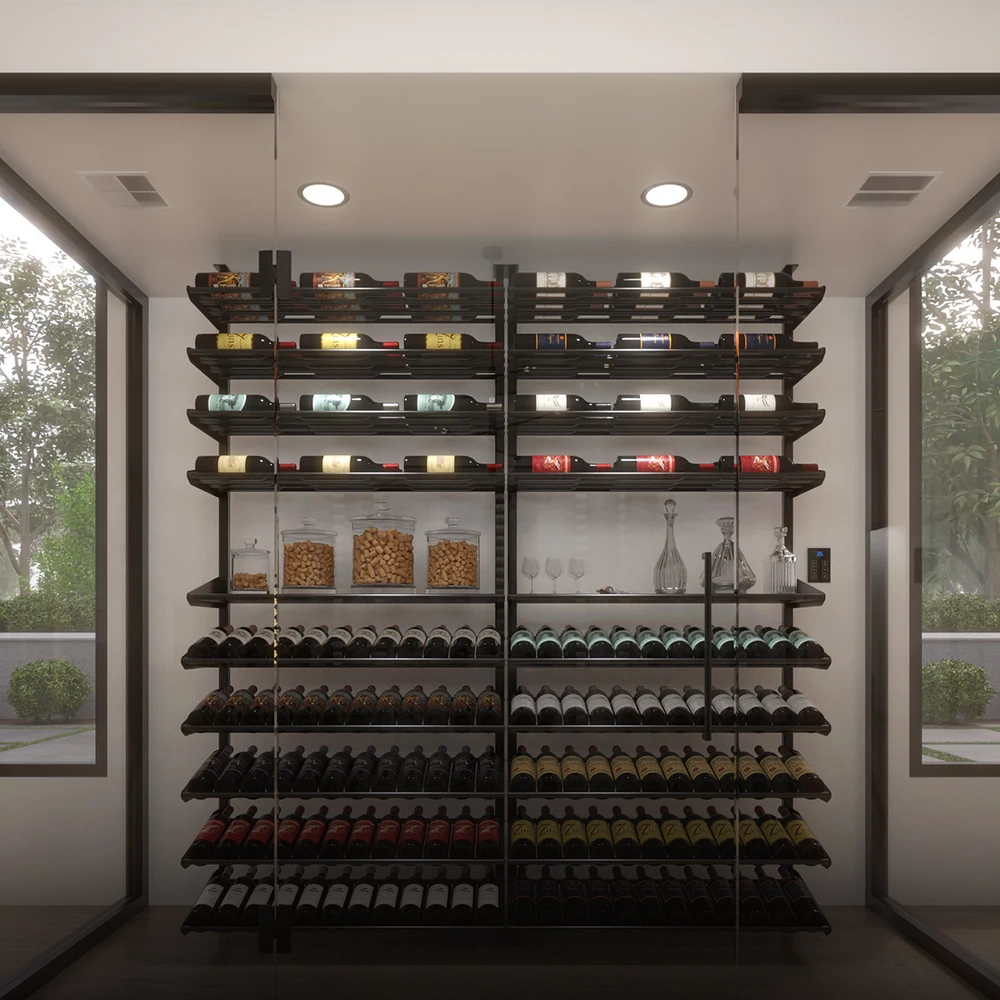
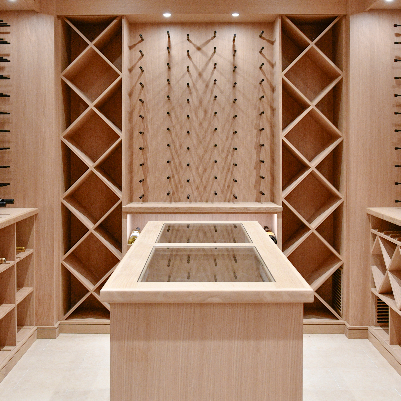
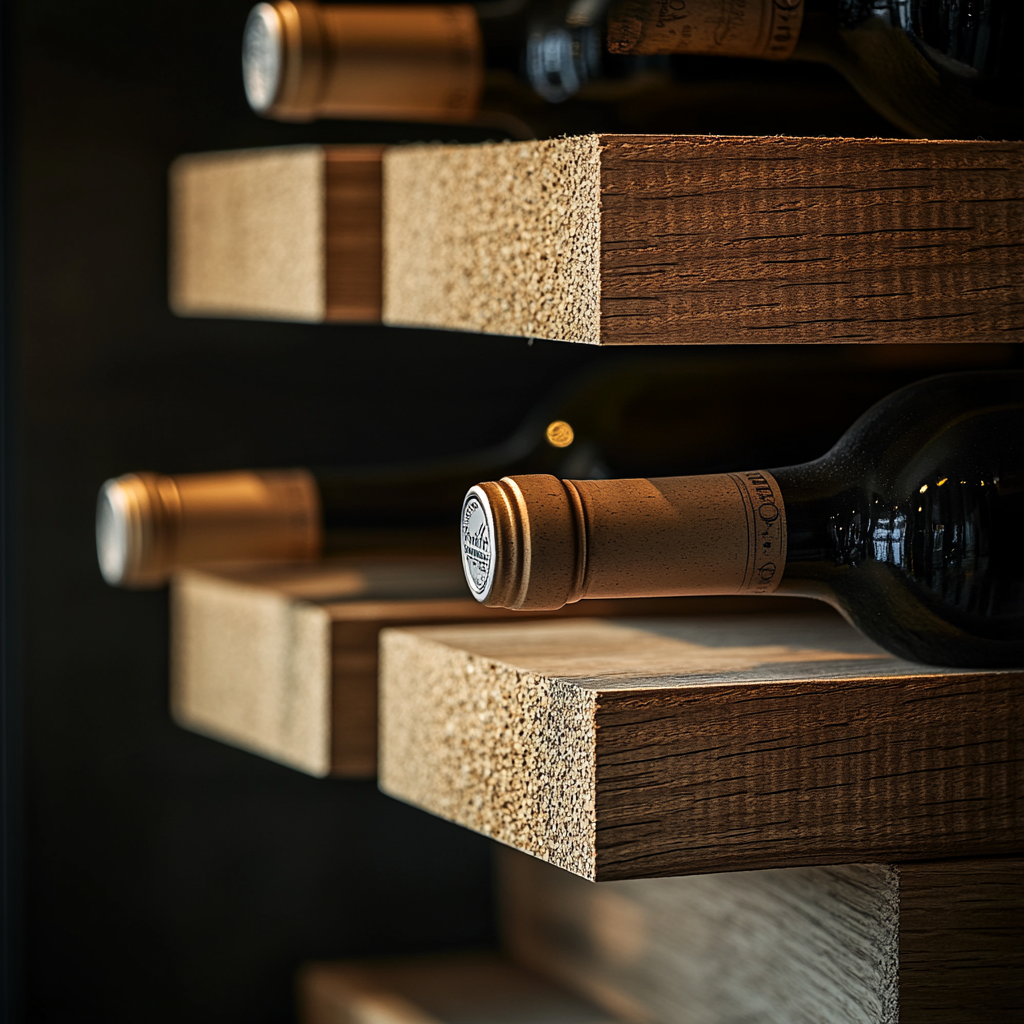
Installing wine pegs directly into the wall is the most visually restrained approach. Bottles appear weightless, aligned in precise grids, with no visible framework competing for attention. The wall itself becomes the design surface, and the wine takes center stage.
This method works best in spaces where architecture is already strong and deliberate. Clean plaster walls, stone surfaces, or carefully finished millwork provide a neutral backdrop that allows the collection to stand alone. The result is minimal, confident, and timeless.
That simplicity, however, depends entirely on what lies beneath the surface. Direct wall installations require careful planning during construction. Reinforced backing, accurate spacing, and structural consistency are essential to ensure long-term stability. Once installed, this approach is not meant to change easily. It favors permanence and precision over flexibility.
For collectors who value purity and architectural clarity, direct wall mounting offers a quiet confidence that never draws attention to itself—only to the bottles it holds.

Panels as a Design Layer
Panel-mounted wine peg systems take a different approach. Rather than treating the wall as the final surface, panels introduce a dedicated layer designed to support both structure and aesthetics.
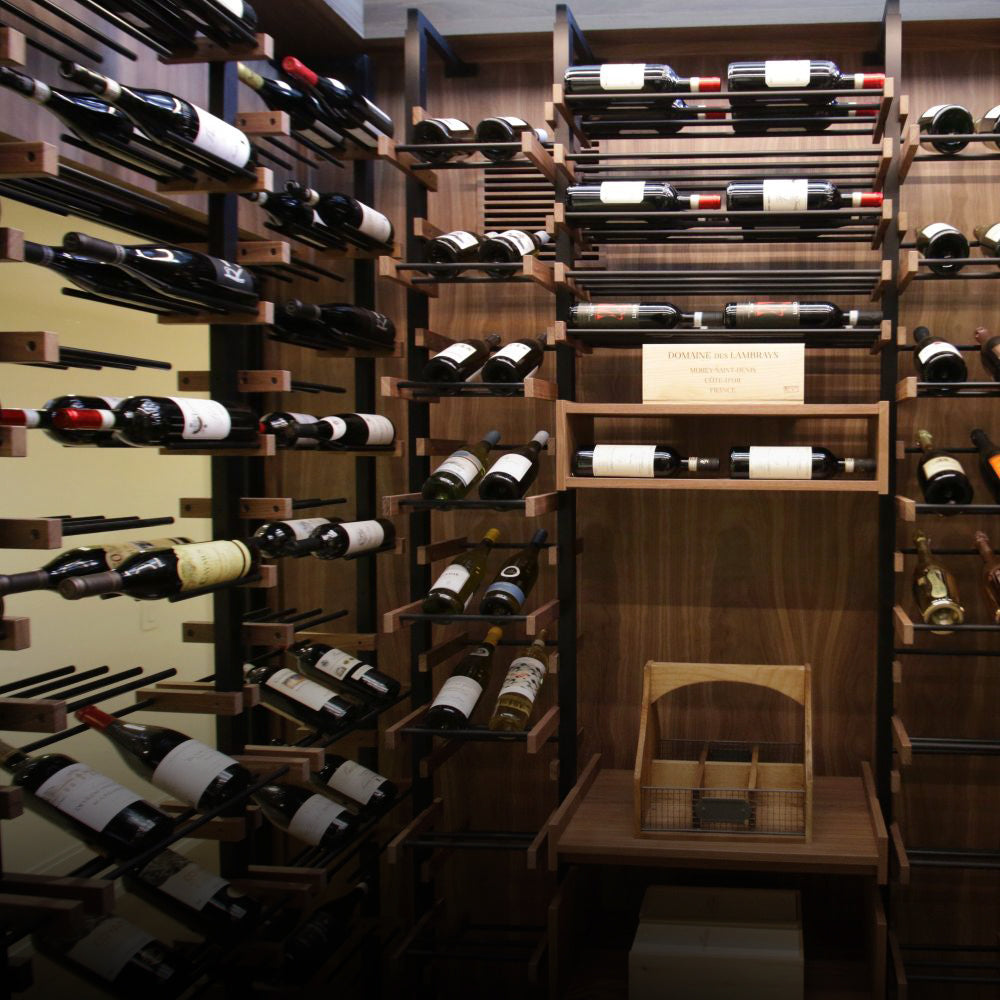
Panels allow designers to work with materials—wood, metal, or composite finishes—that complement the surrounding space. They create visual rhythm, frame collections intentionally, and make complex layouts easier to execute. From a practical standpoint, panels also streamline installation by concealing reinforcements and tolerances behind a finished surface.
This approach is particularly effective in multi-use spaces, where wine storage shares the room with dining tables, tasting areas, or architectural features. Panels give the wine presence without overwhelming the room, offering a balance between display and integration.
Panel systems also provide flexibility. Collections evolve, layouts change, and panels allow adjustments without rebuilding the room itself. For homeowners who anticipate growth or reconfiguration, this adaptability can be a decisive advantage.

The Choice Is About Intent
Both methods serve the same purpose: presenting wine with clarity, order, and respect. The difference lies in how each supports the larger design story.
Direct wall installations emphasize restraint and permanence. Panel systems introduce structure and adaptability. Neither is a shortcut, and neither is inherently better. The right choice depends on how the space is meant to live, how the collection may grow, and how closely the wine display should integrate with the surrounding architecture.
In the end, wine pegs are not just hardware. They are a design decision that affects proportion, rhythm, and longevity. Whether anchored directly into the wall or mounted onto a panel, their success depends on thoughtful planning and a clear vision.
That philosophy—design rooted in intention rather than trend—is at the core of Vine + Vault. The Winter 2025 edition explores how modern wine spaces balance beauty and performance, revealing the quiet decisions that make great cellars endure.
For readers interested in architectural wine storage and contemporary display solutions, our collection of modern wine racking systems reflects many of the principles discussed here, translating editorial ideas into functional design for real-world spaces.