













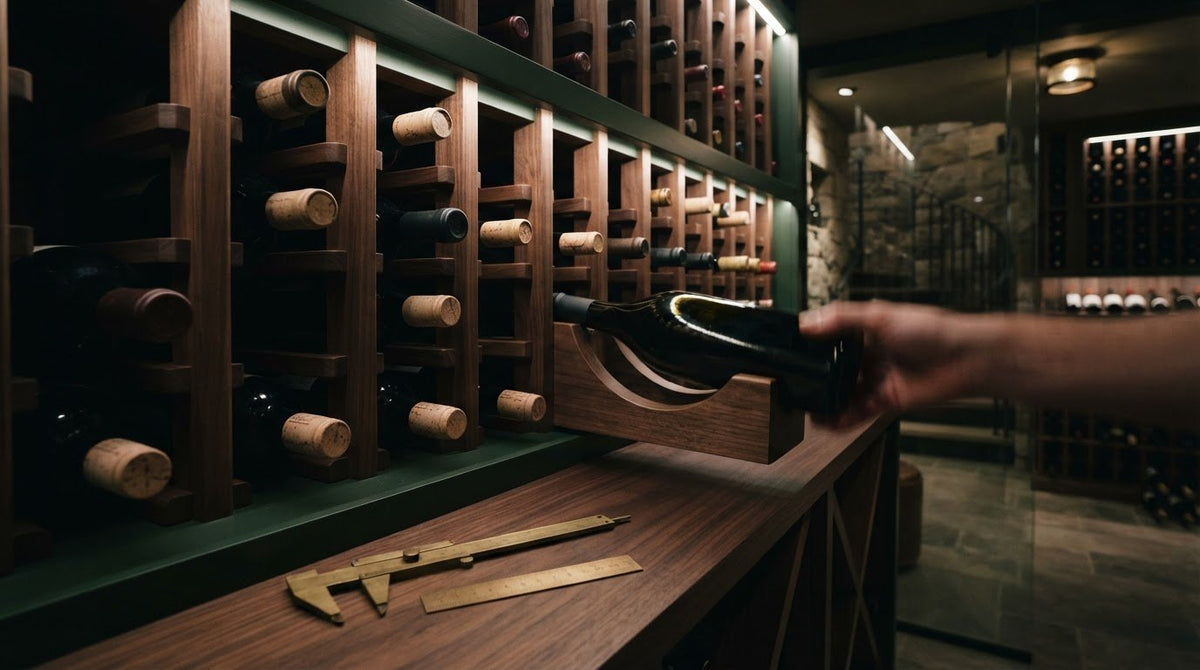
A deeper wine rack isn’t automatically a more secure one. If you’re researching “wine racking depth neck support preventing bottle slippage,” start with how each bottle rests: where its body is supported, how its neck is held, and whether its shape suits the rack. A bottle may feel precarious even when a rack seems generously deep, while well-positioned contact points can help it sit securely and remain accessible.
Depth is only one part of the fit. Bottle formats vary, and rack designs support bottles in different ways. This guide explains how depth and support geometry work together, compares common approaches to bottle contact, and outlines what to measure before planning an installation. Use your collection and room dimensions to compare racking styles and plan a practical layout, rather than relying on one dimension as a universal answer.
Key Takeaways
- Distinguish rack depth from bottle length and usable clearance when planning a secure, accessible layout.
- Inventory your collection’s bottle shapes and measure representative formats before settling on a racking plan.
- Compare neck and body support by where each design contacts the bottle, rather than assuming greater depth prevents slipping.
- Use this guide to understand wine racking depth neck support preventing bottle slippage and create a practical measurement checklist for your installation.
- Balance bottle fit, access, and room layout when comparing classic, modern, and modular racking options.
How Wine Racking Depth and Bottle Support Affect Stability
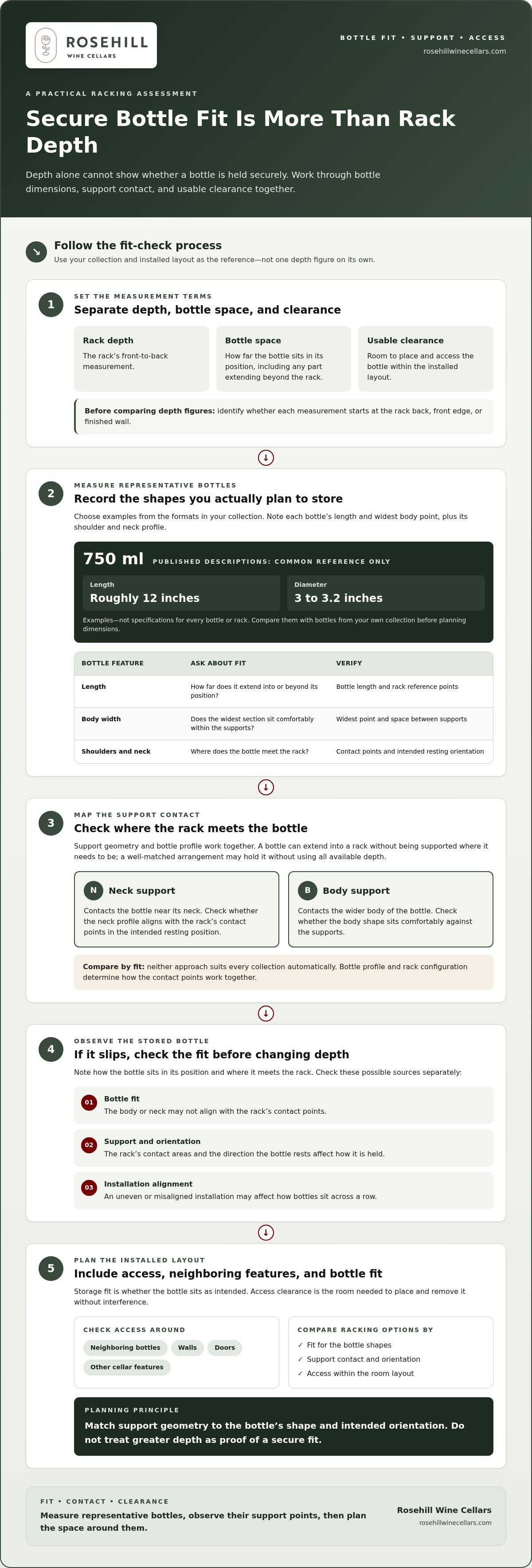
Rack depth is the front-to-back measurement of the rack; bottle stability depends on how that space positions and supports the bottle. A deeper rack may provide more room, but depth alone doesn’t show whether a bottle is held securely. The key question is how the bottle’s shape meets the rack’s support points in its intended storage position.
Consider depth, contact, and retention as related but distinct factors. A bottle can extend into a rack without being supported where it needs to be. A well-matched support arrangement may hold a bottle securely without using all the available depth. To assess wine racking depth neck support preventing bottle slippage, evaluate fit and support geometry together, rather than treating one depth measurement as proof of a secure fit.
What does wine-rack depth measure?
Overall rack depth describes the rack’s front-to-back dimension. The space occupied by a bottle is different: it refers to how far the bottle sits in its individual position, including any portion that extends beyond the rack. Usable clearance is another consideration, since the bottle needs room to be placed and accessed within the installed layout.
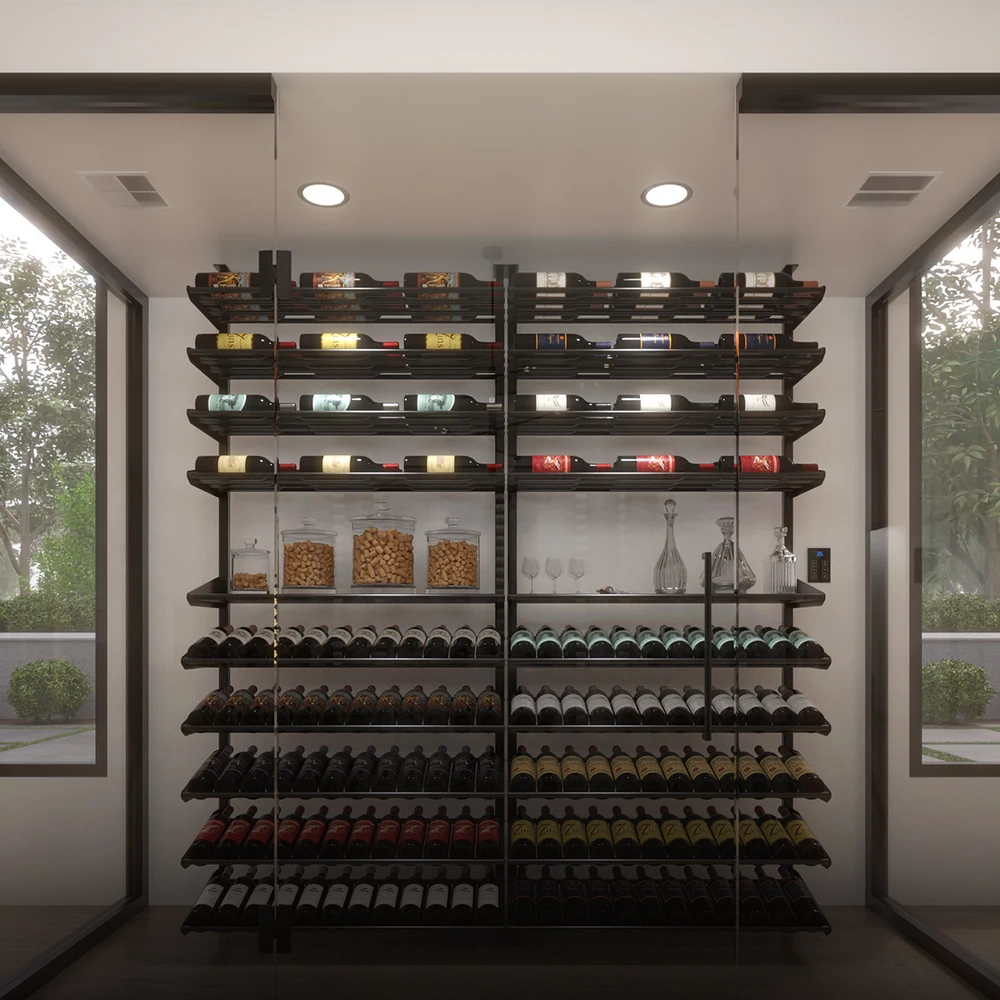
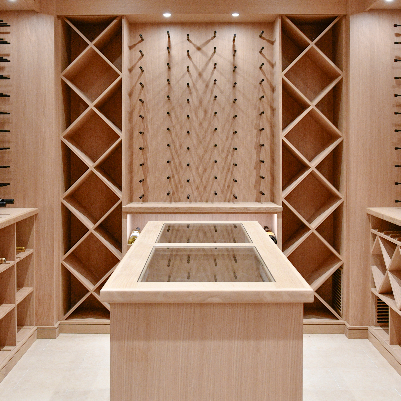
Plans may measure from different reference points, such as the back of the rack, its front edge, or the finished wall. Before comparing depth figures, identify what each measurement includes. For a broader look at standard wine bottle shapes, consider how shoulders, necks, and body profiles affect the way bottles meet rack supports. Rosehill’s modern wine racking is one category to consider when comparing design and layout.
Why can a bottle slip in a rack?
Slippage can point to a mismatch between a bottle and its storage position. Insufficient depth is only one possible factor. Check the fit systematically:
- Bottle fit: The bottle’s body or neck may not align with the rack’s contact points.
- Support and orientation: The rack’s contact areas and the direction the bottle rests affect how it is held.
- Installation alignment: An uneven or misaligned installation may affect how bottles sit across a row.
Separate these factors before changing the specified depth. Measure representative bottles, note where each meets the rack, and observe its position once stored. This gives you a practical basis for comparing racking options and planning around both your collection and available space.
How Bottle Shape and Rack Depth Work Together
A rack’s depth needs to suit the bottles it will hold, not an assumed single standard. Wine bottles vary in length, body width, shoulder slope, and neck shape. These differences affect how a bottle sits in a storage position and where it meets the rack. Even bottles with the same capacity may have different profiles.
As a planning reference, published descriptions commonly put a standard 750 ml bottle at roughly 12 inches long and 3 to 3.2 inches in diameter. Treat those figures as examples, not specifications for every bottle or rack. Measure bottles from your own collection before finalizing dimensions, especially if it includes broad-bodied formats or distinctive shoulders. The bottle’s widest point and the shape of its neck and shoulders can matter as much as its overall length.
Record representative bottle dimensions
Choose examples from the formats you expect to store. Record each bottle’s length and widest body point, and note its shoulder and neck profile because these may be contact areas. Compare how the bottle sits in its intended position instead of relying on capacity or a familiar label. If you use published measurements as a reference, compare them with the actual bottles before using them to plan the rack.
| Bottle characteristic | Fit question | What to verify |
|---|---|---|
| Length | How far does the bottle extend into or beyond its position? | Measured bottle length and rack reference points |
| Body width | Does the widest section sit comfortably within the supports? | Widest point and available space between supports |
| Shoulder and neck profile | Where does the bottle meet the rack? | Contact points and intended resting orientation |
Plan for access as well as storage
Storage fit describes whether the bottle sits as intended in its position. Access clearance is the room needed to place and remove it without interference from neighboring bottles, walls, doors, or other cellar features. Include both in your layout. More open space can make handling easier, but it doesn’t replace supports that suit the bottle.
Fit is one part of a considered cellar plan; environmental conditions matter to wine storage as well. A scientific study on wine storage conditions examines the effects of temperature on wine evolution, a separate consideration from rack geometry.
Use your bottle measurements and access needs to compare racking designs, including modern wine racking options. A fit-first approach makes the relationship between wine racking depth, neck support, and preventing bottle slippage easier to assess without relying on a universal dimension.
Neck Support or Body Support: Which Rack Design Helps Prevent Slippage?
Greater depth alone doesn’t prove that a bottle is securely held. The rack’s contact points and the bottle’s position within them matter just as much. A neck-support design contacts the bottle near its neck; a body-support design contacts its wider body. Neither approach suits every collection automatically. Fit depends on bottle profile and rack configuration.
Secure wine storage depends on support geometry that suits the bottle’s shape and intended orientation, not on rack depth alone. Use that principle to compare designs. Look at which parts of the bottle are supported, how it rests, and whether the arrangement suits the formats you plan to store.
What does neck support do in a wine rack?
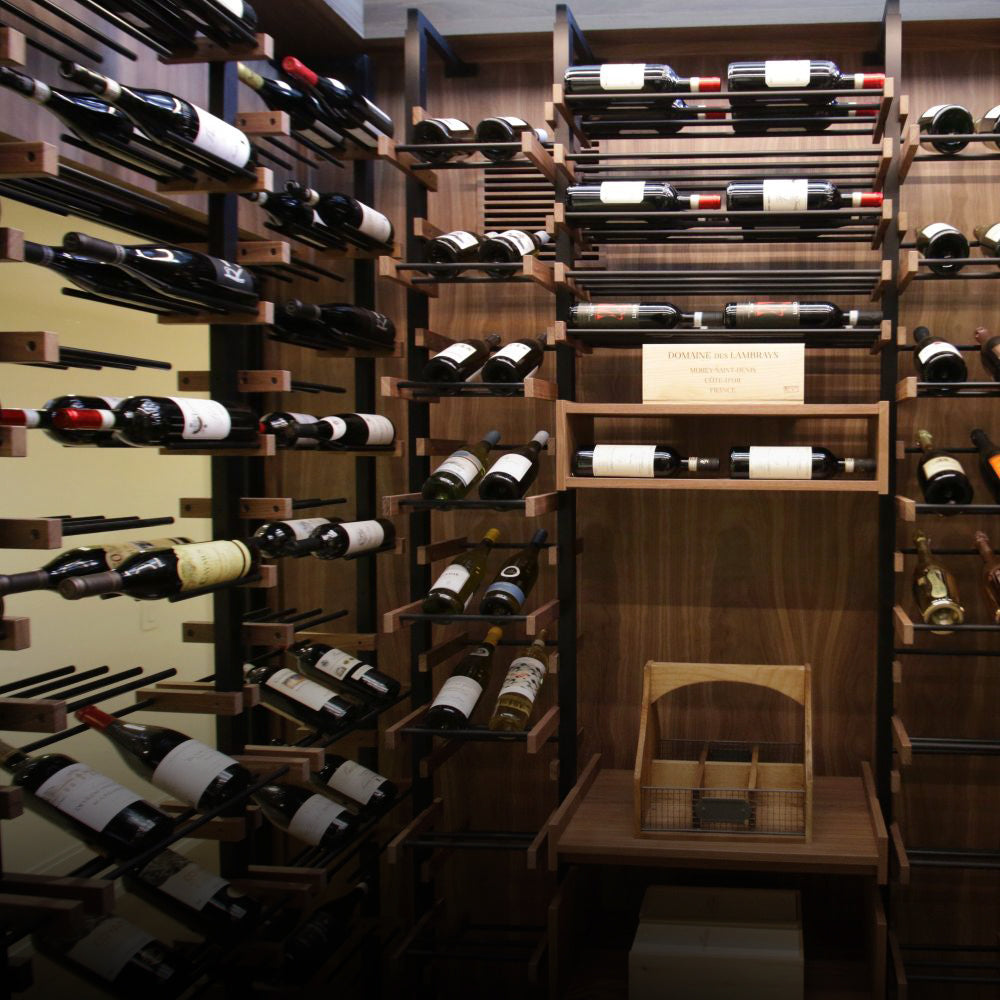
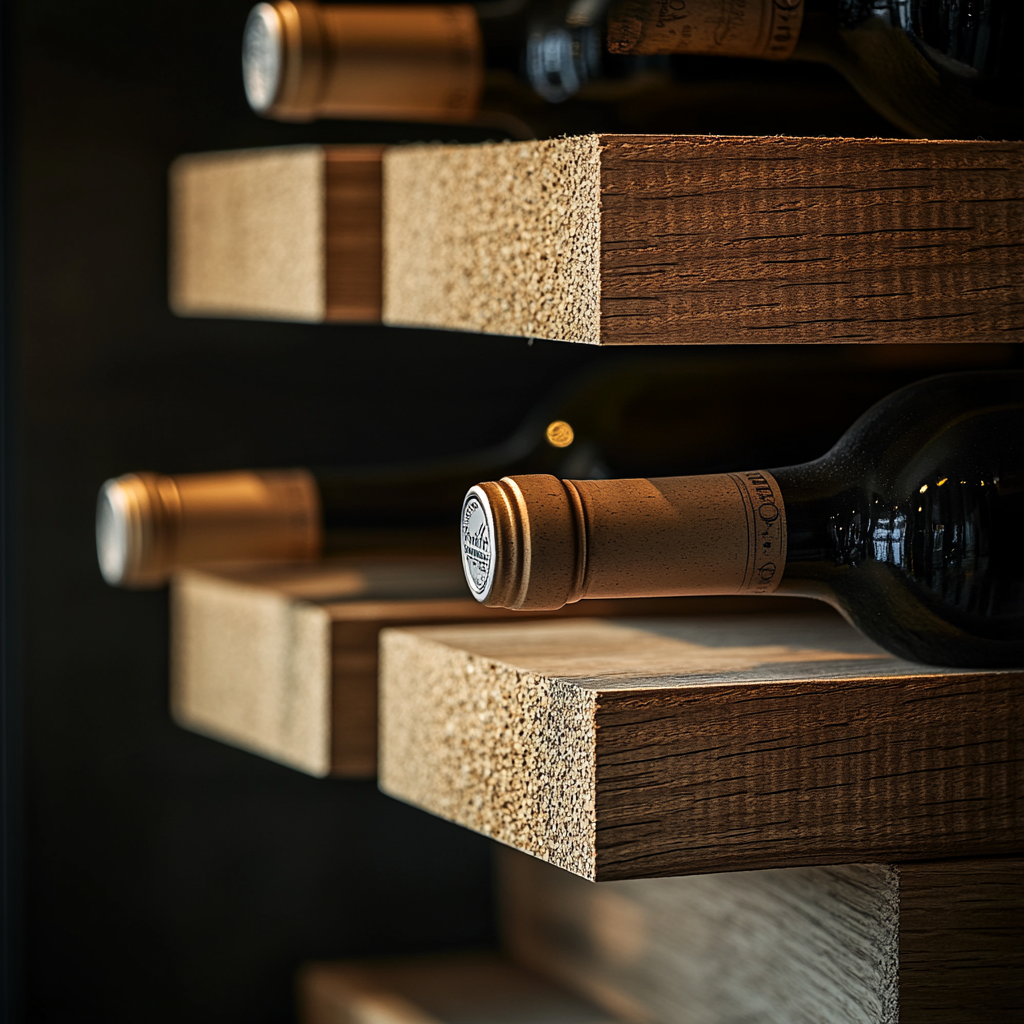
A neck-focused rack positions a bottle by contacting its neck, which can leave much of the body visible. That presentation may suit a display where seeing the bottle is part of the design, but appearance alone doesn’t establish fit. Assess neck dimensions and the bottle’s intended orientation alongside the rack’s support points.
Don’t assume every bottle neck fits every neck-support system. Compare representative bottles from your collection, including those with noticeably different neck or shoulder profiles. Check how each sits in its intended position and whether the contact suits that rack configuration.
When might body or alternative support suit a collection?
Body-contact arrangements support bottles at the body rather than relying primarily on the neck. Because the contact area and bottle orientation differ, the design may change how bottles are presented and how readily labels or bottle shapes can be seen. Weigh these trade-offs against your collection and room instead of treating one approach as universally more secure.
A collection with varied formats calls for particular care: a position that accommodates one bottle profile may not suit another. Compare how each format meets the supports, and consider whether your collection is likely to change. Explore modern wine racking as one design category alongside your space, access, and presentation needs.
For a practical comparison, note each design’s support location, intended bottle orientation, visibility, and fit across representative bottles. This clarifies the relationship between wine racking depth, neck support, and preventing bottle slippage: depth provides room, while suitable contact points help determine how the bottle is held.
A Practical Checklist for Measuring and Specifying Wine Racking
A useful racking plan starts with your collection, then connects bottle fit to the room and installation. Keep actual measurements distinct from estimates, and compare them with the dimensions of the racking you are considering. This prevents a general example from being mistaken for a dimension that suits every bottle or configuration.
What should you measure before choosing a rack?
Work through the collection and installation in order:
- Group bottles by format. Identify the shapes you store regularly and set unusual or oversized bottles aside as separate cases.
- Measure representative bottles. Record each sample’s overall length, widest body point, and relevant neck and shoulder characteristics. Label the bottle or format measured so the record is clear.
- Map the installation space. Measure the available area and record the intended rack orientation. Note walls, doors, corners, and other features that could affect placement or access.
- Write down the support plan. For each intended position, note where the bottle will rest, its orientation, and how it can be placed and removed.
- Compare measurements with the selected design. Review the rack’s dimensions and support layout against your measured bottles and available clearances.
This record helps distinguish the rack’s overall dimensions from the usable space in each position. It also prevents an unusual bottle from becoming the assumed standard for your entire collection.
How can you check for a secure, usable fit?
Review the proposed position using the bottles you measured. Confirm that each intended format meets its supports as designed, rests in the planned orientation, and can be handled comfortably. Consider neighboring bottles and surrounding structures, too. A fit that works in isolation may be awkward if adjacent positions limit access.
If your collection includes several shapes, note which positions suit which formats instead of assuming every bottle can use the same configuration. If a bottle sits unevenly, meets a support differently than intended, or is difficult to retrieve, treat that as a design issue to resolve rather than automatically increasing rack depth.
Once your measurements and requirements are organized, compare wine rack options against your collection and cellar layout. Clear specifications make it easier to assess wine racking depth, neck support, and preventing bottle slippage as connected planning considerations. For a racking plan coordinated with your bottles and space, explore custom wine cellar design.
Choose Wine Racking That Fits Your Bottles and Cellar Plan
The strongest racking choice begins with your collection, not a depth figure in isolation. Bring together what you’ve recorded about bottle formats, support preferences, usable space, access, and room layout. Then compare options against those requirements. The aim is a considered balance: bottles sit as intended, remain practical to retrieve, and fit the character of the cellar.
Keep the key measurements distinct. Rack depth describes the structure; usable depth concerns how a bottle sits in its position; access depends on surrounding space and the rack arrangement. Compare the dimensions and support details of the selected configuration with your collection. That clarity turns wine racking depth, neck support, and preventing bottle slippage into a fit-led planning decision rather than a guess.
When should you compare modular and fixed racking?
Consider how the layout may serve your collection over time. A consistent group of bottle formats may make a fixed arrangement straightforward to plan. If the collection or available space may change, modular options offer another way to organize storage, though no configuration should be assumed to accommodate every bottle or future layout. Compare the proposed arrangement with your measured formats and room plan.
Rosehill Wine Cellars offers Premier Cru Classic and Modern racking. Compare these options against your collection, intended support points, and access needs rather than choosing by appearance or depth alone.
How does custom cellar design bring the details together?
Racking is one part of a complete cellar plan. Bottle formats can inform storage placement; placement needs to work with how bottles are accessed; and the room layout shapes how the racking fits into the overall design. Treat these as connected decisions, with the bottle’s fit in its intended position at the centre. Include dimensions and support details for the selected racking and configuration in the project plan.
Rosehill Wine Cellars designs and builds custom wine cellars, bringing collection needs and room planning together. Explore custom wine cellar design alongside racking options to plan a cohesive space around your collection.
Plan a Cellar That Fits Your Collection
A considered racking plan starts with the bottles you own and the space you have. Measure representative formats, compare where each design supports the bottle, and account for access as well as usable depth. These details make wine racking depth neck support preventing bottle slippage a question of fit and configuration, not simply choosing the deepest rack.
Rosehill Wine Cellars designs and builds custom wine cellars and offers wine racks, including Premier Cru racking. The right choice brings bottle support, accessibility, and the character of your cellar into a cohesive plan grounded in your collection and layout.
Ready to plan a cellar around your collection? Explore Rosehill Wine Cellars and take the next step toward a space designed for the bottles you value.
Frequently Asked Questions
How deep should a wine rack be?
There isn’t one depth that suits every bottle and rack design. The right measurement depends on the rack’s construction, the formats it is intended to hold, and the room needed to place and remove bottles. Measure representative bottles from your collection, then compare them with the rack’s usable dimensions. Treat general depth figures as starting points, not universal specifications, and distinguish usable space from the rack’s overall front-to-back measurement.
Does a deeper wine rack prevent bottles from slipping?
Not necessarily. Depth affects how much of a bottle the rack accommodates, but stability also depends on support points, bottle orientation, and how the rack is designed for the bottle format. A deeper position may still feel insecure if the bottle doesn’t meet its supports as intended. To assess wine racking depth neck support preventing bottle slippage, evaluate the complete fit rather than assuming depth alone solves the problem.
Can wine bottles slip out of a neck-support rack?
Yes, a bottle may not sit securely if its neck shape or dimensions don’t suit the support opening or intended position. Bottle formats vary, so assess the actual bottles you plan to store instead of assuming every neck is alike. Review the rack’s stated compatibility and design, then observe how the bottle rests in its intended orientation. Don’t force a bottle into a position that appears loose or unstable.
Is neck support better than body support for wine bottles?
Neither approach is automatically better for every collection. Neck-support and body-support racks contact different parts of the bottle, and their designs can vary in visibility, access, and format compatibility. Start by identifying which bottles you’ll store and how the rack is designed to hold them. Include less-common shapes in your assessment, since a support style that suits one bottle may not fit another as well.
How do I measure a wine bottle for rack fit?
Measure representative bottles from your collection, noting overall length, the widest body point, and relevant neck or shoulder dimensions. Record which bottle format each measurement represents. Then compare those figures with the rack’s stated usable depth and allow for the space needed to handle bottles. Repeat the assessment for distinct formats rather than relying on one sample. Compare your measurements with the product specifications before finalizing the racking plan.
What should I check if a bottle feels loose in its rack?
First, check that the bottle is positioned in the intended orientation and that its shape suits the rack’s design. Look for a mismatch at the support points, an obstructed or misaligned position, or a format that differs from the bottles around it. Depth may be one factor, but it isn’t the only possible cause. Don’t force a loose bottle into place; review the rack design and reassess its fit.