


































Photo: Justin Parsons for Fogo Island Inn
Some places do not simply host you. They ask something of you: a willingness to slow down, to arrive without expectations, to trade the familiar rhythms of daily life for something older and less predictable. Fogo Island Inn, set on the edge of the North Atlantic as part of an outport community off the north-east coast of Newfoundland, is one of those places. The first time you encounter it, whether through photographs or in person, the word that comes to mind is not luxury, though it is undeniably that. The word is intention.
For Rosehill Wine Cellars, Fogo Island Inn holds a particular significance. We built the custom wine cabinet there. But this post is not a project brief. It is an account of what happens when you actually stay: the community mission that give the property its depth, the wine program, and the custom wine cabinet built to serve both.
The details and quotes throughout this article are shaped by the personal experience of Rosehill owners, Mike and Stefania Domazet, during their stay at Fogo Island Inn. Their words say it best: "An experience you can't experience anywhere else."

Photo: Alex Fradkin for Fogo Island Inn
A Place Shaped by the Sea
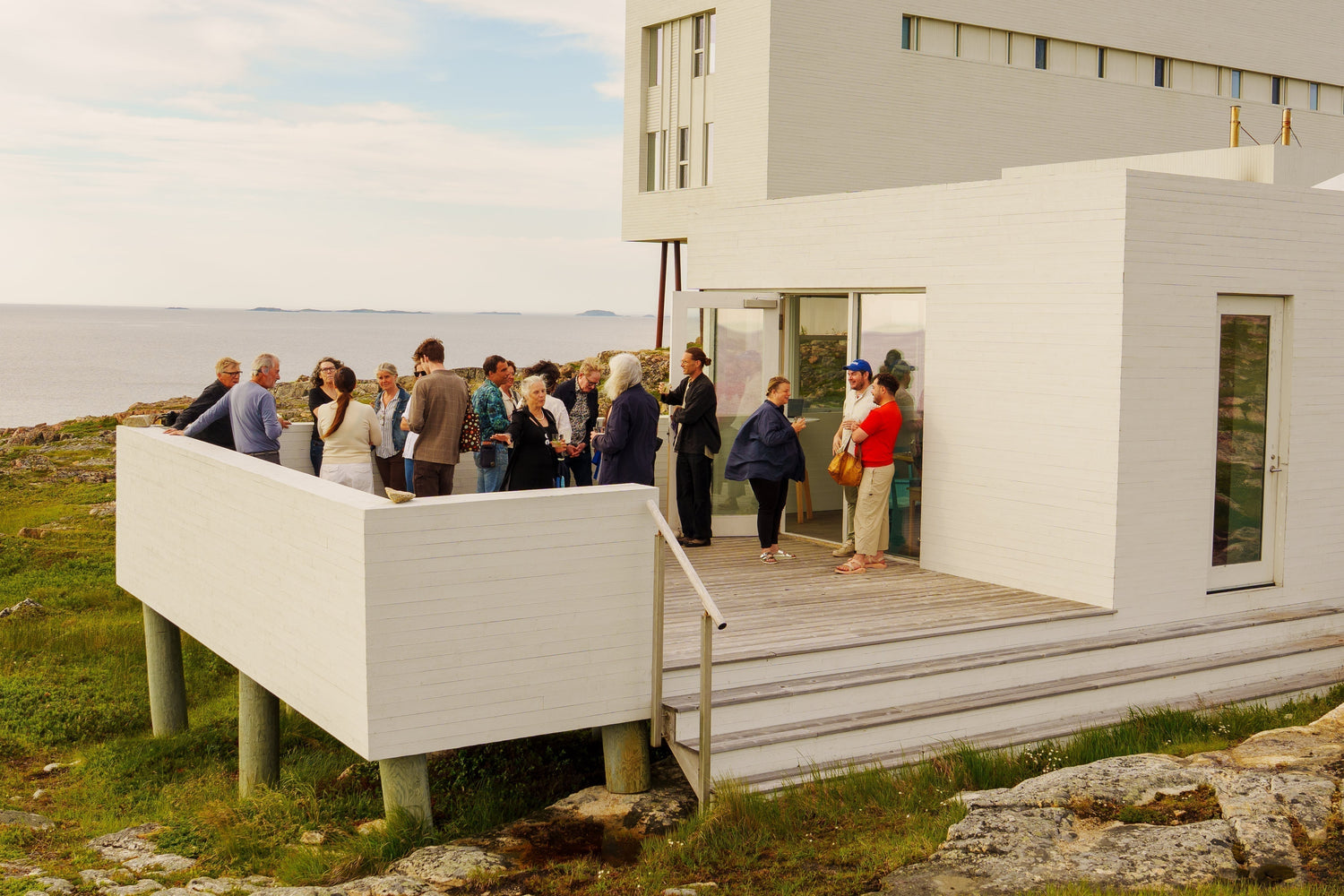
Fogo Island sits as an outport community off the north-east coast of Newfoundland, reachable by ferry from the mainland. The island has been continuously inhabited for generations, sustaining a community defined by its relationship to the land and the sea around it. The Inn was not built to interrupt that character. It was built to express it: architecture that responds to the landscape, programming rooted in local knowledge, and a hospitality philosophy that treats the island's way of life not as a backdrop but as the subject. That commitment to place has not gone unrecognized. Fogo Island Inn is one of only two Canadian hotels to hold the MICHELIN Three-Key designation, the guide's highest distinction for hotels, awarded to properties that offer a truly extraordinary stay.
Behind the Inn sits Shorefast, the registered charity whose mission it is to unleash the power of place for local communities to thrive in the global economy. The Inn is one of several Shorefast initiatives, alongside an international artist residency program, heritage restoration projects, and community-centred social businesses built to generate lasting local resilience. Operating surpluses from the Inn supports that broader work directly. In the words of Zita Cobb, founder and CEO of Shorefast and visionary behind Fogo Island Inn: "The idea behind the Inn was about welcoming the world, while ensuring Fogo Island could stay true to itself and showcase its assets and see itself into the future." Staying here is, in a tangible sense, participating in a system designed to benefit the island around you, and to protect it across generations.
The Inn operates within what it calls a regenerative travel model, one built not just to sustain the island but to actively strengthen it, meeting the needs of present and future generations of Fogo Islanders. This is the distinction that sets Fogo Island Inn apart from properties where the relationship between hospitality and place is incidental. Here, it is the founding premise. The impression of that lands immediately on arrival, as Stefania Domazet reflects: "From the moment you get there, you can feel that this place is different. It's not trying to impress you. It just is what it is, and somehow that's more impressive than anything."

Photo: Mike & Stefania Domazet, personal archives
Your Island, Your Host
Most properties offer guided experiences as an optional layer. At Fogo Island Inn, the relationship between guest and place is designed differently from the outset. Every visitor is paired with a dedicated Community Host: a local Fogo Islander whose role is not to deliver a prepared itinerary but to introduce you to the island they actually know and live in. This is a direct expression of the community investment at the heart of the property. The host program puts local knowledge, and local livelihoods, at the centre of the guest experience.
No two stays are identical because of this. Your Community Host might take you along a coastal trail that exists nowhere in any guidebook, or introduce you to someone whose family has worked these waters for generations. The conversation is as important as the destination. Through it, you begin to understand why people have chosen to remain on Fogo Island across centuries of change, and what that continuity of attachment to a specific place means in a world that increasingly treats location as negotiable.
This is the quality that separates Fogo Island Inn from properties offering comparable physical comfort: it insists on genuine connection. "Our host took me to places I never would have found on my own," Mike Domazet recalls. "That kind of thing doesn't happen by accident. The whole stay is set up to make sure you actually connect with the island, not just look at it." You leave knowing something real about where you were, not simply that you were somewhere beautiful.

Photo: Tom Cochrane for Fogo Island Inn
The Island at Your Own Pace
Before Fogo Island brings you to the table, it asks you to move through it. The hiking trails offer views of coastal landscape with no equivalent on the mainland: ancient, glacier-shaped rocks, rocky headlands, open ocean, and skies that carry a quality of light unlike anywhere else. These are not manicured paths. They are the island on its own terms, and they ask you to meet it there.
Cycling gives you Fogo at your own speed, quiet and unhurried, with the space to stop wherever the view demands it. And then there is the unexpected pleasure of making jam and jelly using traditional methods and local fruit, an activity that sounds modest but as Stefania explains lands differently in practice: "The jam making sounds like such a small thing but it really stayed with us. You're sitting with locals, using their methods, their fruit. It's a simple way to feel like you actually belong somewhere for a moment." You connect to the domestic rhythm of island life in a way that a scenic hike alone does not provide. You make something by hand in a specific place, and you carry it home.
What each of these experiences does, collectively, is prepare you. By the time you sit down to eat, you have already begun to understand the island. The table at Fogo Island Inn does not introduce you to the place. It deepens a relationship you have already started.
 Photo: Alex Fradkin for Fogo Island Inn
The Table, and Everything Behind It
The culinary experience at Fogo Island Inn is among the most articulate expressions of what the property stands for. Every dish begins with what the island produces: ingredients sourced locally, seasonal in the truest sense, prepared with a level of care that makes the provenance unmissable. Sitting down to a meal here, you are not eating food that happens to be local. You are eating food that could only exist here, shaped by these waters, this soil, and the knowledge of the people who work with both.
As Stefania puts it, "Everything on the plate has a story. You taste where you are. There's nothing on the menu that could have come from anywhere else, and you feel that with every bite." The attention given to each ingredient mirrors the broader attention given to each guest. Nothing on the plate is incidental, just as nothing about the stay is. The kitchen understands that extraordinary hospitality is not about adding more. It is about making what is already present impossible to overlook.
That philosophy extends beyond the plate. Mike recalls sitting down to a smoked old fashioned made with iceberg ice pulled directly from the North Atlantic, a detail so specific to this place it could not exist anywhere else. It is the kind of moment that captures what Fogo Island Inn does better than most properties ever attempt: taking what is already extraordinary about where you are, and finding a way to put it in your glass.
For wine lovers, this approach carries a familiar resonance. Terroir, the idea that a wine's character is inseparable from its place of origin, operates here as a guiding philosophy applied not just to the glass but to everything that arrives at the table. The best expression of a grape is shaped by specific soil, climate, and human care. The kitchen at Fogo Island Inn works by exactly the same logic, and it shows in every course.

Photo: Steffen Jagenburg for Fogo Island Inn
A Wine List That Reflects a Philosophy
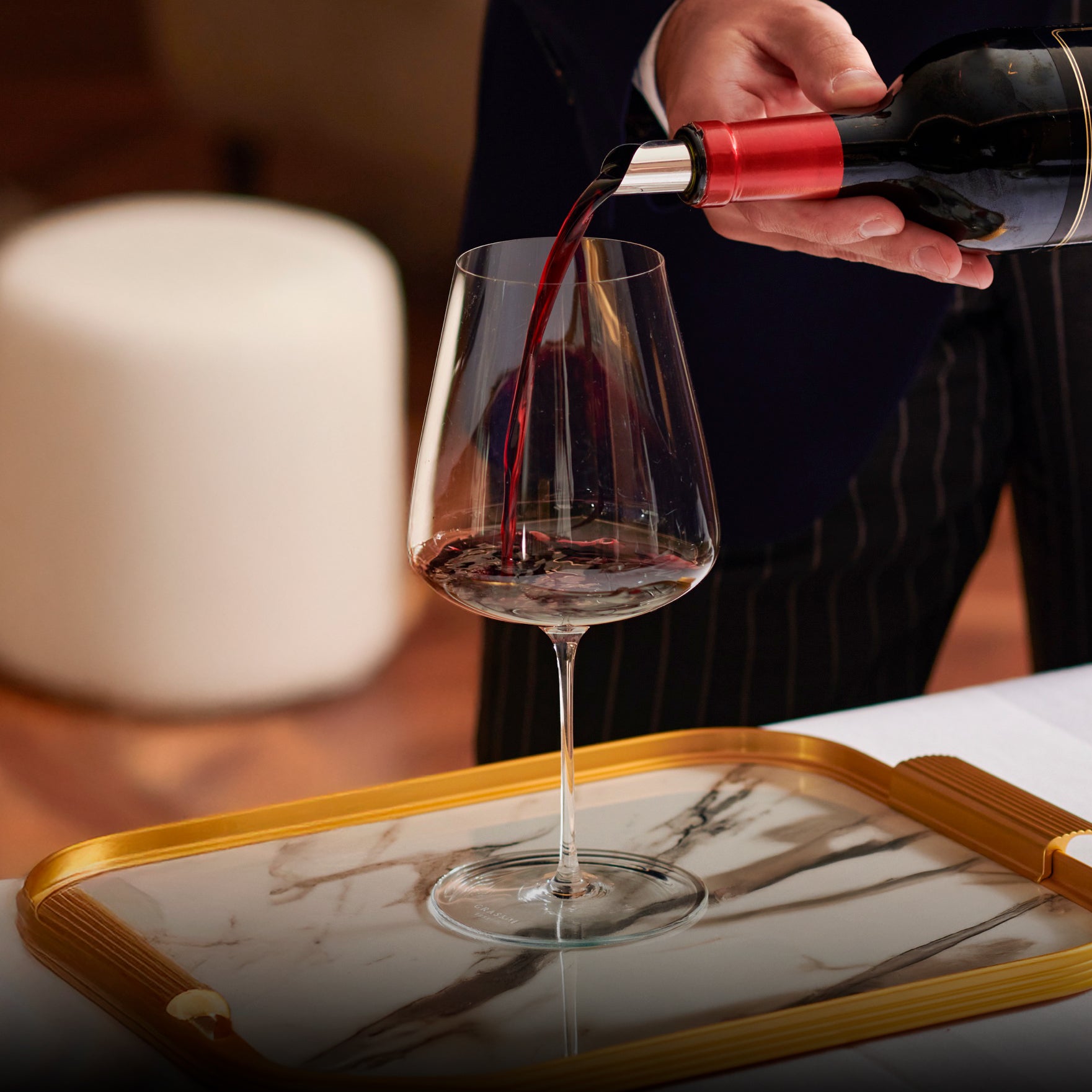
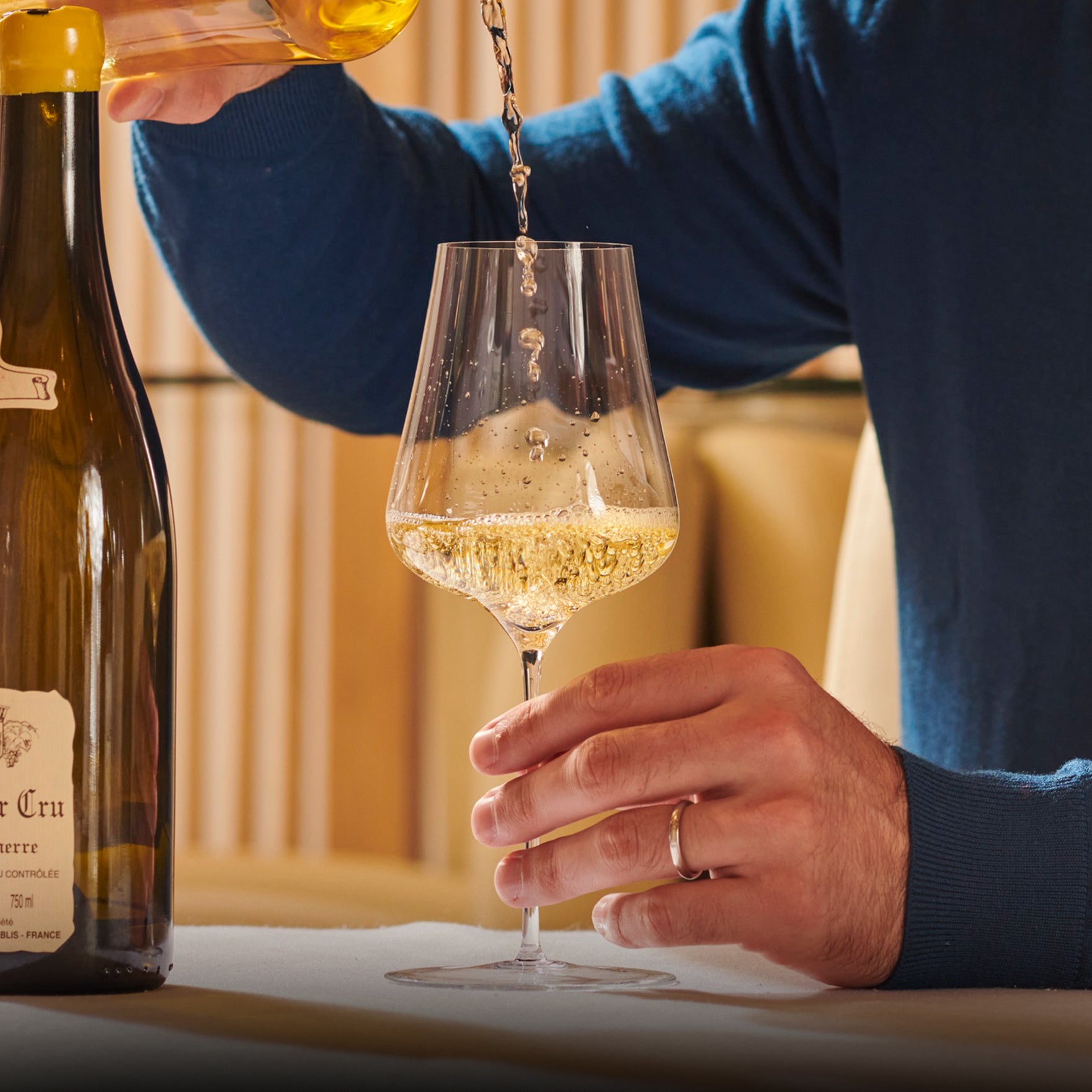
The wine program at Fogo Island Inn extends that same sensibility from the kitchen into the glass. The list was developed by the Inn's certified sommelier and built around a clear point of view: what you drink here should say something about where you are, and the producers behind it should reflect the same values the Inn holds. Small-scale producers from tight-knit, community-rooted operations are given priority, chosen for a quality of character that mirrors Fogo Island's own identity. Canadian wines are featured alongside them. And the broader selection draws from the regions that have long held a historic relationship with Newfoundland: Portugal, Spain, Italy, and France, including the celebrated terroirs of Burgundy and Bordeaux. These are not arbitrary inclusions. They trace the island's centuries-old trading connections, now expressed through the language of wine.
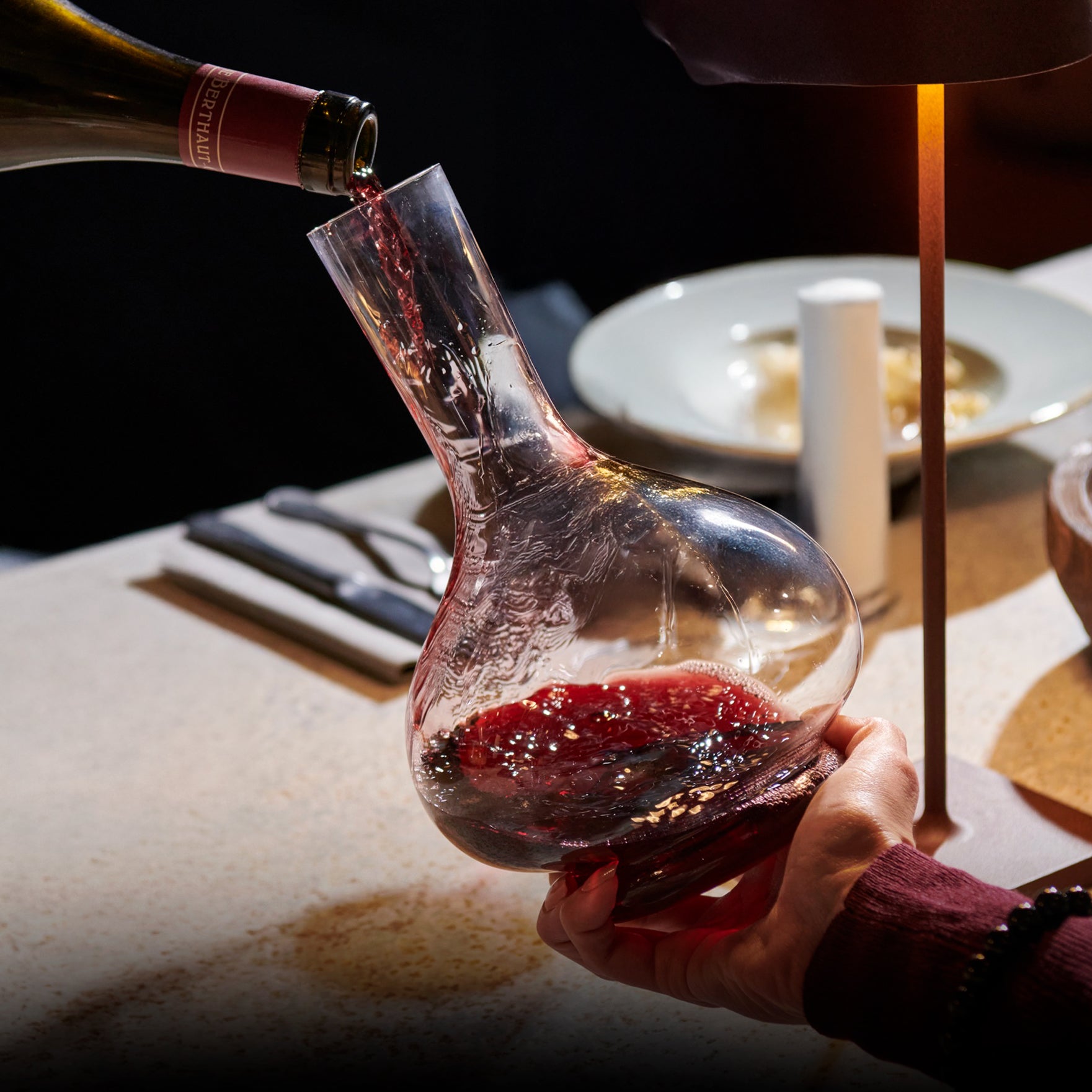
For guests approaching the list without a fixed direction, the sommelier is the guide worth following. For those who arrive with strong preferences of their own, the coherence and depth of the selection reward that knowledge equally. Stefania reflects, "You're sitting at the edge of the ocean, and what's in your glass actually makes sense there. The list isn't trying to be impressive. It's trying to be right for where you are." There is something particular about opening a bottle in this setting, on this island, with this view: it carries a dimension the same wine poured elsewhere simply would not. Context is part of what you are tasting.
That philosophy, the idea that a wine collection should belong to a place as deliberately as the architecture does, is what the cellar Rosehill built was designed to serve. A wine program this considered requires storage built to match it.

Photo: Fogo Island Inn
A Wine Cabinet Built to Belong
It started the way the best commissions do: with a visit. Mike & Stefania Domazet came to Fogo Island Inn as guests, experienced the property firsthand, and recognized immediately that the wine program deserved a storage solution built to match it. An offer was made to help. A second trip followed to confirm the concept, working directly with Design Strategist Ernst Hupel on site to ensure every detail was built precisely around the Inn's wine storage and service needs.
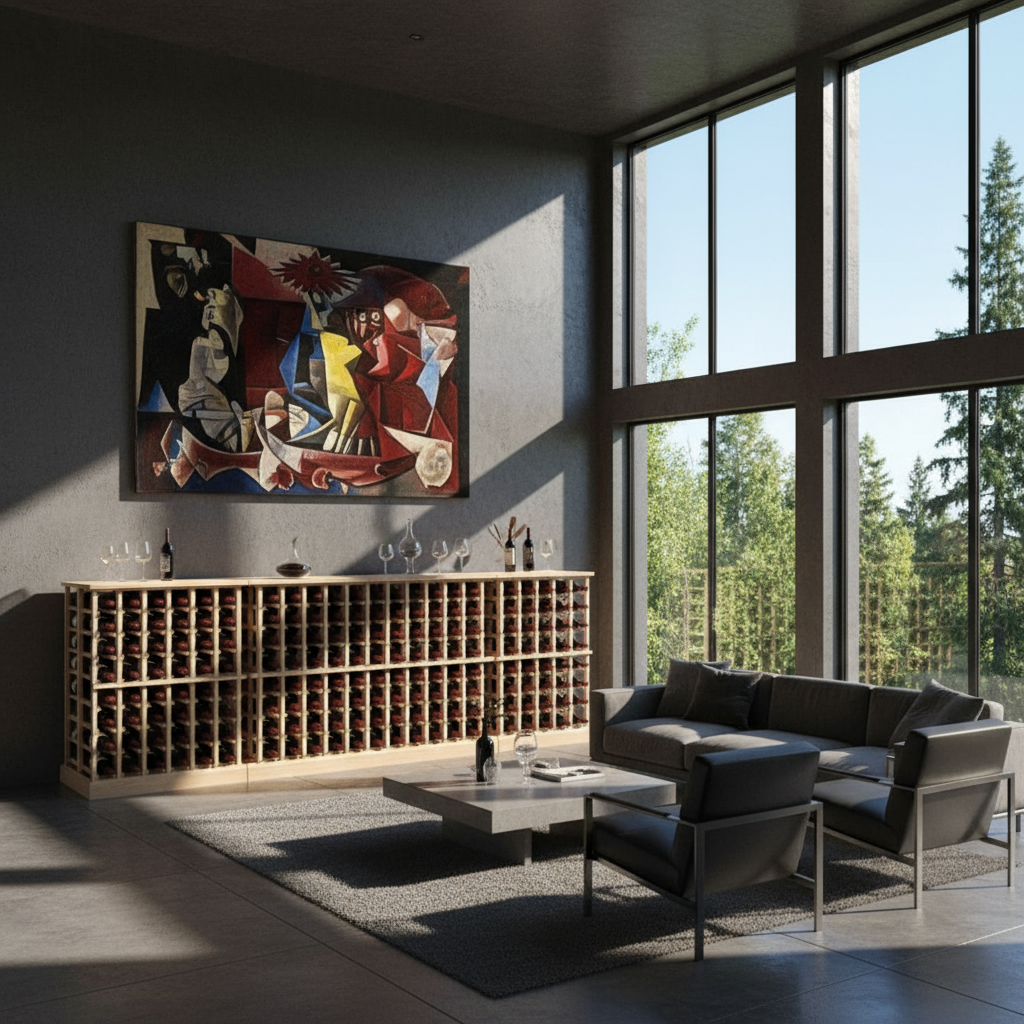
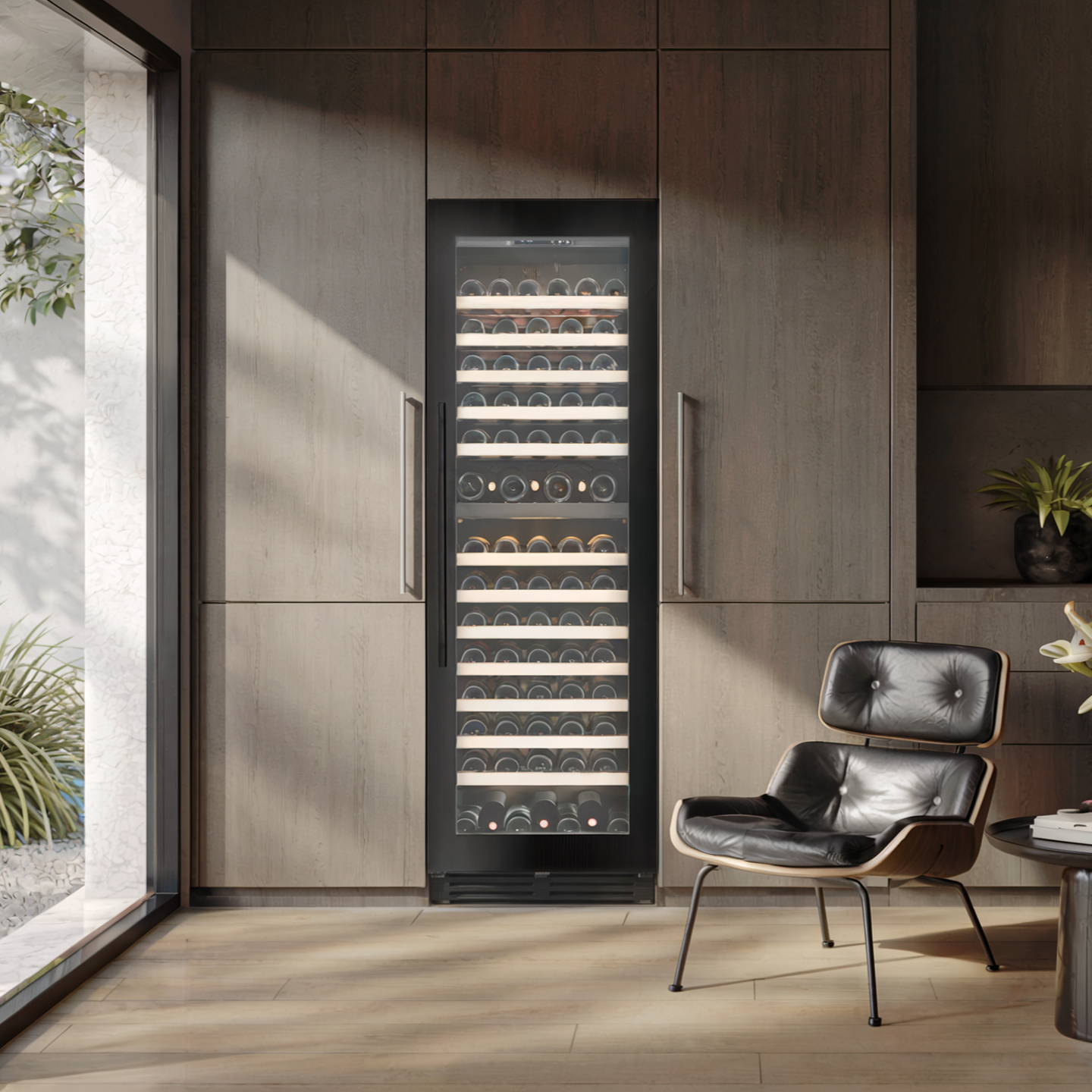
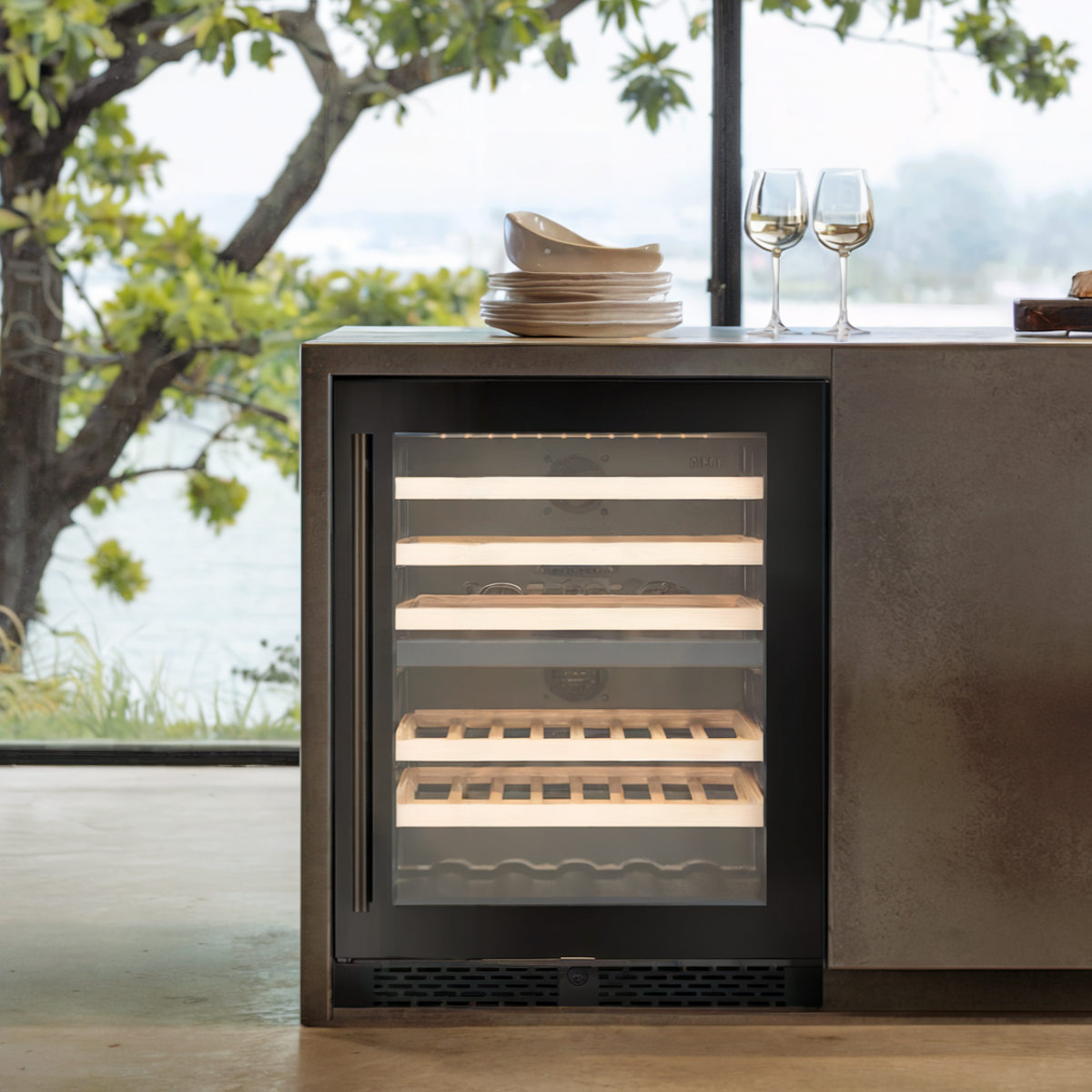
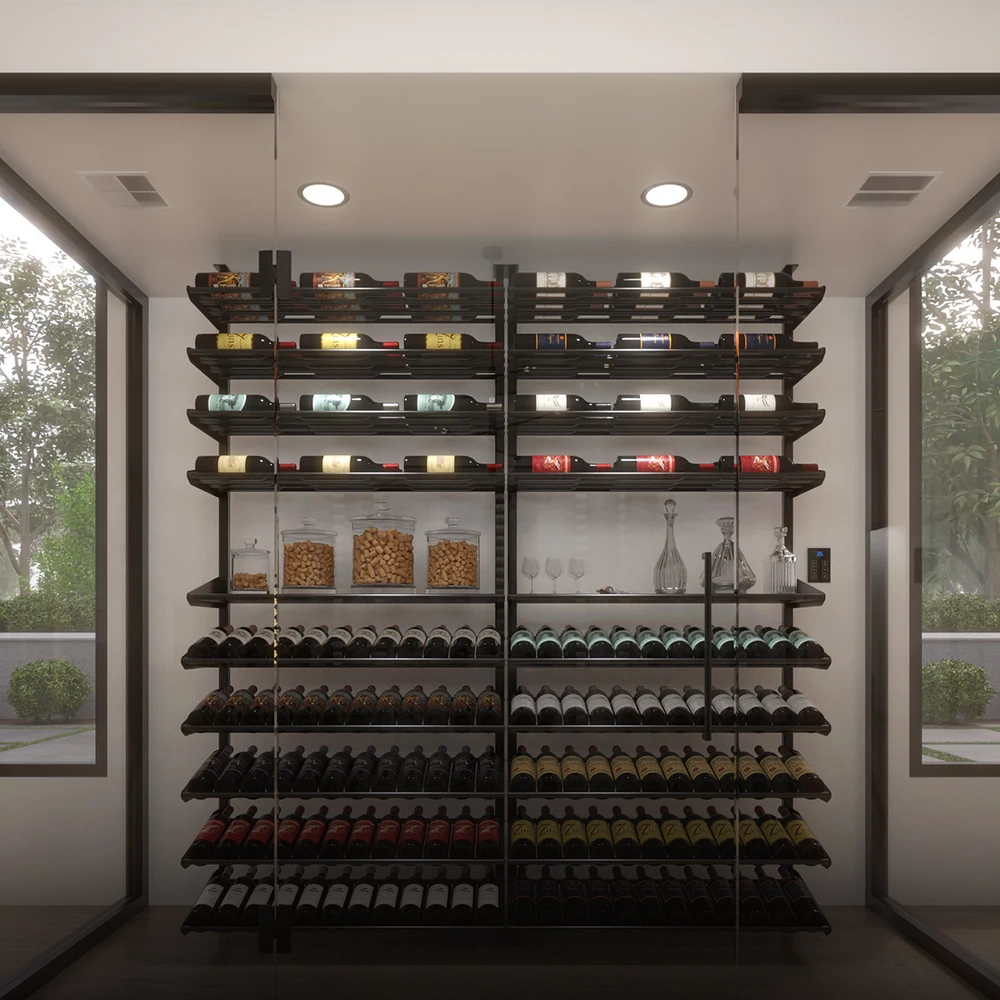
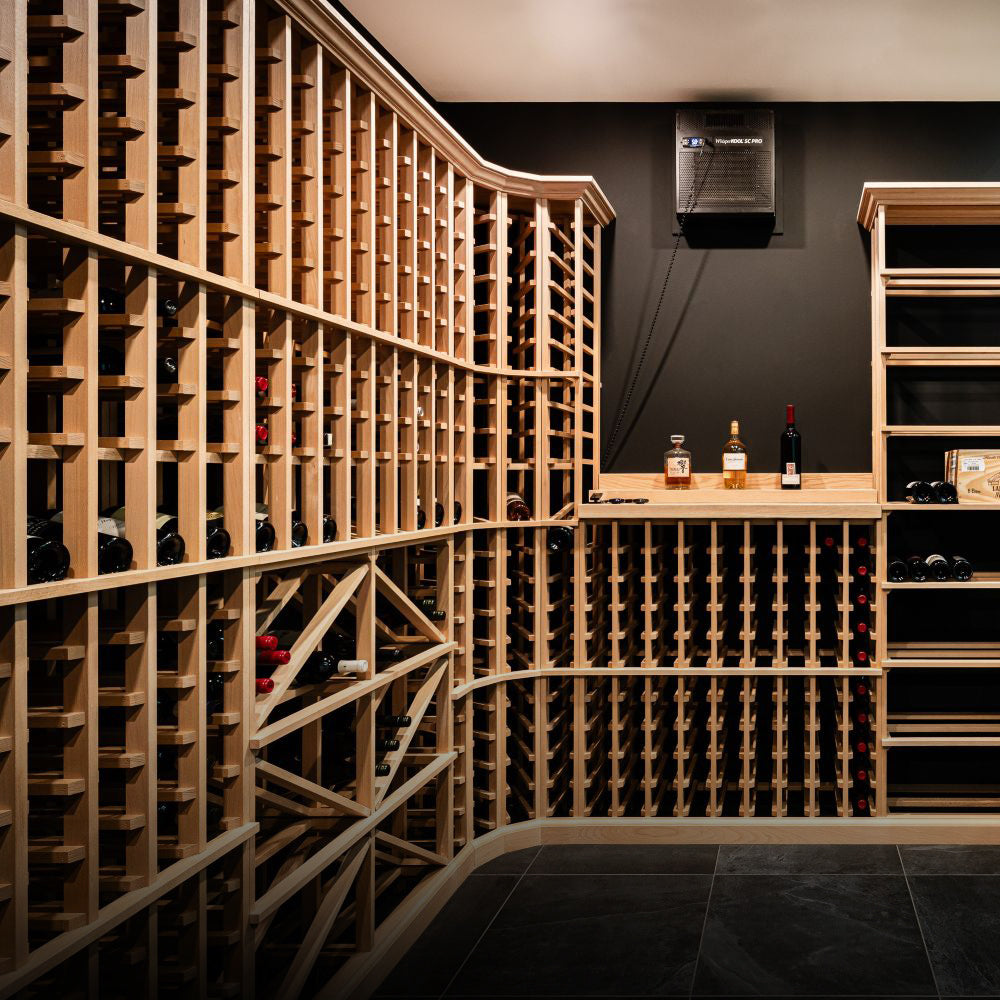
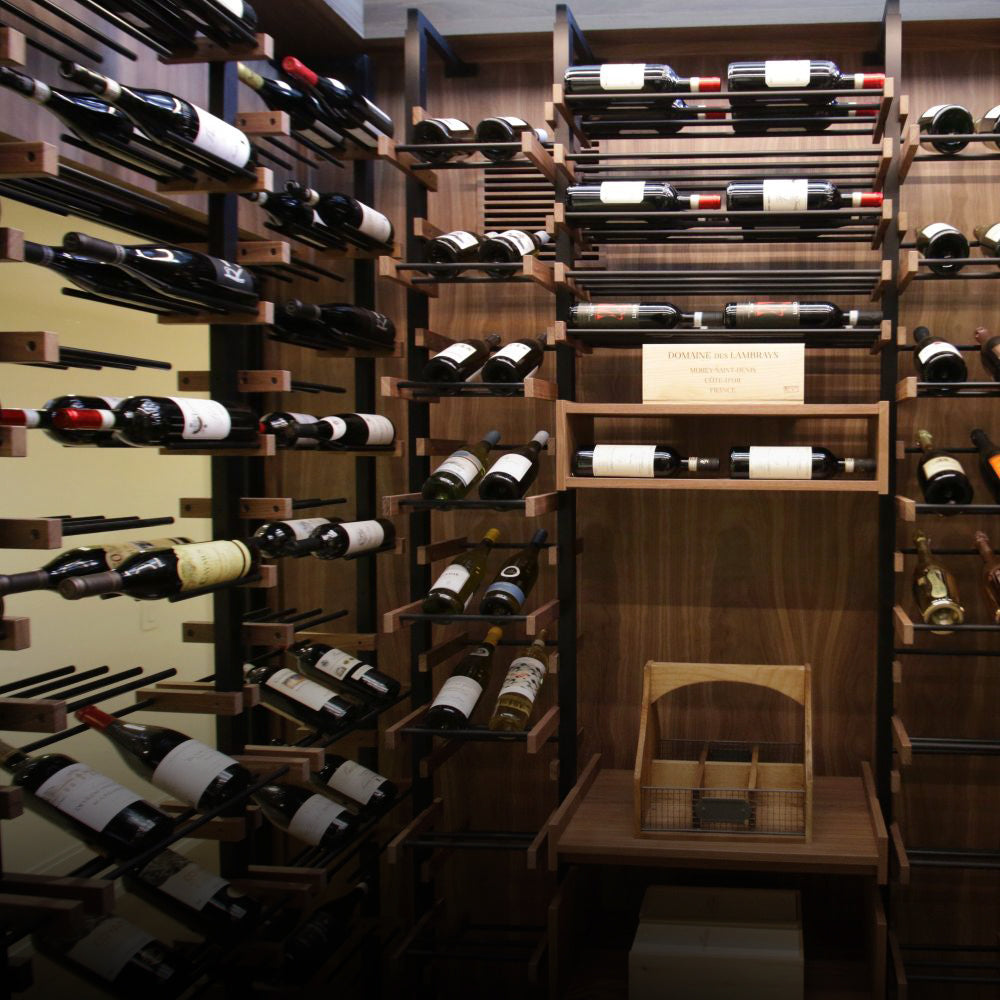
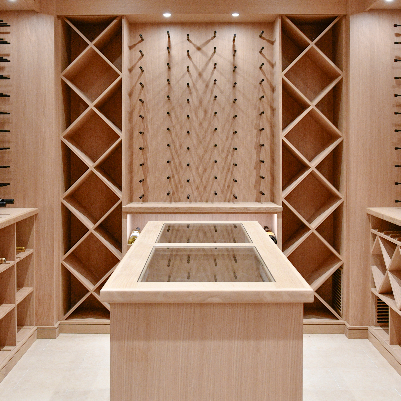
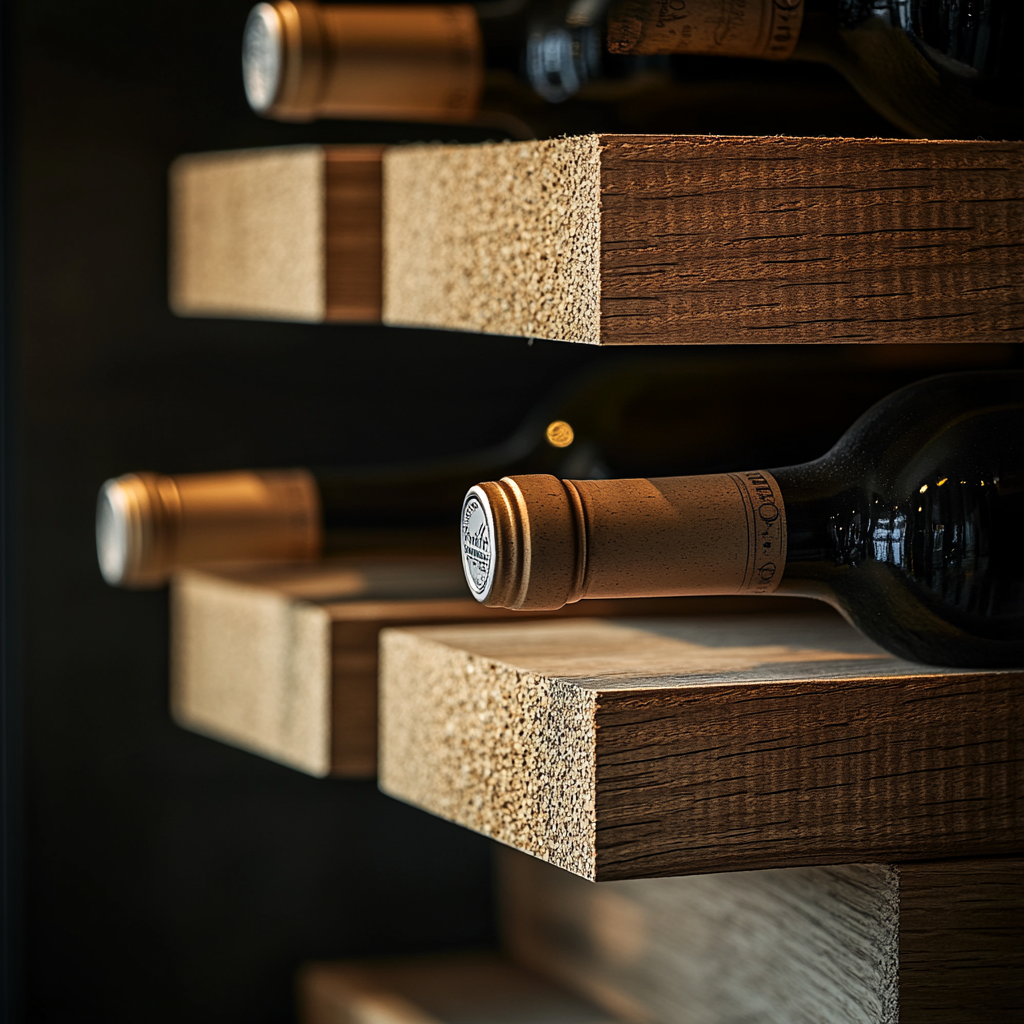
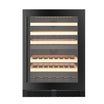
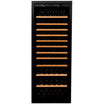
The result is a storage environment held to the same standard of intention that defines every other element of the Inn: considered, precise, and designed to last. The custom wine cabinet holds approximately 198 bottles across two independently cooled zones, one dedicated to red wine and one to white, with the cooling units concealed within a header assembly above the racking. The separation matters. Red and white wine require different storage temperatures, and a cabinet that compromises between them serves neither well. Here, each zone holds its own conditions quietly, without the engineering showing.
The materials were chosen with the island in mind. The interior is birch, stained and lacquered, a wood that belongs to this part of the world, rooting the cabinet in its surroundings as deliberately as everything else at the Inn. Glass doors span the full face of both units, letting the collection be seen without being disturbed. Inside, triple-deep horizontal rails hold the working bottles, angled display shelving brings selected labels forward for service, and a lower bin handles loose bottles and case overflow. Puck lights in the header and LED lighting throughout mean the cabinet presents well in every condition.
For Mike, the Fogo Island commission was personal from the outset, "Working directly with Ernst on this project and being on site to see it come together was something special. A custom wine cabinet has to earn its place in a room like this. We built it to belong there, and I think it does." When a property this considered asks you to build something that lives within it, the work goes beyond executing a specification. It requires understanding what the storage is for, how it will be used daily, and what it needs to communicate about the wine program it serves. The result is a space that complements, rather than competes with, everything around it.

Photo: Mike & Stefania Domazet, personal archives
Plan Your Stay This Season
Fogo Island Inn opens seasonally, and the 2026 season is worth planning around now. The property books quickly, and for good reason: there is nothing quite like it, and the people who have been once tend to come back. For those visiting for the first time, the window to secure a stay this season is narrow.
For Rosehill clients, we’re pleased to offer an exclusive 15% savings on stays in 2026 and 2027. This offer provides a rare opportunity to experience the Inn with preferred access and value. Visit Fogo Island Inn’s dedicated booking link (use hyperlink above) to explore availability and plan your stay.
Fogo Island Inn is the rare kind of place that stays with you. Not as a highlight on a travel list, but as a reference point: a reminder of what it feels like to be somewhere that has fully committed to being exactly what it is. If that is the kind of experience you have been looking for, it is waiting for you at the edge of the North Atlantic.
Rosehill Wine Cellars