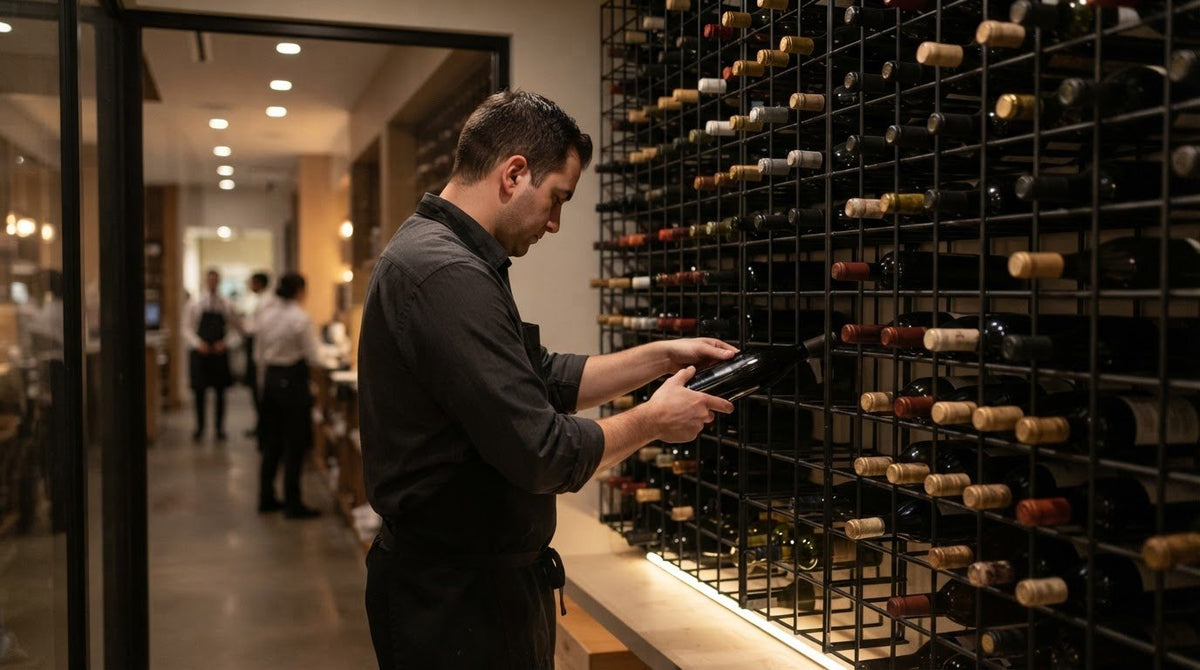
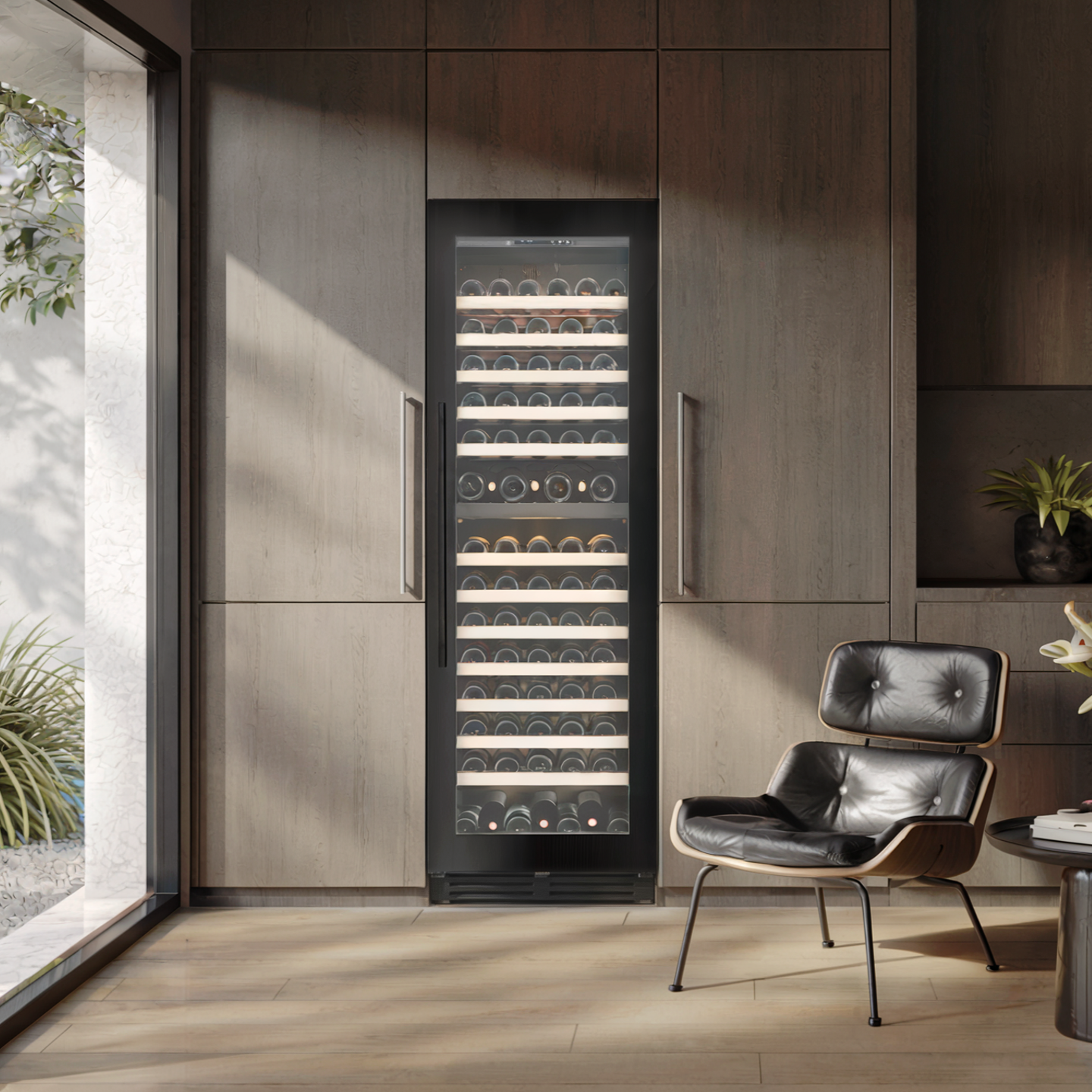
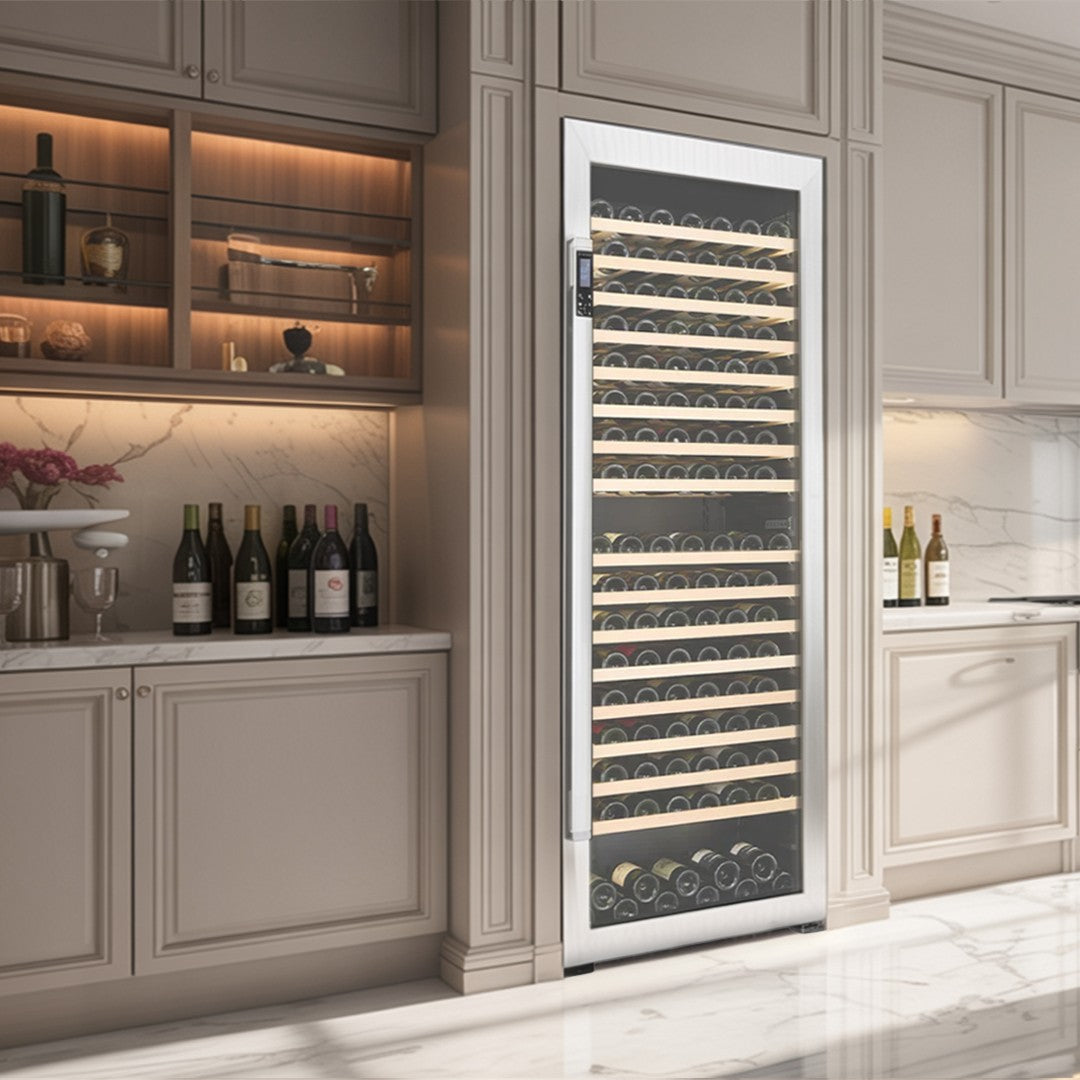
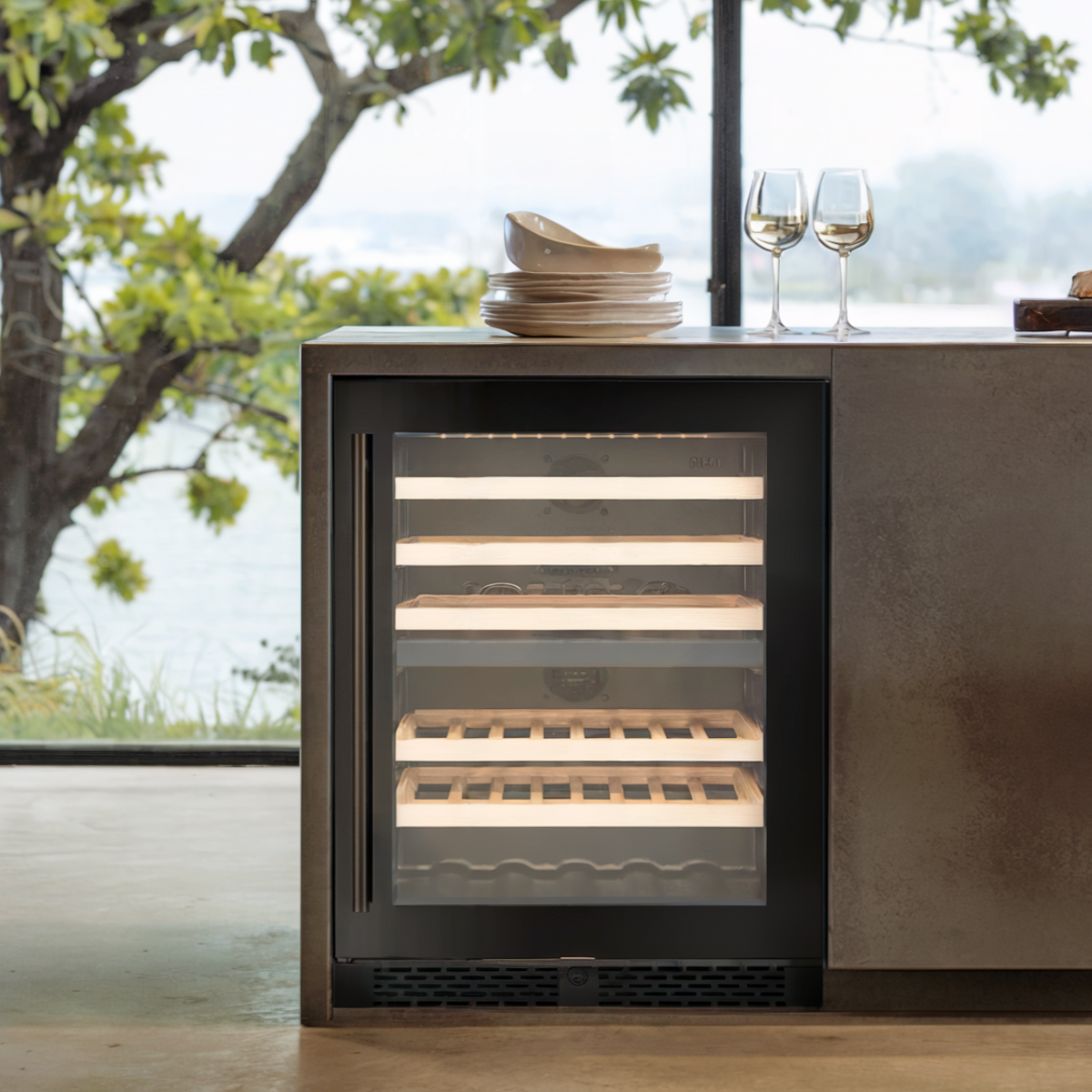
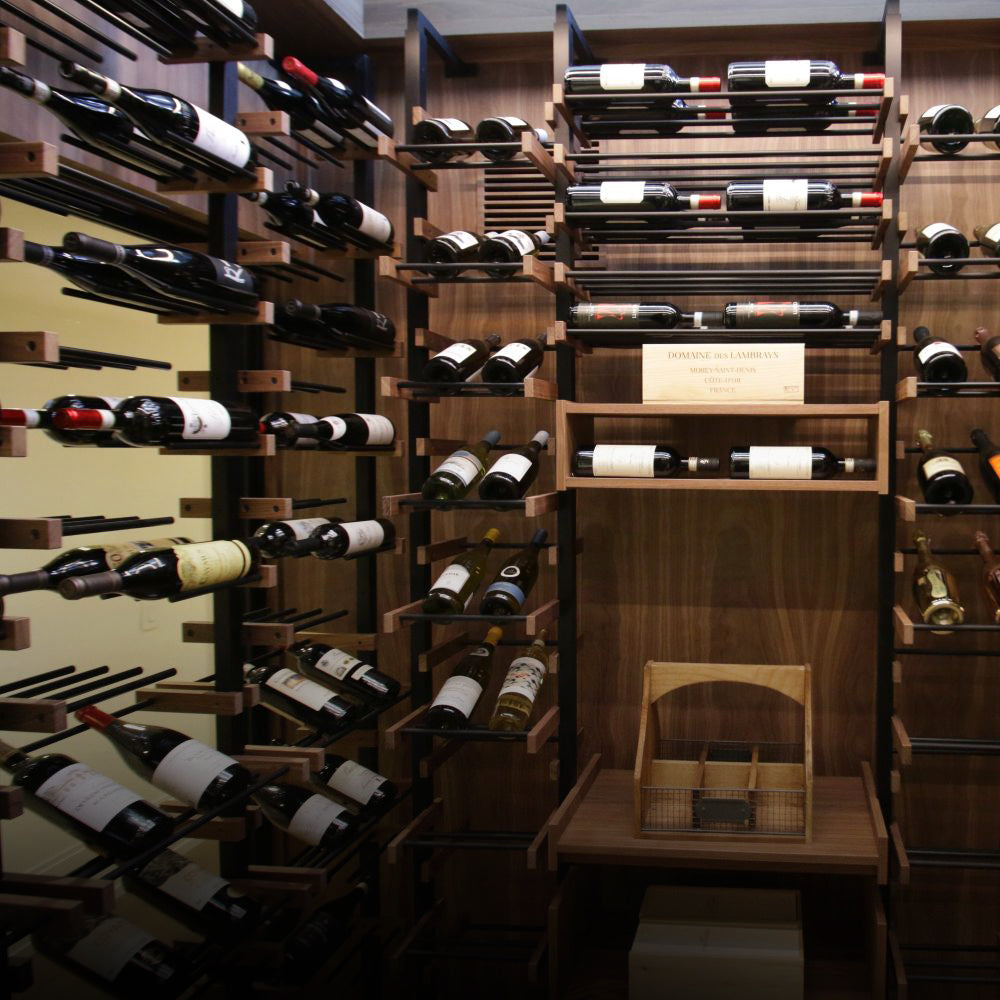



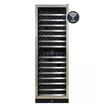




A shelf’s stated capacity is only part of its real-world limit. Retail wine store display racking structural load limits depend on shelf construction, support spacing, anchoring, and how the combined weight transfers to the floor. A bottle of wine weighs about 3 pounds, so a fully stocked display can place substantial weight on its shelves and supporting structure.
It’s easy to focus on how many bottles a rack can hold, but capacity also depends on its construction and installation. Understanding these factors helps you plan a display that balances accessible merchandising with dependable support.
This article explains what shelf ratings mean, how to account for floor loads, and why rack design and materials matter to structural integrity. You’ll also learn how bottle format, shelf depth, and weight distribution affect a display’s practical limits, helping you plan retail storage with greater confidence.
Key Takeaways
- Read a rack’s load rating in context: shelf construction, support placement, and installation all affect how capacity performs in a finished display.
- Plan for the combined weight of stocked wine and shelving, not just the capacity of an individual shelf.
- Consider materials and rack configuration together to support lasting stability in a commercial setting.
- Bracket placement and upright spacing influence how a display is supported and how its weight is distributed.
What Is a Wine Rack Load Rating?
A wine rack load rating states how much weight a rack or shelf is designed to support under specified conditions. When assessing the weight limits of retail wine displays, consider the rating alongside the rack’s supports, anchoring, and installation surface.
Wall and Gondola Stability
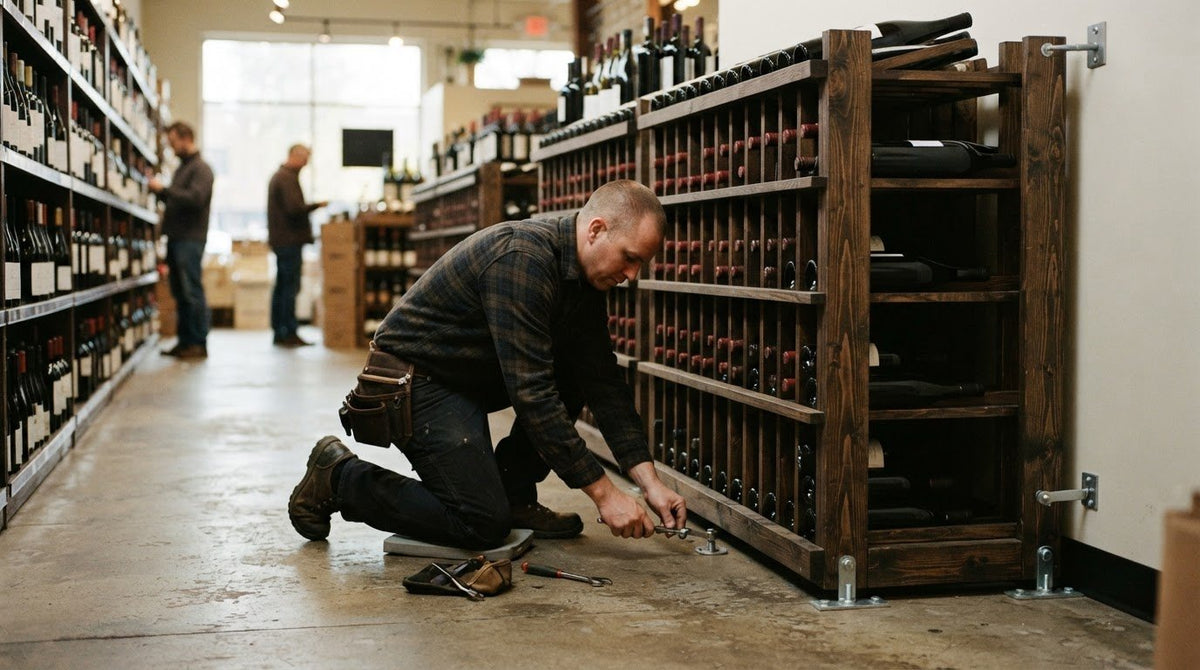
Wall displays transfer weight to a wall, while island gondolas rely on their bases and upright supports. A wall rack needs a secure connection to the structure behind it; a freestanding display needs a stable base and balanced loading. Secure wall-mounted racks to the wall’s wooden or metal framing, or to brick or concrete, not to drywall alone.
Some space-efficient designs hold up to nine bottles in a one-foot-tall section, and some hold about nine bottles per square foot. A wall-mounted rack section might carry a 250-pound rating, but that example is not a rating for every rack or installation. Wine cubes also concentrate bottles within defined compartments, so their capacity depends on the rack’s own design and support.
Display Installation Conditions
Earthquake risk, floor construction, and wall materials affect how a wine display can be secured and supported. Concrete and flexible floors, or walls with accessible framing, present different attachment conditions, so the rack design must suit the actual surface. Securing a wall display to the building’s supporting structure differs from placing an island gondola on a sales floor.
For a freestanding rack, the needed anchoring or bracing depends on its design and the floor conditions. A rack intended to stand independently should be assembled and loaded as designed; a system requiring attachment needs compatible support at its connection points. A wine cellar plan can coordinate display placement and racking; explore modern wine racking as one design reference.
Rules Affecting Retail Displays
Building, fire, and accessibility requirements may affect where a display sits and how it relates to customer paths. The applicable details depend on the facility and governing requirements, so avoid treating one rack rating as approval for every retail layout. The 2010 ADA Standards set requirements for built-in features and accessible paths in commercial facilities. ADA stands for the Americans with Disabilities Act. See the U.S. Department of Justice.
When planning accessibility, consider how a built-in display relates to customer routes through the store. A display’s load rating addresses weight support, not whether its placement meets the facility’s access or fire-safety requirements.
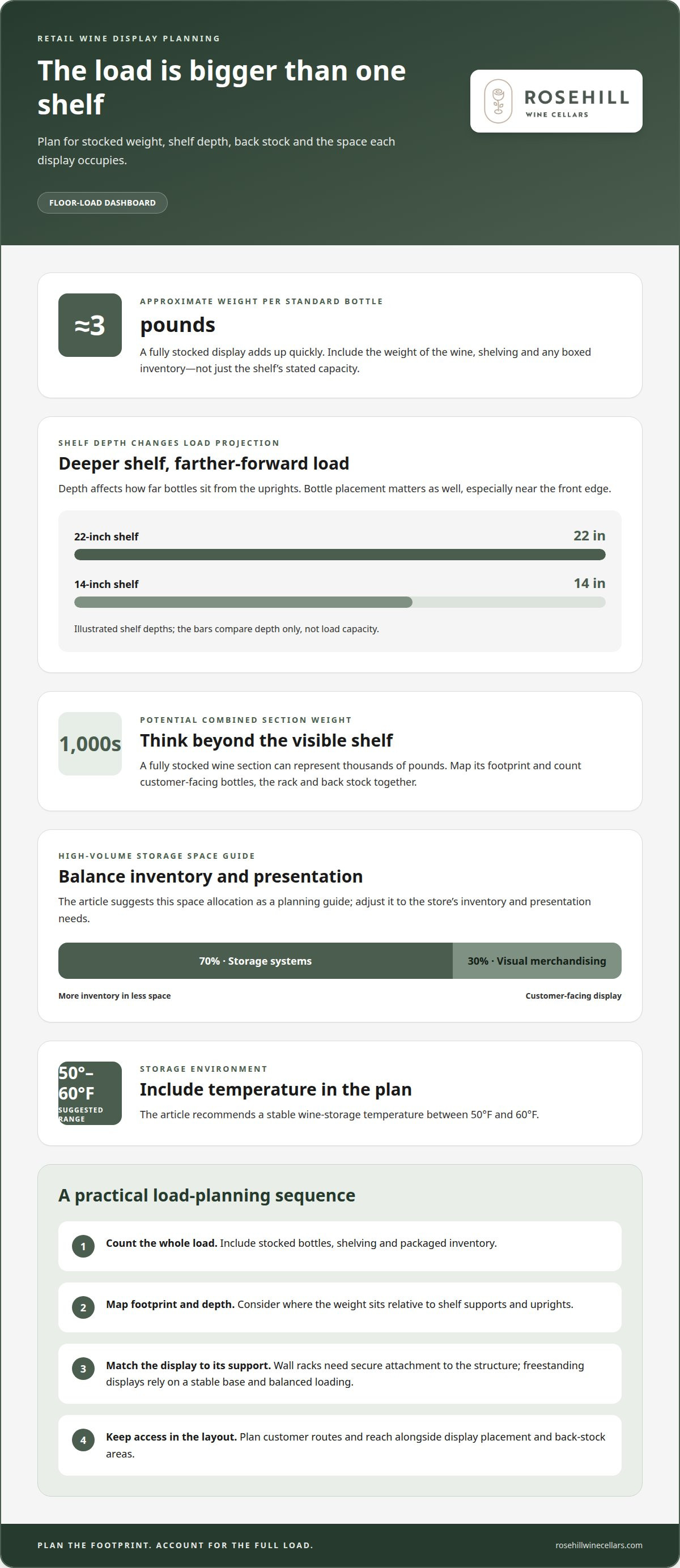
A standard wine bottle weighs about 3 pounds. Packaging adds weight, so boxed inventory must be counted as a complete unit when estimating the load placed on a shelf.
Floor-load planning for commercial wine storage
Floor planning accounts for the combined weight and footprint of stocked racks, not just individual shelf ratings. Shelf depth, bottle orientation, and back-stock placement all affect how weight is distributed across a retail floor when evaluating retail wine store display racking structural load limits.
Storage Depth and Load Projection
Storage depth is how far a shelf extends from its support; load projection is how far the weight sits from that support. Both matter: deeper shelves place bottles farther forward, changing how the shelf and its supports carry the load.
A 22-inch shelf and a 14-inch shelf can behave differently under load, even when each holds wine. For example, bottles at the front of a deeper shelf project farther from the uprights than bottles on a shallower shelf. That difference makes depth and bottle placement relevant to rack selection and floor planning.
Map each display’s footprint alongside its stocked weight. A fully stocked wine section in a liquor store can represent thousands of pounds, so account for the entire section, not just its most visible shelf. Allow enough room for customers to reach bottles without disrupting the display.
Upright and Horizontal Storage
Upright storage positions bottles vertically, while horizontal storage rests them on their sides. The right combination depends on turnover and how long bottles remain in wine storage. Upright displays can suit inventory expected to sell quickly, keeping labels forward for clear merchandising.
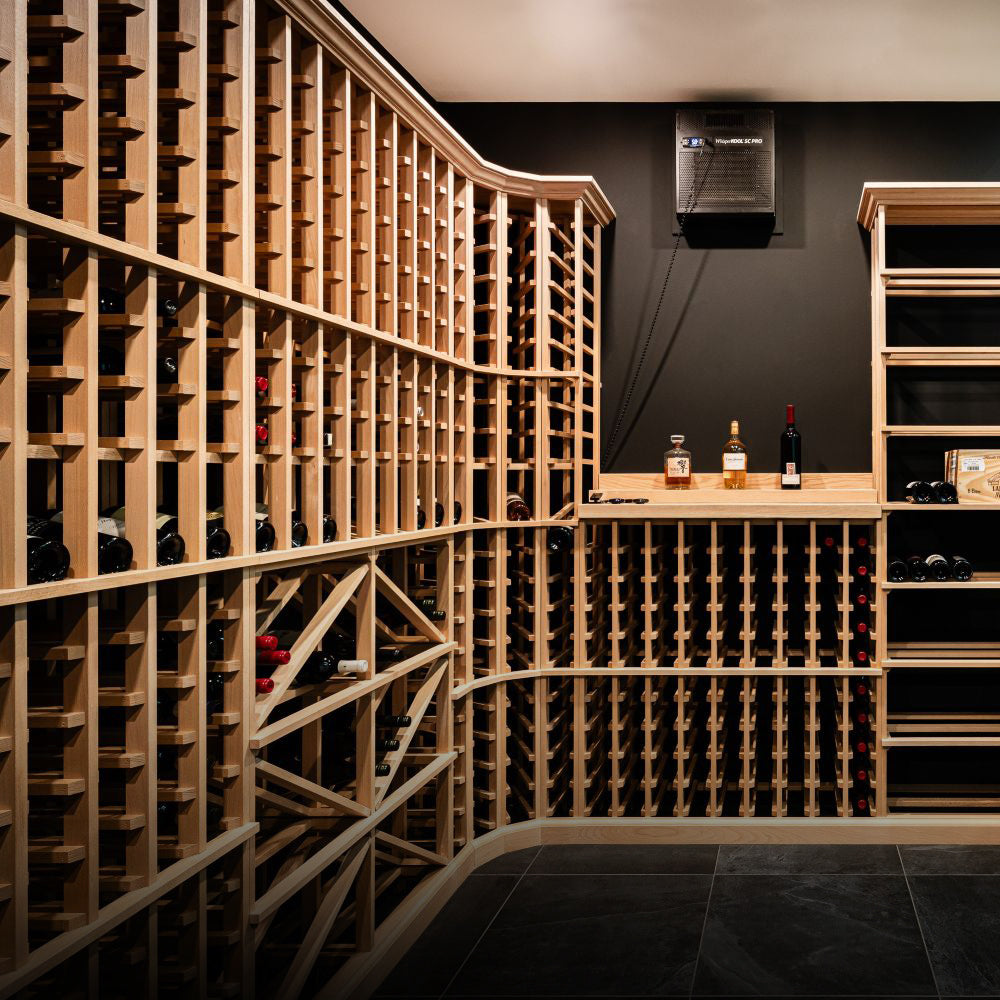
Store natural-cork wine horizontally when it may remain unsold for many months or be kept for years. Stable, horizontal positioning helps protect the cork and the wine’s chemistry. A retail plan can reserve upright positions for fast-moving presentation bottles and place longer-term inventory horizontally.
Back stock adds weight beyond the bottles facing customers. A display backed by additional cases carries the rack, visible bottles, and stored cases together. Include the back-stock area in the floor plan, and arrange heavier inventory so its weight is not concentrated on one shelf or a small area.
A thoughtful wine storage layout can coordinate customer-facing presentation with back stock, while balancing depth, access, and durability.
At the broader floor-planning level, include retail gondola shelving, freestanding shelves arranged in rows on a sales floor, in the inventory load picture: it carries thousands of pounds of merchandise every day. Show the shelving footprint and stocked weight alongside wine racks and back stock, so the layout reflects the combined demands of customer-facing displays and stored inventory. This also helps balance densely packed storage with open browsing and access areas.
For high-volume establishments, the page suggests allocating 70% of storage space to storage systems that hold more inventory in less space and 30% to visual merchandising. Treat that balance as a planning guide, adjusting the layout to suit the store’s presentation and inventory needs. Environmental planning also belongs in the storage design: the page recommends a stable wine-storage temperature between 50°F and 60°F, and walls with insulation rated to resist heat flow at least as well as a standard R-19 layer. Considering space, weight, temperature, and insulation together helps create a plan that supports both stock management and the intended customer experience.
Commercial-grade rack durability
Commercial-grade durability depends on more than a high load rating. Materials, connections, installation, and everyday handling all affect how a fixture performs as inventory changes. Read the rating alongside its stated conditions, and match the complete system to the bottles and components it must support.
That figure applies to the system’s specified configuration, not automatically to every shelf or setup. For an accurate comparison, distinguish shelf capacity from total system capacity. Then consider bottle distribution, possible shelf reconfiguration, and how the floor layout affects the installed fixture.
Freestanding wine rack costs depend on materials, capacity, finish, and configuration; the price depends on the project and is provided after a quote request. A compact display for a limited selection and a large modular installation require different components. Compare intended use and layout before assessing cost, rather than treating capacity alone as a measure of value.
Long-term durability also depends on how a rack is used and maintained. Changing inventory, moving components, or loading shelves unevenly can place different demands on a fixture. A display for varied bottle sizes, for example, needs compatible components and a configuration designed for those formats. Keep the rack assembled and loaded as designed to preserve its intended stability.
Modular rack systems can adapt as merchandising needs change. Their sections and components can support a layout that grows or shifts, provided each configuration follows its design and load rating. That flexibility makes them relevant to modern wine displays, where presentation and storage may need to work together. Browse wine rack options to consider how rack form and intended use align.
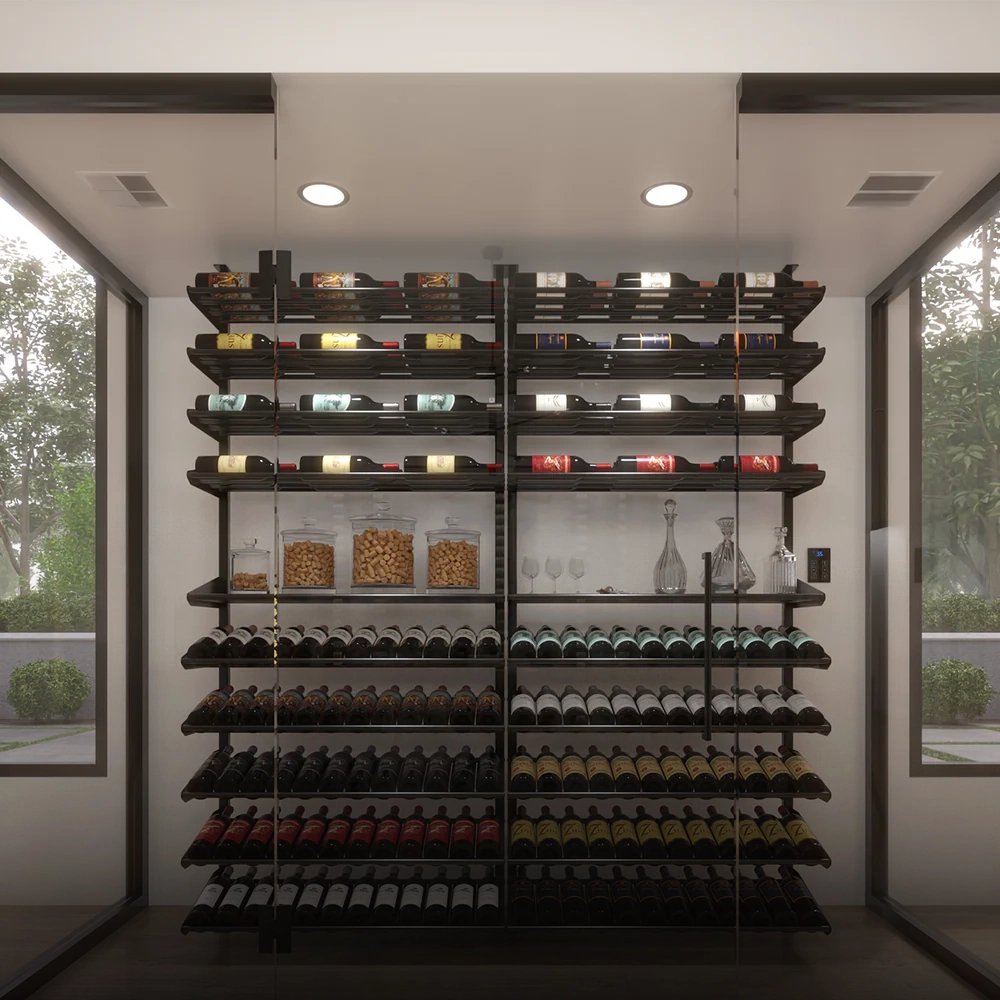
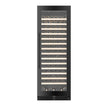
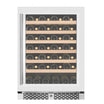
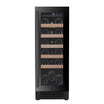
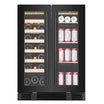
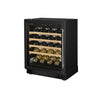
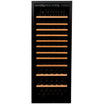
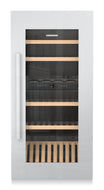
Retail presentation can affect which rack configuration makes sense. In 2026, label-forward merchandising and modular display systems are identified as significant retail wine display trends. A display that makes labels easy to see may serve a different purpose from storage designed primarily for back-stock, so choose components that suit the intended use and can be maintained in their assembled configuration. The Bin 3 freestanding wine storage unit holds 48 bottles, while the Matte Black Modular Wine Display Showcase holds 16 bottles. These capacities help distinguish the products, but do not replace checking the installation requirements and the rating for the complete setup.
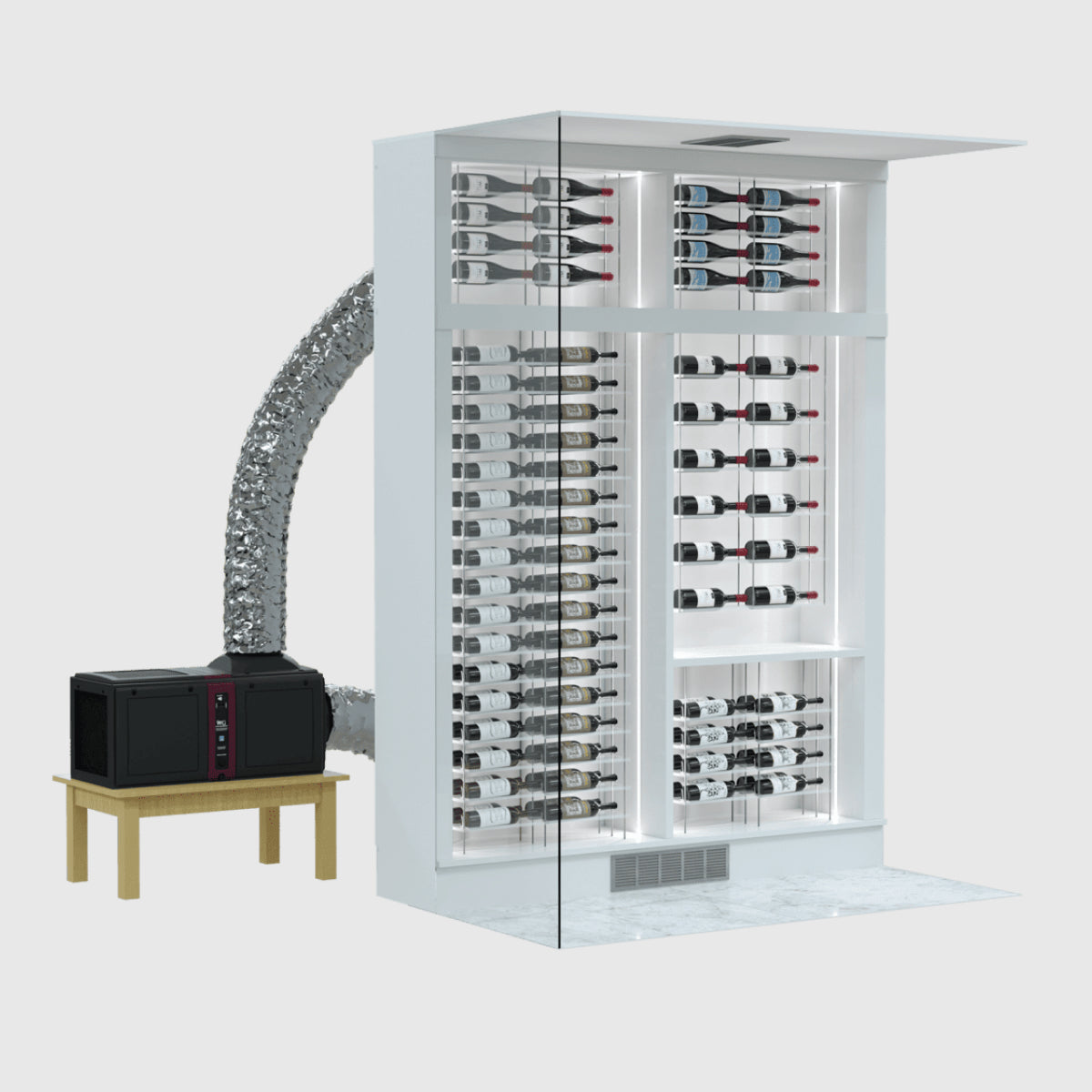
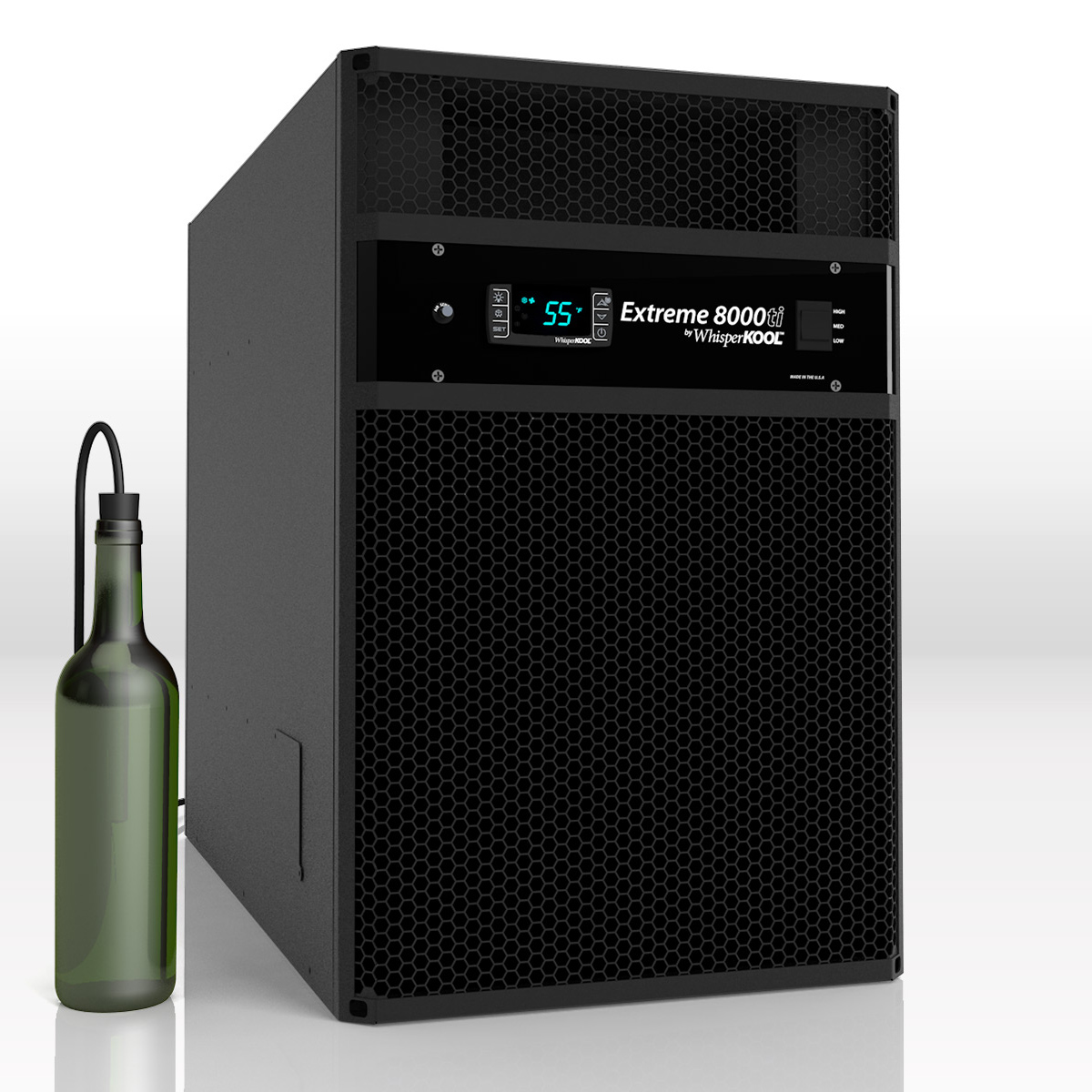
Durability also involves the environment around the rack, especially when wine is stored in a commercial cellar. Commercial wine cellars typically have relative humidity, the amount of moisture in the air, between 50% and 70%. Where cooling equipment is part of the installation, account for its operating needs and its effect on the surrounding display. The page recommends keeping noise levels under 35 dB, a measure of sound loudness, for ductless split wine-cellar cooling systems, which cool without a network of air ducts. Together, appropriate environmental conditions and a well-planned layout can help support reliable storage while keeping bottles accessible for staff and customers. Review the rack, cellar conditions, and cooling arrangement as parts of one installation, rather than treating the fixture as an isolated purchase. That approach makes it easier to select a durable system suited to both daily merchandising and ongoing storage.
Racking load capacity and structural integrity
Capacity depends on rack design, shelf configuration, and weight distribution. For a useful comparison, distinguish an individual shelf’s rating from the complete display’s capacity.
Capacity by Rack Material and Design
Material alone doesn’t determine a wine rack’s load limit; design and configuration matter too.
Those figures describe gondola shelving, not every wood, metal, or modular wine rack. Wood and metal fixtures can differ in shelf spans, supports, and connections, so material labels alone don’t establish capacity. For modular systems, consider how the assembled components and chosen layout affect the complete display.
Shelf, Bay, and Unit Ratings
A shelf rating applies to one shelf; a bay rating applies to a shelving section; a total-unit rating covers the assembled rack. These are different measures, so identify which one a capacity statement describes before comparing displays. A shelf rating, for example, cannot automatically be treated as the capacity of every shelf in its bay.
Also distinguish evenly distributed weight from weight concentrated at one point. Bottles arranged across a shelf load it differently from a heavy case placed near one edge. Base your capacity plan on the rating for the exact shelf, bay, or unit being loaded, rather than adding unlike ratings together.
Load Testing and Safety Factors
A safety factor is a design allowance between expected use and the point at which a component may fail. It does not mean retailers can exceed a stated shelf rating. No single testing figure in the available facts applies to every retail shelf in the United States.
Load-testing methods and rating conditions can vary by rack design and configuration. Use the stated capacity for the assembled shelving and its intended installation, and keep routine stock within that limit. Changing shelf spans or supports, for example, can make a previous rating unsuitable for the revised arrangement.
Overload Risks and Failure Signs
Overloading can cause shelves to bend, connections to loosen, or displays to become unstable. Watch for visible sagging, shifting uprights, separated joints, and bottles that no longer sit securely. These signs matter in a busy retail layout, where customers pass near wine displays.
To estimate required capacity, multiply the number of bottles by about 3 pounds per bottle, then add packaging and other stored items. A collection of 1,000 bottles weighs approximately 3,000 pounds before packaging. Divide inventory across appropriately rated shelves, and account for replenishment so newly added stock doesn’t push a shelf beyond its stated limit.
Bracket design and upright spacing
Brackets connect a wine display to its support, while upright spacing determines where shelves attach. Both affect how a mounted display carries its load and fits the room. A bracket’s shape can influence presentation, but appearance alone doesn’t establish capacity. Match the brackets and upright arrangement to the rack design and intended bottle layout.
Floor-to-wall brackets can offset a wine display up to 1′ from the wall. This arrangement makes the display project forward while adding a floor connection and a wall connection. The bracket makes a 90° turn at the top to anchor back to the wall. That shape can suit a display needing a defined offset, but it doesn’t replace the rack’s load rating.
Angled brackets can tilt at angles up to 37°. An angled presentation can bring labels into view, but the tilt changes how bottles sit and how the rack projects into the room. Consider the angle alongside bottle format, shelf layout, and customer access. A visually refined selection still needs brackets suited to the intended configuration.
Some hidden mounting brackets have a visible footprint 50% smaller than standard brackets. Their reduced visibility can support a clean, premium finish, especially where the fixture is part of the merchandising. A smaller visible bracket does not mean the display requires less support. The complete mounting arrangement, including its attachment points and spacing, remains central to structural integrity.
Upright spacing sets the intervals where shelves or brackets connect to the rack. Position supports to suit the planned shelves so bottles can be distributed across the intended sections. Changing shelf placement in a modular display changes how supports relate to loaded shelves. Keep the arrangement consistent with the rack’s design rather than moving components for appearance alone.
Choose brackets based on desired projection, bottle presentation, and the rack’s specified configuration. A wall display with a forward tilt, for example, needs a different bracket arrangement from one that sits close to its support. Finish and visibility guide the aesthetic choice; the design and its stated capacity guide the structural choice. Professional wine racking selection can help align the display style with the intended layout.
Rosehill Wine Cellars
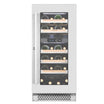
Rosehill Wine Cellars can help you consider racking and storage options alongside your display layout. Turn to the company when you’re weighing how a retail arrangement should balance bottle presentation, available space, and practical storage needs. Premier Cru Classic Racking and Premier Cru Modern Racking offer distinct design directions, while a Vantaggio V300 Wine Cabinet or Wine Cooling Units may suit a project that also needs dedicated wine storage or cooling.
Rack capacity still depends on the specific configuration, supports, and installation conditions. Use the load-rating principles above to guide planning, then consider how your selected products fit the space and intended use. Rosehill Wine Cellars offers wine display and storage options to support this planning.
Shape a Display That Lasts
Planning for retail wine store display racking structural load limits is an opportunity to create a merchandising environment that feels considered and dependable. Treat the display as part of the store’s broader design, allowing for evolving inventory, clear customer movement, and a presentation that suits the space. Build structural decisions into the initial layout rather than leaving them until fixtures are in place.
Bring your priorities together: the desired look, storage needs, and installation conditions. Rosehill Wine Cellars offers custom wine cellar design and build services, as well as wine racks and cabinets, to help you plan a solution for your space. Contact Rosehill Wine Cellars to discuss your wine storage project.
Discuss your wine display plans with Rosehill Wine Cellars and take the next step toward a space designed with care.
Frequently Asked Questions
What Affects Shelf Weight Capacity?
Shelf capacity depends on material, span, support arrangement, and weight distribution. The length between supports matters because a longer unsupported span can respond differently under the same load. Bottle shape and packaging also affect how stock fits. A mix of standard and broader formats, for example, may leave less room for even placement than uniform bottles.
How do wine bottle orientation and shelf spacing affect rack capacity and stability?
Orientation and spacing determine how many bottles fit securely and how their weight sits on each shelf. Upright rows can make labels easier to view, while horizontal positions suit racks designed to cradle bottles. Leave spacing suited to the rack’s intended bottle format; forcing wider bottles into narrow positions can disrupt orderly placement. For mixed formats, plan dedicated spaces rather than squeezing every bottle into identical slots.
How much does a standard wine bottle weigh, including packaging?
A standard wine bottle weighs about 3 pounds. Packaging adds weight, so count the complete packaged unit when estimating shelf loads.