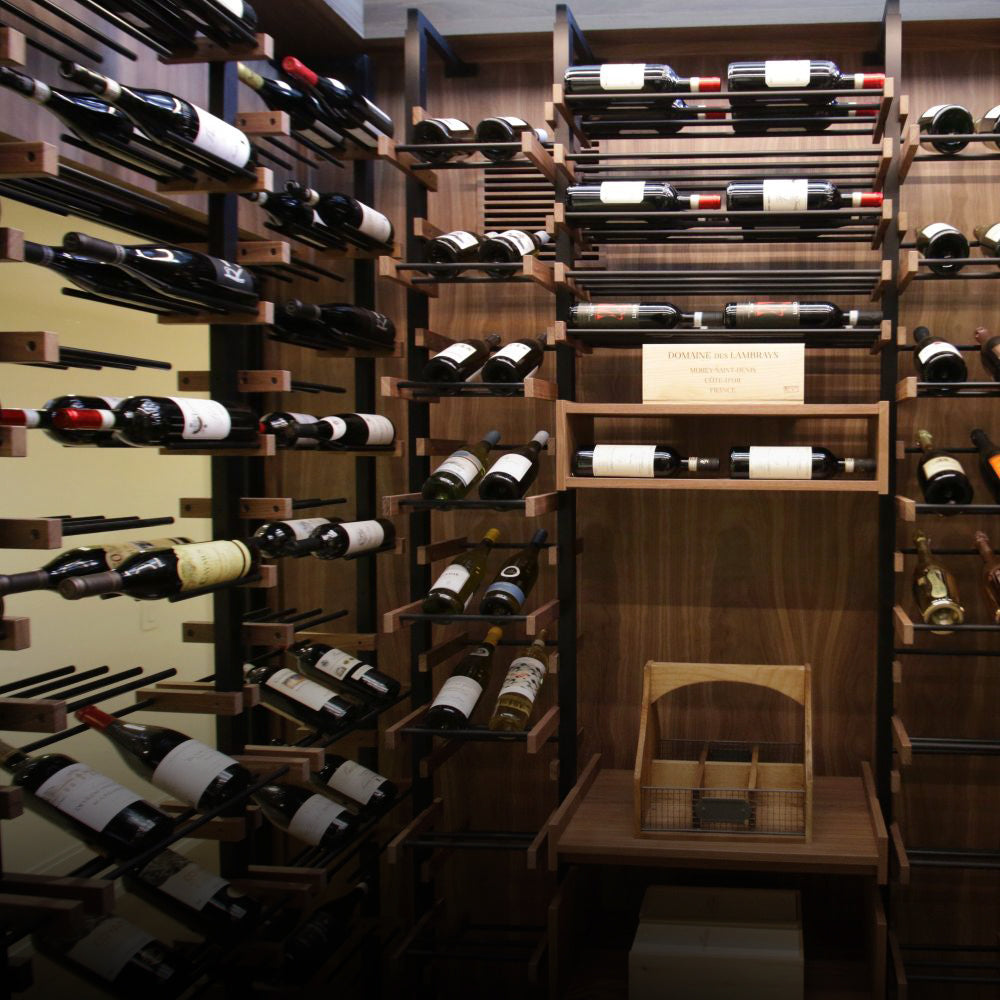



















A lot of collectors treat their wine cooling system as a set-it-and-forget-it investment. It holds temperature, it hums quietly in the background, and it seems fine. Summer is when that assumption gets tested. Whether you are managing a cellar in Florida's heat and humidity, a wine room in a Southern Ontario home during a July heat wave, or a climate-controlled cabinet in the American Southwest, sustained high temperatures place your cooling system under conditions it was designed to handle, but not indefinitely without care.
A properly maintained unit will protect your collection through the hottest months of the year. One that has been left unchecked will not show its weakness until you need it most. The damage, when it comes, tends to be quiet and cumulative: a collection that seemed fine right up until the point it wasn't. This guide covers the warning signs worth knowing, the inspection steps to complete before the heat peaks, how humidity and dry heat create different risks depending on your climate, and when a professional needs to be involved before summer catches your system unprepared.
Why Hot Summers Put Cooling Systems Under Real Pressure
Every wine cooling system is designed to operate within a defined ambient temperature range. When the temperature surrounding the unit climbs toward or beyond that ceiling, the system has to work harder and cycle more frequently to maintain its target interior temperature. In climates with moderate summers, this rarely becomes a problem. In regions where heat is sustained for weeks at a time, the cumulative load is a different matter entirely.
Sustained high temperatures mean your cooling unit is running longer and resting less. Longer run cycles accelerate wear on the compressor, one of the most critical and most expensive components in any cooling system. Condenser coils work less efficiently as the surrounding air temperature rises, because they rely on the temperature differential between the refrigerant and the surrounding air to release heat. Reduce that differential and you reduce performance, at the precise moment the season is demanding the most from the equipment.
None of this means your system will fail. It means summer is when a marginal system reveals itself, and when a well-maintained system justifies the investment in keeping it that way. As we outlined in our spring maintenance guide, the weeks before the heat peaks are the best time to catch issues before they become failures.
Warning Signs Your Cooling System Is Under Stress
The most reliable way to catch a struggling cooling system is consistent monitoring. A wireless thermometer with a data log, placed inside your cellar or wine cabinet, will reveal patterns that a single reading never would. If you are not already tracking temperature over time, start now, before summer arrives.
Beyond the data, there are several warning signs worth knowing:
The unit is running almost continuously. A cooling system that rarely cycles off is working harder than it should to maintain its set temperature. This may mean the ambient temperature has risen beyond the unit's comfortable operating range, or that something, a dirty condenser coil, a failing component, or inadequate insulation, is reducing its efficiency.
Interior temperatures are climbing despite the thermostat setting. If your cellar is reading 18°C when you have it set to 13°C, the system is not keeping pace. This is not a setting problem. It is a performance problem, and it requires investigation before the summer peak arrives. For a full overview of why target storage temperatures matter so much for wine, our guide to wine storage and serving temperatures covers the science in detail.
Unusual sounds from the unit. A compressor that labors, clicks irregularly, or produces sounds it didn't make last year is a unit worth having inspected. These are rarely false alarms.
Ice buildup on the evaporator coils. A thin layer of frost is normal under some operating conditions. Heavy ice accumulation, particularly on a unit that is running constantly, usually signals restricted airflow, a refrigerant issue, or a dirty evaporator coil, all of which reduce cooling capacity at exactly the time you need it most.
Humidity readings outside the target range. Ideal cellar humidity sits between 50 and 70 percent, with 60 percent being the standard reference point for cork preservation. If your readings have shifted significantly in either direction, the system may be compensating, or failing to.

The Pre-Summer Inspection: What to Check Before the Heat Arrives
A cooling system that enters summer in good condition will manage the season. One that enters summer already compromised will not. The checklist below covers the most important inspection points, several of which require only a few minutes and no tools.
Clean the condenser coils. Dust and debris on condenser coils reduce the system's ability to release heat, directly degrading performance as ambient temperatures rise. Refer to your unit's manual to locate the coils, and use a soft brush or vacuum attachment to clear them carefully. This one step has a measurable impact on efficiency and is easy to overlook because it happens out of sight.
Inspect and clear the exterior venting. Through-wall and ducted wine cellar cooling systems exhaust heat through venting to the outside or to an adjacent space. That vent must be clear of obstructions, debris, and foliage. A blocked exhaust vent in summer can cause a cooling unit to overheat and shut down on thermal protection, at best at an inconvenient moment.
Check the door seal. The cellar door is consistently one of the most common sources of thermal and humidity leakage. Close the door on a piece of paper: if you can pull it out without resistance, the seal is no longer tight. Replacing a door gasket is a straightforward fix. Ignoring a leaking door seal in peak summer heat is not.
Verify temperature accuracy. Place an independent digital thermometer inside your cellar for 24 hours and compare its readings against your unit's display. Discrepancies of more than a degree or two warrant a thermostat calibration or sensor inspection. You want to know your cellar is at 13°C, not assume it.
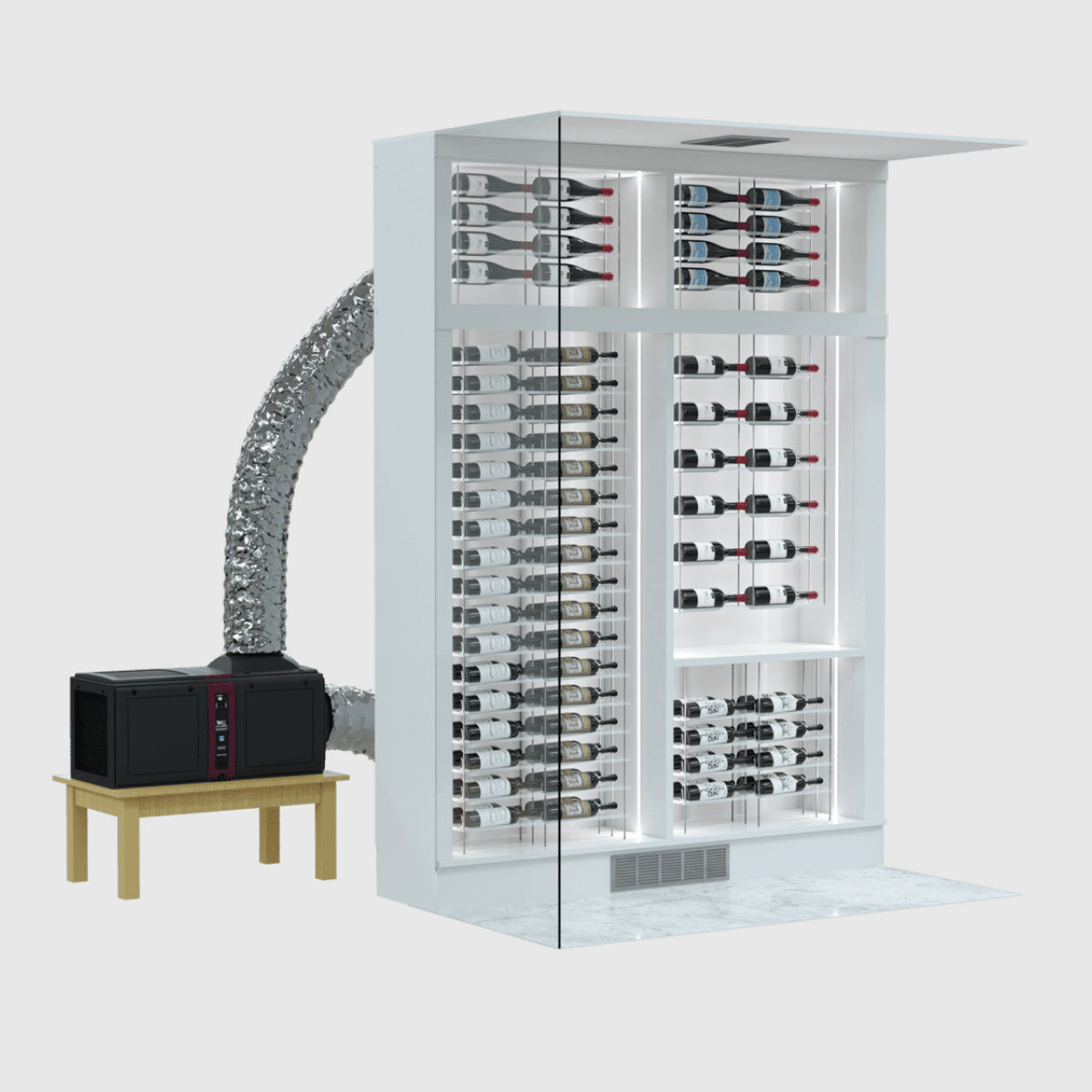
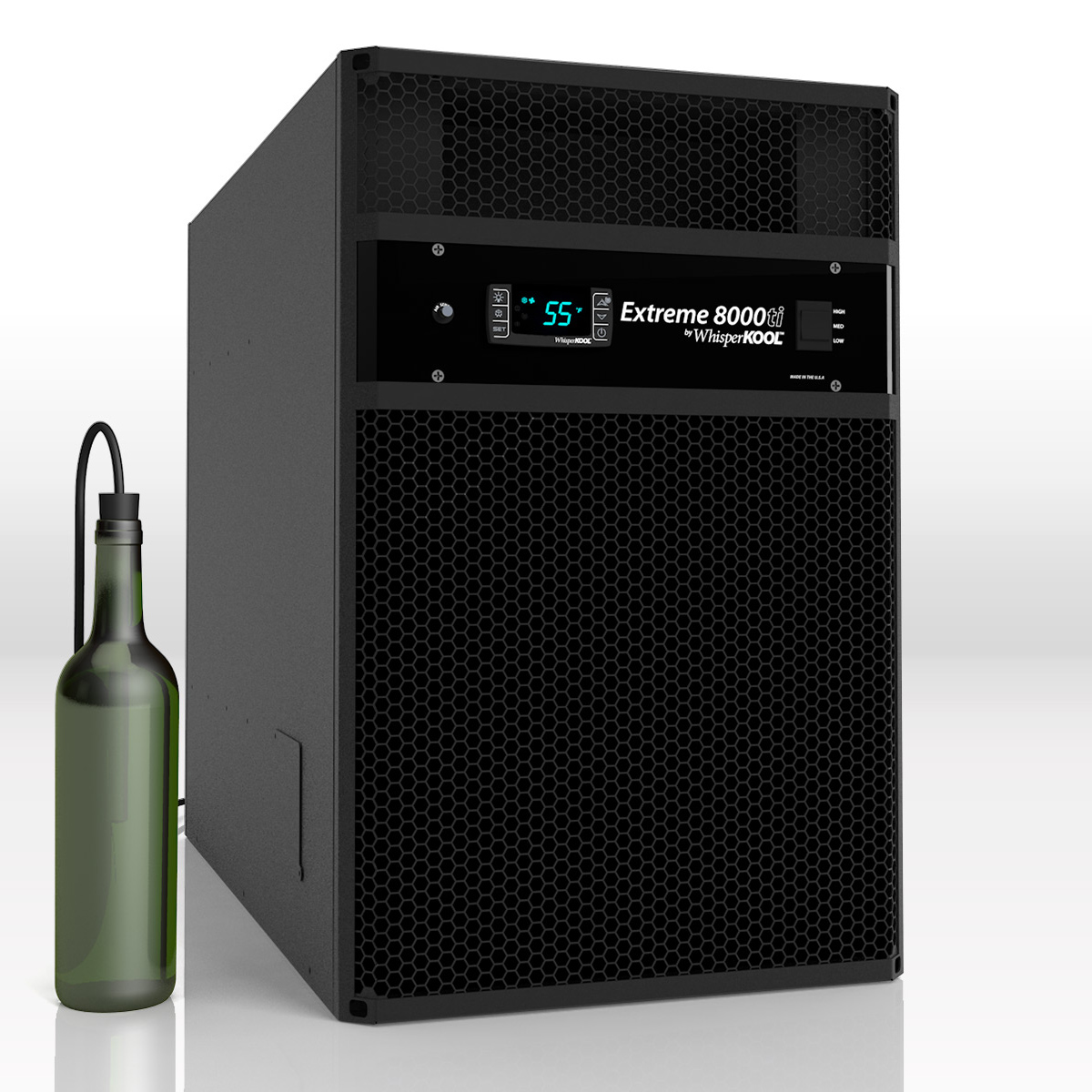
Confirm proper clearance around the unit. Cooling units, including self-contained CellarCool and WhisperKOOL systems, require adequate airflow around them to operate efficiently. Shelving, cabinetry, or stored materials placed too close to the unit can restrict that airflow and cause the system to run hotter than it should. Check your clearances against the manufacturer's specifications.
Inspect insulation and the cellar envelope. A cellar's thermal performance depends on its insulation. Walk the perimeter and look for any signs of moisture intrusion, cold spots that suggest insulation gaps, or areas where warm air might be infiltrating. A single compromised section of insulation can significantly increase the load on your cooling system.
The inspection above addresses the mechanical and structural side of summer readiness. There is a second variable that runs parallel to all of it, one that does not show up on a condenser coil or a door seal, and that behaves differently depending on your climate.
Temperature gets the most attention in wine storage discussions, but moisture is an equally active variable in summer, and the problem looks different depending on where you live. Hot and humid climates, Florida, the Gulf Coast, and parts of the Southeast, press your cooling system to manage a constant moisture load alongside temperature. Hot and dry climates, Southern California, the Southwest, and arid inland regions, create the opposite risk: ambient humidity can drop low enough that corks begin to dry out, compromising the seal and allowing slow oxidation to take hold over time.
The target range in either case is the same: cellar humidity between 50 and 70 percent, with 60 percent being the standard reference point for cork preservation. A hygrometer is the essential monitoring tool here. Read it over several days rather than once, and track the pattern rather than a single snapshot. Seasonal shifts can move humidity meaningfully in either direction, and catching the trend early is far easier than correcting it after the fact.
In humid climates, if moisture is running high despite your cooling system, check for intrusion points: condensation on cold pipes, floor seepage after heavy rain, or insufficient drainage near the cellar perimeter. In dry climates, if readings are consistently falling below 50 percent, a small humidifier placed near the cooling intake, or a shallow water source within the cellar, can provide enough relief to protect your corks without overwhelming the system. A dedicated cellar humidifier is worth considering for any collection where low humidity is a persistent seasonal issue.
Summer Weather and Power Outages: A Contingency Worth Having
Summer storms, whether hurricane-season systems along the Gulf and Atlantic coasts, severe thunderstorm cells across the Midwest and Southeast, or the monsoon patterns of the Southwest, can interrupt power at the worst possible time. A wine cellar without power is not immediately a crisis. A well-insulated cellar with good thermal mass will hold its temperature for a meaningful period of time, the exact duration depending on insulation quality, cellar size, ambient outdoor temperature, and how recently the door was last opened.
The practical steps are straightforward. Keep the cellar door closed during an outage: every opening accelerates temperature rise. Know your cooling unit's restart behavior after power is restored, specifically whether it resumes automatically or requires manual reset. Some units need a brief delay before restarting after power fluctuations; forcing an immediate restart can stress the compressor. If outages are a regular occurrence in your region, a battery backup or generator circuit dedicated to your cooling system is worth serious consideration for any collection of significant value.
When to Call a Professional
Not every maintenance task belongs on a DIY checklist. Refrigerant levels, electrical components, and detailed diagnostic work require qualified technicians, and attempting them without the right training can void warranties and create new problems.
For collectors in hot climates, a professional pre-summer inspection is one of the highest-value investments you can make in your collection. A technician who knows wine cellar cooling systems will check what you cannot: refrigerant charge, electrical connections, compressor health, and the condition of internal components that are invisible from the outside. Catching a failing component in May is a manageable service call. Catching it in August, when technicians are at peak demand and your cellar is already warming, is a more stressful and more expensive situation.
Rosehill's Annual Maintenance Plan is specifically designed for collectors who want their cooling system professionally serviced on a scheduled basis, before problems surface rather than after. Whether you are managing a cellar in Florida, in Ontario's summer heat, or in any other region where the season puts real demands on cooling equipment, it is the most straightforward way to ensure your system is ready for what's coming.
Your Collection Is Only as Protected as Your Cooling System Allows
The wine in your cellar represents years of selection, investment, and anticipation. The cooling system protecting it is not a passive element in that equation: it is an active, mechanical piece of equipment that requires care to perform. A hot summer is unforgiving of neglect, and generous to preparation.
If your system is due for a service, or if any of the warning signs above feel familiar, now is the right time to act. Browse Rosehill's full range of wine cellar cooling systems, including CellarCool and WhisperKOOL units built for residential cellar installations, or contact our team to arrange a pre-summer inspection through our Annual Maintenance Plan. Because the best time to find out your cooling system has a problem is not mid-August.