












Building a wine cellar is an act of precision. You invest in insulation, vapour barriers, a cooling system, and racking configured for your collection. Every variable is addressed. And then the system runs through its first summer and the humidity inside your perfectly engineered cellar drops to 38 percent. Corks that were sealed tight begin to lose their grip. Bottles that should have been aging quietly are now exchanging oxygen with the outside world.
This is the cellar humidity paradox: the same cooling system that holds your cellar at the right temperature is actively pulling moisture out of the air as it runs. In some cellars and some climates, that process tips the balance far enough that corks become a liability rather than a seal. The question of whether your cellar needs a dedicated humidifier is not purely technical. It depends on where you live, how your cellar was built, and what your cooling system is doing to the air every time it cycles on.
This post covers why humidity matters as much as temperature, how cooling systems create dryness even in well-built cellars, what the right numbers actually are, and how to determine whether humidification belongs in your setup.
What Cellar Humidity Actually Does
Temperature gets most of the attention in wine storage discussions, and reasonably so: it is the variable that most directly controls the pace of aging. But humidity plays a role that is less visible and, when it fails, more difficult to detect until damage is already done.
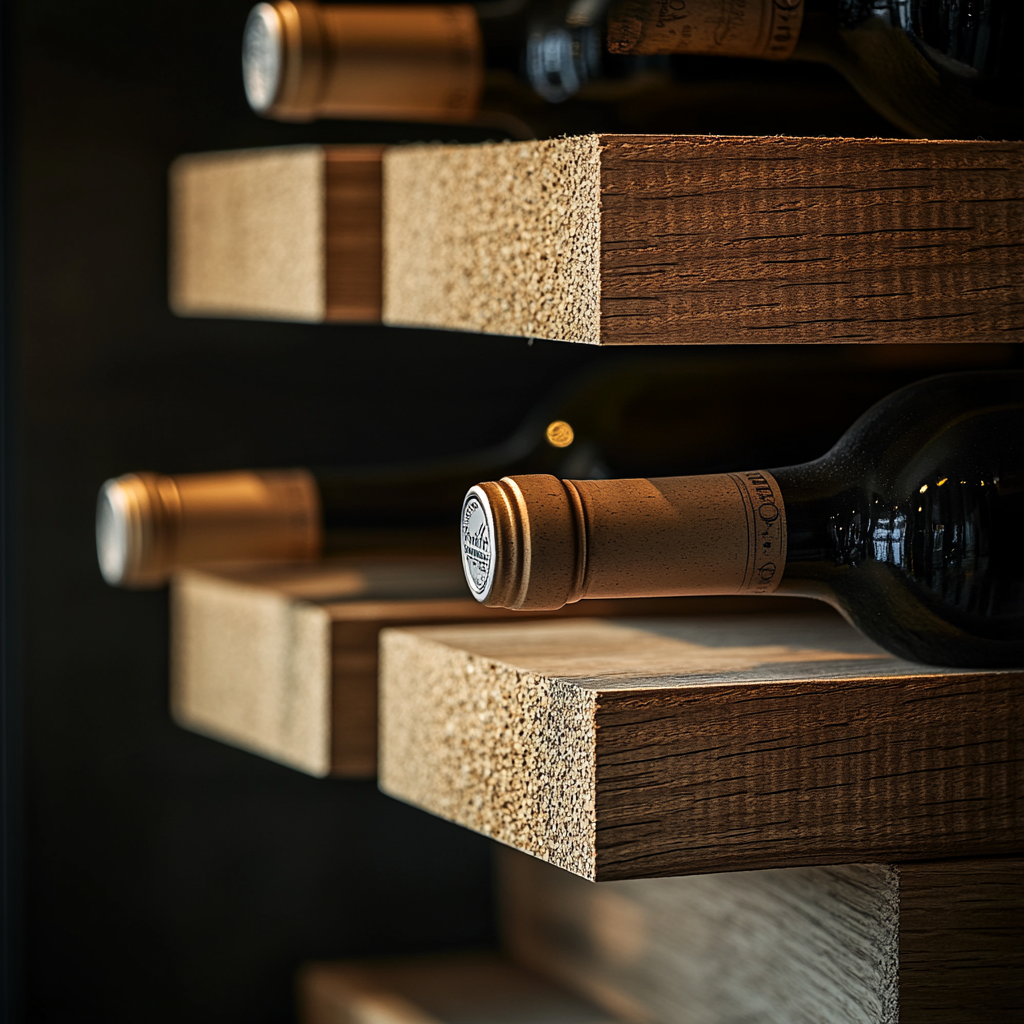
The cork is the mechanism that connects humidity to your wine. A cork in proper condition is slightly compressed inside the bottle neck, maintaining a seal that controls the microscopic, slow oxygen exchange that allows wine to age. That compression depends on the cork retaining its moisture and elasticity. When the surrounding air is too dry over extended periods, corks gradually lose that moisture, contract, and begin to allow oxygen into the bottle at an uncontrolled rate. The result ranges from mild oxidation and premature aging to outright spoilage in severe cases.
Storage environments running consistently below roughly 50 percent relative humidity begin to present this risk in earnest. It is not a problem that appears after a single dry week. It accumulates over months and years, which is exactly why collectors who store wine for the long term need to take it seriously. As our guide on how long to store wine covers in detail, the storage conditions surrounding a bottle are half of what determines whether its aging window ever materializes.
The risk on the other end of the scale is real too. Humidity running consistently above 75 to 80 percent creates conditions for mold growth on labels, wooden rack components, and cellar framing. It can also accelerate corrosion on metal racking hardware. The goal is a stable middle range, not simply maximizing moisture in the air.
How Cooling Systems Create Dryness
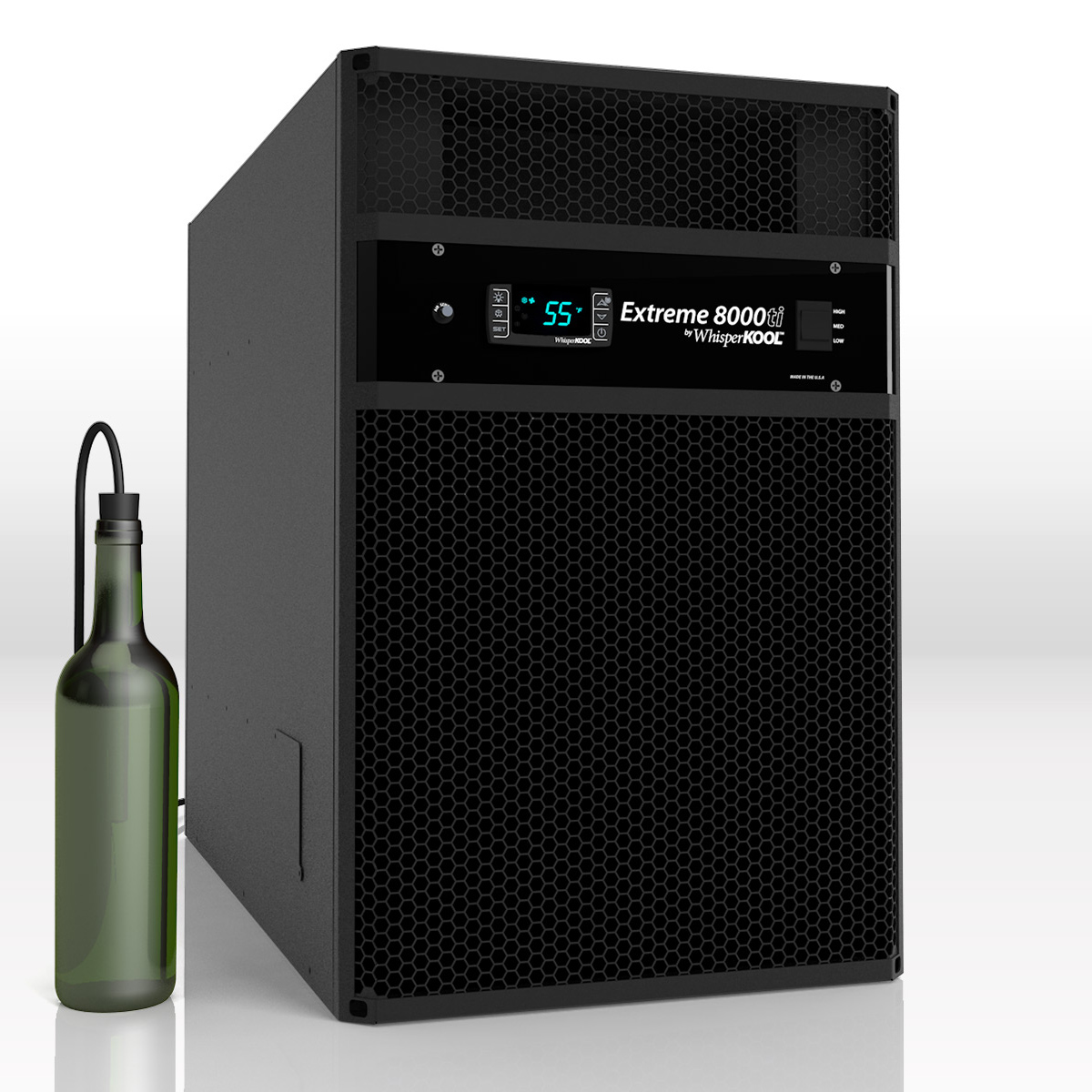
The mechanism is the same one that makes air conditioning feel drying on your skin. A wine cellar cooling unit works by passing warm cellar air over an evaporator coil carrying refrigerant. The refrigerant absorbs heat from the air, which is how the air temperature drops. But warm air also carries moisture, and when that moisture-laden air contacts the cold coil, it condenses. The water drips off the coil, collects in a drain pan, and exits the cellar. The air that returns to the room is cooler and drier than it was when it entered.
This is not a flaw in the design. It is simply how refrigeration works. In a residential air conditioning application, the dehumidification effect is often welcome. In a wine cellar, it works against you.
The degree of drying depends on several factors: how frequently the unit cycles, how large the cellar volume is relative to the unit's capacity, how well the cellar is sealed, and what the ambient conditions outside the cellar are contributing. A unit that runs frequently in a dry climate pulls far more moisture from a cellar than the same unit running briefly in a humid coastal environment. This is one reason that cellar humidity management is a more consistent concern in certain climates than others, and why it requires active monitoring rather than a set-and-forget assumption.

The Target Range: What Your Cellar Should Be Running At
The widely accepted range for wine cellar relative humidity is 50 to 70 percent, with most cellar designers targeting 60 to 65 percent as the practical ideal. Within that band, corks remain in good condition, mold is not a significant concern, and the overall storage environment is stable.
Below 50 percent is where the risk profile changes. Brief dips are unlikely to cause lasting damage, but a cellar that consistently measures in the low 40s or below over multiple seasons is creating conditions where cork integrity becomes genuinely unpredictable, particularly in bottles being held for ten or more years.
Above 70 to 75 percent, the concerns shift rather than disappear. Wine remains safe at these levels, but labels become vulnerable to mold and deterioration, and wooden racking components can absorb moisture and expand or warp over time. If you use Premier Cru Wine Racks or any premium wood racking in your cellar, sustained high humidity is something to manage rather than ignore.
Monitoring is the foundation of any humidity management approach. A calibrated digital hygrometer placed at mid-rack height, away from the cooling unit's direct output, gives you the most accurate reading of what your bottles are actually experiencing. Take readings across different seasons before drawing conclusions about your cellar's baseline behaviour. Temperature and storage fundamentals are covered in our earlier post on wine storage temperature vs. serving temperature, which addresses the full environmental picture alongside the humidity question.
How to Know If Your Cellar Is Running Dry
A hygrometer gives you the data. But there are also physical signs that a cellar has been running dry, particularly in bottles that have been in storage for several years.
- Cork position. A cork in a properly humidified environment sits flush with or very slightly above the top of the bottle neck. A cork that has dried and contracted will sit noticeably lower, sometimes with visible gap or cracking at the surface. Inspect your longer-held bottles when you retrieve them: the cork's condition tells you something the hygrometer reading alone cannot.
- Capsule seepage. This appears where a small amount of wine has been drawn up past the cork and dried at the foil. Some collectors interpret it as evidence of a leaking or defective cork. In many cases it reflects a period of dryness in the storage environment rather than a problem with the individual bottle.
- Cork brittleness on opening. A cork that crumbles or tears rather than extracting cleanly from a bottle in long storage is consistent with a history of insufficient humidity. This is not always the case: older corks can be fragile for other reasons. But if you are seeing it repeatedly across different bottles and producers, the storage environment is a reasonable place to look.
Do You Actually Need a Dedicated Humidifier?
Not every cellar does. The honest answer is that the need depends on a combination of factors that vary enough between builds that a blanket recommendation in either direction would not serve most collectors well.
- Climate. Cellars in hot, dry climates, and particularly those inside buildings where central air conditioning runs for a significant portion of the year, face the greatest drying pressure. The cooling unit is working against ambient conditions that are already low in moisture. Cellars in naturally humid climates, in basements with consistent ground moisture, or in cooler northern environments where the cooling system runs less aggressively may stay within the target range without any supplemental humidity at all.
- Cellar construction. A properly sealed cellar with a continuous vapour barrier and appropriate insulation will hold whatever moisture is present more effectively than a cellar with gaps in the envelope. If a cellar is losing humidity through the walls as quickly as the humidifier can add it, the problem is more likely a construction issue than a humidification one.
- Cooling unit characteristics. Unit sizing, how frequently it cycles, and whether it incorporates any humidity management in its own design all affect how much moisture leaves the cellar through the cooling process. If you are specifying a new system, this is a conversation worth having with your cellar builder upfront rather than after the cellar is finished and the humidity readings are already low.
- Cellar age. Freshly built spaces with green lumber or recently applied drywall compound absorb significant moisture from the air during their first year. A new cellar that reads low on humidity in its first few months may stabilize as the building materials reach equilibrium. Monitor through at least one full seasonal cycle before concluding that humidification equipment is required.
Humidifier Options for Wine Cellars
For cellars where the numbers confirm that supplemental humidity is needed, the options differ in output capacity, maintenance requirements, and suitability for different cellar sizes.
Ultrasonic Humidifiers
Ultrasonic units use a vibrating element to produce a fine cool mist, which is dispersed into the cellar air. They are quiet, produce no heat, and are well-suited to smaller cellar volumes. The main maintenance consideration is mineral buildup from tap water: using distilled or demineralized water reduces this significantly, and the units benefit from regular cleaning to prevent mineral deposits or microbial growth in the reservoir. For collectors with cellars in the 200 to 500 cubic foot range, a well-specified ultrasonic unit is often the most practical entry point.
Evaporative Humidifiers
Evaporative units work by drawing dry air through a water-saturated wick or pad, allowing evaporation to add moisture to the outgoing airstream. They have a natural self-regulating quality: as the ambient humidity rises toward saturation, the evaporation rate slows. This makes them somewhat forgiving compared to units that add moisture at a fixed rate regardless of current conditions. Evaporative units require regular wick or pad replacement and periodic cleaning, but they avoid the misting and potential for water droplet deposition that some ultrasonic units can produce if positioned poorly relative to bottles or labels.
Steam Humidifiers
Steam-based units heat water to produce moisture-rich vapour. They offer higher output for larger cellar volumes and can be ducted into the cellar's air distribution system in more elaborate configurations. The heat output, while generally modest relative to the cellar's cooling capacity, is a factor to account for when sizing this type of unit. Steam humidifiers are most commonly specified in larger custom cellar builds where the system is engineered holistically rather than added after the fact.
Integrated Humidity Management
Some cooling systems designed specifically for wine cellars incorporate humidity management as part of the unit rather than requiring a standalone humidifier. If you are planning a new cellar or specifying a new cooling system, discussing integrated humidity control options with your supplier is worth doing at the outset. Retrofitting humidification into a finished cellar is always possible, but it is simpler and often more effective when it is part of the original design.
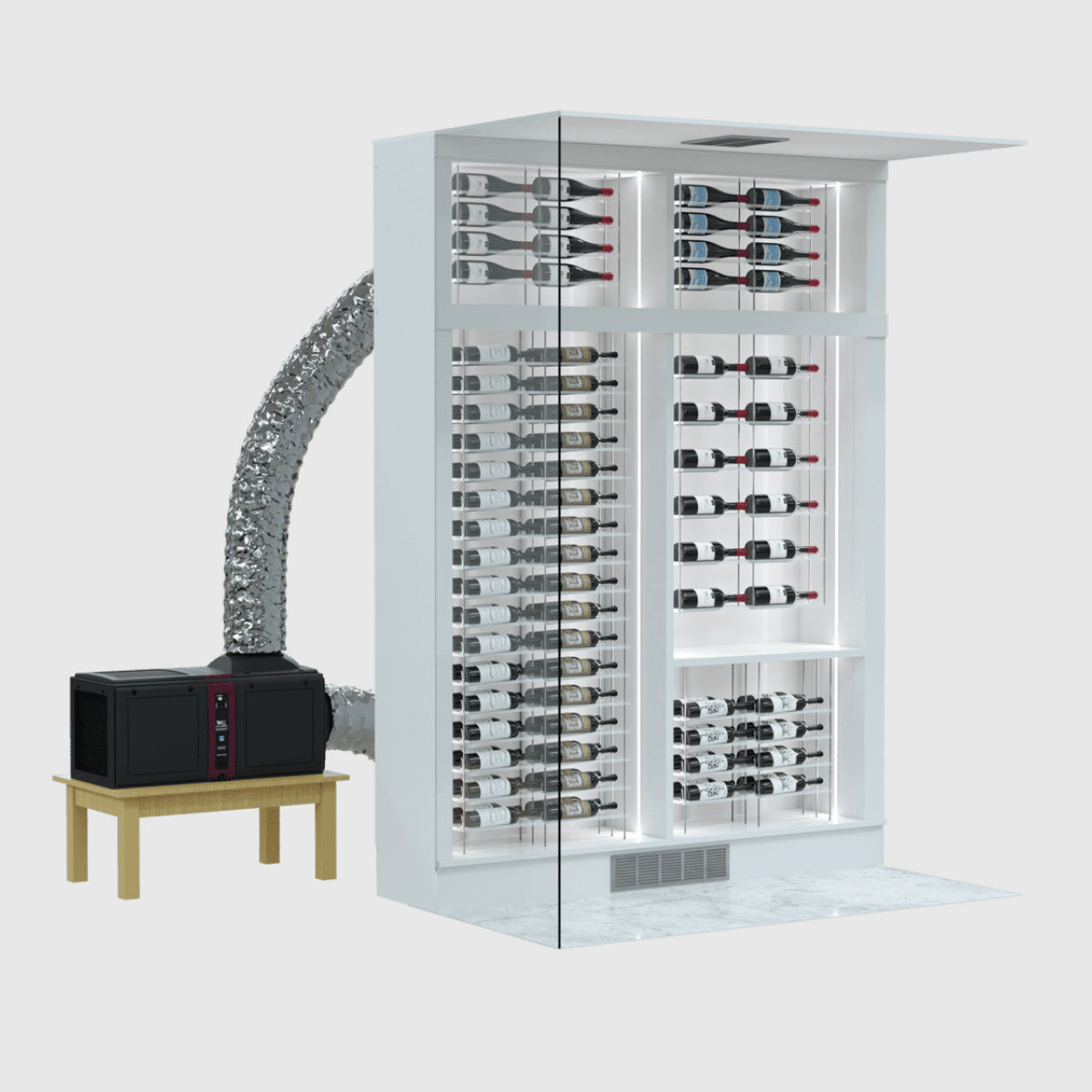
Rosehill carries CellarCool cooling systems, which are designed for residential and commercial cellar applications. For specific guidance on humidification configurations available within the CellarCool range, contact our team directly: the right approach depends on your cellar's dimensions, location, and the cooling unit already specified or under consideration.
The Florida Factor
For collectors building cellars in South Florida and across the Gulf Coast, humidity management deserves specific attention. Central air conditioning in this climate runs for the better part of the year, and heavily air-conditioned interior spaces frequently reach relative humidity levels well below what most northern environments see at any point in the year. A wine cellar inside a home that is itself being aggressively dehumidified faces compounded drying pressure: the ambient indoor air contributing to the cellar environment is already moisture-depleted before the cellar's own cooling system begins its work.
This is one reason that humidification is a more consistent specification in Florida cellar builds than it tends to be in climates where basements stay naturally cool and moderately humid. It is not that the problem is unique to Florida, but rather that the factors contributing to it stack more severely there than almost anywhere else in North America. If you are building a cellar in the Naples, Fort Lauderdale, or Tampa area, treat humidification as a planning item rather than an afterthought. It will almost certainly be needed.
The same logic applies to any cellar being built inside a condominium or apartment building with centralized climate control, regardless of geography. When your cellar is inside a climate-controlled envelope that was not designed with wine storage in mind, the baseline humidity reaching your cellar is likely lower than you would find in a naturally conditioned basement space.
Building It In vs. Adding It Later
Specifying humidification at the build stage is meaningfully simpler than adding it once the cellar is finished. A whole-cellar humidifier that requires a water supply line can be plumbed during construction as a single task. Adding it to a completed space means running a supply line to a finished room, which may involve opening walls or floors depending on where the cellar sits relative to your building's plumbing.
For smaller standalone humidifiers with reservoirs that you fill manually, retrofitting is straightforward: these units require only a power connection and a suitable placement inside the cellar. The trade-off is the maintenance of manual refilling, which becomes more burdensome the larger the cellar volume. For a cellar above roughly 400 to 500 cubic feet, a unit requiring daily refilling during dry periods is an inconvenience that wears on compliance over time.
If you are in the planning phase of a cellar build, the conversation to have with your designer is not just whether humidification is needed, but what type makes sense for the space, whether the plumbing and power supply can accommodate it cleanly, and where the humidifier should be positioned relative to the cooling unit and racking layout. Getting this right at the design stage means it becomes an invisible part of how the cellar runs rather than an add-on you are managing around.
Wine cellar construction fundamentals, including insulation, vapour barriers, and the conditions that allow a cellar to perform well over decades, are covered in our guide on whether a wine cellar adds value to your home, which addresses the full scope of what goes into a properly built residential cellar.
Getting the Conditions Right
Humidity management is one piece of a storage environment that has to work as a system. Temperature stability, light exclusion, vibration control, and the structural integrity of the cellar envelope all contribute to whether the bottles inside are genuinely protected. None of these variables operates in isolation, and addressing one without understanding the others leads to gaps.
The practical starting point is always measurement. If you do not have a calibrated hygrometer in your cellar, install one before drawing any conclusions. Monitor it through a full seasonal cycle. If readings consistently fall below 50 percent for extended periods, investigate the source before specifying equipment: check the cooling unit's drain output to confirm it is removing moisture at the expected rate, assess the cellar's vapour barrier and seal, and look at the ambient conditions in the space surrounding the cellar. Then decide whether supplemental humidification addresses the actual problem.
The Bottom Line
For collections that include wines with long aging windows, from structured Barolo and classified Bordeaux to quality white Burgundy and vintage Champagne, the storage environment is not a detail. It is the mechanism by which those aging windows become real. A cellar that runs dry quietly over several years may look exactly right when you open it and smell completely wrong when you finally open the bottles.
Getting the humidity right is not the most visible part of cellar ownership. It rarely comes up in the design conversation, and it produces no dramatic failures you can point to in the moment. What it produces, when it is handled correctly, is bottles that are exactly what they should be when you finally decide the time is right. Rosehill Wine Cellars works with collectors across Canada and Florida on cellar builds, cooling systems, and the storage equipment that makes long-term aging possible. Browse our full range of wine cellar cooling systems and wine cellar humidifiers online, or contact our team to talk through the specifics of your build.