




















A more powerful cooling unit may not solve converted closet wine room cooling airflow problems. If temperatures remain uneven or the system runs constantly, check for a blocked air path or exhaust heat returning to the closet before assuming the unit lacks capacity. In a compact space, the location of the equipment, shelves, and stored items can all affect airflow. A few careful observations can help you narrow down the cause before changing the setup.
This guide explains how to spot restricted circulation and exhaust recirculation, how to distinguish airflow clues from other cooling concerns, and what to review before choosing a fix. It also covers why the wine room’s sealed, insulated envelope and the cooling unit’s exhaust route need to be considered together. Rosehill Wine Cellars designs custom wine cellars and offers wine cooling systems, bringing room layout and equipment choices into the same planning process.
Key Takeaways
- Uneven temperatures, warm air near the unit, or frequent operation are useful clues, but none confirms a single cause on its own.
- Separate air circulation inside the wine room from the cooling unit’s path for taking in air and releasing heat.
- Check for blocked openings and returning exhaust before replacing equipment to address converted closet wine room cooling airflow problems.
- Use a safe, step-by-step checklist and compare visible openings and clearances with the cooling unit’s manual.
- Plan changes around the room’s conditions, heat load, equipment placement, and storage needs so the space and cooling setup work together.
Converted Closet Wine Room Cooling Problems: What Airflow Symptoms Can Tell You
Uneven temperatures, warm air around the cooling unit, or equipment that seems to run unusually often can raise concern. Each is a clue, not a diagnosis. Restricted airflow is one possibility, but equipment condition, thermostat or control behavior, and a system that does not suit the room can produce similar symptoms.
Wine-room airflow includes both circulation that distributes cooled air and the equipment’s path for rejecting heat. These functions are connected, but they are not interchangeable. Air inside the room may feel still even while the unit is operating, or the unit may struggle to release heat despite adequate circulation through the cellar. The purpose of a wine cellar is to support suitable storage conditions, as outlined in this general overview of the Wine Cellar.
Which signs may point to restricted or recirculating airflow?
A blocked intake or discharge opening can interfere with the unit’s ability to move air or release heat. Look for stored items, furnishings, or tight clearances near openings you can see. Note the location of any warm area, too. Warm air on the room side may mean something different from warm air near the unit’s heat-discharge side, so compare what you observe with the system layout instead of treating warmth alone as proof of a blockage.
Exhaust heat returning toward the unit’s intake is another possibility. If discharged air flows back toward the area where the unit draws air, heat rejection may be less effective and the system may run more often. Frequent operation can also have other causes, including control issues or a mismatch between the unit and room. Record when the symptom occurs, where it is strongest, and whether it changes when the door is open or closed. A record of repeated observations is more useful than replacing equipment based on one clue.
Why a converted closet can make airflow harder to assess
A closet often leaves little spare room for equipment, bottles, and the clearances an installation requires. A shelf, cabinet edge, or later addition can narrow an air path without making the restriction obvious. Installation requirements vary by unit, so use its manual rather than relying on a general clearance rule.
The door and nearby furnishings can also affect how air moves around the equipment. If a symptom appears only when the door is closed, record that pattern, but do not assume it proves the cause. Note room conditions and equipment placement alongside the symptom. This can help distinguish converted closet wine room cooling airflow problems from possible equipment or sizing concerns and guide what to investigate next.
Room design and cooling selection belong in the same conversation. The closet’s dimensions, heat load, equipment position, and intended storage all shape what the system needs to manage. Rosehill Wine Cellars offers wine cellar cooling systems as part of a broader approach to planning the room and equipment together, rather than treating the unit as an isolated fix.
How Airflow Works in a Closet Wine Room Cooling System
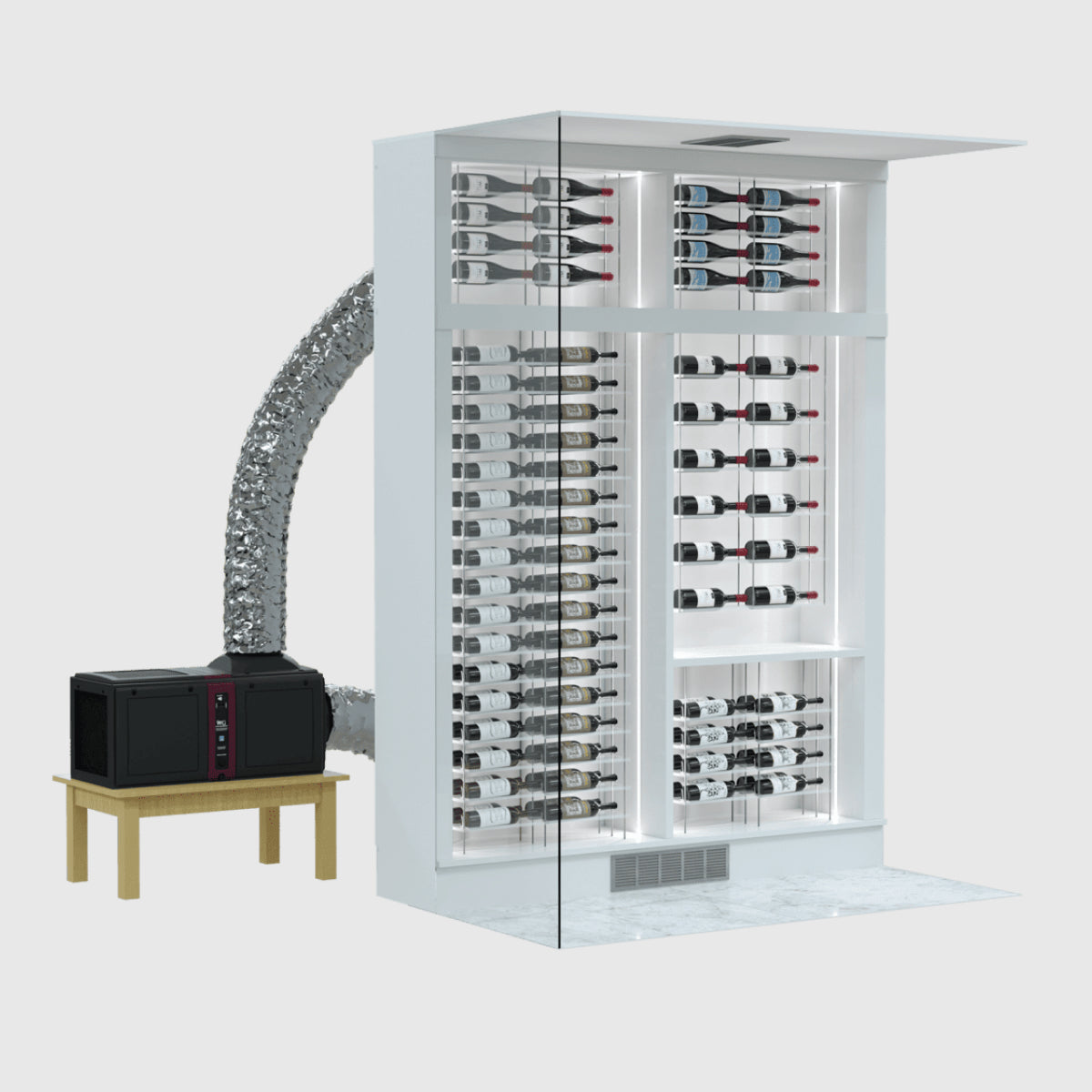
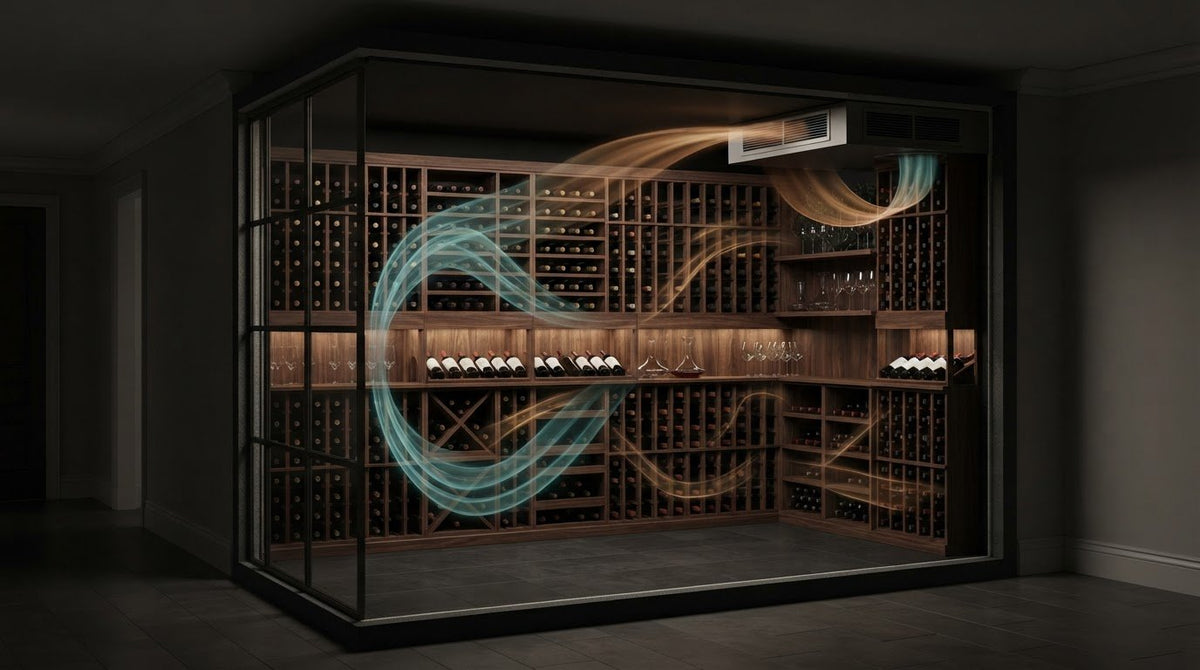
A closet wine room has two related but distinct air paths. Inside the conditioned room, air circulates to distribute cooling around bottles, shelving, and corners. Through the equipment, air follows the cooling unit’s designed intake and discharge routes so heat can move away from the conditioned space. Identifying which path is affected helps you avoid changes that look useful but do not address the restriction.
Room circulation moves cooled air around the wine; equipment ventilation moves heat away from the cooling unit. Both matter, but they solve different problems. A fan that moves air within the closet may help mix room air, but it will not necessarily correct a blocked equipment outlet or a poor exhaust route.
Room circulation versus cooling-unit intake and discharge
Within the room, cooled air needs to reach the storage area rather than remain concentrated beside the unit. Racking, tightly packed bottles, deep corners, or a shelf across the airflow path can affect how evenly air mixes. This may contribute to different conditions in separate parts of the room, even while the unit is running.
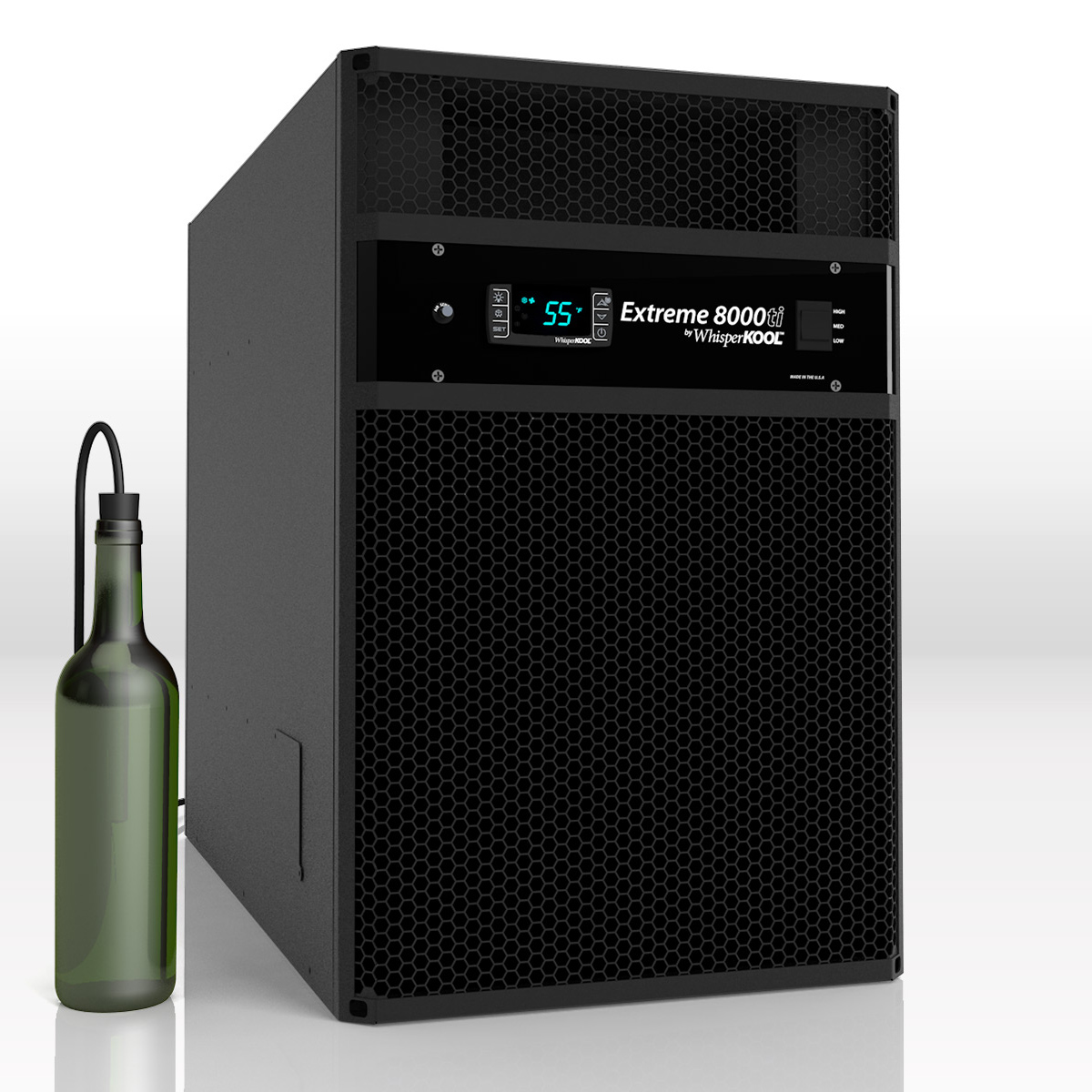
The cooling unit also has its own intake and discharge openings. Their locations and required clearances depend on the model and installation. Use the manual to identify each opening and the required surrounding space. Do not assume an extra fan, a new grille, or a single open vent will resolve every airflow concern. First identify whether the issue involves room circulation or equipment ventilation, then check that path for an obstruction or poor layout.
Heat rejection, exhaust location, and recirculation
During operation, the cooling system needs to release heat outside the conditioned wine room. Discharged air needs a suitable route away from the unit’s intake. If warm air gathers near the equipment and flows back toward that intake, the unit may draw in air it has just heated instead of rejecting heat effectively.
Nearby walls, a confined adjoining space, or objects in front of an outlet may contribute to this pattern. The effect depends on the room and equipment, so do not copy a vent layout from a general diagram or another installation. Check the model’s instructions for its required clearances, discharge direction, and installation conditions before making changes.
- Room side: Check whether shelves, bottles, or corners interrupt air movement through the storage area.
- Equipment side: Identify the intake and discharge openings from the manual, then look for visible obstructions.
- Exhaust side: Observe whether discharged warm air has a route away from the intake. Do not assume one vent arrangement suits every unit.
When assessing converted closet wine room cooling airflow problems, trace room circulation and the unit’s heat-rejection path separately before deciding what to adjust. For a new or reworked storage space, Rosehill’s custom wine cellar design brings room layout and cooling choices into the same planning process.
Airflow or Equipment Problem? Compare the Clues Before Replacing Anything
A cooling unit that runs often or a room with uneven temperatures can have several explanations. A visible obstruction or warm exhaust returning toward the intake may point to an airflow concern. Control settings, heat load, maintenance, or system sizing may also play a part. A symptom alone cannot establish that the unit has failed. Record what you observe and compare the clues before deciding what to change.
Use this table to organize observations, not as a remote diagnosis. The same symptom can have more than one cause, and the unit’s installation manual is the reference for its specific requirements.
| Observation | Possible airflow clue | Other possible cause | What to record |
|---|---|---|---|
| Visible item near an intake or discharge | An object or tight clearance may restrict the unit’s air path. | A room may still have a control, maintenance, or sizing concern. | Opening affected, obstruction location, and when you noticed it. |
| Warm discharge air seems to travel back toward the unit | Exhaust recirculation may interfere with heat rejection. | Room heat load or equipment condition may also contribute to frequent operation. | Where the warm air travels and whether the pattern changes with nearby doors open or closed. |
| Different areas of the room feel or measure differently | Room circulation may be uneven around shelves, bottles, or corners. | Control settings, heat entering the room, system suitability, or maintenance may be involved. | Location and time of each reading, plus the control setting and operating pattern. |
| Unit operates often or sounds different | A restricted intake or discharge is one possibility if an opening is visibly obstructed. | Heat load, sizing, controls, or maintenance may also affect operation. | When operation occurs, any recent room changes, and the sound or pattern observed. |
Clues that make an airflow restriction worth investigating
Start with what is visible and accessible. Look for items close to the unit’s intake or discharge, then note whether conditions change when the wine-room door or a nearby door is open. Observe where warm discharge air travels and whether it seems to return toward the unit. Record these details without moving equipment or changing an opening whose purpose you have not identified.
Clues that may indicate another cooling concern
Persistent temperature variation deserves attention, but its location and pattern matter more than a single reading. Compare measurements taken in the same places and note the control settings, room changes that could increase heat load, and any maintenance history. Noise and run time are useful context, not proof of a particular fault. These observations can help narrow the next question without establishing whether the equipment itself is faulty.
For converted closet wine room cooling airflow problems, first distinguish a visible air-path issue from broader concerns about controls, heat load, sizing, or maintenance. A clear record makes it easier to assess the room and cooling system together before replacing equipment.
A Safe Airflow Checklist for a Converted Closet Wine Room
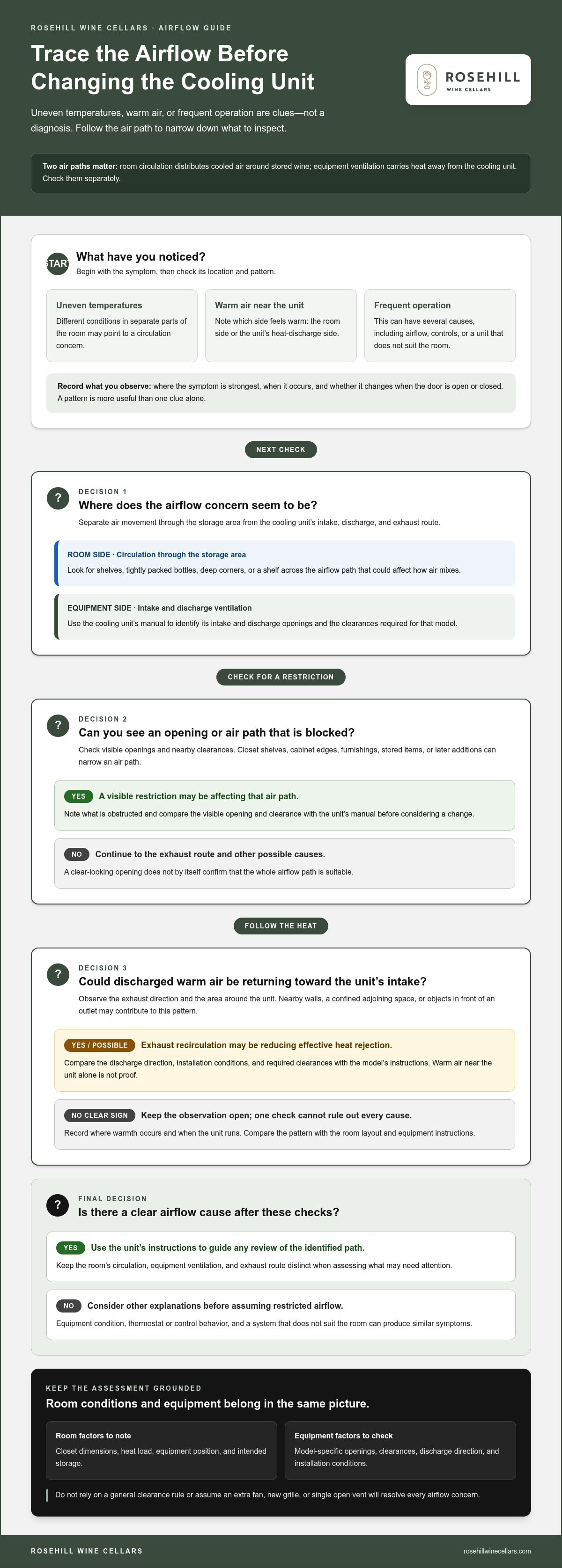
Begin with what you can observe safely. A careful record of symptoms, room conditions, and visible openings can help distinguish an airflow concern from an issue that needs closer review. Document symptoms before altering a wine-room system. Avoid moving or modifying equipment to test a theory.
- Observe the pattern. Note where the room feels warmer or cooler, when the unit operates, and whether conditions change at different times or when the door is open or closed.
- Record room conditions consistently. If you use a thermometer, take readings in the same accessible locations and at comparable times. Write down each reading, its location and time, and any relevant change in the room.
- Check accessible openings visually. Look for stored items, dust, or nearby furnishings that appear to obstruct the unit’s intake or discharge. Do not remove panels or reach inside the equipment.
- Notice the room’s circulation. Observe whether bottles, shelving, or corners might interrupt air movement, and whether a closed door or nearby doorway changes the conditions you are tracking.
- Compare the installation with the unit manual. Identify the model and use its instructions to check the intended intake and discharge locations, clearances, and installation conditions.
- Decide whether the next step goes beyond a visual check. Electrical, refrigerant, and construction work are outside this checklist. Do not open the unit, handle wiring or refrigerant components, or cut into walls or vents based on an observation alone.
What to inspect without dismantling the cooling system
Keep the inspection external and observational. Check accessible openings for visible obstructions, then note whether nearby storage or shelving crowds the equipment or changes room circulation. Record symptoms as they occur rather than relying on memory. For example, note if one area feels warmer after the door has stayed closed, or if a change appears near a particular opening. This makes patterns easier to compare without disturbing the system.
When the room layout or installation needs a closer review
If the equipment seems tightly placed, compare its clearances with the manufacturer’s instructions rather than guessing. Consider whether warm discharge air can move away from the unit or may return toward the intake. The appropriate arrangement depends on the specific equipment and space, so do not add a vent or reposition the unit without understanding those requirements.
For converted closet wine room cooling airflow problems, a written record and a manual-based review are practical starting points before changing equipment. If you are comparing system categories for a room plan, Rosehill’s wine cellar cooling systems can help frame the decision alongside the space itself. To explore cooling options, review Rosehill’s wine cooling systems.
Plan a Better Wine-Room Airflow Solution Around the Space
After recording observations and comparing them with the cooling unit’s instructions, choose a next step that fits the evidence. You may need to clear a restricted air path, reassess whether the system suits the room, or revisit the room design. Replacing equipment before identifying the space’s constraints can leave the original problem unresolved.
Consider cooling choices alongside the conditions they need to manage: room dimensions and heat load, equipment placement, paths for intake and discharge, and intended wine storage. A compact closet with limited equipment clearance presents different design considerations from a larger cellar. Evaluate the room and unit together because each affects how the setup functions.
When adjusting the air path may be part of the solution
If your observations point to a specific obstruction, removing or repositioning it may address the documented concern. For example, stored items placed directly beside an accessible opening could restrict its air path. Make changes only when they are consistent with the cooling unit’s installation instructions. Clearances and venting arrangements vary by unit, so do not treat generic dimensions as universal standards.
After an appropriate adjustment, keep recording conditions in the same locations and under comparable circumstances. A change in the observations may help show whether the air path was relevant, but it does not confirm that every other factor is resolved. If symptoms persist, return to the unit manual and consider the broader room and equipment setup rather than making successive unverified changes.
When to rethink the cooling plan for the closet
A wider review may be appropriate if the equipment has little room around it, warm discharge air has no suitable route away from the intake, or the closet layout limits practical placement. It is also worth reconsidering the full setup when the intended storage or heat load seems at odds with the existing system. In these situations, reviewing the complete design may be more useful than replacing a component without addressing surrounding constraints.
Rosehill Wine Cellars designs custom wine cellars and sells wine cooling units. Its custom wine cellar design service connects room planning with decisions that shape the cooling setup. A considered plan can account for layout, equipment location, heat load, and storage needs together, rather than assuming one solution fits every closet.
For converted closet wine room cooling airflow problems, match the next step to what you observed: address a documented obstruction, reassess system suitability, or reconsider the room design. The right direction depends on the specific space and unit.
If you are planning a wine-storage project or reviewing cooling options, explore Rosehill’s wine cellar cooling systems as part of your next planning step.
Shape Your Next Wine-Storage Decision
Let your observations guide the next decision rather than guessing which component to replace. For converted closet wine room cooling airflow problems, a clear record can help you decide whether the space needs a modest adjustment or a broader rethink of its cooling plan. Keep the intended storage, room conditions, and equipment placement in view as you consider what comes next.
Rosehill Wine Cellars brings custom wine cellar design and cooling products together, with the room considered alongside its equipment. The goal is a plan tailored to the project, not a one-size-fits-all solution.
Explore wine cellar cooling systems as you plan your next step. Start with the observations you have gathered and choose the option that fits your wine-storage space.
Frequently Asked Questions
Can I use a standard air conditioner to cool a converted closet wine room?
Not as a default. A standard air conditioner may not suit the conditions needed for wine storage, and lowering the room temperature alone will not resolve a blocked intake or a poor route for heat to leave the space. While residential cooling contractors like Peters Heating & Cooling handle everyday home comfort systems, dedicated wine spaces require specialized units designed to manage both low temperatures and delicate humidity balance. Before choosing a system, note the room’s construction, equipment location, and intended storage use. Use the installation instructions and requirements for the specific cooling equipment to assess whether the setup is appropriate.
Does a converted wine closet need a louvered door for airflow?
Not necessarily. A louvered door changes how air passes between the closet and adjoining space, but that does not automatically meet a cooling unit’s ventilation needs or suit the room’s design. Adding louvers may also affect the room’s ability to maintain its intended environment. Review the selected unit’s installation instructions and consider the room as a whole before changing the door. A louvered design is not a universal fix.
Why is warm air coming from my wine room cooling unit?
Warm air may be part of the unit’s normal heat-rejection process, but its intended route depends on the equipment and installation. Check where the air exits without touching or opening the unit. If it strikes a nearby wall, meets an obstruction, or appears to travel back toward the intake, record what you observe. Compare the setup with the manufacturer’s instructions before changing the outlet or moving the equipment.
Can poor airflow affect humidity in a converted wine room?
Airflow can influence how conditions are distributed through a small room, but it alone does not establish the cause of a humidity concern. A reading near a doorway may differ from one taken among tightly arranged bottles, for example. Use the same measuring device and location when tracking readings, and note dates and room conditions. For converted closet wine room cooling airflow problems, humidity observations are useful context, not a diagnosis.
How often should I clean a wine-room cooling unit filter?
Follow the cleaning schedule and method in the instructions for your specific unit, since filter care varies by equipment. If the filter is accessible to the user, note its condition and the date it was checked, then follow the stated cleaning steps. Do not open sealed sections or attempt work beyond the user guidance. For broader preventive-care details, see Rosehill’s wine cellar cooling maintenance plan.
What happens if a wine cooling unit’s exhaust air returns to its intake?
Returning exhaust can make it harder for the system to reject heat effectively, though the impact depends on the unit and its installation. Observe whether warm discharge seems to loop near the equipment or is directed toward a nearby surface. Note any visible obstruction and compare the air path with the manufacturer’s guidance. Do not assume a single vent change will suit every installation.
Can I move a cooling unit to fix airflow in a converted closet?
Moving the unit may change airflow, but it is not a universal solution. A position that improves one path could conflict with the unit’s installation requirements or leave insufficient space for its intended operation. Before considering relocation, document the current placement and identify the model’s instructions. Treat work involving wiring, refrigerant components, or the surrounding structure as beyond a simple visual airflow check, and connect with qualified cooling technicians at contractor-stack.com if complex HVAC adjustments are needed.