













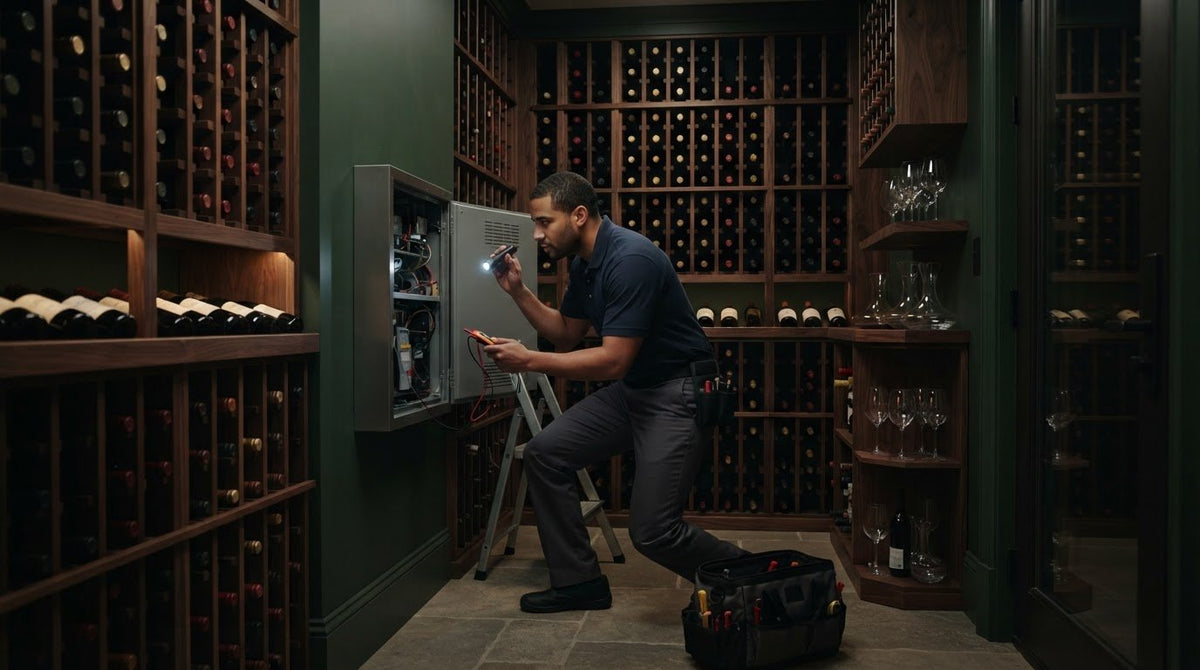
What is the value of an Annual Maintenance Plan? It is less about a promise to prevent every fault and more about making sure your wine cooling equipment receives scheduled attention. Before enrolling, it’s reasonable to want clear answers, especially when a change in cooling performance could affect the conditions in your cellar.
Rosehill Wine Cellars offers recurring service plans with scheduled inspections and preventative care for wine cooling systems. A plan’s value depends on what it covers, how often service is scheduled, and whether it suits your system. Preventive care is also different from arranging a repair after a problem appears, so find out what the plan does and doesn’t include.
This guide explains what a wine cooling maintenance plan may involve, how to compare scheduled service with calling for help only when needed, and what terms to confirm before enrolling. You’ll also find practical ways to prepare for an appointment and assess whether the plan’s inspection scope, eligible equipment, exclusions, and appointment arrangements fit your needs.
Key Takeaways
- An Annual Maintenance Plan provides scheduled, preventive attention, but it isn’t a promise that problems won’t occur.
- Before enrolling, confirm in writing how often inspections take place, which equipment is eligible, and what tasks and exclusions apply.
- Compare scheduled care with on-demand service by considering the scope, convenience, and terms that suit your cellar and equipment.
- Prepare for an appointment by noting your unit’s model details, any changes you’ve observed, and relevant service history.
- Rosehill Wine Cellars offers recurring plans with scheduled inspections and preventative care. Verify the current scope and suitability for your system.
Why an Annual Maintenance Plan Matters for Wine Cooling
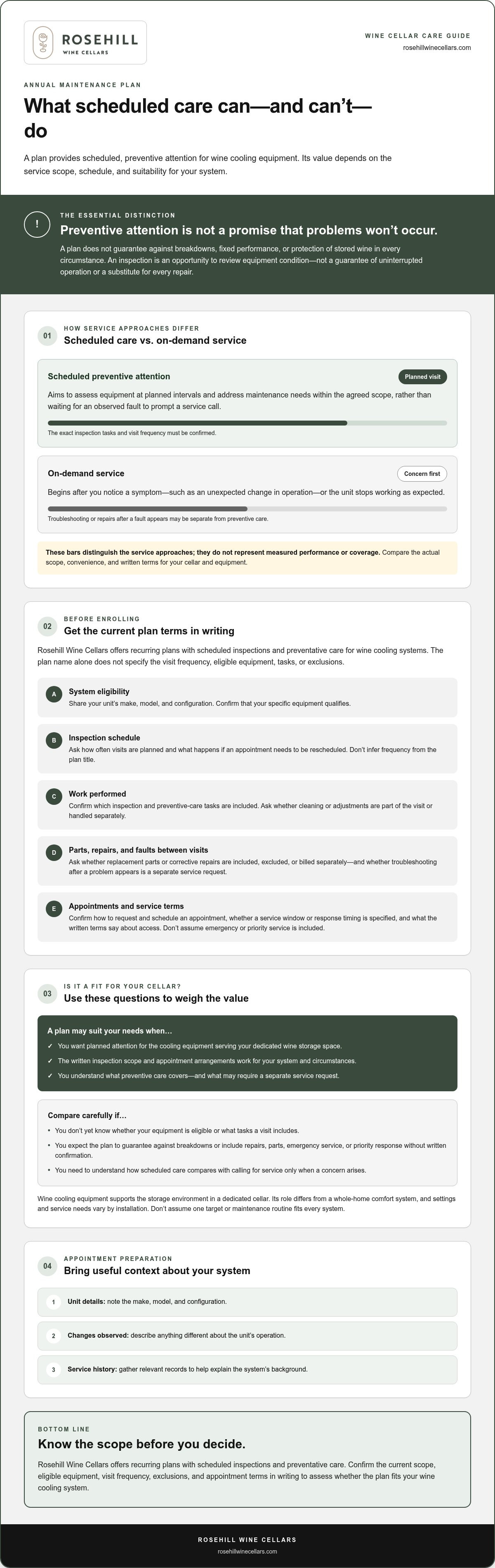
An Annual Maintenance Plan provides scheduled, preventive attention for a wine cooling system. Its purpose is to assess the equipment at planned intervals and address maintenance needs within the agreed scope, rather than wait for a fault to prompt a service call. It does not guarantee against breakdowns, promise fixed performance, or ensure that stored wine will be protected in every circumstance.
Wine cooling equipment serves a dedicated storage environment, unlike whole-home comfort systems designed to condition living spaces. Its role is to support conditions appropriate for storing wine over time. The critical factors in wine storage include consistency in the storage environment, which helps explain why owners pay attention to how their cooling system operates. A planned inspection offers an opportunity to review equipment condition, but the specific checks depend on the system and the service plan.
How wine cooling differs from general home comfort
A wine cellar cooling unit has a focused role: helping maintain the cellar’s storage environment, not adjusting temperatures throughout a home. If its operation changes, the effect may be felt in the dedicated space it serves. Owners storing wine over an extended period may value planned attention to the cooling equipment as one part of caring for the cellar. Settings and service needs vary, so don’t assume one target or maintenance routine fits every installation.
Preventive service versus waiting for a problem
Preventive maintenance for a wine cooling system is scheduled attention intended to assess equipment condition and identify service needs before an observed fault becomes the reason for a visit. On-demand service, by contrast, begins after an owner notices a symptom, such as an unexpected change in operation, or the unit stops working as expected. An inspection may bring concerns to light, but it can’t guarantee uninterrupted operation or rule out future repairs.
Rosehill Wine Cellars offers recurring service plans that include scheduled inspections and preventative care for wine cooling systems. Those general details don’t specify which inspection tasks are performed, how often they occur, which equipment qualifies, or what exclusions and other terms apply. Confirm the current plan scope and its suitability for your unit before enrolling. Routine preventive attention and troubleshooting or repair after a fault appears are not automatically the same service, so clarify how the plan handles each.
What to Confirm About Annual Wine Cooling Maintenance
A service plan’s title alone doesn’t tell you what happens during a visit or what support is available afterward. Before enrolling in an Annual Maintenance Plan, ask for the current terms in writing. Clear answers make it easier to compare scheduled care with arranging service only when a concern arises.
Which equipment and service tasks are included?
Start with your system. Share its make, model, and configuration, then ask whether that specific wine cooling unit is eligible. Rosehill Wine Cellars offers recurring plans that include scheduled inspections and preventative care, but confirm the exact tasks and eligible equipment rather than assuming they are covered.
- Inspection schedule: How often are visits planned, and what happens if an appointment needs to be rescheduled?
- Work performed: Which inspection and preventative-care tasks are included? Are cleaning or adjustments part of the visit, or handled separately?
- Parts and repairs: Are replacement parts or corrective repairs included, excluded, or billed separately?
- Faults between visits: Does the plan cover troubleshooting after a problem appears, or is that a separate service request?
These distinctions matter because a preventive visit and a repair visit have different purposes. For further technical context, the ASHRAE Handbook offers industry standards for refrigeration. However, a technical resource doesn’t establish what a particular service plan covers.
What schedule, access, and terms apply?
Ask how inspections are scheduled and how to request an appointment. Confirm the appointment process and whether the written terms specify a service window or response timing. Don’t assume emergency or priority service is included. If you’re comparing equipment categories, Rosehill’s wine cellar cooling systems collection can help you identify the kind of system you have before asking about eligibility.
Review the administrative details as well. Check renewal and cancellation terms, exclusions, service-call conditions, and any charges that may apply when work falls outside the plan. If you own a freestanding unit, ask whether the terms distinguish it from a cellar system. Keep the written answers with your equipment records so you can refer to the agreed scope later.
Use a written checklist to avoid mismatched expectations: covered equipment, inspection frequency, included tasks, separate repair or parts costs, appointment arrangements, exclusions, renewal, and cancellation. Confirm each point with Rosehill before enrolling. You can then judge the plan on its actual scope and fit for your wine cooling equipment, not on assumptions based on another provider’s maintenance package.
Is an Annual Maintenance Plan Worth It for Your Wine Cellar?
Not automatically. A plan may suit an owner who values scheduled attention, while another owner may prefer to arrange service only when an issue arises. The right choice depends on the equipment, its service history, how the cellar is used, access to service, and the written plan terms. Neither approach guarantees fewer repairs or protects wine from every equipment problem.
When scheduled service may fit your priorities
Planned inspections can provide routine oversight for equipment that supports a dedicated wine storage environment. This may appeal if you prefer to have service scheduled rather than remember to arrange a visit later, or if you want a professional to assess a system with a history of concerns. Consider how important consistent cellar conditions are to your storage plans, while remembering that an inspection can identify concerns but can’t promise uninterrupted operation.
May suit: You value scheduled attention, want a defined inspection routine, or would rather clarify service arrangements in advance. The written scope matches your system and expectations.
Ask further: Your equipment’s eligibility is unclear, the plan describes inspections vaguely, or you need repair, parts, or urgent service that may not be included. Compare the written terms with your likely needs before committing.
When to compare alternatives before enrolling
Compare like with like. A scheduled preventive visit is not necessarily equivalent to troubleshooting after a fault appears, and neither automatically includes replacement parts or repairs. Ask what an on-demand appointment covers, then compare it with the plan’s inspection frequency, included tasks, exclusions, appointment process, renewal, and cancellation terms. If a term is unclear, request a written explanation before deciding.
Plan value depends on confirmed coverage and individual needs. A plan may appeal to someone who prefers routine oversight, while an owner whose system is not eligible or whose main concern falls outside the coverage may need another arrangement. Rosehill Wine Cellars offers recurring plans with scheduled inspections and preventative care. Confirm the current terms and suitability for your equipment directly with the company.
If you’re identifying your equipment before asking about fit, Rosehill’s wine cellar cooling systems collection provides relevant product context. For refrigerant-related service questions, consult the EPA requirements for servicing refrigeration equipment and ask the service provider which requirements apply to your situation. Weigh the written scope, your preferences, and access to service, rather than assuming savings or protection.
How to Prepare for a Wine Cooling Maintenance Appointment
A little preparation can make a service visit more focused. Before an appointment under an Annual Maintenance Plan, gather useful information about the equipment and its recent operation, then confirm practical details with the provider. You don’t need to inspect internal components or attempt adjustments yourself. Leave technical checks and corrective work to the service professional.
Information to gather before the visit
Start with what you can observe safely. If the model and serial information is visible without moving equipment, removing panels, or entering a restricted space, note it or take a clear photo. Otherwise, ask the provider how to identify the system. Then make a short record of anything unusual:
- Sounds you’ve noticed, and when they occur.
- Changes shown on the unit’s display or in the cellar’s observed conditions.
- Alerts, recurring concerns, or changes in how the equipment appears to operate.
- Previous service records and any recent changes to the cellar or cooling equipment.
Note when an issue began and whether it happens consistently or intermittently. Specific observations can help the professional understand what you’re reporting. Don’t remove covers, handle wiring, or try to diagnose the cause before the visit.
Questions to ask during and after inspection
Confirm appointment logistics in advance, including how to request or arrange the visit, what access the professional needs, and whether anyone must be present. Keep the route to the equipment accessible if you can do so without moving heavy items or disturbing the installation. If access is limited, explain that when arranging the appointment so the provider can advise you.
After the inspection, ask for a clear summary. Which areas or components were inspected? Were any concerns identified, and do they require follow-up? Ask the provider to distinguish work included in the plan from additional recommended service, parts, or repairs. If further work is proposed, request an explanation of its purpose and confirm any applicable terms before authorizing it.
Before the visit ends, clarify how to arrange the next scheduled inspection or a follow-up appointment, and keep the service notes with your equipment records. Rosehill Wine Cellars accepts service appointment requests and can be contacted by toll-free phone or live chat. Contact Rosehill about a service appointment to confirm the current process and what information to have ready.
Explore Rosehill Wine Cellars' Annual Maintenance Plan
Rosehill Wine Cellars offers an Annual Maintenance Plan for wine cooling systems as part of its recurring service plans. The confirmed scope includes scheduled inspections and preventative care. This is a starting point, not a complete description of every task, eligible system, or plan term. Request current information directly before deciding whether the plan suits your equipment.
What Rosehill confirms about its service offering
Rosehill’s focus on wine cooling equipment makes its maintenance plans relevant to owners seeking scheduled attention for a dedicated cellar system. The company was founded in 1995 and offers wine cooling products alongside recurring service plans. Don’t infer specific inspection procedures, repair coverage, or parts inclusion from the general description. Confirm those details for the plan currently available.
If you’re unsure how to describe your setup, review Rosehill’s wine cellar cooling systems collection for relevant equipment context. Then share your unit’s make and model, if available, when asking about suitability. A system’s category alone may not establish eligibility, so ask Rosehill to confirm directly.
How to take the next step with confidence
Before enrolling, request the current plan details and clarify the points that will shape your decision:
- Does the plan apply to your specific wine cooling system?
- How often are inspections scheduled, and what preventative care is included?
- Which services, parts, or repairs are outside the plan?
- What appointment, renewal, cancellation, and other terms apply?
Ask for the answers in writing, particularly if your priority is a specific service task or appointment arrangement. You can also explain your equipment’s history and what you hope scheduled attention will provide. This helps establish whether the plan’s confirmed scope aligns with your priorities, without relying on assumptions about performance or protection.
Rosehill accepts service appointment requests and offers toll-free phone support and live chat. Use the contact option that suits you to request current plan information or ask whether your system is a fit. A brief conversation can help you determine what to confirm next, whether you’re considering enrollment or simply seeking details about the service offering.
Ask Rosehill about an Annual Maintenance Plan
Make a Confident Plan for Your Wine Cooling System
Scheduled preventive care can offer a useful routine for wine cooling equipment, but a service plan is a good fit only when its scope matches your system and priorities. Before choosing an Annual Maintenance Plan, confirm the inspection schedule, eligible equipment, included tasks, exclusions, and how repairs or parts are handled. Comparing those written terms with arranging service only when needed can help you choose the approach that suits your cellar.
Rosehill Wine Cellars was founded in 1995 and offers recurring plans that include scheduled inspections and preventative care. Confirm the current details, your system’s suitability, and the exact plan terms before enrolling. You can request service appointments and contact Rosehill by toll-free phone or live chat.
Ask Rosehill about an Annual Maintenance Plan and take a considered next step toward scheduled attention for your wine cooling equipment.
Frequently Asked Questions
Is an Annual Maintenance Plan worth it for a wine cellar cooling system?
It depends on your equipment, your preference for scheduled attention, and the plan’s written terms. Compare the inspections and preventative tasks included with anything billed separately, and ask how appointments are arranged. A plan isn’t a guarantee against breakdowns or wine loss. If the scope, exclusions, or service process aren’t clear, request clarification before enrolling so you can weigh scheduled care against arranging service only when needed.
What does an annual wine cooling maintenance plan include?
Inclusions vary by provider and plan. Rosehill Wine Cellars describes its annual plans as including scheduled inspections and preventative care for wine cooling systems, but you should confirm the current tasks and whether your equipment qualifies. Ask specifically whether cleaning, adjustments, parts, repairs, or follow-up visits are included or separate. Review the provider’s current written terms instead of assuming a wine cooling plan matches a general HVAC maintenance package.
How often should a wine cellar cooling system be serviced?
Follow the equipment manufacturer’s guidance and ask the service provider what interval is appropriate for your specific system. An annual plan may arrange scheduled inspections, but that doesn’t establish that every unit needs identical tasks or timing. The suitable schedule can depend on the equipment and its operating conditions. Before enrolling, confirm how often inspections occur under the plan and whether that schedule aligns with the manufacturer’s recommendations.
Can a maintenance plan prevent a wine cooling unit from breaking down?
No plan can guarantee that a cooling unit won’t fail. Preventive care provides an opportunity to inspect the system and identify concerns, but it can’t rule out future problems or ensure uninterrupted operation. Ask what happens if an inspection reveals an issue, including whether diagnostic work, repairs, or replacement parts are covered or charged separately. Assess the plan by its confirmed scope and suitability, not by assuming it prevents equipment failure.
Does an Annual Maintenance Plan cover repairs and replacement parts?
Don’t assume scheduled inspections and preventative care include corrective repairs or parts. Each provider defines plan coverage differently, so ask Rosehill Wine Cellars to clarify its current terms before enrolling. Request written details about diagnostic visits, labor, replacement parts, exclusions, and any additional service charges. A clear distinction between routine plan work and follow-up repair service helps you understand what the plan provides and what may require a separate appointment.
How do I prepare for a wine cooling maintenance appointment?
Gather useful information without opening or working on the equipment. If safely accessible, note the unit’s model details and collect prior service records. Write down unusual sounds, alerts, or changes you’ve observed, including when they occur. Confirm appointment arrangements and access requirements with the provider. During or after the visit, ask what was inspected, whether anything needs follow-up, and which recommendations fall outside the included plan work.
What should I check before enrolling in an annual service plan?
Confirm that your equipment is eligible, how often inspections occur, and which preventative tasks are included. Ask how appointments are arranged and whether repairs, parts, or follow-up service are separate. Review exclusions, renewal and cancellation terms, and any service-call conditions. Request the current terms in writing and compare them with your priorities. If a detail is unclear, ask the provider to explain it before you decide.