















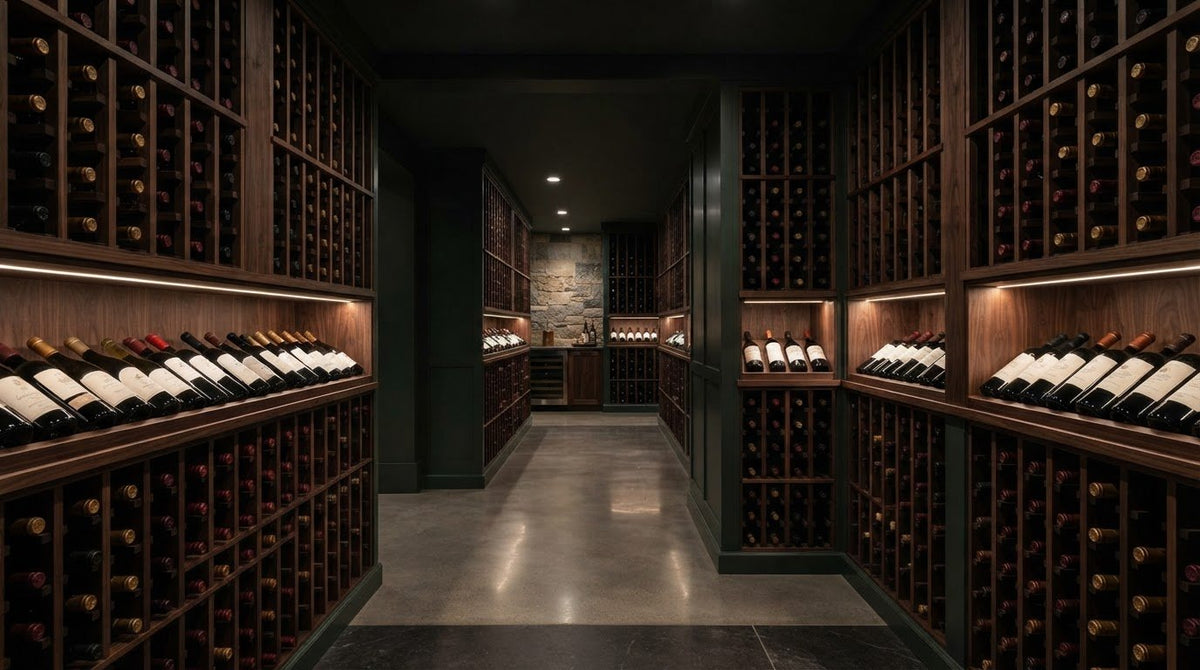
Doubling your cellar storage capacity is rarely a question of square footage; it is an exercise in millimetres. If you are curating an expanding collection, you already know the frustration of watching treasured bottles compete for limited perimeter wall space. Executing proper double deep wine racking space planning offers the ideal solution to scale your storage without expanding your cellar footprint. Yet placing bottles two-deep introduces distinct architectural stakes, from pinched aisles that make retrieving rear vintages hazardous to concentrated tandem bottle mass that can stress residential subfloors.
You don't have to sacrifice accessibility or peace of mind to house more wine. Master spatial layout, clearance dimensions, and structural calculations to double your cellar bottle capacity safely while maintaining balanced climate circulation and clear inventory visibility. This architectural guide breaks down the essential wall-to-aisle dimensions, cooling airflow parameters, and structural rules you need to know before ordering your racks.
Key Takeaways
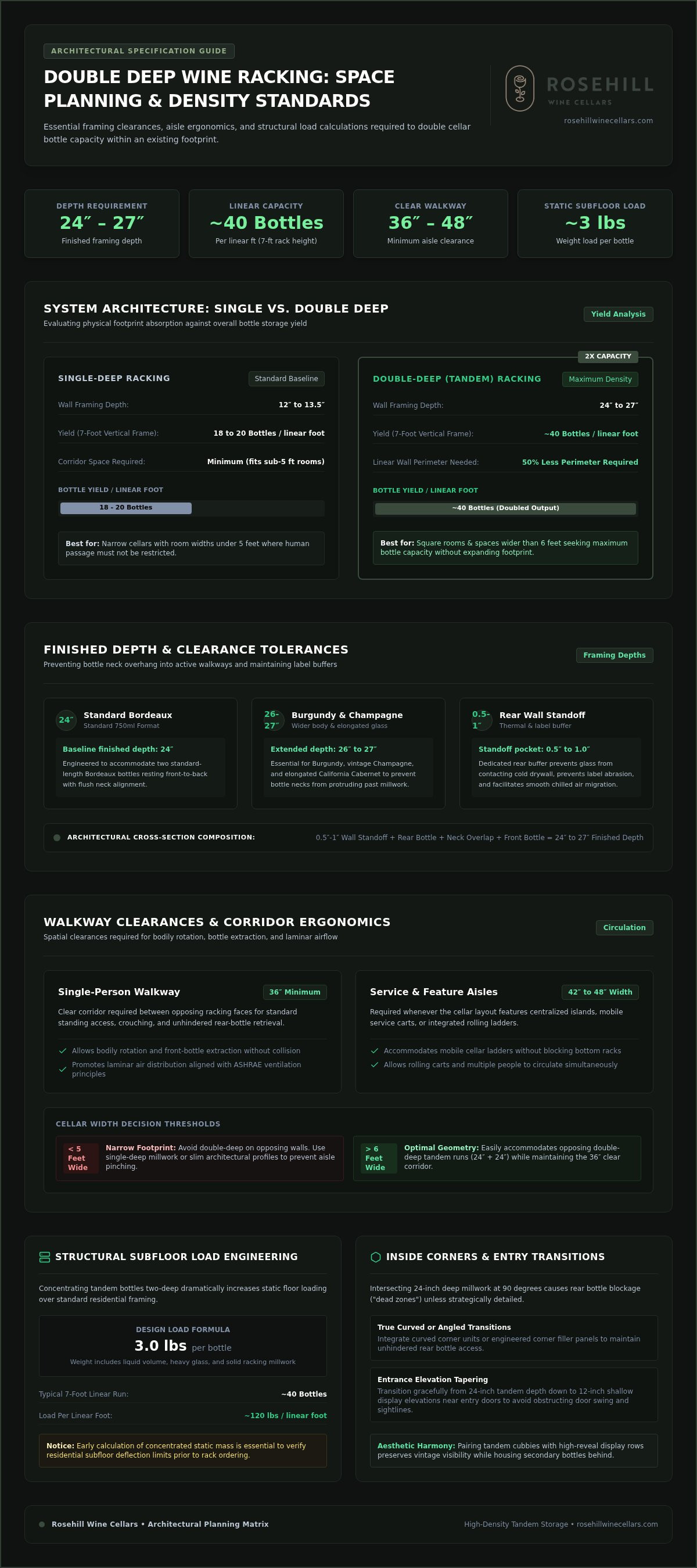
- Successful double deep wine racking space planning requires allocating 24 to 27 inches of finished framing depth to house two standard bottles front-to-back.
- Establish minimum walkway clearances of 36 to 42 inches between opposing racking faces to ensure comfortable bottle retrieval and effortless mobility.
- Account for concentrated static loads early by calculating roughly three pounds per bottle to verify residential subfloor structural capacity.
- Integrate dedicated airflow pathways around dense storage blocks to prevent microclimate variances and maintain balanced cellar refrigeration.
- Pair tandem bottle cubbies with high-reveal display rows to preserve clear inventory visibility and protect rear-stored vintages from being overlooked.
Double Deep Wine Racking Dimensions and Footprint Essentials
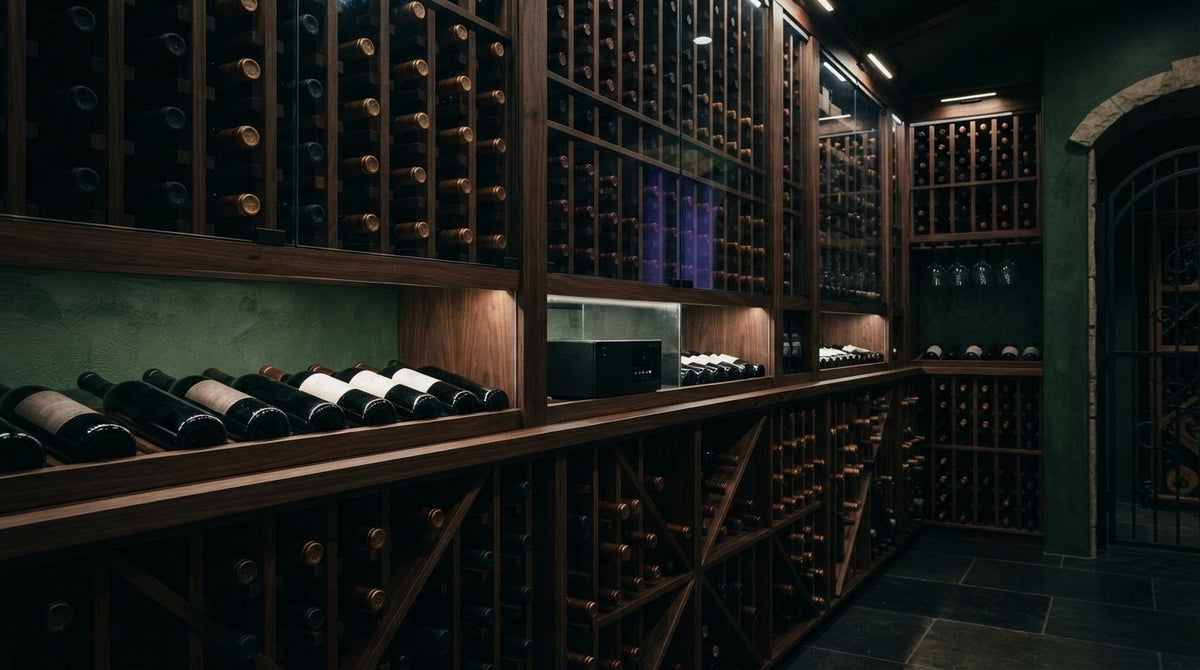
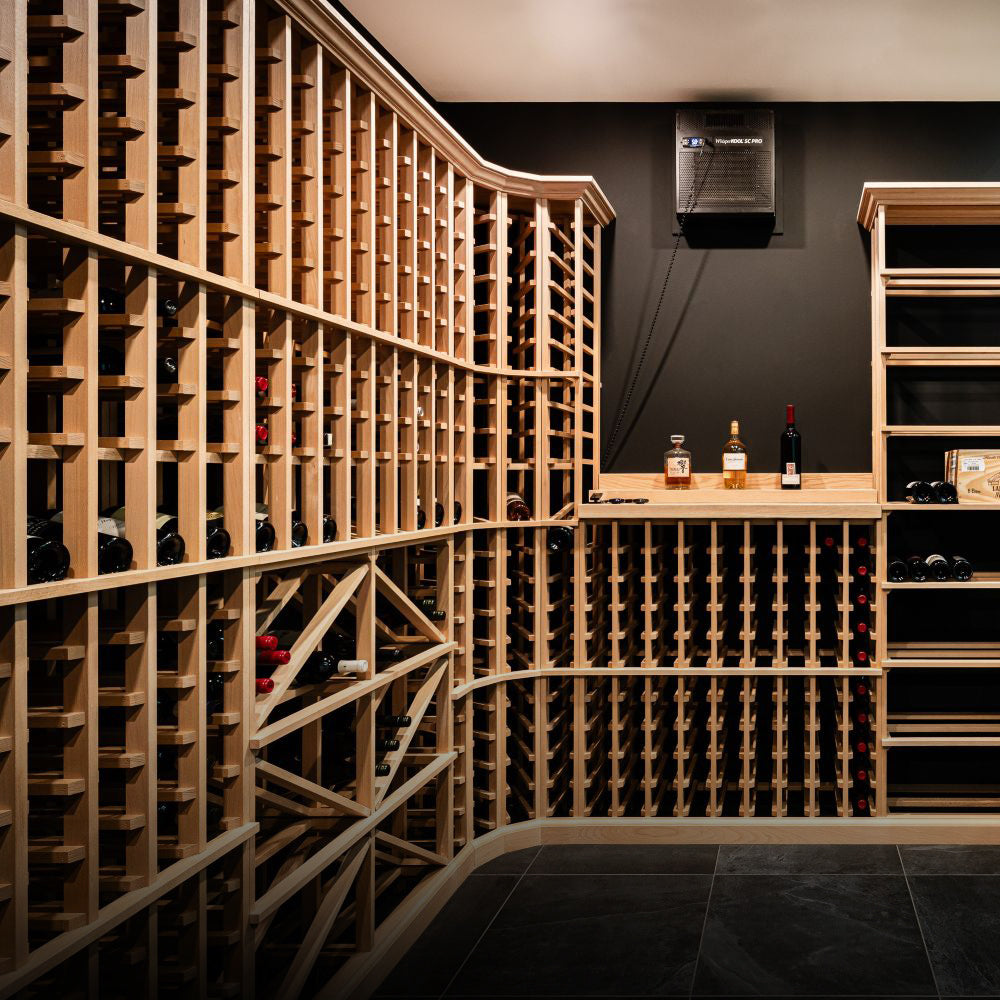
Double deep wine racking stores two standard bottles front-to-back within each individual column, effectively doubling your storage yield per linear foot compared to traditional single-depth configurations. In architectural practice, achieving this capacity requires precise spatial forethought. Successful double deep wine racking space planning hinges on recognizing that wine bottles are neither uniform nor flush. The nominal dimensions of two bottles placed end-to-end rarely match the actual finished framing depth your cellar demands.
Standard Depth and Finished Clearance Calculations
A baseline installation for standard 750ml Bordeaux bottles requires a minimum finished framing depth of 24 inches. However, serious cellars rarely house uniform Bordeaux shapes exclusively. Wider-bodied Burgundy, vintage Champagne, and elongated California cabernet bottles require 26 to 27 inches of total depth to prevent bottle necks from protruding past the front millwork into active walkways.
Precise depth calculations must also account for punt variations, bottle neck overlap, and structural wall standoffs. Leaving a dedicated 0.5- to 1-inch standoff buffer behind the millwork prevents rear glass from striking cold drywall surfaces or structural framing. Preserving this subtle rear pocket protects paper labels from abrasion and sustains ideal wine storage conditions by allowing chilled ambient air to migrate smoothly behind the storage block.
Single Deep Versus Double Deep Footprint Comparison
Standard single-deep systems occupy 12 to 13.5 inches of wall depth, yielding roughly 18 to 20 bottles per linear foot across a typical seven-foot vertical frame. Tandem double-deep racking doubles that output to nearly 40 bottles within the exact same linear profile. While tandem cabinetry absorbs an additional foot of floor area outward from the wall, it dramatically reduces the total perimeter linear footage required to house a large collection.
When applying professional custom wine cellars layout principles, room geometry dictates whether tandem depth makes practical sense. Square footprints and rooms wider than six feet readily accommodate tandem runs along opposing walls. In contrast, narrow spaces under five feet wide usually benefit from single-deep millwork or slim architectural profiles from our modern wine racking lines to ensure essential human circulation isn't compromised.
Aisle Clearance and Spatial Planning for High-Density Cellars
High-density bottle storage quickly turns counterproductive if physical retrieval becomes cumbersome. Rigorous double deep wine racking space planning balances maximum bottle capacity with human ergonomics. When two deep runs face one another across a central corridor, spatial allowances must account not only for standing foot traffic, but also for bodily rotation and bottle extraction clearance.
Calculating Walkway Widths and Reach Radii
Maintain a minimum clear pathway of 36 inches between opposing racking faces for single-person access. If your layout features a central island, rolling cellar ladders, or rolling service carts, expand this aisle to 42 or 48 inches. Working with tandem cubbies requires physical room to stoop down, extract a front bottle safely, set it aside, and reach inward for the rear vintage without brushing against opposite racks. Ample corridor clearance also promotes laminar air distribution along walking paths, keeping room environments aligned with established ASHRAE ventilation standards.
Managing 90-Degree Inside Corners and Dead Zones
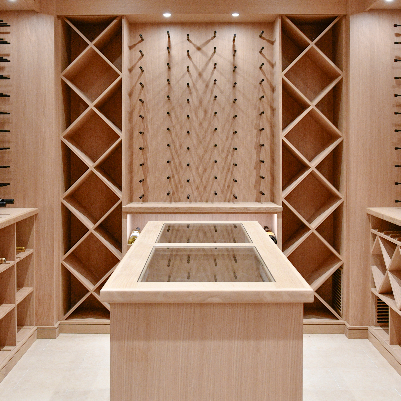
Inside corners present a frequent spatial planning failure point. If two 24-inch deep millwork runs simply meet at a standard 90-degree corner, the intersecting column completely blocks access to the adjacent rear bottles. You can avoid creating these permanent dead zones by integrating true curved corner units, angled corner transitions, or engineered corner filler panels. When moving toward cellar entrances, transition gracefully from 24-inch tandem casework to 12-inch shallow display elevations to keep sightlines open and walking paths fluid. For flexible configurations across complex perimeters, explore our guide on modular wine racks for scalable footprint planning.
Doorway Swings and Structural Entry Obstacles
Entryways introduce strict perimeter boundaries that must be planned before framing begins. An inswinging door will collide with cabinetry if an adjacent double-deep run projects 24 to 27 inches into that swing path:
- Hinge Placement: Hang cellar doors to swing outward or recess adjacent millwork with a shallow starter column.
- Glass Enclosure Clearances: Mount frameless glass hardware completely clear of projecting bottle neck zones to prevent door strikes.
- Loading Pathways: Preserve an unobstructed 36-inch path from the doorway into the room interior for case delivery and bulk transfers.
If you are mapping out a challenging footprint, working with experienced designers through Rosehill's bespoke custom wine cellar design services can help verify your layout clearances with precise 3D CAD modeling.
Structural Support and Floor Load Capacity Calculations
Doubling storage density introduces significant physical forces that standard residential flooring was never designed to bear without preparation. A single filled 750ml wine bottle exerts approximately three pounds of static weight. When you arrange bottles in tandem depths across vertical columns, that load concentrates rapidly into a remarkably narrow footprint along your walls or across a central island. Thorough double deep wine racking space planning demands accurate structural calculations long before the first case is unpacked.
Calculating Total Static Bottle and Framework Mass
A typical seven-foot-tall double-deep column houses up to 40 bottles, translating to 120 pounds of liquid and glass mass in a single vertical bay. Adding the dead weight of dense architectural millwork, such as solid wood uprights and cross-rails, increases that figure to roughly 145 to 160 pounds per column. An eight-foot bank of double-deep racking can easily place 1,200 to 1,500 pounds of static force onto a narrow two-foot strip of flooring. This concentrated linear load differs vastly from broad live loads generated by human footsteps or conventional living room furniture.
Subfloor Reinforcement and Load Distribution
Basement concrete slabs easily support concentrated wine mass, but upper-floor installations and main-level spaces above crawlspaces present distinct engineering challenges. Evaluate the following elements with a qualified professional:
- Joist Orientation: Racks running perpendicular across several floor joists distribute weight effectively; runs positioned parallel over a single joist create severe deflection risks.
- Continuous Plinth Bases: Set cabinetry on solid, continuous platforms rather than individual pointed levelers to spread mass evenly across the subfloor plane.
- Structural Blocking: Insert dimensional lumber blocking between existing joists beneath the cellar perimeter to reinforce high-stress floor zones.
Wall Stud Anchoring and Seismic Fastening
Because tandem columns hold a secondary layer of glass forward of the primary wall plane, their center of gravity naturally shifts outward. Unanchored tall racks risk severe forward deflection or tipping when retrieving rear bottles. Fasten each vertical upright directly to structural wall studs using heavy-duty, corrosion-resistant lag screws placed at top, middle, and base levels. Never rely on drywall anchors or masonry toggle bolts alone. Freestanding double-deep islands require reinforced floor cleats or internal diagonal steel bracing to prevent mechanical rack-walking and keep the installation stable over decades of use.
Bottle Accessibility, Inventory Systems, and Visual Ergonomics
Doubling bottle capacity creates an operational challenge: bottles stored in rear positions vanish from view. Without an intentional organizational framework, tandem slots invite forgotten vintages and unnecessary bottle handling. Architectural double deep wine racking space planning must merge dense engineering with visual ergonomics, ensuring every bottle remains cataloged, visible, and safely retrievable.
Front-to-Back Organization Logic for Tandem Slots
Eliminate inventory confusion by pairing identical bottles within each tandem cubby. Storing two bottles of the exact same vintage front-to-back ensures the visible front label identifies both positions. If storing varied selections, place bottles nearing peak maturity in the front opening and long-term aging stock behind them. Bottleneck cellar tags printed with barcodes or handwritten details provide immediate identification without forcing you to slide the front bottle out. Pairing this physical labeling with a digital cellar management app preserves full catalog visibility across the entire room.
Integrating High-Reveal Display Rows and Presentation Angles
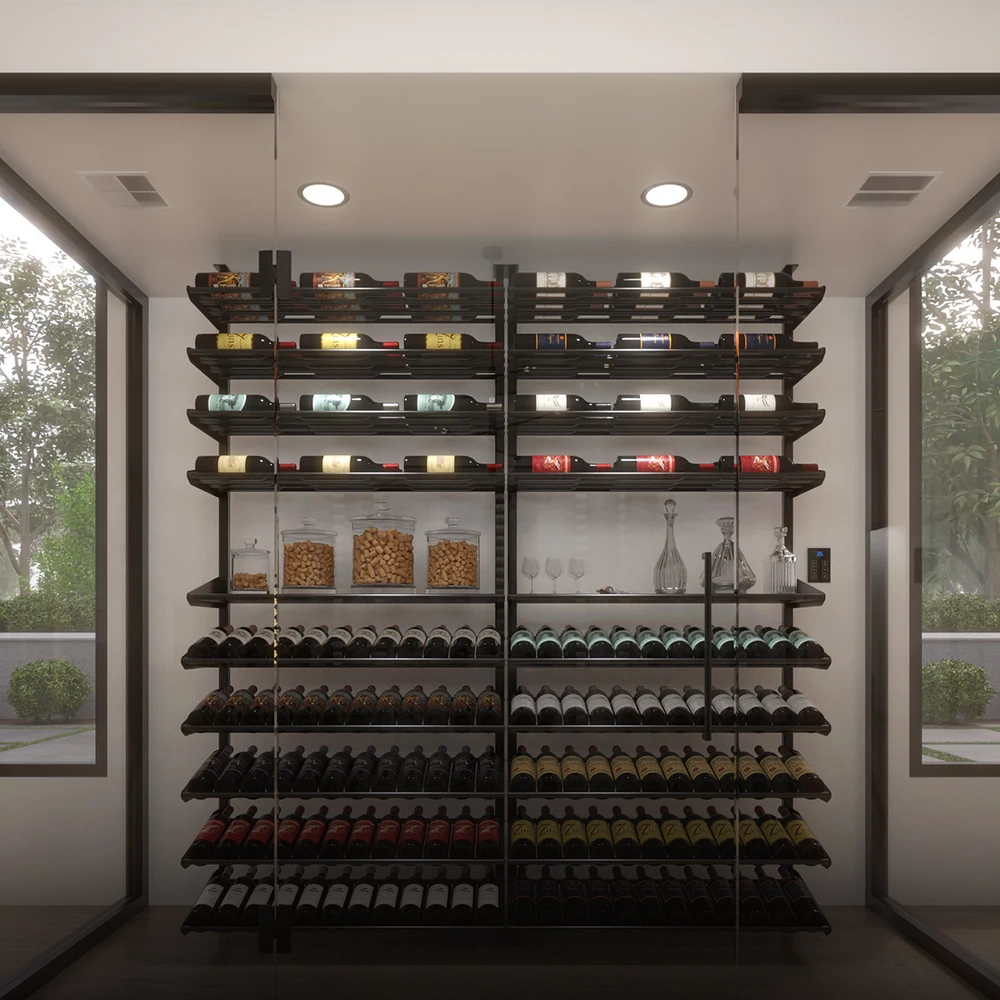
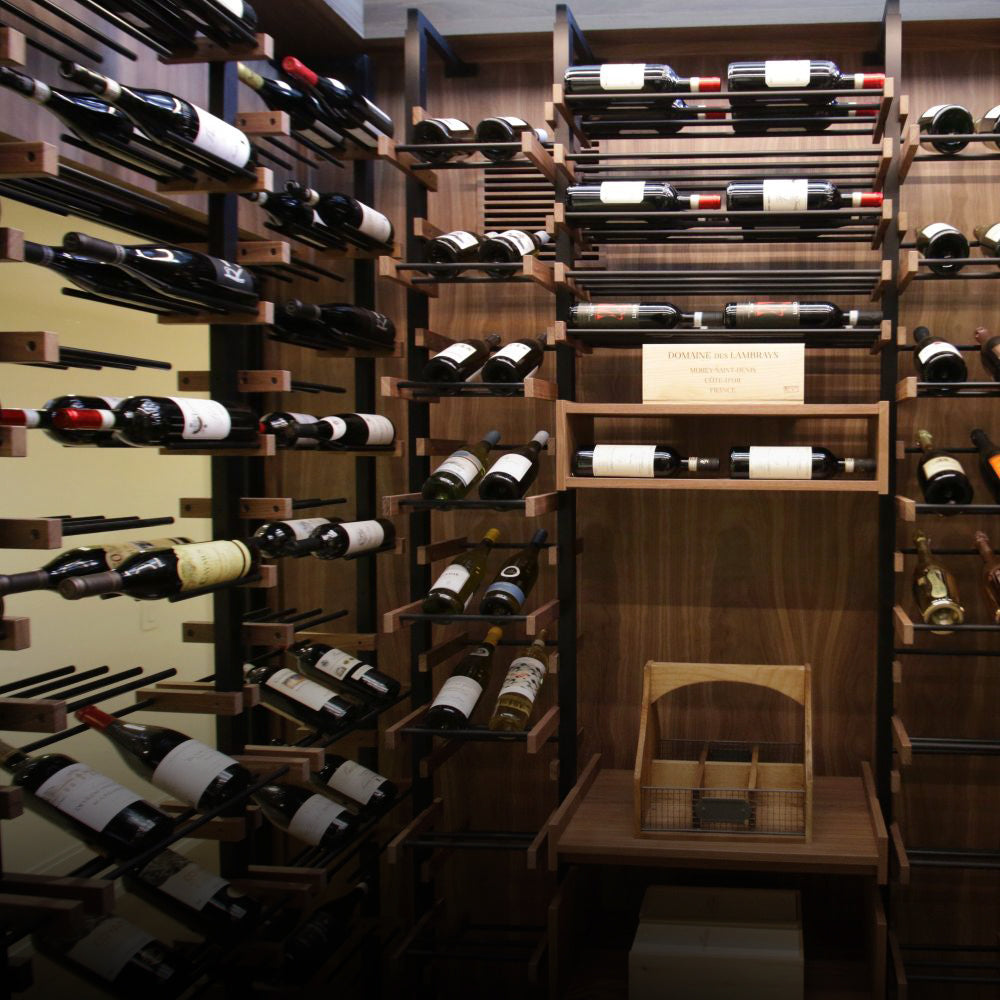
Unbroken blocks of individual cubbies can appear monotonous and visually heavy. Integrating horizontal display rows angled at 15 degrees creates visual breathing room while showcasing marquee producer labels. These display elevations allow label reading at waist and chest heights without disturbing collection stock. The solid hardwood options in our Premier Cru Classic collection integrate high-reveal presentation rows seamlessly into tandem-depth layouts, combining visual luxury with dense capacity below.
Comparing Double Deep Individual Cubbies to Case Storage
Individual tandem cubbies excel for mixed bottle inventories, but large-format wood boxes call for dedicated bulk storage. Placing full original wooden cases (OWC) directly into deep cubbies wastes space and strains wrist joints during retrieval. When planning lower cabinetry beneath individual bottle runs, consider the following layout adjustments:
- Heavy Crate Base Sections: Reserve the lowest 24 inches of floor space for full case bins or heavy-duty slide-out shelves.
- Slide-Out Hardware Clearances: Ensure heavy ball-bearing slides have unobstructed room to extend fully into the central aisle.
- Ergonomic Grouping: Keep daily drinkers and current-year selections between hip and shoulder level, using upper and lower tandem slots for long-term cellaring.
If you are assembling an extensive multi-case cellar, explore our complete line of modular wine racks to build the exact mix of tandem cubbies and case storage your collection requires.
Climate Control, Air Circulation, and Material Selection
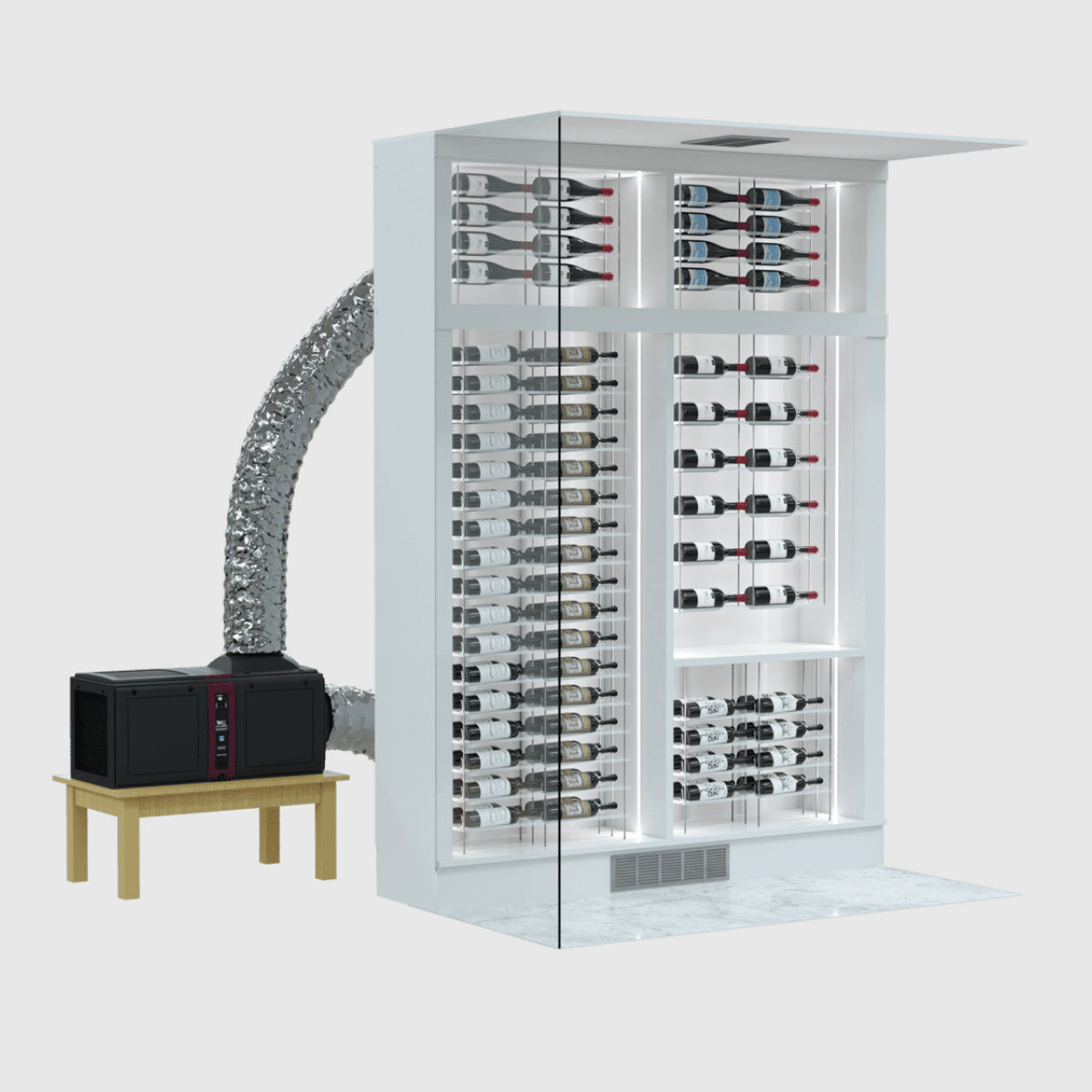
Dense blocks of double-deep racking introduce physical barriers to cellar climate control. While single-depth racking allows conditioned air to wash across perimeter walls relatively unimpeded, a 24- to 27-inch deep timber installation can trap air, creating static pockets where cool air stagnates and heat accumulates. Comprehensive double deep wine racking space planning must integrate mechanical refrigeration dynamics directly into the millwork layout. Blending traditional wooden modules with open-format metal systems from our modern wine racking collections can break up monolithic masses and promote unobstructed air currents.
Preventing Cold Stagnation and Thermal Stratification
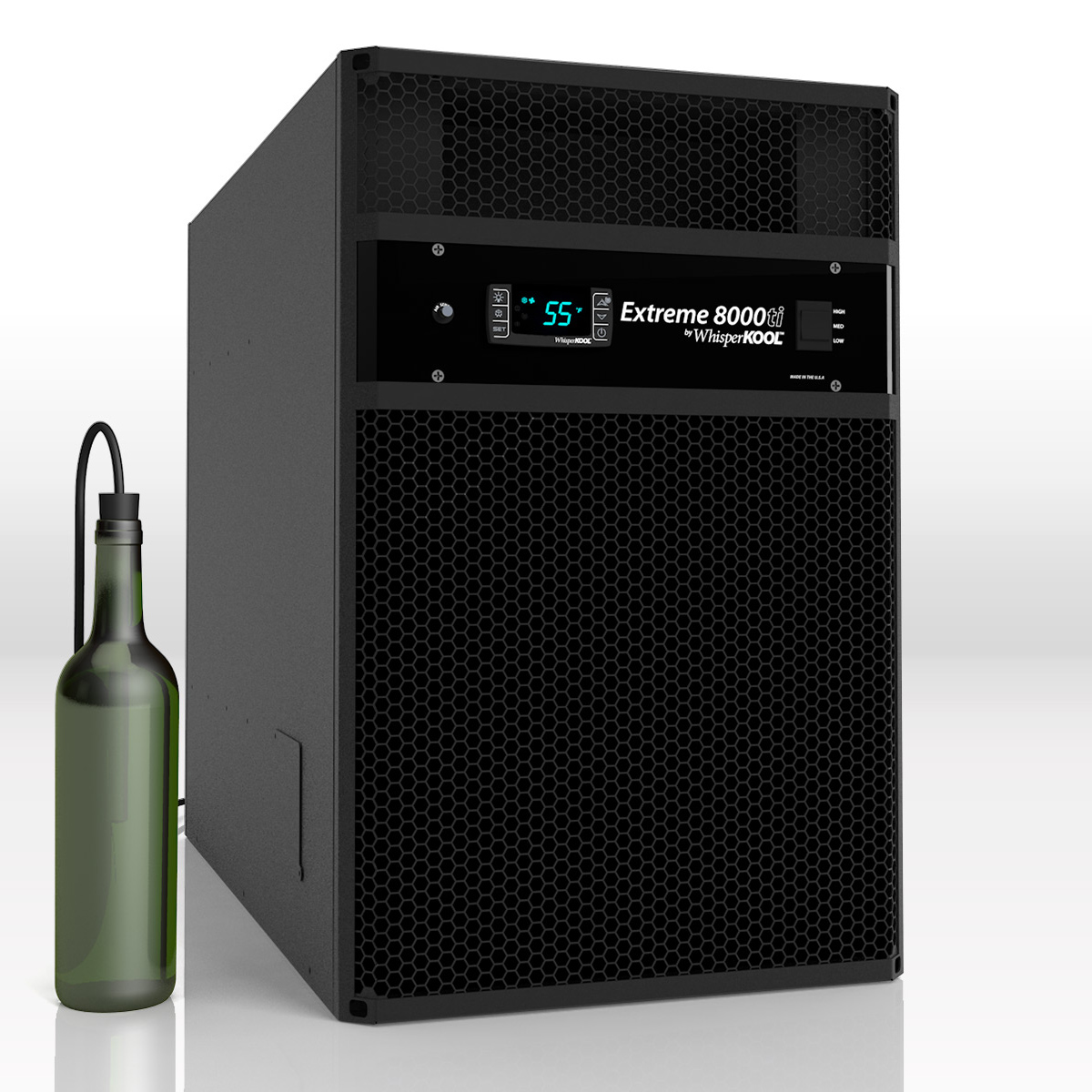
Position cooling supply vents so chilled air discharges smoothly down open aisles rather than blasting directly into the faces of deep racking columns. Maintain at least three to four inches of clear space between top trim and finished ceilings to allow return air to cycle back to the evaporator coil without restriction. Without intentional air pathways, thermal stratification occurs; front bottles may register the target 55°F while rear tandem bottles sit in localized warm spots four to six degrees higher, compromising bottle aging over time.
Hardwood Species Performance Under Sustained Humidity
Sustained 50% to 70% relative humidity poses distinct structural risks to dense tandem woodwork. In deep cubbies, restricted air exchange allows moisture to linger against timber surfaces. Select naturally decay-resistant hardwoods such as premium all-heart redwood, mahogany, or dense white oak. Avoid porous softwoods or unsealed lumber, which can swell, warp, and harbor mildew in humid microclimates. Purpose-built wine racks engineered with non-off-gassing sealants ensure long-term structural integrity and protect delicate label paper across decades of cellar aging.
Professional Layout Planning and Bespoke Design Support
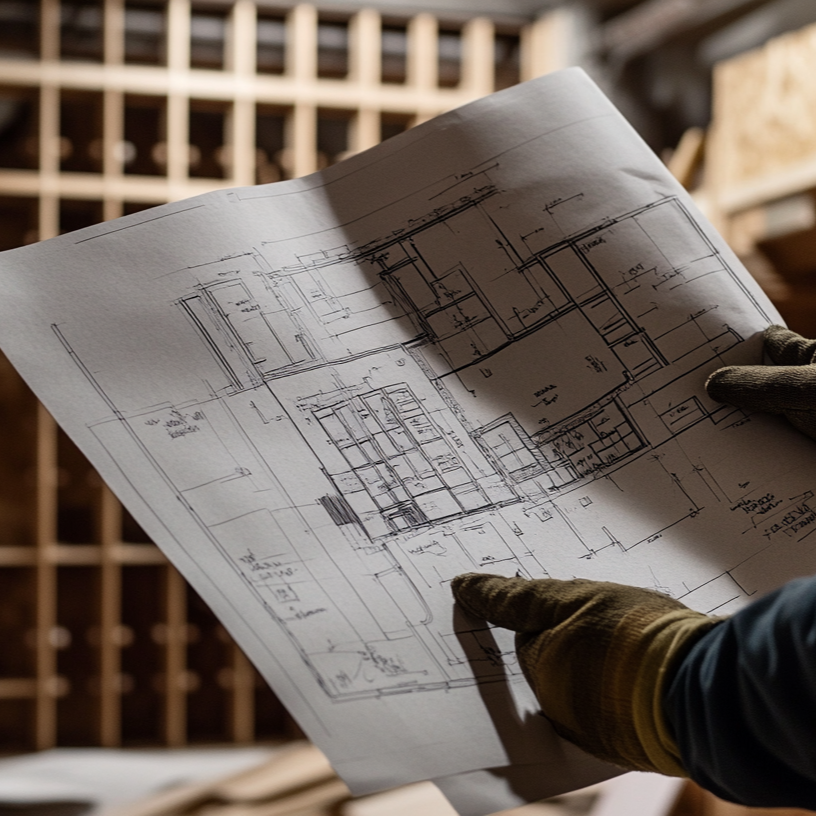
Precision is mandatory when balancing tandem bottle mass, thermal airflow pathways, and exact corridor dimensions. Even minor millwork miscalculations can block cooling supply registers or pinch aisle tolerances. Partnering with the experienced Rosehill Wine Cellars design team provides you with detailed 3D CAD elevations that account for wall standoffs, ductwork integration, and exact bottle footprints before manufacturing begins, ensuring an effortless installation.
Execute Your Cellar Expansion with Engineering Confidence
Executing thoughtful double deep wine racking space planning transforms an ordinary footprint into a high-capacity sanctuary for your private reserve. When you balance finished framing depths with generous 36-to-42-inch aisle clearances, deliberate subfloor reinforcement, and unobstructed refrigeration pathways, high storage density never compromises collection care or effortless bottle accessibility.
Bringing this level of spatial precision to your home is seamless with the right partner. Rosehill Wine Cellars brings over 30 years of national cellar engineering and construction expertise to every layout, combining factory-direct craftsmanship through our Premier Cru Classic racking line with commercial-grade climate integration. Whether you are converting an underutilized alcove or outfitting an expansive private tasting room, your collection deserves an enduring architectural foundation.
Request your complimentary 3D custom cellar design today and take the definitive first step toward expanding your cellar capacity safely.
Frequently Asked Questions
How much depth is required for double deep wine racking?
A standard installation requires between 24 and 27 inches of total finished framing depth. Standard Bordeaux 750ml bottles need 24 inches to sit comfortably tandem. Wider or longer shapes, such as Burgundy, Champagne, and California cabernet bottles, typically require 26 to 27 inches to avoid protruding past the face frame. Planning also includes a subtle half-inch to one-inch wall standoff buffer behind the rack to prevent glass impact against cold drywall.
Can standard residential flooring handle the weight of double deep wine racks?
Ground-floor concrete slabs support double-deep weights easily, but upper-level wood joist framing usually requires structural evaluation. A full 750ml bottle weighs approximately three pounds. Once you factor in dense cabinetry, an eight-foot tandem column run can exceed 1,500 pounds of static load. In residential spaces with subflooring, installing solid continuous base plinths and positioning racks perpendicular to joists prevents subfloor deflection and localized structural sagging.
How do I see or reach bottles stored in the back row?
Storing identical vintages front-to-back within the same cubby is the most practical strategy for tandem depth. This eliminates guesswork because the front bottle indicates what lies behind. For mixed collections, bottleneck identification tags allow you to confirm rear vintages without removing front stock. Integrating digital cellar tracking software alongside angled high-reveal presentation display rows ensures full visual inventory control throughout your collection.
What is the recommended minimum aisle width for a double deep wine cellar?
You should plan for a minimum clear walkway of 36 inches between opposing racking faces. Effective double deep wine racking space planning accounts for stooping, bending, and holding two bottles simultaneously during rear bottle retrieval. If your room incorporates rolling ladders, mobile tasting carts, or a central island, expand the corridor to 42 or 48 inches to preserve smooth human circulation and unobstructed room flow.
Does double deep wine racking restrict cooling system airflow?
Yes, deep cabinetry blocks air circulation more than shallow shelving if supply and return pathways are overlooked. Solid blocks of tandem wood racking can trap pockets of heat, causing thermal variations between front and rear bottles. Positioning cooling registers to blow along central corridors, maintaining top-of-rack clearances beneath ceilings, and integrating ventilated rack uprights ensures consistent 55°F climate circulation across every bottle position.
Is double deep racking suitable for larger Champagne or Magnum bottles?
Standard double-deep individual slots are engineered specifically for 750ml bottles, not larger formats. While wide 750ml Champagne bottles fit in deeper 26-to-27-inch configurations, 1.5-liter Magnums require specialized racking dimensions. Architectural double deep wine racking space planning typically allocates the lower perimeter tiers to dedicated magnum racks, diamond bins, or pull-out case shelves to house oversized glass without forcing it into tandem cubbies.
Can I combine double deep wood racks with modern metal wine pegs?
Absolutely. Blending solid timber casework like Premier Cru Classic racking with contemporary metal wine pegs or rails creates striking visual contrast while improving room airflow. Many architects feature deep wood cabinetry along primary perimeter walls for high-density storage and install label-forward metal pegs, such as Vinofabbrica systems, on accent walls or glass partitions to display prized vintage labels as functional art.