



A lighting fixture marketed as "100% UV-free" can still quietly ruin an age-worthy vintage in a matter of months. True wine display lighting uv rating requirements extend well beyond filtering invisible radiation; they demand strict control over the critical 370 to 450-nanometer spectral band, where high-energy violet and blue wavelengths activate riboflavin and trigger irreversible lightstruck faults.
You've invested considerable passion into curating an exceptional collection, and it's understandable to feel caught between striking visual illumination and the fear of photochemical damage or fluctuating cellar temperatures. You shouldn't have to keep your finest bottles hidden in the dark just to preserve their structural integrity.
Here, you'll master the precise UV ratings, spectral thresholds, and thermal metrics needed to safeguard your collection. We'll examine the exact lux limits, color rendering standards, and architectural decoupling strategies that allow you to showcase your cellar beautifully without compromising delicate aging chemistry.
Key Takeaways
- Explore the photochemical science behind lightstrike and why the 370 to 450-nanometer blue-violet band poses a severe hazard to fine wine chemistry.
- Establish baseline wine display lighting uv rating requirements, targeting zero microwatts per lumen (0 µW/lm) and 50 to 100 lux thresholds for long-term preservation.
- Learn how to decouple LED thermal dissipation from cellar refrigeration loads to prevent localized hot spots near bottle necks.
- Discover architectural fixture criteria, from rigid extruded diffusers to narrow-beam optics, tailored for high-end racking systems.
- Master glass enclosure specifications, including laminated UV-filtering glazing and strategic zoning to block ambient light intrusion.
Photochemical Degradation: The Physics of UV Radiation in Wine Storage
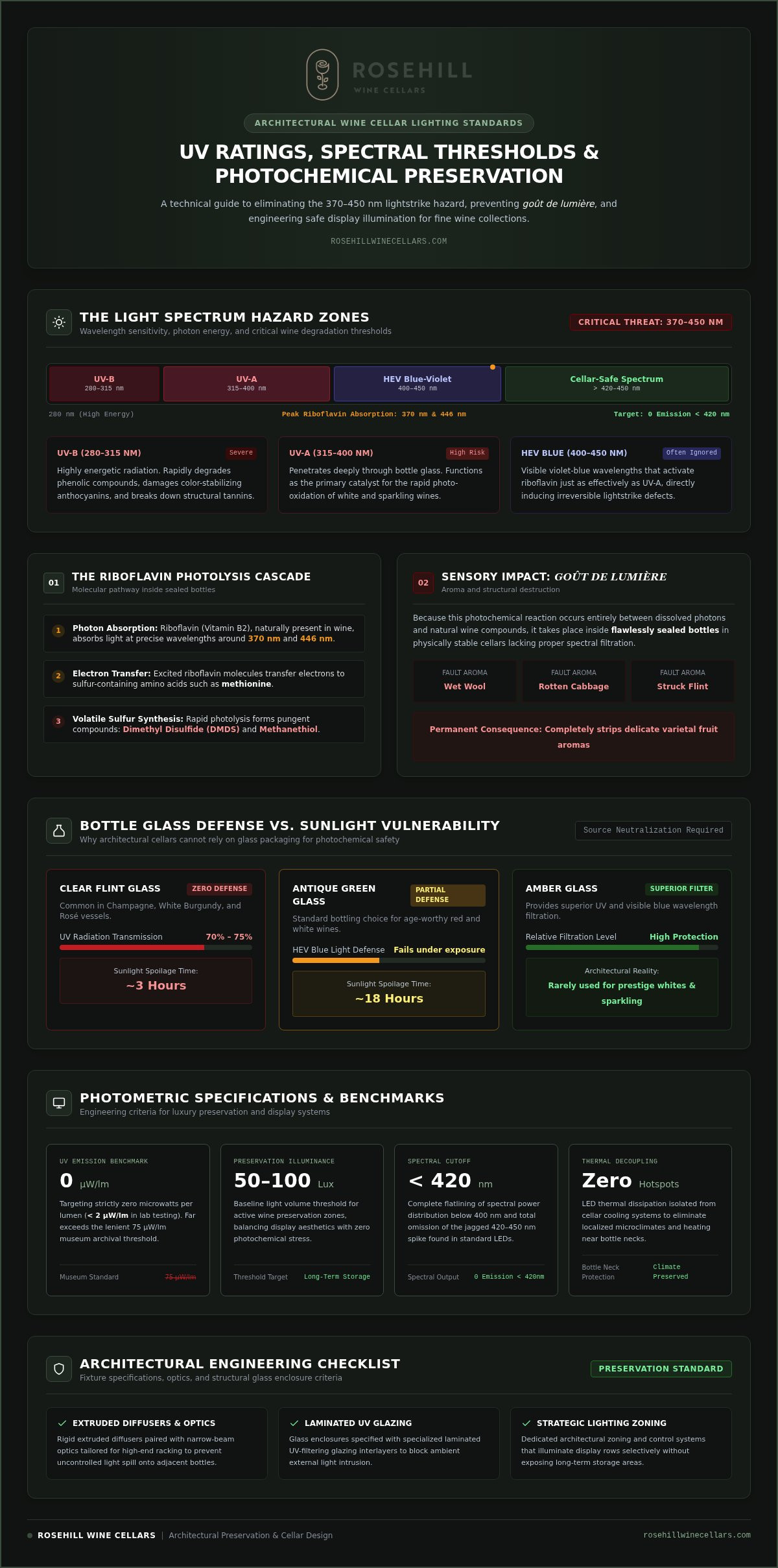
Bottled wine behaves as a dynamic chemical solution sensitive to environmental energy. While traditional cellar guidance focuses on thermal stability and humidity control, light exposure poses an equally destructive threat. Photons within the ultraviolet (UV) and short-wave visible light spectra penetrate bottle glass to trigger irreversible catalytic changes. Meeting rigorous wine display lighting uv rating requirements means addressing both invisible UV-A radiation (315 to 400 nm) and short-wave visible light across the blue-violet boundary (400 to 450 nm). Without proper spectral boundaries, light energy destabilizes the liquid chemistry, resulting in the dreaded fault known as goût de lumière, or lightstruck character.
Glass enclosures provide uneven defense. Standard clear flint glass lets up to 70% to 75% of ambient ultraviolet radiation pass through, offering virtually no defense. Antique green glass performs slightly better, yet it still fails under prolonged exposure to high-energy visible wavelengths. Amber glass provides superior filtration, but modern architectural displays often feature Champagne, white Burgundy, and Rosé bottled in vulnerable clear or green vessels. Architectural cellars must neutralize the light source itself rather than relying on bottle glass for preservation.
The Riboflavin Reaction and Mercaptan Formation
The catalytic process begins when riboflavin (vitamin B2), a naturally occurring micronutrient in wine, absorbs light at precise wavelengths around 370 nm and 446 nm. Excited riboflavin transfers electrons to sulfur-containing amino acids such as methionine. This rapid photolysis forms foul volatile sulfur compounds, predominantly dimethyl disulfide (DMDS) and methanethiol. These molecules introduce pungent notes of wet wool, rotten cabbage, and struck flint while stripping away delicate varietal fruit aromas. Because this reaction requires only photons and dissolved compounds, it occurs inside perfectly sealed bottles resting in an otherwise stable physical environment.
Wavelength Sensitivity: UVA, UVB, and High-Energy Visible Light
Photochemical risks vary across specific wavelengths, making spectral precision critical in storage of wine environments:
- UV-B (280-315 nm): Highly energetic. It rapidly degrades phenolic compounds, damages color-stabilizing anthocyanins, and breaks down structural tannins.
- UV-A (315-400 nm): Penetrates deeper into bottle glass, acting as the primary trigger for the photo-oxidation of delicate white and sparkling wines.
- High-Energy Visible (HEV) Blue Light (400-450 nm): Often ignored by generic lighting manufacturers, this visible violet-blue band activates riboflavin just as effectively as UV-A.
Sunlight can spoil wine in clear glass in as little as 3 hours, while green glass succumbs after roughly 18 hours. To provide genuine preservation, architectural wine display lighting uv rating requirements mandate zero spectral emission below 420 nanometers, ensuring that display fixtures never transmit photochemically reactive wavelengths to resting bottles.
Wine Display Lighting UV Rating Requirements and Photometric Standards
Specifying fixtures for fine wine storage requires shifting from simple visual design to strict photometric engineering. While commercial LEDs are commonly advertised as safe, improper diode fabrication and phosphor degradation can still allow stray high-energy photons to escape. True preservation hinges on establishing quantifiable benchmarks for optical purity, light volume, and spectral distribution. Adhering to professional wine display lighting uv rating requirements means treating your cellar with the same conservation rigor applied to rare historical archives.
Measuring Ultraviolet Radiation: Microwatts Per Lumen Benchmarks
Archival museum conservation standards historically set an upper threshold of 75 microwatts per lumen (µW/lm) for light-sensitive artifacts. For high-value wine, that allowance is far too lenient. Modern architectural cellars require an uncompromising metric: zero measurable ultraviolet radiation, or less than 2 µW/lm under laboratory testing.
Verify this by reviewing a fixture's laboratory spectral power distribution (SPD) curve. Premium diodes designed for cellars show complete flatlining below 400 nm and omit the jagged spike between 420 and 450 nm typical of standard cool-white chips. For collectors pairing bespoke millwork with premium vintages, integrating tested illumination within a tailored layout by Rosehill Wine Cellars ensures that every optical emitter complies with these laboratory-grade benchmarks.
Balancing Lux Levels and Bottle Longevity
Light intensity directly drives chemical decay rates. To balance bottle readability with archival longevity, follow strict photometric boundaries:
- Continuous Display Threshold: Keep illumination across bottle shoulders and labels below 50 lux for long-term aging collections.
- General Circulation: Limit ambient cellar paths to 10 to 20 lumens per square foot (roughly 100 to 200 lux) during brief entry.
- Transient Task Lighting: Confine active inspection light to a maximum of 200 lux, restricted to brief intervals.
Color rendering requires equal discipline. Insist on a minimum Color Rendering Index (CRI) of 90, with an optimal target of 95+ and an R9 saturated red score above 50. This fidelity guarantees rich label legibility without introducing high-energy wavelengths. Pair this color accuracy with a correlated color temperature (CCT) between 2700K and 3000K; this warm spectrum suppresses reactive blue frequencies and flatters organic materials like walnut and blackened steel.
Architects should combine these limits with passive infrared (PIR) occupancy sensors. Automating your fixtures ensures bottles experience total darkness for more than 95% of their cellar life, eliminating continuous photon stress while delivering brilliant visual impact the moment you enter.
Thermal Management: Decoupling Lighting Heat from Climate Systems
Every watt of electrical power delivered to a lighting system converts directly into heat inside the cellar envelope. The conversion formula is absolute: 1 watt equals 3.412 British Thermal Units per hour (BTU/hr). An installation running 100 watts of continuous display lighting injects over 341 BTU/hr of sensible heat into the refrigerated volume. While fulfilling wine display lighting uv rating requirements prevents photochemical damage, unmanaged thermal dissipation creates a second, equally serious hazard: warm microclimates around bottle necks.
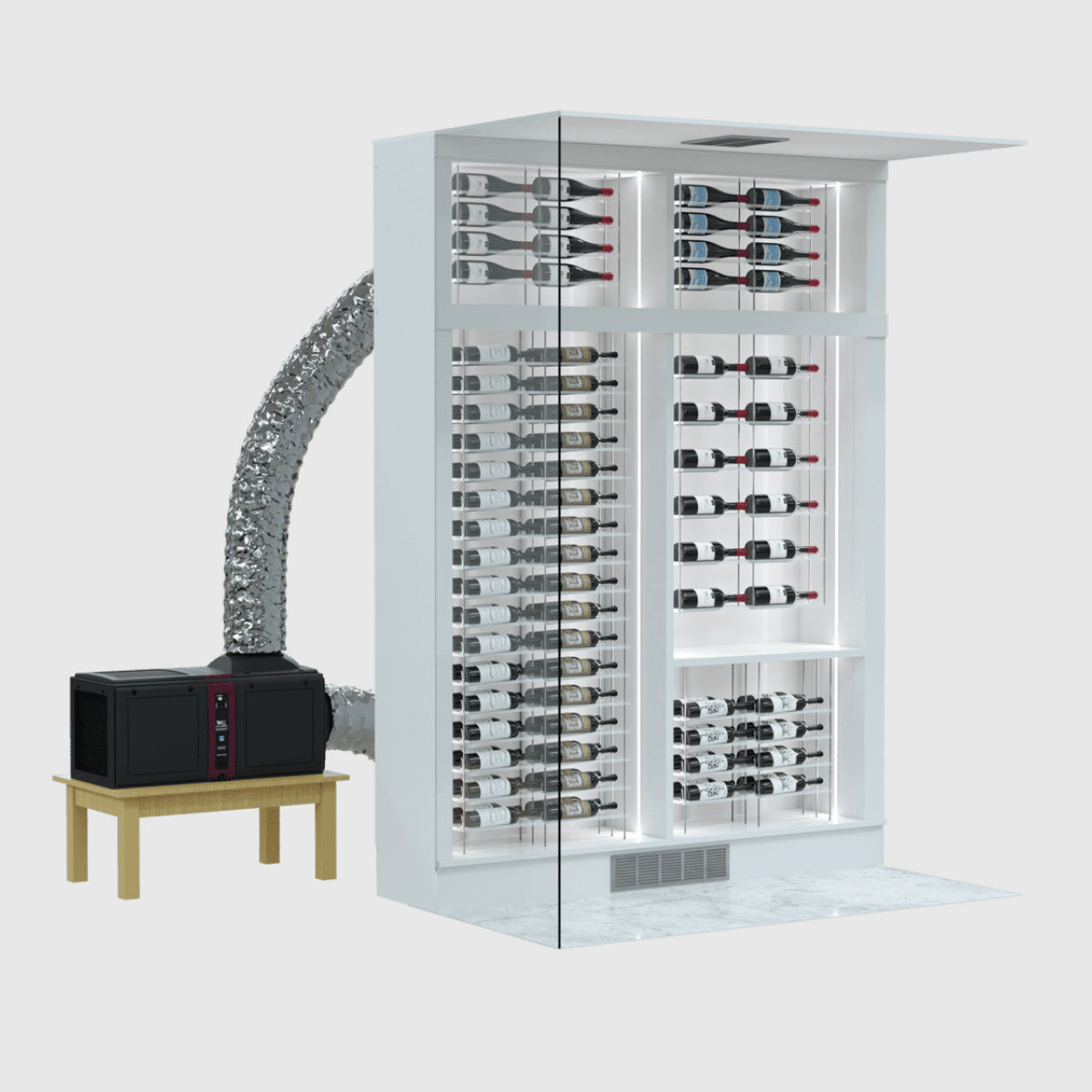
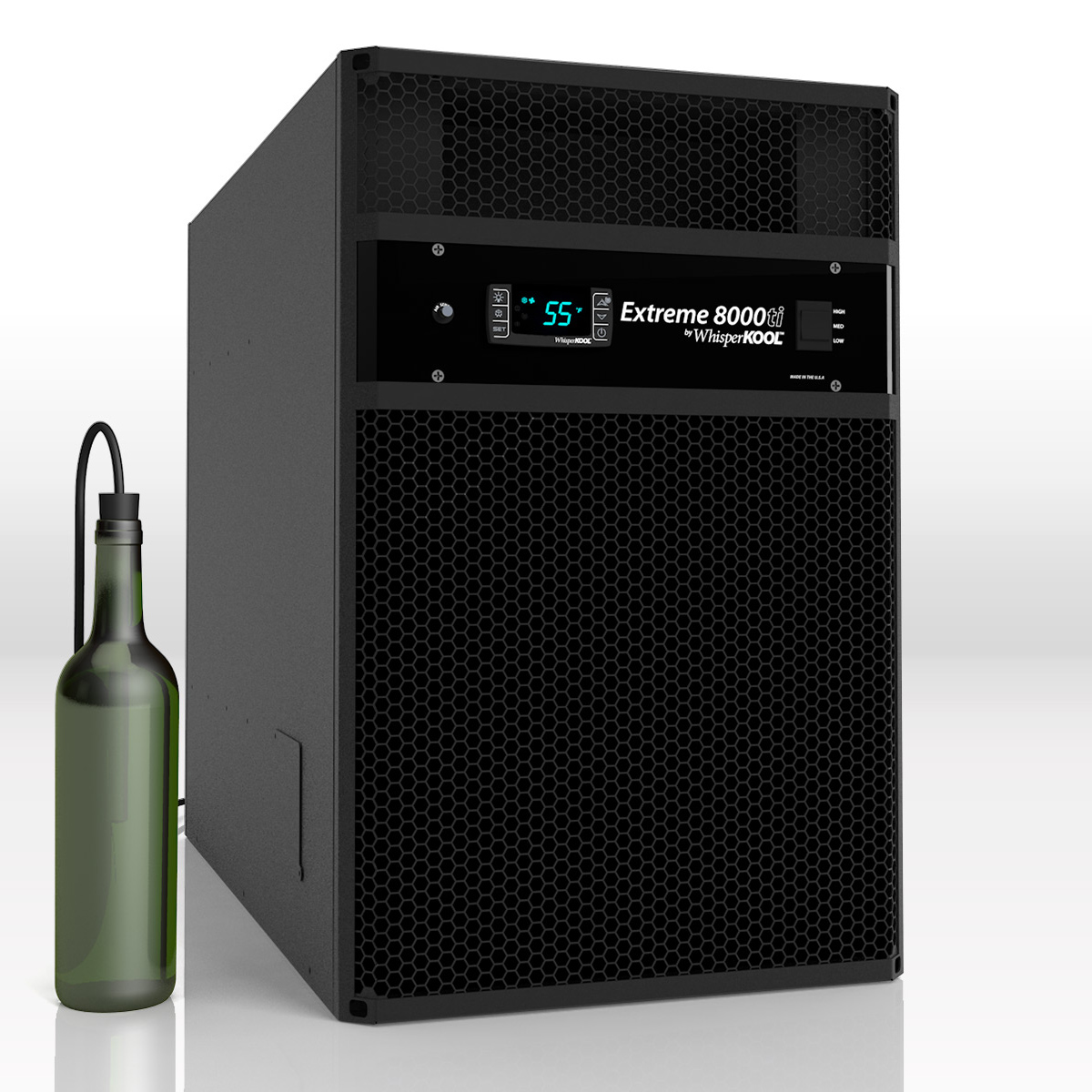
Localized temperature swings around resting bottles cause the wine liquid core to expand and contract. This pumping action degrades cork elasticity, breaks the airtight neck seal, and accelerates premature ullage through oxidative seepage. Mitigating this risk requires sizing and selecting dedicated wine cellar cooling systems that explicitly factor internal electrical heat loads into their total runtime calculations.
Remote Driver Engineering and Low-Voltage Infrastructure
The primary source of electrical heat in an LED fixture is not the diode itself, but its power supply. AC-to-DC transformers operate with inherent energy loss, shedding substantial warmth during voltage stepping. Eliminating this thermal burden inside the cellar requires three architectural steps:
- External Driver Mounting: Locate all Class 2 power drivers in an adjacent utility closet, mechanical room, or ceiling plenum outside the insulated envelope.
- Low-Voltage Distribution: Run 24V DC secondary wiring through the vapor barrier rather than high-voltage line current, reducing line resistance and localized heat.
- Sealed Penetrations: Pack every conduit breach through the wall assembly with fire-rated, non-hardening acoustic or silicone sealant to preserve the continuous vapor retarder.
Passive Extrusion Heat Sinks and Thermal Isolation
Even when drivers sit outside the room, the diodes generate convective warmth along their mounting surface. Heavy-gauge aluminum channels serve as necessary passive heat sinks, drawing heat away from delicate diode junctions and diffusing it evenly into the ambient air stream before localized hot spots can form.
Direct contact between metal fixtures and display racking can conduct heat straight into stored glass bottles. Designers must install non-conductive thermal breaks, such as high-density neoprene gaskets or acrylic spacers, between linear aluminum channels and structural shelving. For comprehensive layouts integrating custom joinery with precision cooling, engaging custom wine cellars design specialists ensures that every lighting channel and refrigeration cycle works in thermodynamic equilibrium.
Architectural Fixture Specification: Strip Lights, Pucks, and Optics
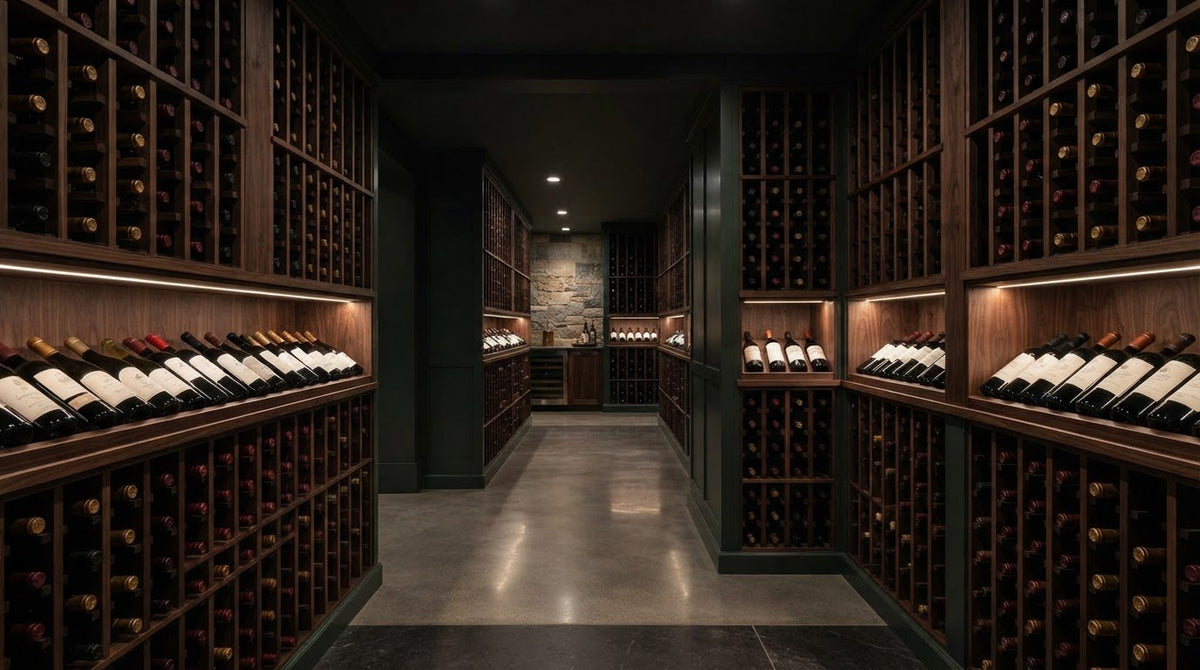
Executing an exquisite display requires balancing beam control, physical materials, and luminaire construction. Bare tape strips wrapped in flexible silicone jacketings often degrade under continuous 55°F cellar operation, yellowing over time and shifting their original spectral distribution. Meeting rigorous wine display lighting uv rating requirements calls for rigid aluminum extrusions fitted with specialized poly-methyl methacrylate (PMMA) opal diffusers. These continuous channels eliminate harsh diode pixelation, delivering soft illumination across wine collections without concentrating radiant energy on fragile glass surfaces.
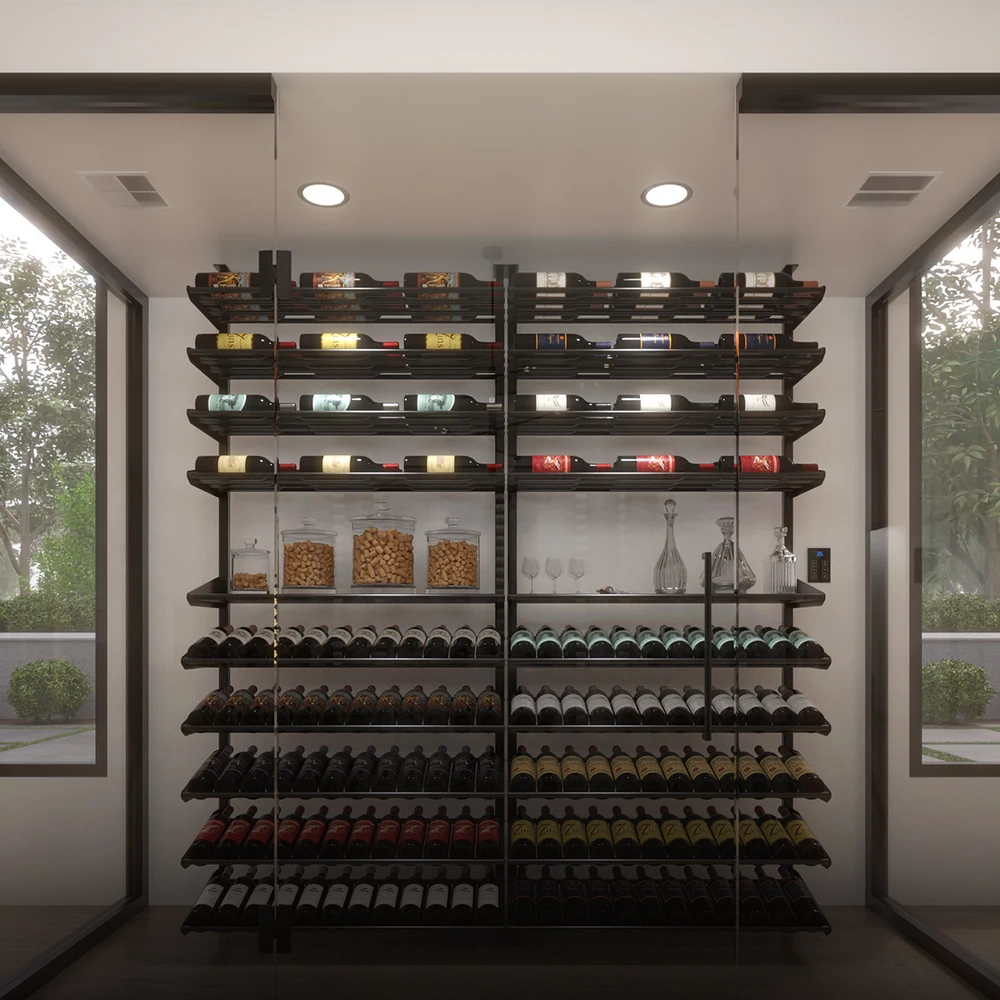
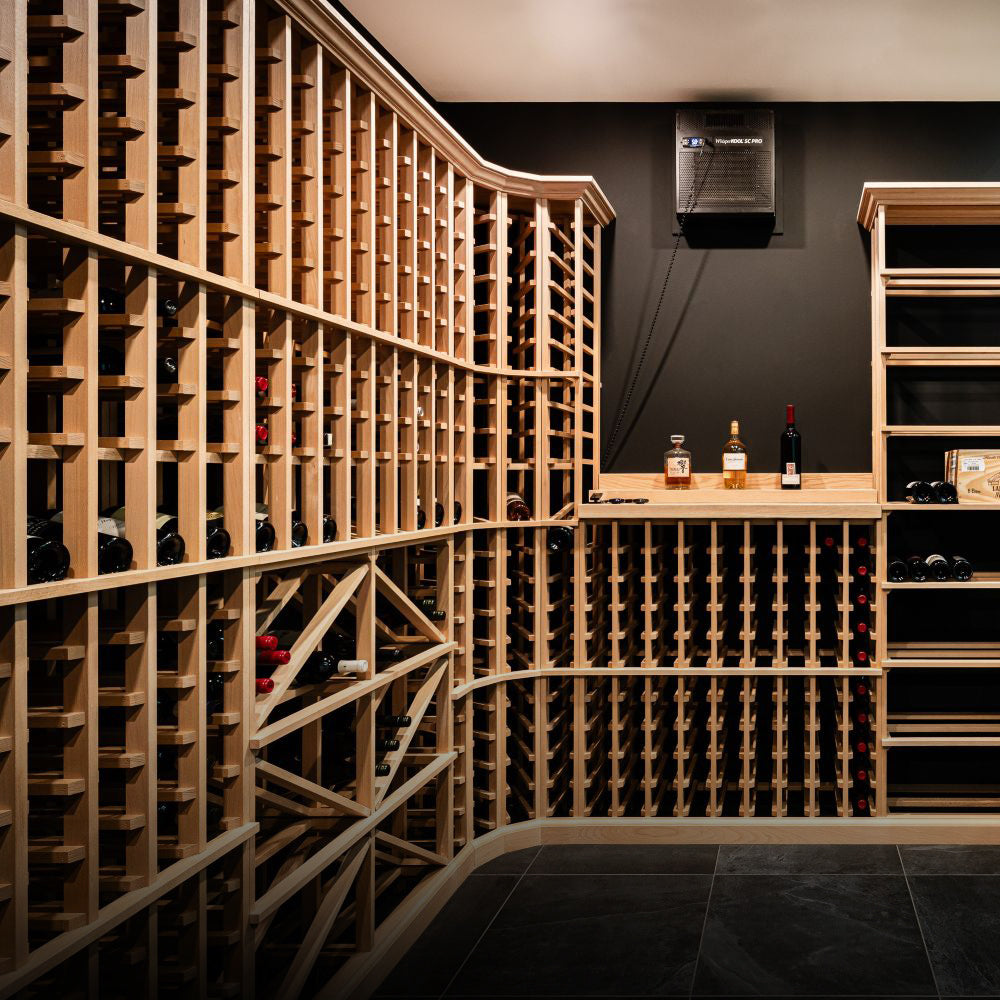
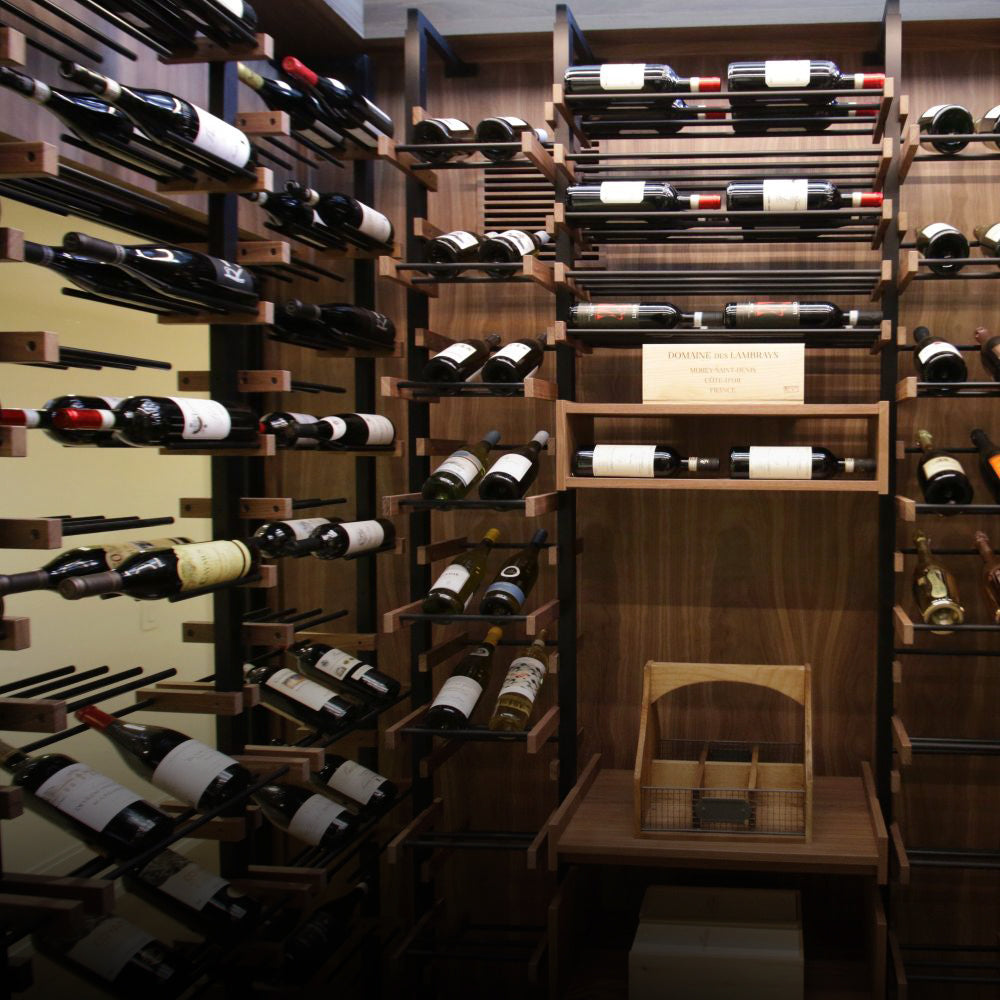
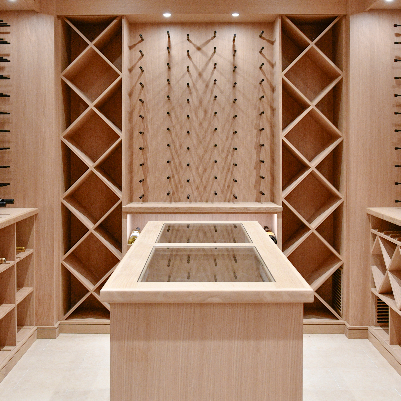
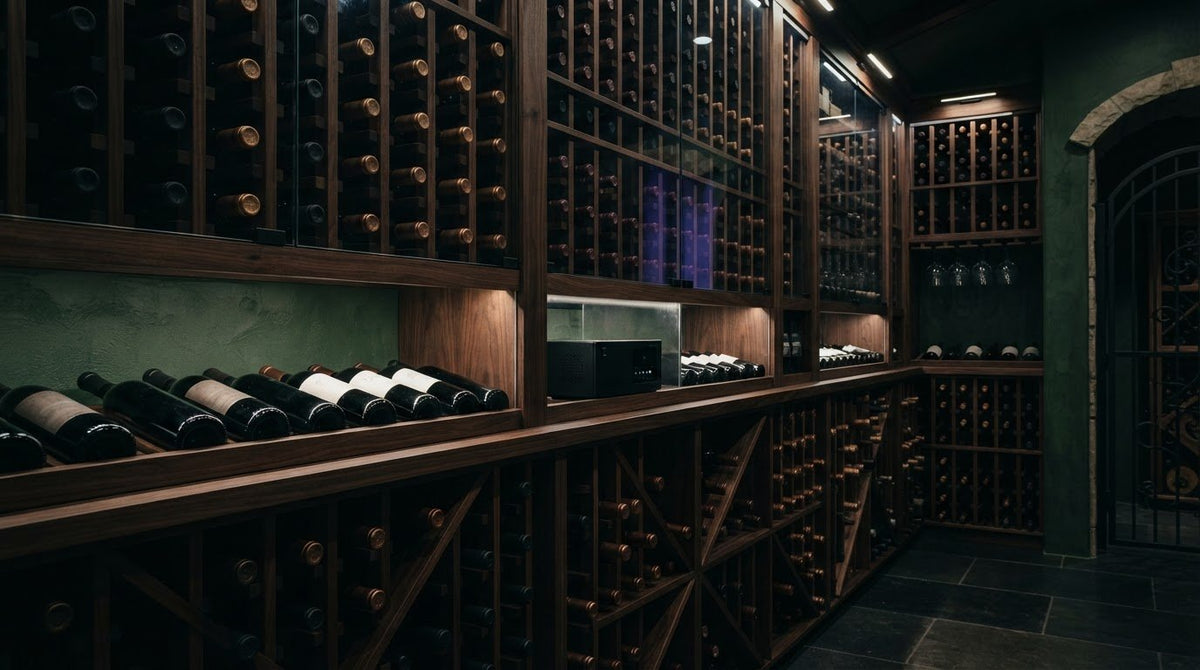
Instead of bathing entire racks in direct, indiscriminate light, refined layouts use indirect ambient reflection. Bouncing low-lumen light off textured split-face stone, dark rift-sawn oak, or non-reflective matte backings produces an expansive glow that keeps direct photon impact on glass bottles well below preservation thresholds. When combined with minimalist modern wine racking systems, these channeled luminaires tuck discreetly behind metal structural posts, concealing the light source entirely while placing the visual focus squarely on vintage labels.
Diffusers, Lenses, and Optical Cutoff Angles
Precision beam manipulation protects the sensitive liquid core of resting bottles. For overhead spotlights and directional pucks, general flood distributions are entirely unsuitable. Specify recessed micro-pucks equipped with 15- to 30-degree narrow beam optics. These lenses isolate label typography without washing over the bottle neck, shoulder, or cork closure.
Pair these focused lenses with anti-glare accessories. Honeycomb hex-cell louvers and deep architectural snoots physically block stray spill light, establishing sharp 45-degree visual cutoff angles that prevent glare when viewing the cellar through exterior glass partitions.
Backlit Acrylics, Edge-Lit Panels, and Vertical Displays
Suspended metal peg systems paired with edge-lit backdrops create a striking, floating visual aesthetic. Achieving this look safely requires specialized material selection:
- Optical Purity: Deploy edge-lit PMMA light-guide panels that emit zero infrared heat forward and yield zero ultraviolet radiation across the panel face.
- Perimeter Decoupling: Mount high-density 24V LED tapes solely along perimeter aluminum channel heat sinks, keeping electrical heat entirely isolated from the main bottle suspension plane.
- Consistent Separation: Maintain a strict minimum clearance of 2 to 3 inches between the backlit diffusion acrylic and the bottle bodies to avoid localized microclimate warming.
Ready to build a showcase that balances conservation standards with modern elegance? Explore the curated peg systems and architectural hardware in our modern wine racking collection to begin configuring your bespoke display.
Glass Enclosures, Controls, and Architectural Preservation Checklists
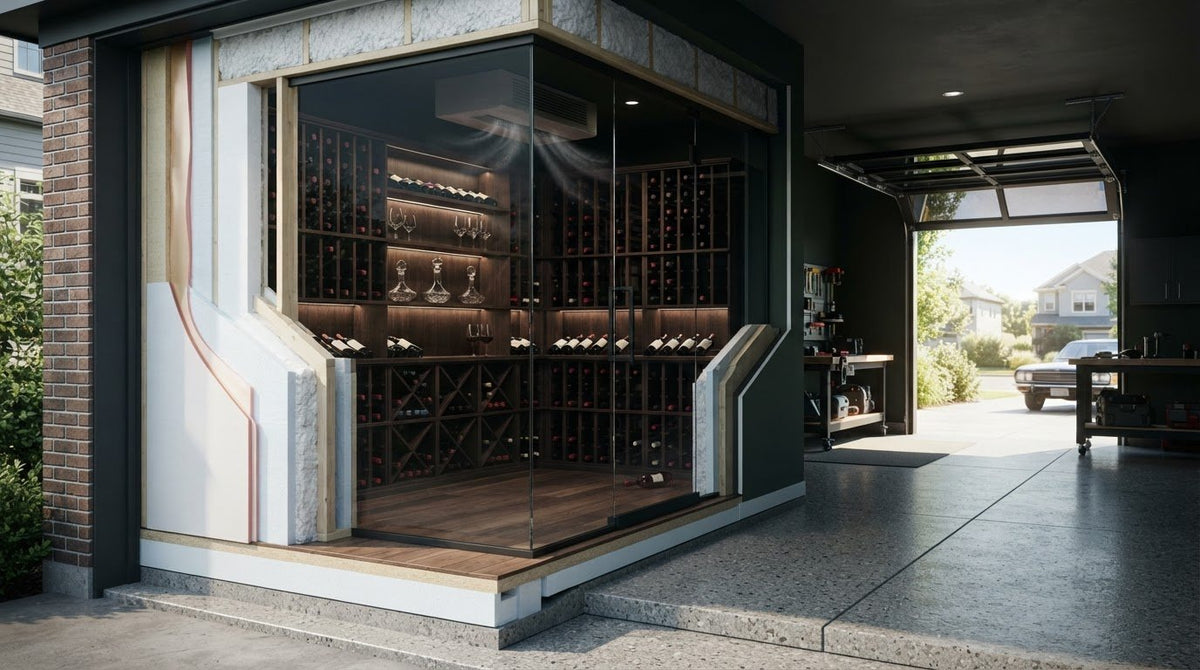
Specifying pristine interior luminaires addresses only half of the preservation equation. Modern glass-enclosed wine rooms frequently sit adjacent to daylit living spaces, great rooms, or exterior window walls. Without proper optical barriers, ambient daylight floods the display with uncontrolled UV-A and short-wave blue photons. Satisfying wine display lighting uv rating requirements requires pairing interior zero-emission fixtures with high-performance architectural glazing and intelligent controls that guard your collection against external light pollution.
High-Performance Glazing and Spectrally Selective Films
Standard monolithic float glass permits up to 75% of ambient ultraviolet radiation to pass directly into the storage space. Architectural wine enclosures demand insulated glass units (IGUs) incorporating laminated safety glass with specialized polyvinyl butyral (PVB) interlayers. These museum-grade interlayers provide 98% to 99%+ filtration of wavelengths below 380 nm, maintaining a UV Transmission (UVT) rate under 5% for serious aging spaces.
Combine laminated interlayers with spectrally selective low-emissivity (low-E) coatings on surface two or three of the IGU. This metallic micro-layer reflects solar infrared heat back toward the living area while neutralizing residual high-energy photons. For standalone installations, selecting engineered systems like Vantaggio wine cellars ensures your enclosure incorporates factory-tested UV-filtering glass packs that prevent ambient light degradation.
Commissioning, Spectrometer Auditing, and Ongoing Controls
Architectural lighting requires rigorous physical verification prior to stocking valuable vintages. Smart control architectures using 0-10V, DALI, or Phase dimming protocols allow precision scheduling that curtails total photon accumulation. Program your automation system for three dedicated scenes:
- Archival Preservation Mode: 0% output (complete darkness) during inactive hours, governed by occupancy sensors.
- Ambient Presentation Mode: 10% to 20% output, maintaining illuminance strictly below 50 lux across bottle labels.
- Active Sommelier Mode: Up to 100% output (capped at 200 lux) for label inspection, timed to revert automatically after 10 minutes.
During final commissioning, verify fixture performance using a calibrated, portable spectrophotometer held against the bottle resting planes. The audit must confirm zero spectral leakage below 400 nm and ensure maximum ambient lux remains within target thresholds. For homeowners and architects seeking a fully verified balance of optical safety, refrigeration engineering, and bespoke cabinetry, partnering with Rosehill Wine Cellars provides nationwide turnkey design expertise grounded in scientific preservation.
Elevating Cellar Aesthetics Through Scientific Precision
Mastering wine display lighting uv rating requirements bridges the gap between ambitious architecture and serious oenological preservation. Safeguarding fine wine demands a unified approach: suppressing reactive violet-blue wavelengths below 420 nanometers, managing illuminance under 50 lux for continuous display, and isolating low-voltage driver heat outside the vapor barrier. When luminaires, glazing interlayers, and refrigeration work in tandem, your collection remains completely protected against photochemical degradation and thermal instability.
Every bottle in your cellar represents an investment in craftsmanship, terroir, and patience. You shouldn't have to compromise those qualities for visual drama. With over three decades of specialist engineering experience founded in 1995, Rosehill Wine Cellars delivers turnkey integration of bespoke glass enclosures, architectural racking, and climate systems nationwide. Collaborate with Rosehill Wine Cellars on your bespoke cellar lighting and design to build a striking showcase where your rarest vintages age flawlessly for decades to come.
Frequently Asked Questions
What is the maximum safe UV rating for wine display lighting?
The maximum safe threshold is zero microwatts per lumen (0 µW/lm), with an absolute laboratory tolerance under 2 µW/lm. While museum conservation guidelines allow up to 75 µW/lm for sensitive artifacts, fine wine requires stricter standards. Stringent wine display lighting uv rating requirements demand fixtures that flatline across all UV spectra and suppress the adjacent 400 to 450-nanometer blue-violet band to eliminate the risk of photolytic chemical degradation.
Can standard commercial LED strip lights spoil bottled wine?
Yes, off-the-shelf commercial LED strips can spoil wine over time. Many general-purpose diodes rely on high-energy blue emitters coated with inexpensive phosphors, creating an intense spectral spike between 420 and 450 nanometers. This wavelength band excites riboflavin just as effectively as raw ultraviolet light. Additionally, bare commercial tapes lack adequate heat sinking, which can warm adjacent bottles and accelerate oxidation.
How does lightstruck fault alter the aroma and taste profile of fine wine?
Lightstruck fault severely diminishes fresh varietal fruit aromas and creates unpleasant sulfurous compounds. When riboflavin interacts with amino acids under improper lighting, it generates dimethyl disulfide and methanethiol. These volatile compounds produce unmistakable off-odors reminiscent of wet cardboard, damp wool, cooked cabbage, and struck flint. Even brief exposure permanently flattens a wine's delicate aromatics, ruining its structural complexity on the palate.
Do colored wine bottles protect vintages from display lighting damage?
Colored glass offers modest defense, but it won't shield wine indefinitely. Clear flint glass transmits nearly 75% of UV radiation, leaving white wines and Rosés defenseless. Traditional green glass filters UV-B effectively, yet it remains vulnerable to high-energy violet-blue wavelengths after just 18 hours of direct exposure. Amber glass performs better, but architectural displays must neutralize the light source itself rather than relying on bottle glass.
What is the recommended color temperature for wine cellar lighting fixtures?
The optimal correlated color temperature is a warm white between 2700K and 3000K, with 2700K considered the ideal standard. Warm diodes naturally suppress the hazardous blue wavelengths found in cooler 4000K or 5000K commercial luminaires. When evaluating wine display lighting uv rating requirements, always pair this warm CCT with a high Color Rendering Index of 90+ to illuminate bottle labels accurately without introducing photolytic hazards.
How do remote LED drivers help protect wine cellar climate control?
Remote LED drivers protect the cellar climate by eliminating internal transformer heat. Power supplies convert alternating current to direct current, releasing sensible heat in the process. Placing drivers outside the vapor barrier ensures that electrical thermal gains don't enter the refrigerated room. This decoupling prevents localized hot spots around upper bottle racking, lowers overall cooling runtimes, and prevents erratic temperature spikes that dry out natural corks.
What type of architectural glass is required for lit wine display enclosures?
Display enclosures require double-glazed or triple-glazed insulated assemblies incorporating laminated glass with a specialized polyvinyl butyral (PVB) interlayer. This museum-grade film blocks 98% to 99%+ of ambient ultraviolet wavelengths below 380 nanometers. Integrating spectrally selective low-emissivity coatings further reflects external ambient infrared heat, preventing surrounding room illumination and sunlight from disrupting the cellar's precise 55°F thermal equilibrium.