















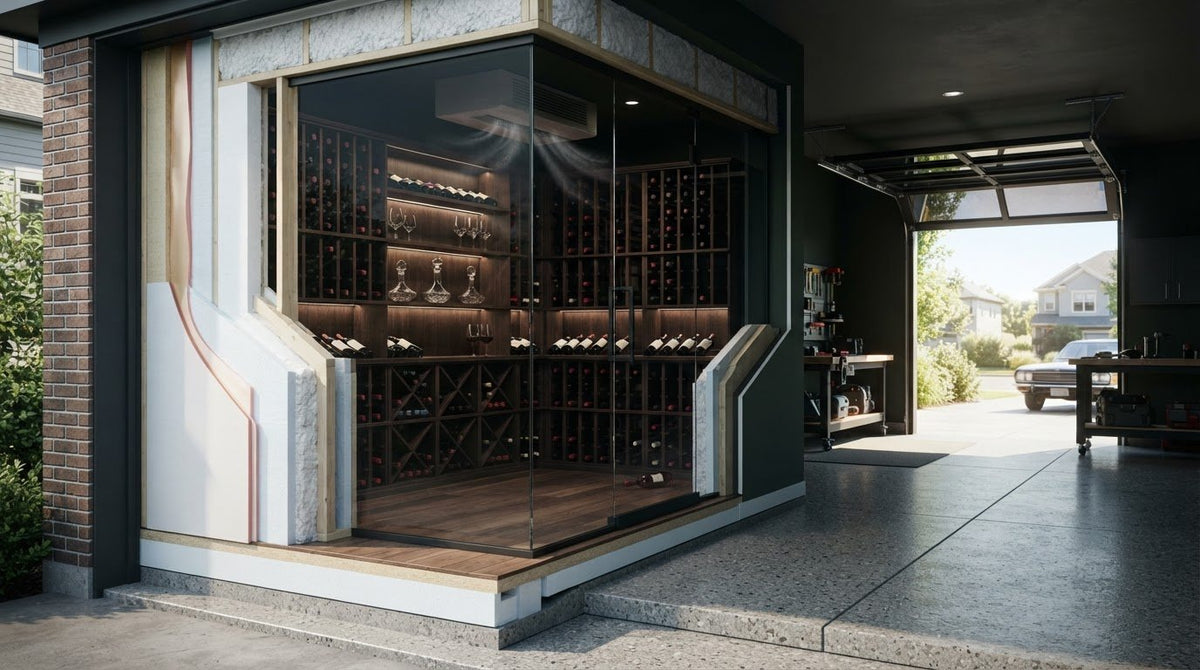
Standard home building practices will quietly destroy a garage wine conversion. When summer ambient temperatures soar past 100°F or winter sub-zero freezes set in, treating an unconditioned garage like a typical interior closet puts your investment-grade vintages at catastrophic risk. You likely already recognize that fine wine demands an unwavering 55°F, yet the thought of cooling equipment burning out during a heat spike is a constant worry. Implementing true garage wine room extreme climate insulation requires looking beyond ordinary residential methods and adopting dedicated building science.
This guide provides the exact architectural strategies needed to build an impenetrable thermal envelope. You'll learn how to specify continuous insulation assemblies for extreme ambient differentials, position vapor retarders correctly on the warm side of framing, and isolate concrete slabs against relentless heat transfer. We'll also examine how to select commercial-grade wine cooling units engineered to endure hostile environments, ensuring your cellar remains an enduring, protective sanctuary for your collection.
Key Takeaways
- Mastering garage wine room extreme climate insulation requires elevating thermal assemblies to minimum benchmarks of R-22 in walls and R-30 to R-50 in ceilings to counteract severe ambient swings.
- Discover why positioning the vapor barrier on the warm exterior face of the wall assembly is essential for preventing interior wall condensation and structural decay.
- Learn how to specify commercial-grade split wine cooling units equipped to endure extreme ambient differentials without causing compressor failure.
- Explore the architectural mechanics of decoupled framing and thermal subfloor breaks that isolate your cellar from conductive concrete slabs.
- Identify humidity-resilient hardwood racking species and vapor-impervious architectural finishes engineered to maintain cellar integrity at a steady 55°F.
The Physics of Garage Wine Storage in Extreme Climates
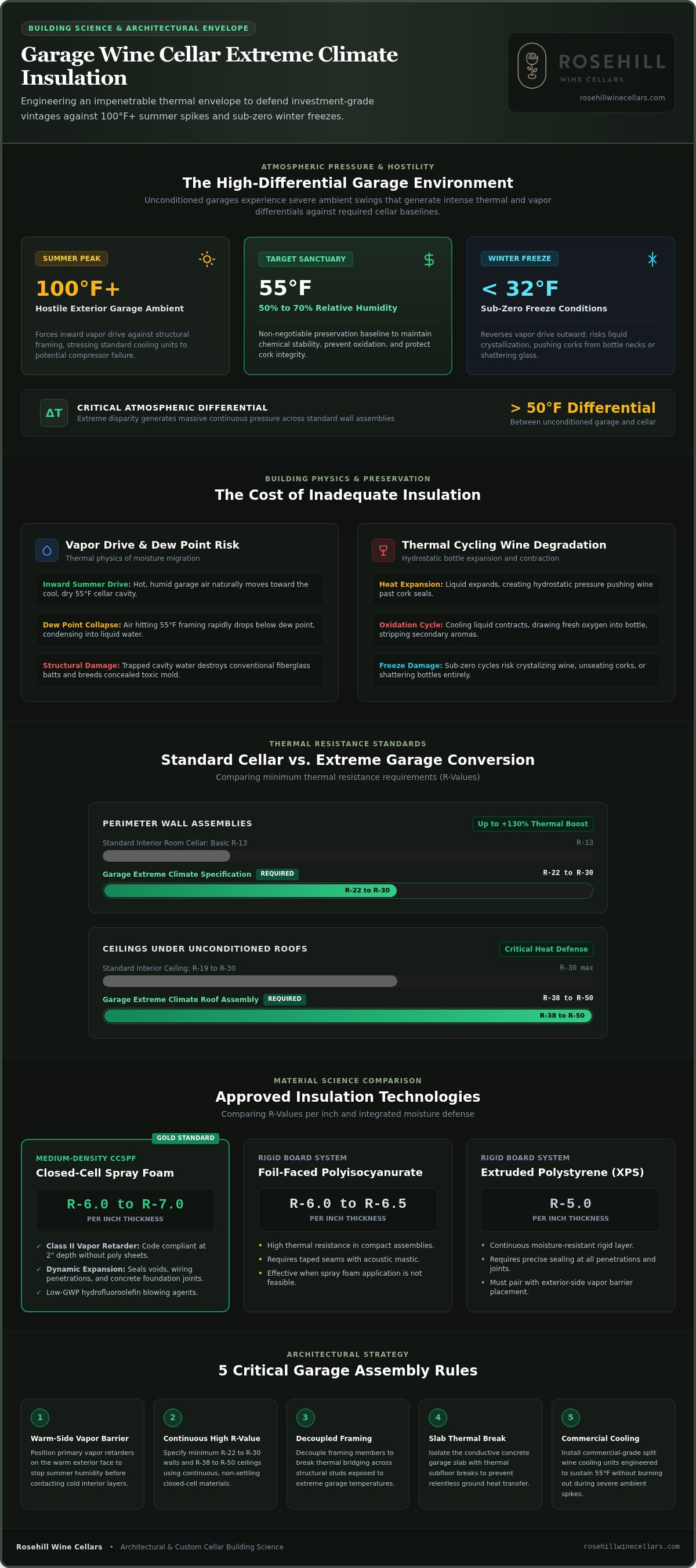
Garages represent the most hostile architectural environment for long-term wine preservation. In an unconditioned garage, seasonal ambient temperatures frequently swing from sub-freezing winter conditions to well over 100°F in summer heatwaves. Wine storage, by contrast, demands a continuous 55°F baseline with 50% to 70% relative humidity to protect delicate chemical compounds. When an unconditioned structure experiences massive exterior heat spikes, the thermal differential between the garage and the cellar interior can easily exceed 50°F. This disparity generates intense vapor pressure, forcing warm moisture straight toward the cooler enclosure. Without purpose-built garage wine room extreme climate insulation, standard building assemblies inevitably fail under this relentless atmospheric pressure.
Understanding Vapor Drive and Condensation Risks
Moisture naturally travels from areas of high temperature and humidity toward cool, dry spaces. In extreme summer heat, hot garage air exerts heavy vapor drive inward against the cellar perimeter. Complying with verified active wine cellar environmental standards requires halting this moisture migration before it reaches the cooled interior framing. If humid air penetrates the wall cavity and contacts structural materials cooled to 55°F, it rapidly drops below its dew point. Liquid water then collects inside the stud cavities, destroying conventional insulation and fostering concealed black mold. In sub-zero winter conditions, this vapor drive reverses, drawing humidity out of the cellar and threatening cork hydration.
The Consequences of Thermal Cycling on Aging Wine
Wine is chemically delicate, and rapid temperature fluctuations accelerate destructive aging reactions. When heat permeates the room, the liquid expands inside the bottle, exerting hydrostatic pressure against the cork seal. This expansion forces wine up the neck, compromising the cork and drawing in fresh oxygen once the liquid cools and contracts. These thermal spikes ruin balance, flattening acidity and stripping secondary aromas. Winter freeze cycles are equally dangerous; sub-freezing garage temperatures risk crystalizing the liquid, pushing corks out of necks or shattering rare bottles entirely. Safeguarding investment-grade vintages requires structural barriers that eliminate ambient cycling completely.
Selecting Extreme Climate Insulation Materials: R-Values and Vapor Barriers
Standard interior cellars often rely on basic R-13 assemblies, but converting an unconditioned garage demands a substantially higher thermal defense. Implementing proper garage wine room extreme climate insulation means engineering minimum ratings of R-22 to R-30 for perimeter walls and R-38 to R-50 for ceilings directly beneath unconditioned roof spaces. Traditional fiberglass batts settle over time and lack resistance against moisture saturation; safeguarding your collection requires continuous, impervious materials engineered for high-differential performance.
Closed-Cell Spray Foam: The Gold Standard for Garages
Medium-density closed-cell spray polyurethane foam (ccSPF) provides the most comprehensive thermal protection for garage builds. Formulated with modern low-GWP hydrofluoroolefin blowing agents, it yields an impressive R-6.0 to R-7.0 per inch of thickness. When applied at a depth of two inches, it serves as a code-compliant Class II vapor retarder, eliminating the need for separate polyethylene sheeting. The foam expands dynamically into structural voids, encasing wiring runs and sealing irregularities against concrete foundations that would otherwise leak conditioned air.
Rigid Foam Board Systems and Sealing Protocols
Rigid board assemblies offer a viable alternative when spray application isn't feasible. Foil-faced polyisocyanurate provides approximately R-6.0 to R-6.5 per inch, while extruded polystyrene (XPS) delivers R-5.0 per inch. These systems require meticulous execution; every joint, seam, and penetration must be sealed with acoustic mastic and rated foil tape. Per Building Science Corporation's vapor barrier guide, placing your primary vapor retarder on the warm exterior face prevents moisture from condensing against the colder internal layers.
Addressing the Concrete Slab and Thermal Bridging
Standard concrete garage slabs function as massive thermal highways, conducting seasonal heat and ground moisture straight upward into the room. Effective garage wine room extreme climate insulation requires decoupling this foundation completely. Lay high-compressive-strength XPS boards (25 to 40 psi) over an elastomeric epoxy vapor barrier, topping them with tongue-and-groove subflooring. Place thermal break gaskets beneath all wall bottom plates to arrest conductive transfer through wood and steel framing. If navigating these multi-layered details feels complex, partnering with Rosehill Wine Cellars for custom wine cellar design ensures your room's thermal envelope is engineered without compromise.
Cooling System Requirements for High-Differential Garage Wine Rooms
High ambient heat combined with severe seasonal shifts places extraordinary strain on refrigeration mechanics. Even with robust garage wine room extreme climate insulation, an undersized or improperly configured cooling unit will run continuously, causing premature compressor burnout. Self-contained units that vent heat directly back into an enclosed garage create a catastrophic feedback loop; as surrounding air spikes past 100°F, condenser heat rejection halts and triggers high-pressure safety shutdowns. Selecting commercial-grade wine cellar cooling systems capable of operating under broad thermal differentials is vital for long-term cellar survival.
Calculating Heat Gain and Sizing BTU Requirements
Accurate thermal load calculations must be based on worst-case ambient garage extremes rather than standard indoor baselines. Sizing requires calculating total heat conduction through all exterior walls, ceilings, and decoupled slab assemblies, while factoring in glass surface area, internal LED illumination, and bottle capacity. Equipment should be engineered to handle peak summer heat while maintaining a balanced 70% to 80% duty cycle, preserving mechanical longevity and stabilizing relative humidity.
Selecting Split Systems and Exterior Condensers
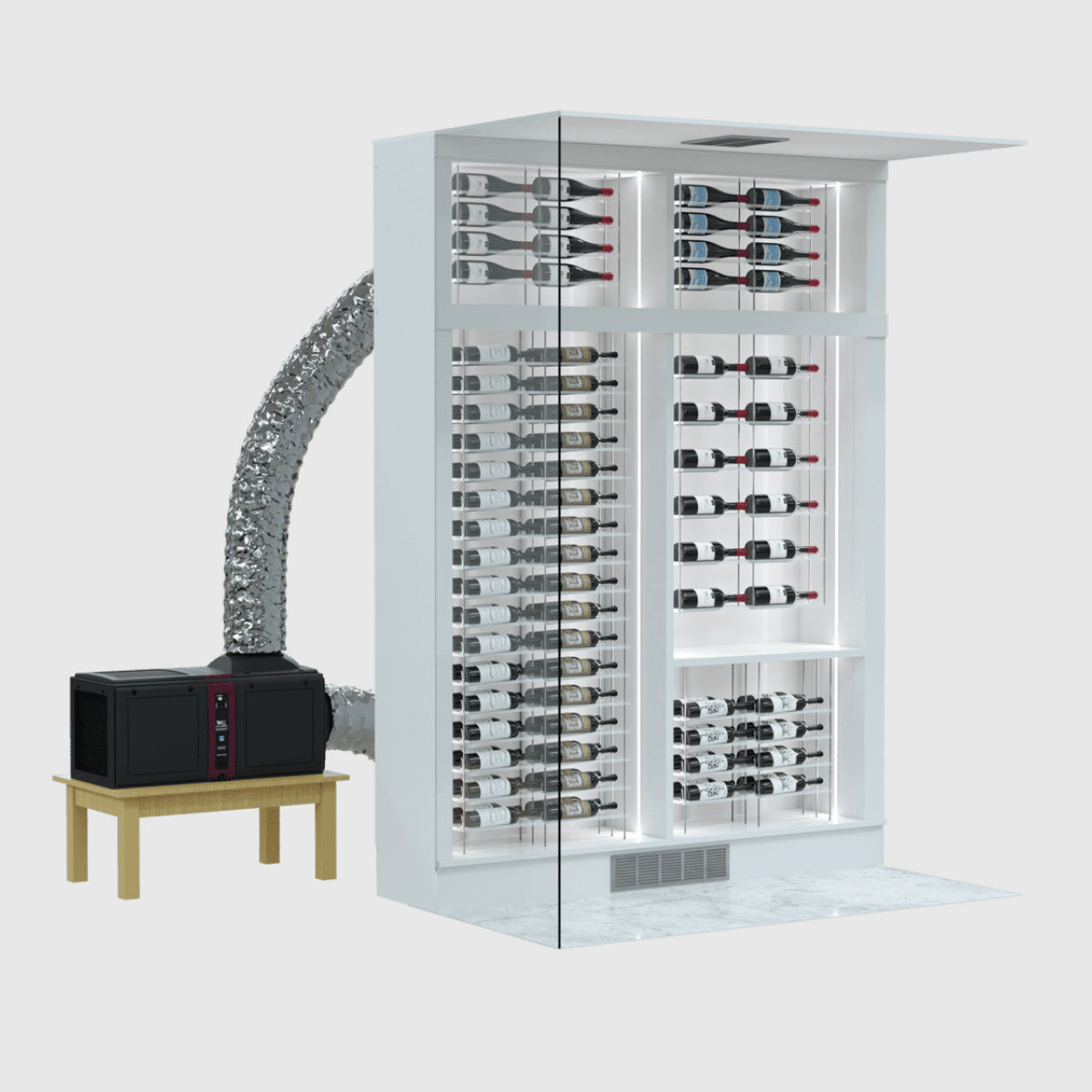
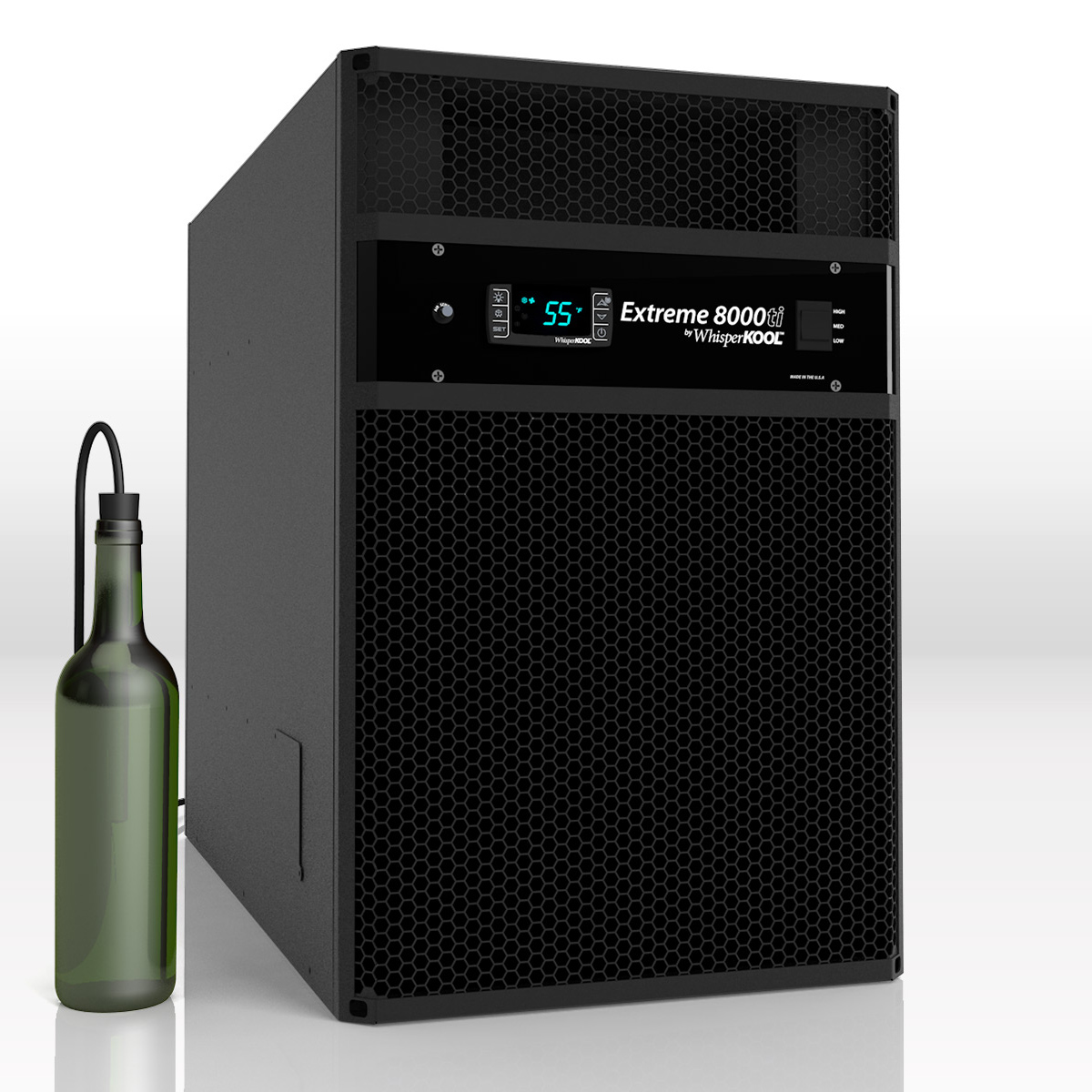
Ducted or ductless split systems are the preferred architecture for high-differential garage conversions. By separating the evaporator from the condensing unit, heat exhausts entirely outside the building envelope or into a separate ventilated mechanical area. Proven systems from leading manufacturers provide commercial-grade durability, managing high condensing temperatures without disrupting the serene aesthetic of the interior wine room. Fully ducted configurations also isolate mechanical vibration, protecting settling sediment in mature vintages.
Managing Winter Freezes with Cold-Weather Controls
Northern winters introduce the opposite challenge: severe unheated garage freezes that disable standard air-conditioning hardware. Standard refrigeration compressors cannot start or run reliably when surrounding ambient temperatures drop below 32°F because liquid refrigerant migrates into the compressor oil. Extreme climate setups require specialized low-ambient features:
- Crankcase Heater Straps: Keep compressor oil warm during sub-zero exposure, preventing hard starts and mechanical scouring.
- Fan Cycling Pressure Switches: Regulate head pressure by modulating condenser fan speeds in freezing exterior conditions down to -20°F.
- Integrated Electric Heating Elements: Activate automatically when room temperatures dip, ensuring the cellar stays locked at 55°F throughout brutal winter cold snaps.
How to Build an Insulated Garage Wine Room: A Step-by-Step Assembly
Constructing a wine sanctuary within an unconditioned garage requires building a completely isolated room within a room. If you are rethinking your overall footprint to balance a dedicated preservation build with everyday utility, garage transformation specialists like The Garage RX can help optimize the surrounding residential space for organization and efficiency. Structural decoupling ensures that exterior masonry and garage framing don't conduct intense ambient heat or winter freezes directly into your preservation space. Executing reliable garage wine room extreme climate insulation depends on a precise, methodical assembly sequence, sealing every stud cavity, seam, and mechanical penetration before finishing the space.
Framing and Vapor Barrier Installation Sequence
Frame independent 2x6 stud walls offset at least one inch from existing exterior garage walls or concrete foundations. This physical air gap breaks conductive thermal bridging. When you aren't applying continuous closed-cell spray foam directly against exterior sheathing, wrap the entire exterior-facing side of the new framing with continuous 6-mil virgin polyethylene sheeting. Position this barrier strictly on the warm exterior face of the assembly. Overlap all plastic sheet edges by at least twelve inches, sealing every seam with acoustic mastic and heavy-duty vapor tape to stop humid air migration.
Insulating and Sealing Structural Penetrations
Pack the framing cavities entirely with dense insulation, ensuring zero voids or air pockets remain. Even minor mechanical penetrations can short-circuit your thermal envelope:
- Electrical Fixtures: Encase every junction box, conduit penetration, and switch outlet with fire-rated expanding foam sealant.
- Mechanical Line Sets: Wrap refrigeration copper lines and dedicated condensate drain pipes in closed-cell elastomeric pipe insulation to eliminate interior pipe sweating.
- Interior Wallboard: Fasten moisture-resistant green board or cementitious backer board across the interior framing, finishing the surface with zero-VOC, mold-inhibiting primers and paints.
Doors, Glazing, and Perimeter Airtightness
Standard interior doors will quickly warp and leak conditioned air under extreme garage conditions. Hang an exterior-grade, foam-core fiberglass or thermally broken steel door assembly rated between R-7 and R-11. Equip the door frame with continuous magnetic or compressional Q-Lon weatherstripping, and install an automatic mechanical drop-down bottom sweep that seals tightly against the threshold when closed. For viewing walls, specify dual- or triple-pane argon-filled Insulated Glass Units with soft-coat Low-E glass to reflect radiant heat. To eliminate framing risks and build an impenetrable enclosure, partner with Rosehill Wine Cellars for bespoke custom wine cellar design tailored to your exact garage footprint.
Designing the Interior: Preservation, Racking, and Architectural Integrity
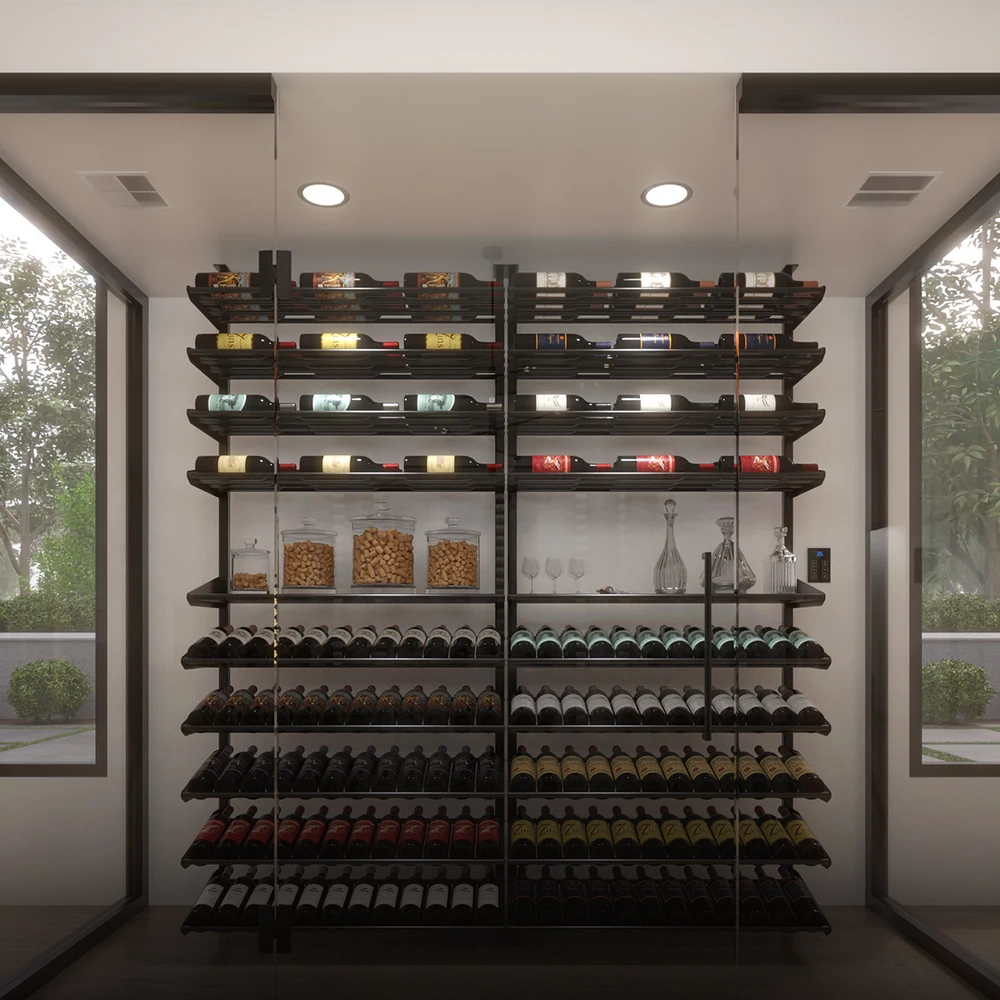
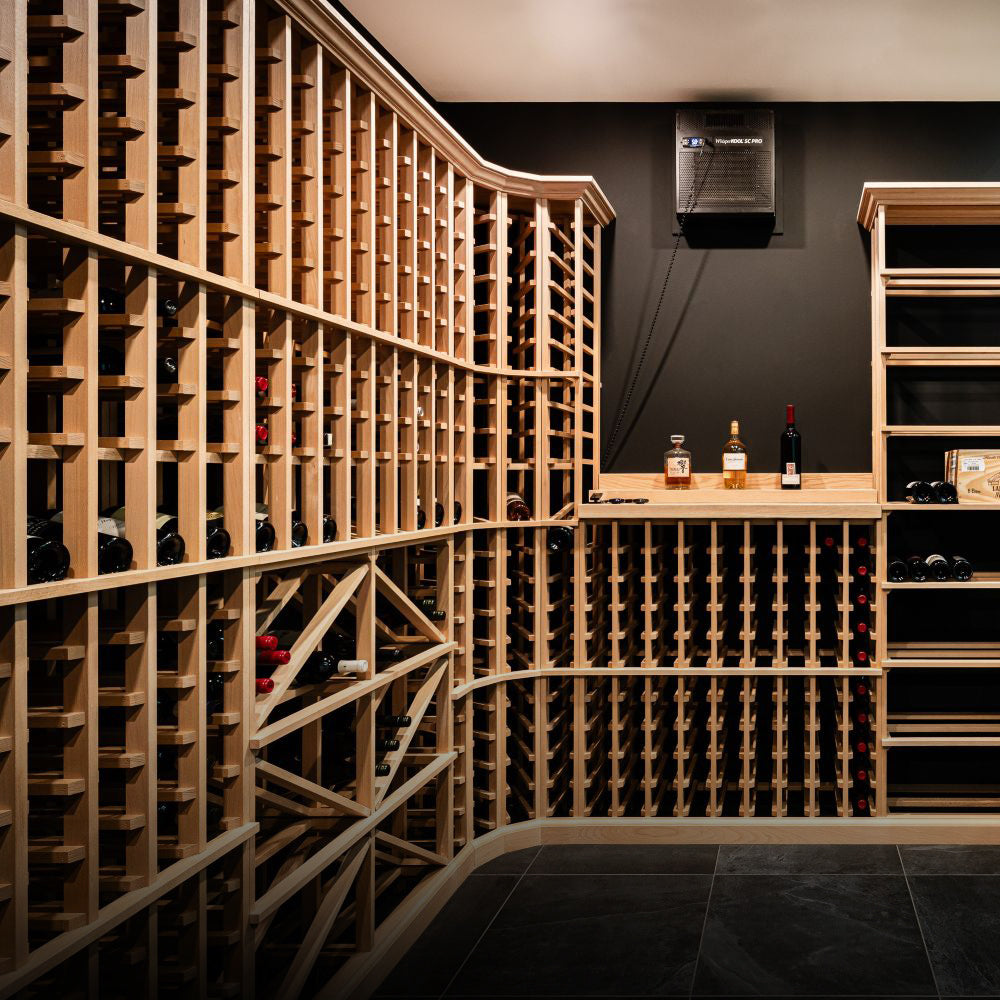
Once the thermal envelope and mechanical systems are established, the interior architecture must endure a continuous 55°F environment with 60% to 70% relative humidity. In an unconditioned garage, interior finishes face persistent microclimate pressures if thermal boundaries falter. Standard residential millwork and softwoods warp, cup, and harbor surface mildew when exposed to high ambient moisture. Every racking component and wall surface must maintain structural integrity while complementing your aesthetic goals. Planning your layout with seasoned specialists in custom wine cellars ensures that bottle capacity, airflow circulation, and structural load distribution remain perfectly balanced.
Selecting Moisture-Resistant Materials and Racking
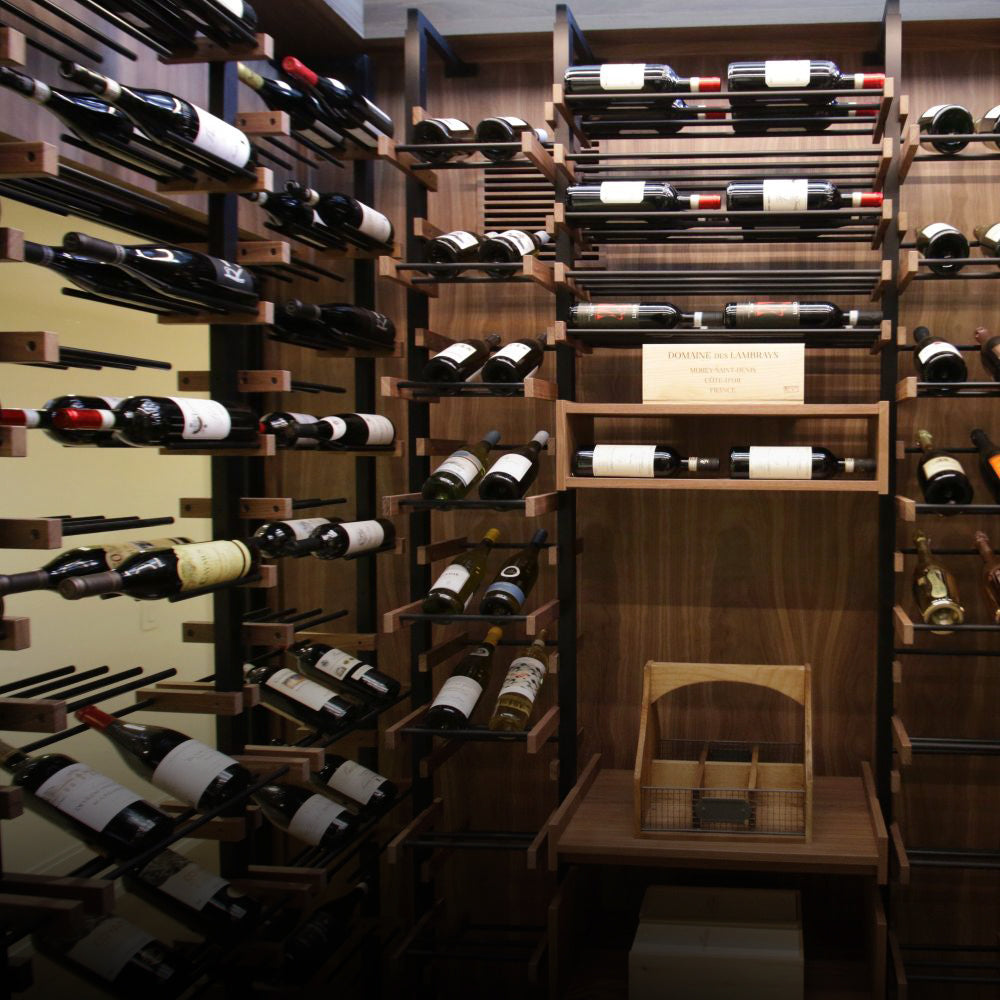
Racking timber must be naturally rot-resistant and completely non-aromatic to protect permeable cork closures. Unfinished all-heart redwood, premium white oak, and African mahogany thrive in high humidity without degrading or emitting volatile aromas. If your aesthetic favors contemporary minimalism, powder-coated steel or aluminum assemblies from specialized modern wine racking lines offer impervious, mildew-proof durability. Prior to installing drywall, anchor solid 3/4-inch marine-grade or exterior-rated plywood backing across the framing bays. Securing dense bottle racking into dedicated structural blocking prevents wall failure under heavy loads.
Thermal-Neutral Lighting and Electrical Layout
Cellar illumination choices directly influence cooling efficiency. Halogen and incandescent lights emit significant radiant heat, placing unnecessary thermal loads on your garage wine room extreme climate insulation assembly. Specify low-voltage, thermal-neutral LED systems that emit zero ultraviolet radiation. Keep these lights on automated timers or discreet motion sensors to ensure they operate only when you're actively browsing bottles. Avoid recessed ceiling cans; piercing the ceiling vapor retarder introduces direct air leakage. Surface-mounted tracks or sealed linear cove fixtures preserve thermal continuity.
Long-Term Environmental Monitoring and Commissioning
Commissioning the finished room requires a disciplined testing phase before introducing wine stock. Run the cooling system in the sealed, empty room for at least 72 hours, monitoring how the interior responds to midday garage heat spikes. Deploy dual smart hygrometers with wireless remote tracking to measure temperature and relative humidity continuously. This commissioning verification confirms that your garage wine room extreme climate insulation and mechanical hardware operate in perfect harmony, providing unwavering preservation for your collection.
Securing Your Collection Against Hostile Climates
Converting an unconditioned garage into an enduring wine cellar requires unyielding architectural discipline. Decoupling your framing from the concrete slab, positioning the vapor retarder strictly on the warm exterior side, and elevating thermal assemblies to handle severe ambient heat and sub-zero freezes creates an impenetrable barrier. Pairing this envelope with split cooling equipment engineered for high-differential performance ensures that your vintages remain protected at a pristine 55°F through every seasonal swing.
Executing flawless garage wine room extreme climate insulation demands precise mechanical calculations and specialized building science. Backed by over three decades of architectural cellar design and mechanical engineering experience, Rosehill Wine Cellars provides the technical expertise needed to transform challenging unconditioned spaces into striking, dependable sanctuaries. When you're ready to safeguard your investment with custom layout planning and commercial-grade cooling hardware, consult the wine cellar engineering specialists to bring your project to life with complete confidence.
Frequently Asked Questions
Can I convert an unheated garage into a wine room without adding spray foam?
Yes, you can build without spray foam by using rigid foil-faced polyisocyanurate or extruded polystyrene boards paired with a dedicated 6-mil virgin polyethylene vapor barrier. However, this assembly demands meticulous craftsmanship. Every joint, framing junction, and electrical box penetration must be sealed with acoustic mastic and foil tape. Spray foam remains the preferred method because it naturally seals structural voids and acts as a code-compliant vapor barrier in a single step.
What R-value is required for a garage wine cellar in extreme climates?
A garage build requires significantly higher thermal resistance than an interior home cellar. Exterior-facing walls require a minimum of R-22 to R-30, while ceilings beneath an unconditioned roof or attic need R-38 to R-50. Achieving effective garage wine room extreme climate insulation prevents the intense heat of 100°F summer days from overwhelming your cooling system, while also keeping bitter winter chills from dropping internal room temperatures below the safe 55°F threshold.
Where should the vapor barrier be placed when insulating a garage wine room?
The vapor barrier must be positioned on the warm, exterior face of the wall studs, facing the unconditioned garage. Warm summer air carries immense moisture that drives inward toward the cool, 55°F wine room. Placing the barrier on the outside prevents moisture from penetrating stud bays and hitting cold interior drywall. If installed on the interior side by mistake, moisture condenses inside the wall cavity, rotting framing and sparking concealed mold blooms.
Can I use a standard through-the-wall cooling unit in an uninsulated garage?
No, standard self-contained through-the-wall units will rapidly fail in an unconditioned garage. Most self-contained models have a maximum operating ambient limit of 110°F and an operational temperature differential of 55°F. When hot garage air climbs past 100°F and the unit dumps condenser heat into that same enclosed space, temperatures quickly exceed operating limits. This causes high-pressure compressor lockout, excessive wear, and early mechanical burnout. Dedicated split systems should be specified instead.
How do I protect my garage wine cellar during freezing winter temperatures?
Protecting your cellar in winter requires specialized low-ambient mechanical controls and supplementary heat. Standard cooling compressors suffer severe oil breakdown when operated below freezing. Equipping split condensing units with crankcase heaters and fan-cycling switches allows safe operation down to -20°F. Additionally, your climate system must include an integrated electric heating coil. When ambient garage temperatures drop below freezing, the system gently warms the room to hold your bottles safely at 55°F.
Do I need to insulate the concrete garage floor underneath my wine room?
Yes, concrete slabs readily conduct exterior heat and ground moisture horizontally beneath your framing. Uninsulated slabs become continuous thermal bridges that introduce unwanted warmth and humidity. Installing comprehensive garage wine room extreme climate insulation requires laying high-compressive-strength XPS boards over an elastomeric epoxy vapor barrier directly on the concrete. Placing a tongue-and-groove subfloor over this rigid foam decouples the wine room floor and prevents localized condensation under racking.
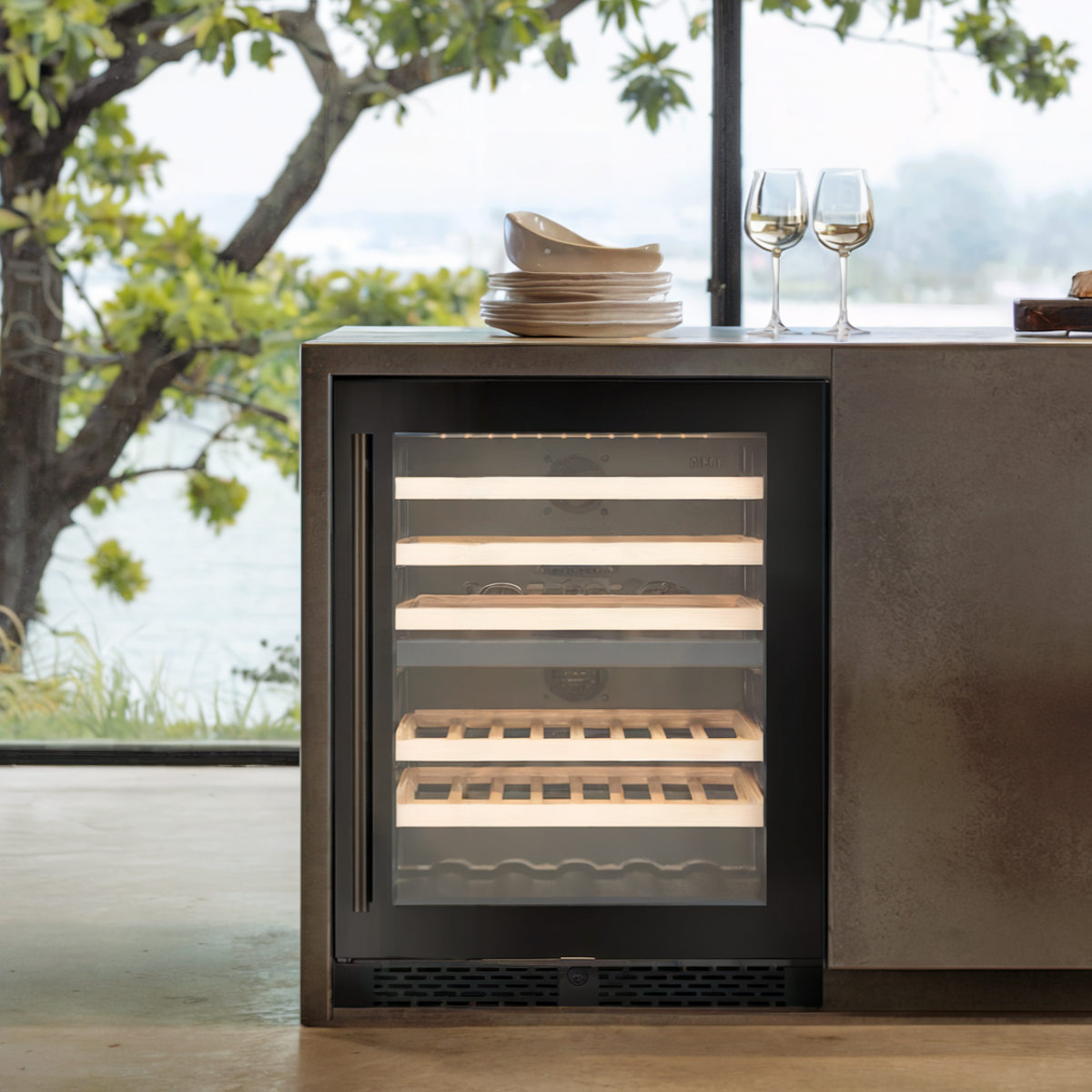
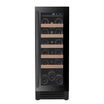
Is it better to build a walk-in cellar or install a pre-insulated wine cabinet in a garage?
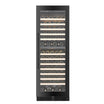
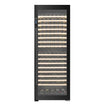
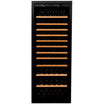
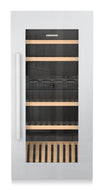
The choice depends on bottle volume and available floor plan. Dedicated walk-in rooms offer immense architectural presence, custom racking configurations, and superior storage density for collections exceeding several hundred bottles. However, for smaller spaces or tighter budgets, a commercial-grade pre-insulated unit like the Vantaggio V300 Wine Cabinet offers factory-sealed thermal efficiency. It delivers exact climate preservation inside an unconditioned alcove without requiring extensive architectural framing and vapor-barrier construction.