





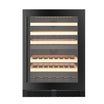
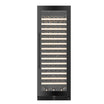
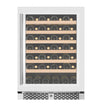
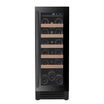












The first question most buyers ask when shopping for a wine fridge is: how many bottles does it hold? It's a reasonable place to start. The problem is that bottle count, on its own, tells you very little about whether a unit will actually meet your needs.
At Rosehill Wine Cellars, we've spent over thirty years helping collectors find the right wine fridge for their space and their collection. Choosing the correct size is one of the decisions we see buyers get wrong most often, and it's almost always in the direction of too small. This guide covers how to size a wine fridge properly, starting with your actual collection and where it is headed.
Start With Your Collection, Not a Bottle Count Spec
Before looking at any product specifications, take stock of what you actually have and how you buy. A collector with fifty bottles of serious Burgundy and a habit of buying by the case needs a different solution than someone with sixty mixed bottles picked up two or three at a time. The quantity is similar. The storage requirements, and the growth trajectory, are quite different.
Two questions frame the sizing decision more usefully than any bottle count:
- How many bottles do you have right now, and how many do you expect to have in two to three years?
- Are you storing primarily for aging, for near-term drinking, or both at the same time?
The first question builds in the growth buffer that most buyers skip. The second determines whether a single-zone or dual-zone unit is the right architecture. Both answers shape the sizing decision before you look at a single specification.
The Sizing Mistake Most Buyers Make
Buying too small is the single most common wine fridge error we see, and it is almost always the result of buying for the current collection rather than the collection two years out. A 50-bottle fridge purchased at 80 percent capacity is full within months. The buyer either starts leaving bottles out of temperature-controlled storage, purchases a second unit they didn't budget for, or ends up replacing the original unit earlier than planned.
If your collection is stable and you have no interest in growing it, sizing precisely to your current needs is defensible. Most collectors, however, find their buying habits accelerate once they have proper storage. Good storage encourages acquisition. Build in a meaningful buffer.
A practical guideline: size for 150 percent of your current collection. If you have 60 bottles today, a unit with a realistic capacity of 80 to 100 bottles leaves room to grow without forcing an immediate upgrade.

Sizing by Collection Tier
Most residential wine fridge buyers fall into one of three collection tiers. Each has a different set of unit requirements.
The Curated Collection: Up to 75 Bottles
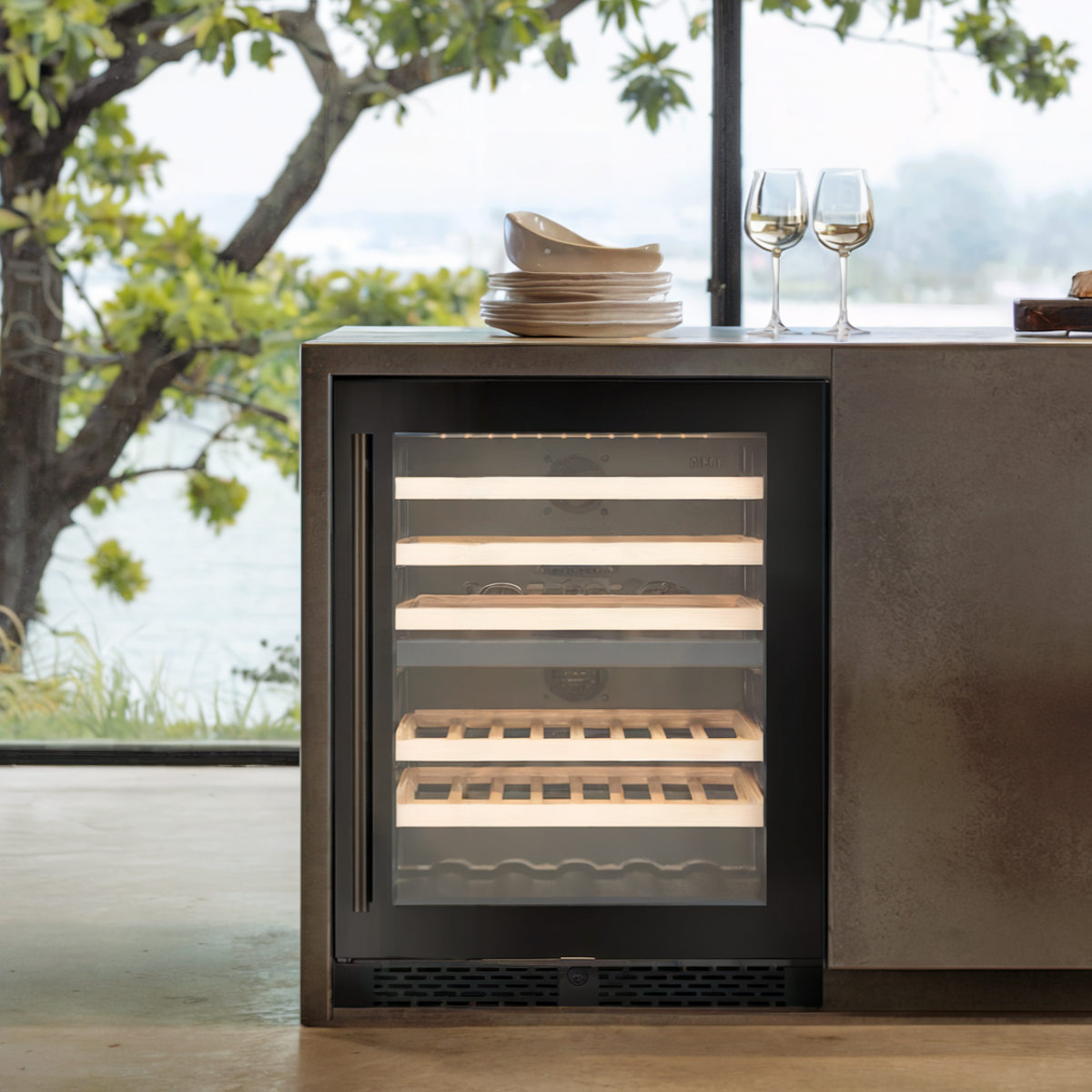
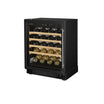
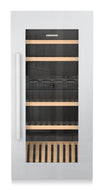
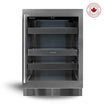
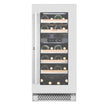
At this scale, the priority is usually a combination of temperature precision and footprint. Buyers in this tier often want a unit that integrates into a kitchen renovation or home bar without demanding a dedicated space. Under-counter built-in units are a natural fit here: they hold 30 to 75 bottles in a standard 24-inch format, vent from the front for flush installation, and carry the design finish expected in a renovated kitchen.
For a full breakdown of how the built-in configuration works and when it's the right call, our article on built-in vs. freestanding wine fridges covers the ventilation engineering and installation implications in detail.
The Growing Collection: 75 to 200 Bottles
This is where the sizing question becomes more nuanced. A collector in this tier typically has both aging stock and ready-to-drink bottles, which means a dual-zone unit becomes worth considering. The important caveat: a dual-zone unit splits its interior capacity across two temperature ranges. A fridge rated at 120 bottles with two zones effectively gives you roughly 60 bottles of dedicated aging storage and 60 bottles of near-term storage. If you need 100 bottles of aging stock, a dual-zone unit needs to be rated at 200 bottles or more to deliver that.
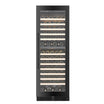
At this collection size, freestanding column units begin to make more practical sense than under-counter built-ins. The capacity ceiling of under-counter formats is real, and a full-height freestanding unit in this tier offers both the bottle count and the temperature performance to match a serious collection. Brands like Liebherr and EuroCave have strong options across this range.
The Serious Collection: 200 Bottles and Above
At 200 bottles and above, a wine fridge is no longer supplemental storage. It is a primary wine cellar. The priorities shift accordingly: temperature stability across the full interior, vibration dampening for bottles held over years, and meaningful humidity management all matter more at this scale than they do for a 50-bottle ready-to-serve unit.
Full-height freestanding units from EuroCave are the reference point in this tier, built specifically for long-term wine storage at residential scale with the humidity and vibration control that serious aging demands. The Vantaggio line from Rosehill offers a strong house-brand option for collectors who want meaningful capacity and reliable performance at a more accessible price point.
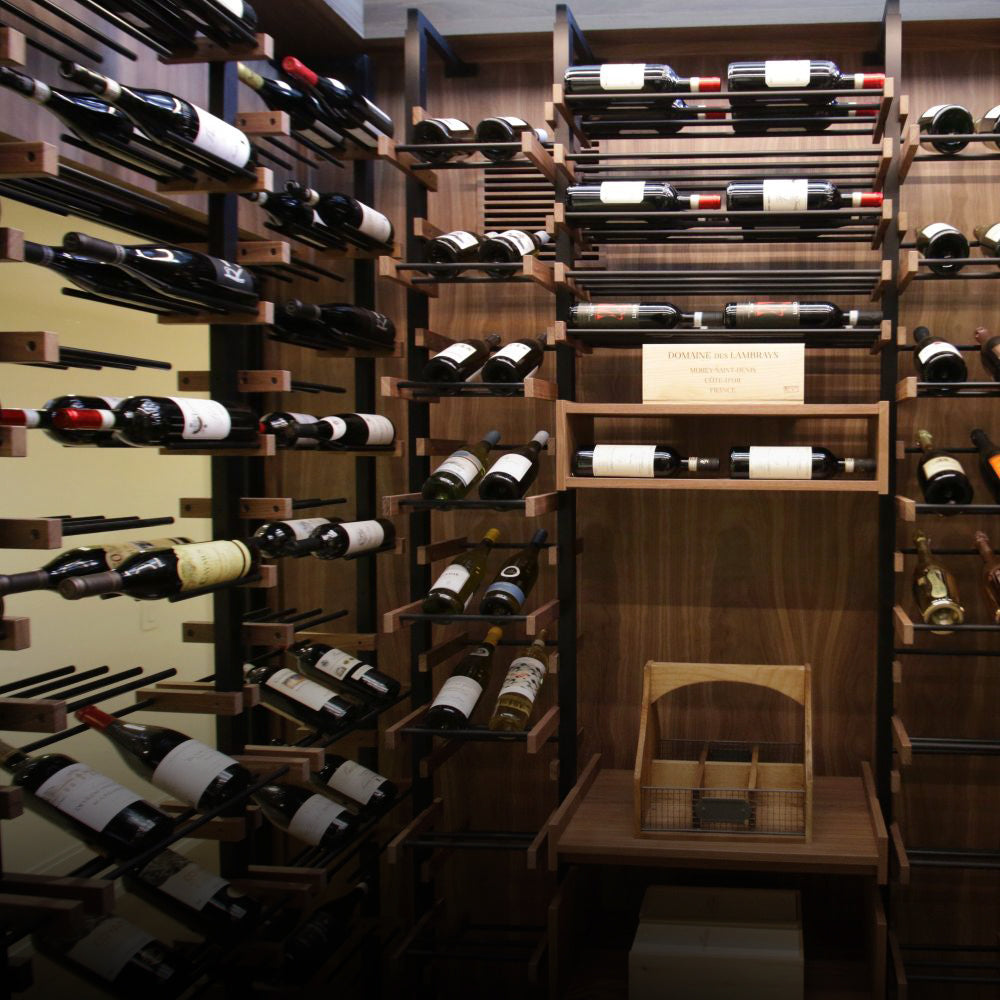
For collections approaching 300 to 400 bottles or more, a dedicated custom wine cellar with a purpose-built cooling system becomes the more appropriate solution. A wine fridge of any size has limits; a properly insulated cellar does not.

Single-Zone vs. Dual-Zone: How Zone Configuration Affects Usable Capacity
Zone configuration is not just a temperature question. It is a capacity question, and buyers frequently overlook this.
A single-zone unit holds everything at the same temperature, ideal for a collector who stores exclusively for aging at 12 to 14 degrees Celsius, or exclusively for near-term drinking at a slightly warmer range. The entire interior is available for one purpose, and the stated capacity reflects that.
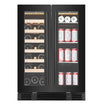
A dual-zone unit divides the interior into two independently controlled temperature zones, typically upper and lower. This is the most practical setup for collectors managing both aging stock and ready-to-drink bottles in the same unit. However, the stated bottle count covers the full interior. If a dual-zone unit holds 150 bottles total across both zones, you are working with roughly 75 bottles of aging storage and 75 bottles of service-ready storage. Plan your size requirement accordingly.
For the underlying reasons why different temperature ranges matter for different wine styles, our guide to wine storage temperature vs. serving temperature covers the science in full, including the distinction between long-term aging temperatures and optimal serving windows.
Bottle Format: Why the Stated Capacity Is Always Optimistic
Every bottle count you see on a wine fridge specification sheet is calculated using the standard 750ml Bordeaux bottle: a straight-sided bottle with a relatively modest diameter. Burgundy-style bottles, with their sloping shoulders and wider girth, take up more space per bottle. Champagne and sparkling wine bottles are larger still. And magnums, at 1.5 litres, typically displace two standard bottles in any rack configuration.
If your collection skews toward Burgundy, Champagne, Rhone, or other wide-format bottles, apply a meaningful discount to any stated capacity figure. A unit rated at 100 Bordeaux-format bottles may realistically hold 70 to 80 Burgundy bottles, depending on the internal configuration. Some units are designed with adjustable shelving that accommodates varied bottle formats better than others. This is worth confirming with the specific model before purchase.
Physical Dimensions: What the Footprint Actually Tells You
Bottle count is the output. Physical dimensions are what determine whether a unit fits your space, and which installation configuration is even available to you. Both matter, and neither alone gives the full picture.
Under-counter built-in units are governed by a fixed height: 34 inches is the standard counter height clearance, and most units in this category are designed to fit beneath it. Width varies, with 24-inch models holding the most capacity in standard kitchen openings and 15-inch models serving tighter alcoves or bar installations. The trade-off is straightforward: a narrower unit in a defined space versus a wider unit in a more flexible location.
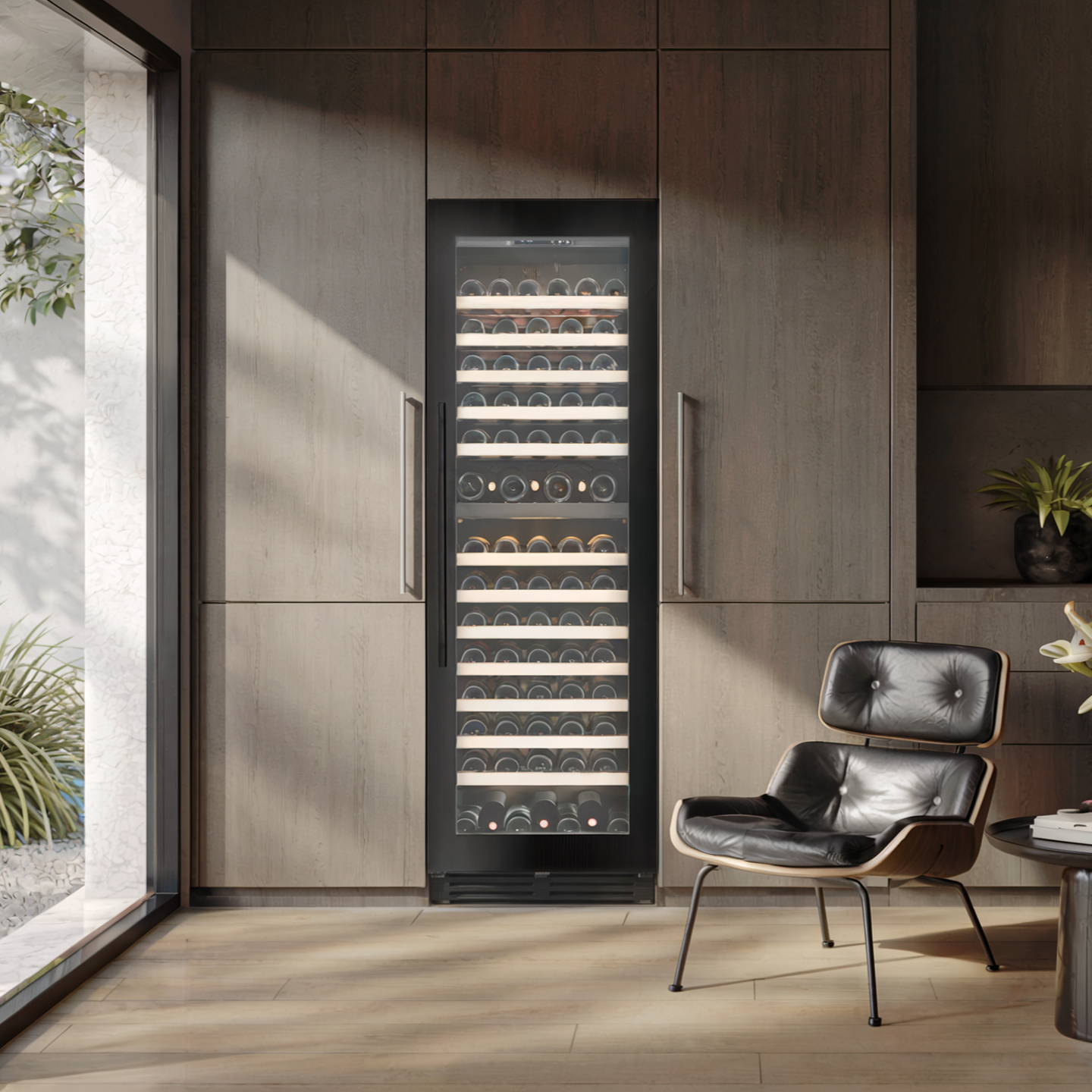
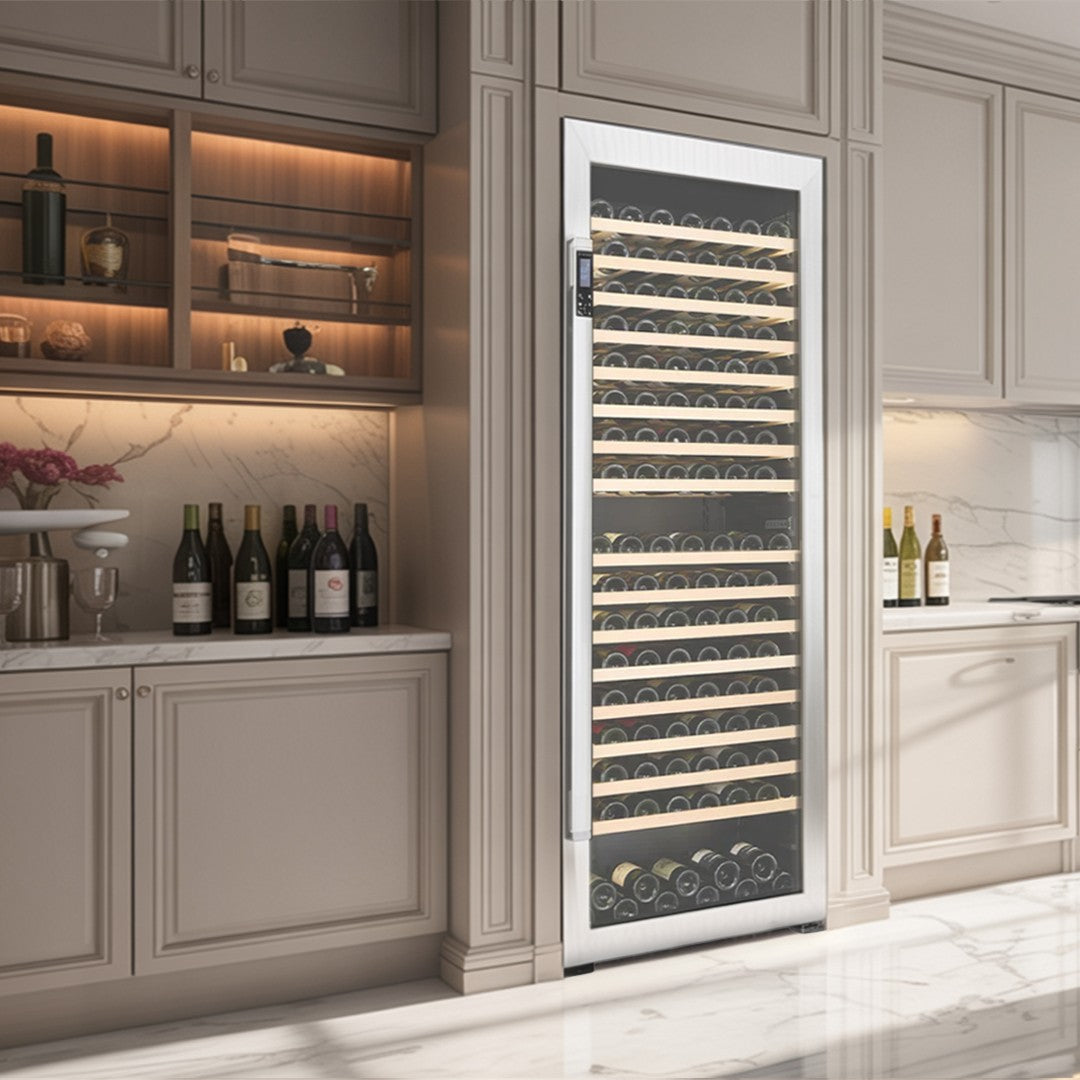
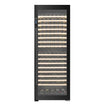
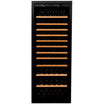
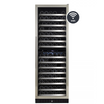
Full-height freestanding units are not constrained by counter height, and their column format gives them a notably better ratio of bottle count to floor footprint than any under-counter alternative. For a collector who can give up a section of wall in a dining room, wine room, or basement, a full-height freestanding column typically delivers two to three times the bottle count of an under-counter unit at roughly the same floor space.
If you're still working through the built-in vs. freestanding decision before thinking about size, start with our guide to built-in vs. freestanding wine fridges. Getting the configuration right is the prerequisite. Size selection follows from it.
Quick Reference: Sizing by Collection Profile
Curated collection, up to 75 bottles:
- Under-counter built-in or compact freestanding
- Single-zone if aging only; dual-zone if mixing aging and service-ready
- Size to at least 100-bottle capacity to allow for growth
- Priority: footprint, design integration, temperature precision
Growing collection, 75 to 200 bottles:
- Full-height freestanding column unit strongly preferred over under-counter
- Dual-zone recommended if aging and service-ready bottles are both part of the mix
- Account for zone split: size the total unit for double your per-zone target
- Priority: capacity, temperature stability, dual-zone flexibility
Serious collection, 200 bottles and above:
- High-capacity full-height freestanding or custom cellar build
- Humidity management and vibration dampening are non-negotiable priorities
- EuroCave and Vantaggio are the reference points in this tier
- For 300-plus bottles: evaluate a custom cellar build alongside large-format fridge options
Ready to Find the Right Size for Your Collection?
Getting the size right is how you avoid outgrowing a unit within the year, and how you make sure the capacity on the spec sheet matches the collection you actually have.
Browse our full range of wine fridges and cooling solutions online, including options from Vantaggio, EuroCave, and Liebherr across every tier of collection. Or contact the Rosehill team directly for a recommendation tailored to your space, your configuration, and where your buying is headed.