






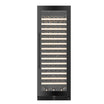
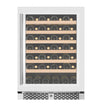
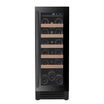
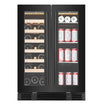











A wine rack is one of those purchases that seems simple until you start looking seriously. Then the variables multiply: wood or metal, modular or fixed, individual bottle slots or bulk storage, freestanding or built into a cellar. The options are wide, the differences are real, and the wrong choice tends to reveal itself slowly, in a collection that doesn't quite fit, a rack that can't expand, or a storage environment that works against the wine rather than protecting it.
This guide works through every variable that matters, in the order it makes sense to consider them. It covers the functional basics first, then moves through material selection, configuration formats, capacity planning, installation approach, and the build quality markers that separate racking built to last from racking that won't.
At Rosehill Wine Cellars, we've helped collectors navigate this decision for over thirty years. Work through this guide in order for a full picture, or skip to the section most relevant to where you are in the decision.
Start With the Basics: What a Wine Rack Actually Needs to Do
Before material, configuration, or aesthetics come into the picture, it helps to be clear on the functional requirements. A wine rack has one core job: to hold bottles horizontally, in a stable environment, in a way that protects the wine inside them.
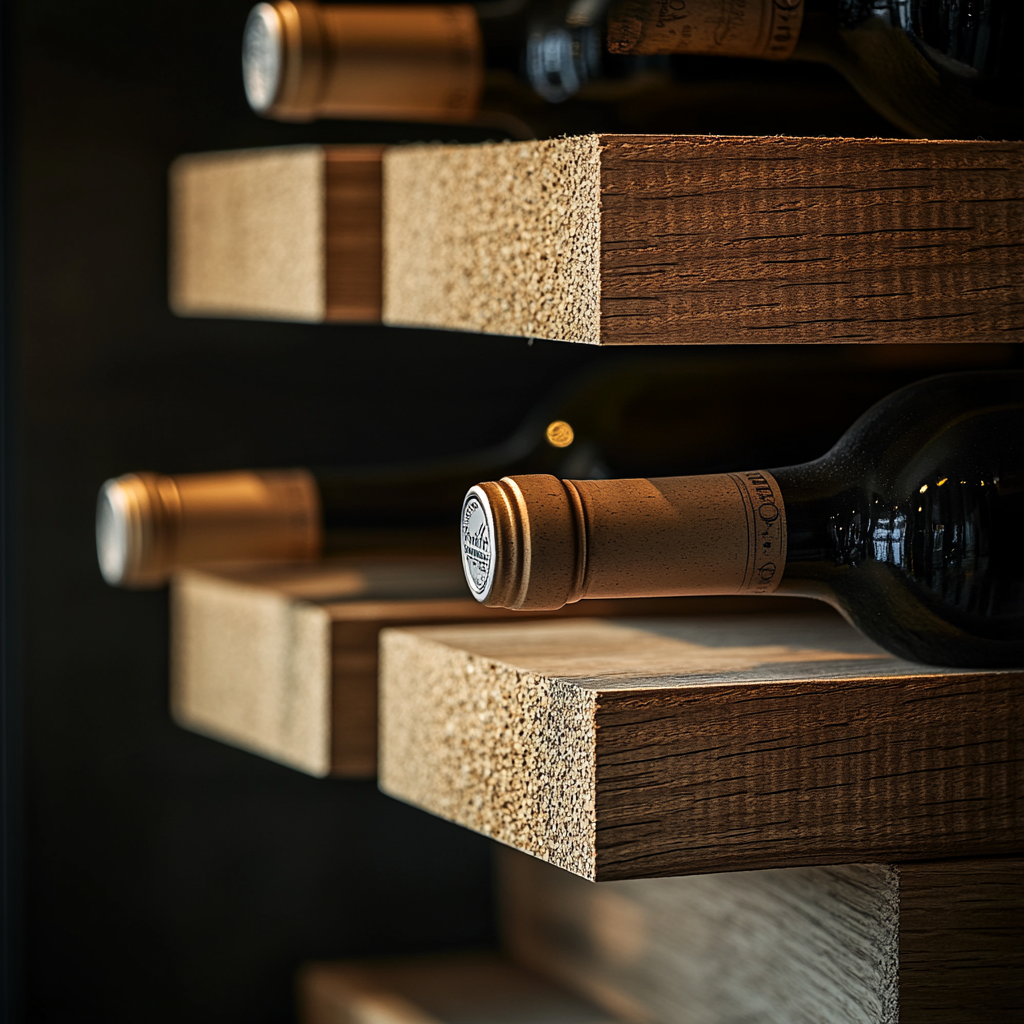
Horizontal storage is not a stylistic preference. For bottles sealed with natural cork, it is a practical necessity. A bottle stored upright dries out the cork over time, compromising the seal and exposing the wine to oxidation. Stored on its side, the cork stays in contact with the wine, remains moist, and maintains an effective barrier. This is why virtually every serious storage solution, from modular metal racks to custom wood cellars, holds bottles at a horizontal or near-horizontal angle.
Beyond orientation, a good rack provides physical stability: no rocking, no flex, no vibration transfer. Wine stored in a rack that vibrates, even subtly, is subject to a level of agitation that disrupts the slow chemical processes behind proper aging. Metal and purpose-built wood racks handle this well; cheap, lightweight alternatives often do not.
For a deeper look at the environmental conditions that matter alongside physical storage, our guide on wine storage temperature vs. serving temperature covers the science of what wine needs to age correctly.

Material: Wood, Metal, or Modern Alternatives
Wood
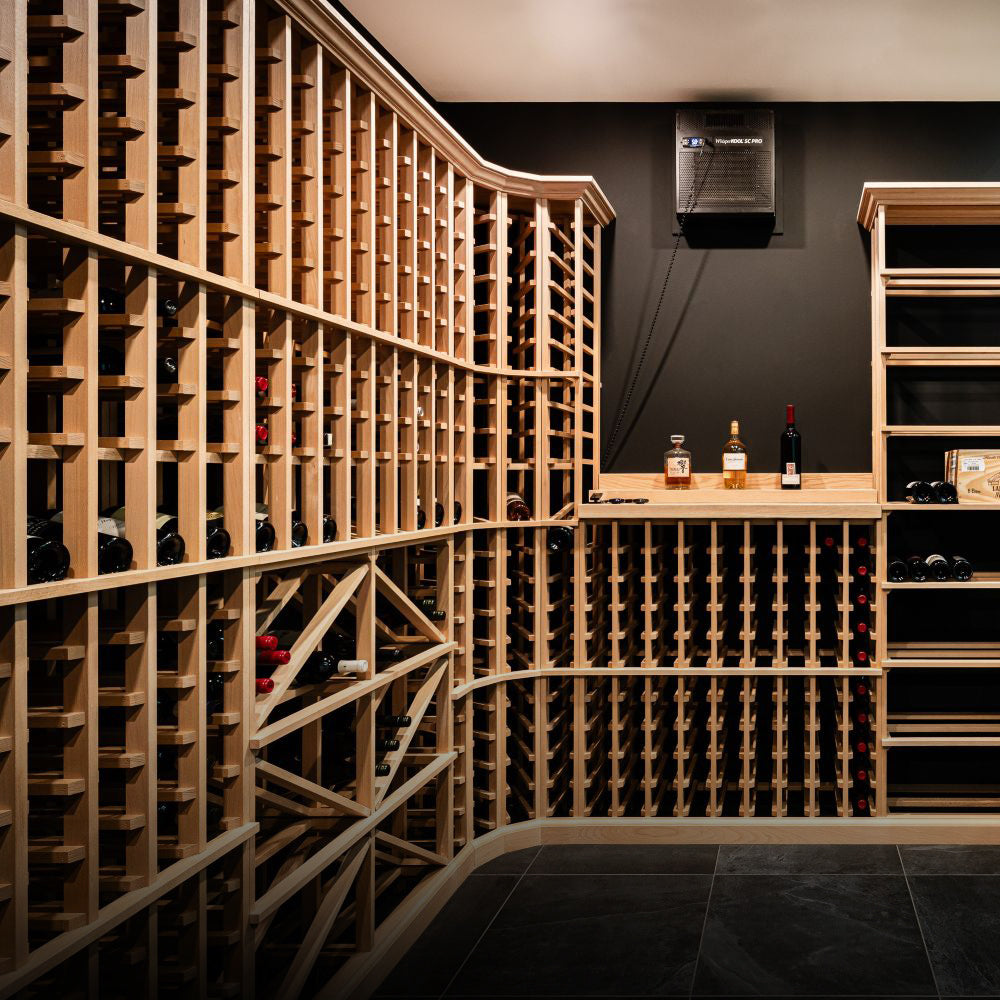
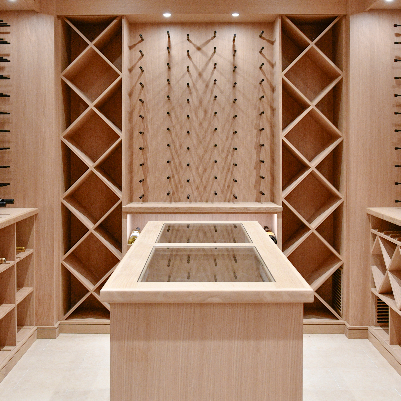
Redwood and pine are the traditional choices for wine rack construction, valued for their natural resistance to moisture and their ability to absorb minor humidity fluctuations without warping. A well-built wooden rack feels substantial, reads as warm and considered in a cellar or dedicated wine room, and ages gracefully alongside the collection it holds.
The practical consideration: wood requires a stable humidity range to perform at its best. In environments with significant humidity swings, untreated wood can swell, contract, or develop mould over time. Quality matters significantly here. A rack built from well-seasoned wood with proper joinery will outlast a rack assembled from cheap composite materials by a very wide margin.
Traditional wood racking suits collectors building a permanent, finished wine cellar. It is harder to reconfigure once installed, which means the initial planning needs to account for long-term capacity rather than short-term needs.
Metal
Metal wine racks, including wrought iron, powder-coated steel, and stainless steel, handle humidity well, resist rust when properly finished, and maintain their structure across a wide range of environmental conditions. For cellars in climates with significant humidity variation, including Florida's year-round heat and moisture, metal racking is a reliable choice.
Modular metal systems offer something traditional wood racking does not: genuine flexibility. Individual panels or sections can be added as a collection grows, reconfigured as storage needs change, and relocated if the space changes. For collectors who are building incrementally or who aren't certain about their long-term storage requirements, this adaptability is a meaningful advantage.
From an aesthetic standpoint, metal racking spans a wide range. Heavier wrought-iron pieces carry a traditional, cellar-appropriate look. Powder-coated steel in black or dark metallic finishes suits modern and contemporary spaces. The visual tone is largely determined by finish and design rather than the material itself.
Modern Racking Systems: Acrylic, Peg-Based, and Minimal Formats
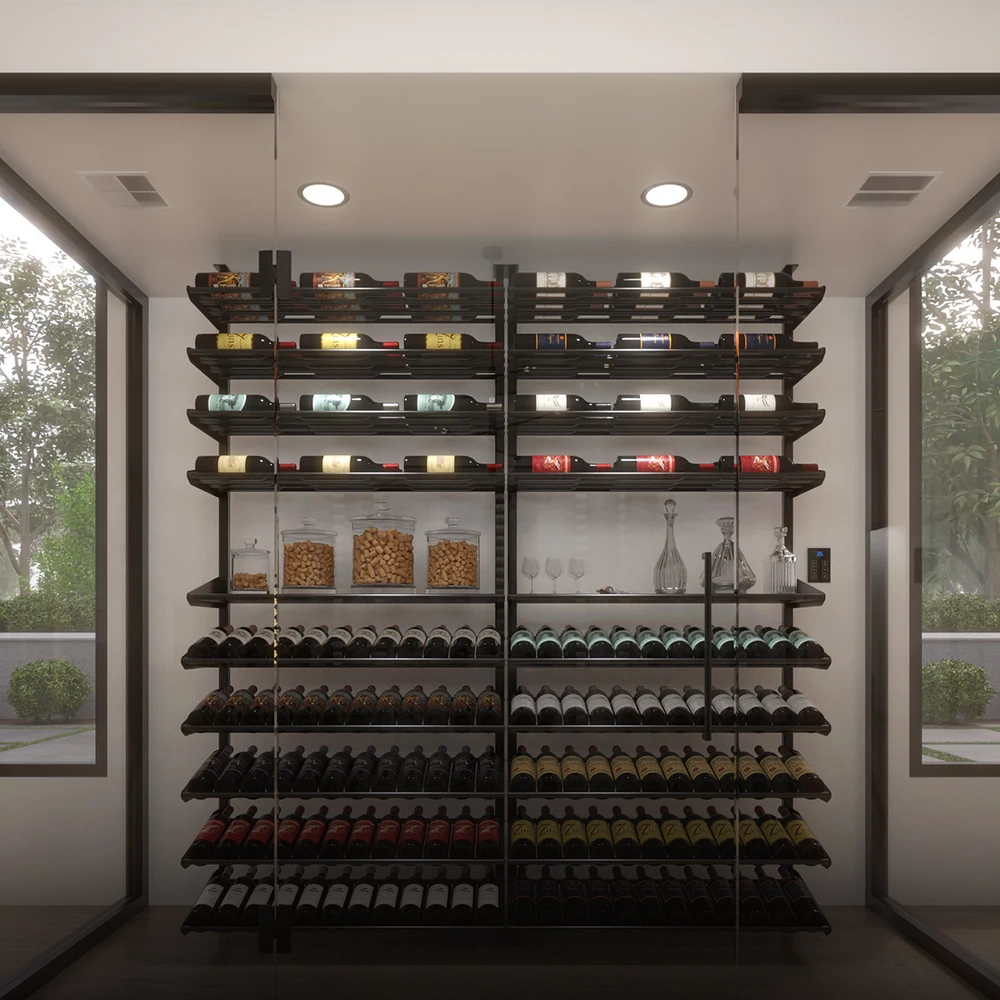
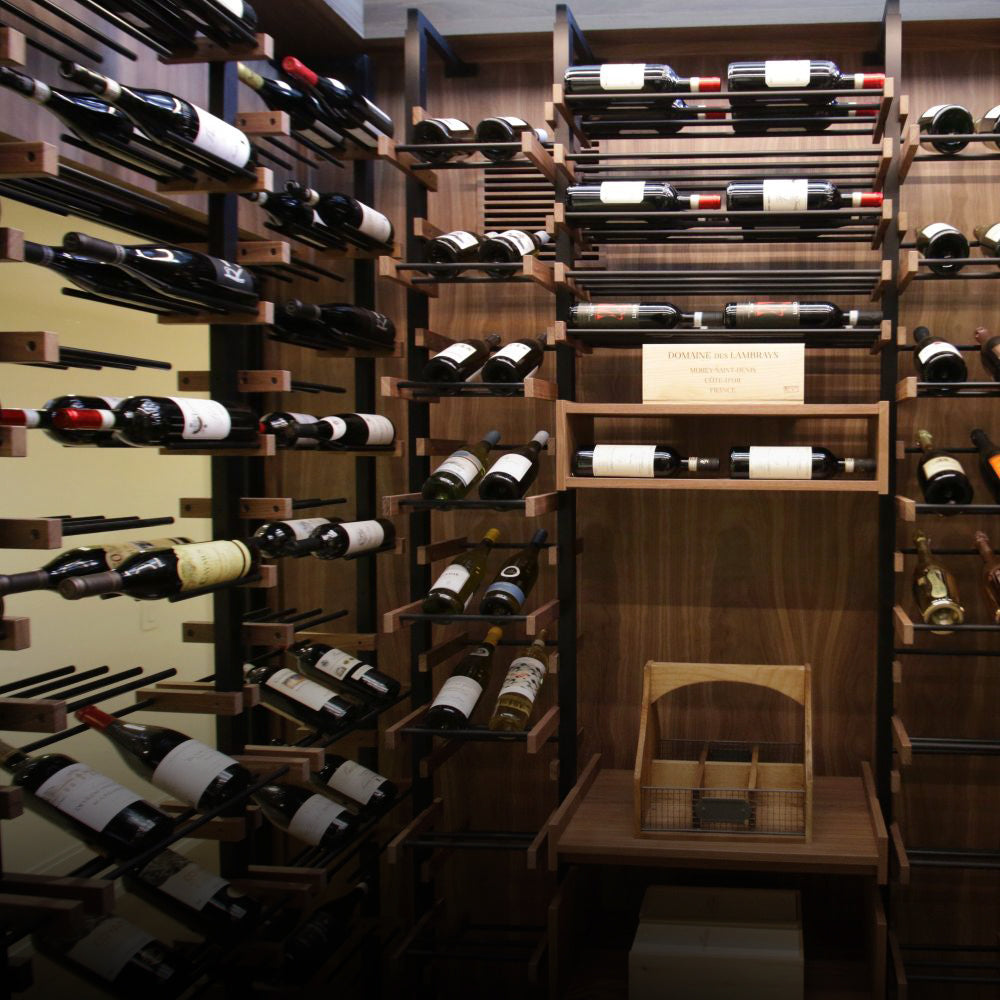
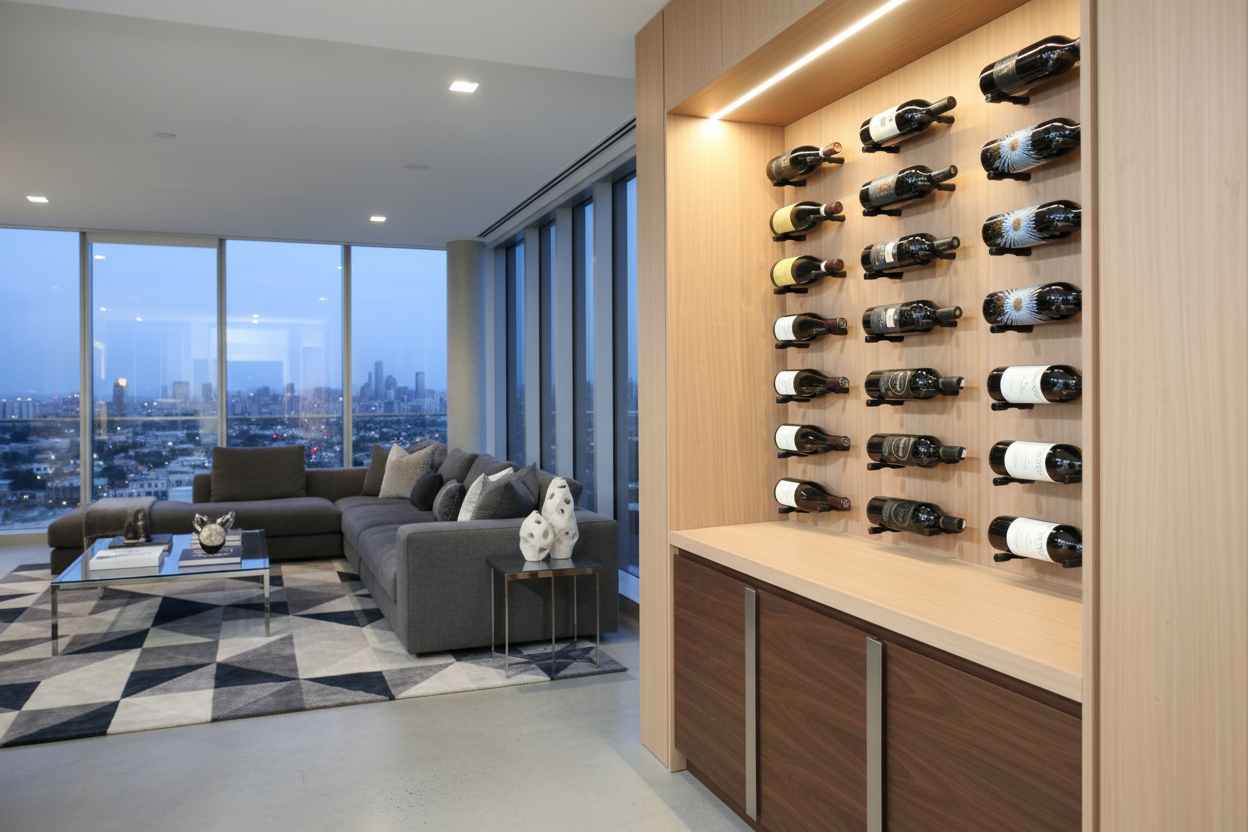
Contemporary wine storage design has moved well beyond the traditional row-and-column rack. Peg-based systems, where individual metal or acrylic pegs support each bottle, allow wine to be displayed at angles that highlight labels and create a more visual, design-forward presentation. Acrylic and minimalist metal frameworks offer a look that integrates naturally into modern interiors.
These formats tend to be more expensive per bottle than equivalent modular metal racking, but the trade-off is a visual impact that traditional racking cannot replicate. For collectors building a wine wall as a design feature in a living space or dedicated tasting room, modern racking earns its cost.
Performance is comparable to metal racking in terms of bottle support and humidity resistance. Build quality varies by manufacturer, as it does in any category, and is worth examining carefully before committing to a large installation.
Configuration: How the Rack Is Designed to Hold Bottles
Material is the starting point. Configuration determines how much wine the rack actually holds, how accessible each bottle is, and whether the system can adapt as the collection changes.
Individual Bottle Storage
Individual bottle slots, where each bottle sits in its own designated opening, are the standard for racking designed around accessibility and presentation. Each bottle is independently supported, easy to locate, and easy to remove without disturbing anything around it. For collectors who manage an organized inventory and want specific bottles within reach, individual storage is the logical format.
The trade-off is density. Individual slots use more material and vertical height per bottle than bulk alternatives. In a finite space, this matters.
Bulk or Case Storage
Horizontal case storage, where wine is stacked in boxes or organized in bulk runs, maximizes volume efficiently and suits collectors who buy in quantity and hold for the long term. If a significant portion of your collection is bought by the case and will not be accessed until it approaches its drinking window, dedicating space to bulk formats alongside individual racking is an efficient use of the cellar.
Many well-designed cellars combine both: accessible individual bottle storage at eye level for the wines being rotated regularly, and bulk case storage below for the bottles aging out of reach.
Modular and Expandable Systems
Modular racking is the practical choice for collections that are still growing. Individual panels, columns, or sections can be added without rebuilding the entire storage structure. The initial layout handles current inventory; additional modules absorb the next case of Burgundy, the new mixed dozen, the allocation that arrived unexpectedly.
Premier Cru Wine Racks, Rosehill's house brand racking line, is built around exactly this principle: modular, well-engineered racking designed to grow with the collection rather than constrain it. For collectors who want a serious, purpose-built solution that scales, Premier Cru is the practical starting point.
Capacity Planning: How Much Rack Do You Actually Need?
Collectors consistently underestimate how much their collection will grow. A rack that fits two hundred bottles today rarely fits the collection five years from now, particularly once an allocation program, auction habit, or regular travel adds to the inventory faster than bottles leave it.
A useful planning principle: build for the collection you expect to have in three to five years, not the one you have now. If that is not feasible in the current space, choose a modular system that can expand rather than a fixed one that cannot.
Capacity planning also means being honest about the mix of formats. A collection composed largely of standard 750ml Bordeaux-format bottles fits most racks without modification. Large-format bottles, including magnums, double magnums, and format bottles above 1.5 litres, require oversized slots or dedicated sections. If your cellar holds any meaningful number of large formats, plan the racking to accommodate them from the outset.
Champagne and Burgundy bottles, with their wider shoulders and different weight distribution, also deserve attention during the planning phase. Not all racks accommodate every bottle format without adjustment.

Freestanding Versus Cellar Integration
How the rack is installed, or whether it is installed at all, has real implications for both performance and flexibility.
Freestanding racks offer maximum flexibility. They can be relocated, reconfigured, and added to without any structural commitment. For collectors who are not yet in their permanent space, whose cellars are still being planned, or who simply want the option to change the layout, freestanding modular systems are the right choice. Setup is straightforward, and no construction is required.
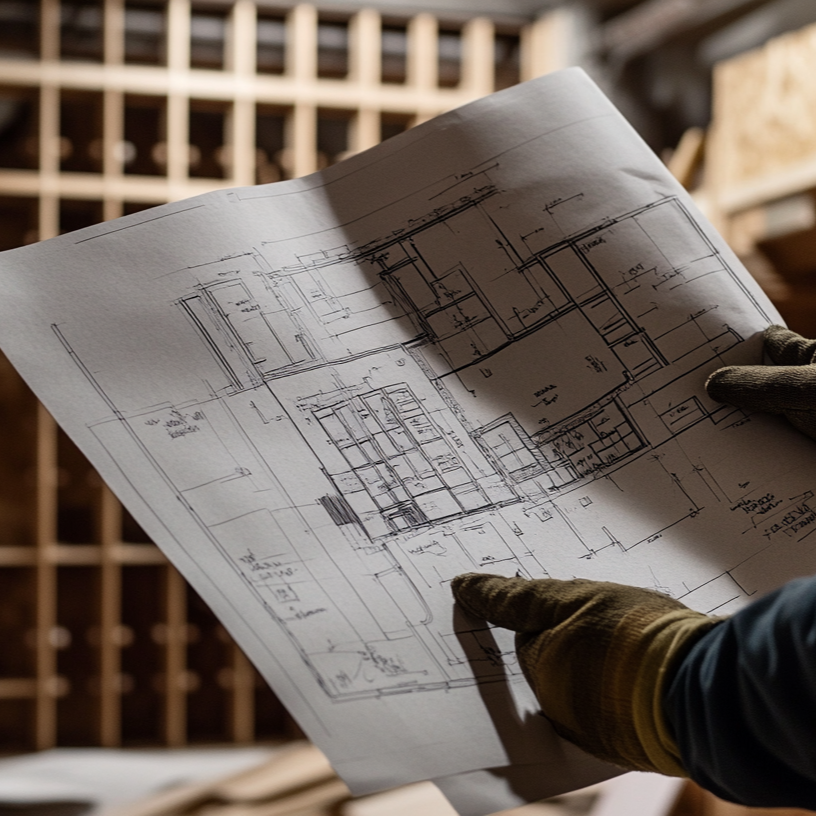
Cellar-integrated racking, where the racks are built into the room itself, offers a finished, purpose-built look and the ability to use every cubic metre of the space efficiently. Custom wall-mounted systems, floor-to-ceiling runs, and angled display sections are all possible when racking is designed as part of the room rather than placed within it. The trade-off is permanence: integrated racking is harder to reconfigure, and changes to the collection's scale or organization may require structural adjustments.
For collectors building a serious, long-term wine cellar, the right answer often combines both: a core structure of integrated or wall-mounted racking for the bulk of the collection, with a freestanding or modular component for the bottles in active rotation. If you're thinking through a full cellar build alongside the racking question, our article on whether a wine cellar adds value to your home covers how these decisions intersect with the broader investment conversation.
Build Quality: What Separates a Rack That Lasts
The difference between a rack that lasts twenty years and one that degrades in five shows up in a handful of specific places.
Joinery and fastening matter in wood racking. Mortise and tenon construction, dowels, and quality wood glue produce a rack that remains rigid under load. Racks assembled primarily with staples or lightweight fasteners will loosen over time, particularly under the sustained weight of full bottles.
In metal racking, the quality of the powder coating or finish determines how the rack holds up in a humid cellar environment. Properly finished steel resists rust and surface degradation through years of temperature and humidity cycling. Poorly finished metal will eventually show corrosion, which is both aesthetic and structural.
Weight capacity per section is worth checking for any rack that will hold a large number of bottles in a single run. A standard 750ml bottle weighs roughly 1.2 to 1.4 kilograms when full. A full run of fifty bottles across a single section represents meaningful sustained load, and the rack's structural design needs to account for it.
Quick Reference: Wine Rack Variables at a Glance
Wood racking:
- Traditional aesthetic, warm and finished
- Well-suited to permanent, finished cellars
- Requires stable humidity; less adaptable to changing environments
- Harder to reconfigure once installed
Metal racking:
- Handles humidity variation well
- Modular formats allow expansion and reconfiguration
- Spans traditional and contemporary aesthetics depending on finish
- Strong practical choice for long-term or growing collections
Modern and peg-based systems:
- Visual impact and design flexibility
- Suited to display-forward installations and contemporary interiors
- Higher cost per bottle than equivalent modular metal
- Ready to Find the Right Wine Rack for Your Collection?
Individual bottle storage:
- Optimized for accessibility and inventory management
- Lower density than bulk formats per square metre
Bulk and case storage:
- Maximizes volume for collections held long term
- Best combined with individual-slot sections for an accessible front row
Modular systems:
- Designed for collections that grow
- Add panels or sections without rebuilding
- Premier Cru Wine Racks from Rosehill are built for exactly this format
Ready to Find the Right Wine Rack for Your Collection?
Rosehill carries a comprehensive range of wine racks and racking systems, from modular metal solutions and the Premier Cru house brand to custom cellar racking and contemporary display formats. Whether you are equipping a finished wine cellar, building out a wine room, or finding the right freestanding solution for a growing collection, the team at Rosehill has the expertise to match the right system to your space.
Browse our full wine racks collection online, or contact us directly for a recommendation built around your specific storage requirements.