
















When a collector gets serious about wine storage, the first real wine fridge decision isn't which brand or how many bottles. It's whether to go built-in or freestanding. It seems like an aesthetic choice. In practice, it determines which models are compatible with your space, what installation looks like, and how reliably the unit performs over years of use. Get the configuration right and everything else follows. Get it wrong and you may end up with a unit that looks correct but underperforms, or fails well ahead of schedule
At Rosehill Wine Cellars, we've helped collectors work through this decision for over thirty years. This guide covers both configurations clearly, starting with the engineering principle that defines them.
What Is the Actual Difference Between Built-In and Freestanding Wine Fridges?
The terminology matters, and it's worth being precise before anything else.
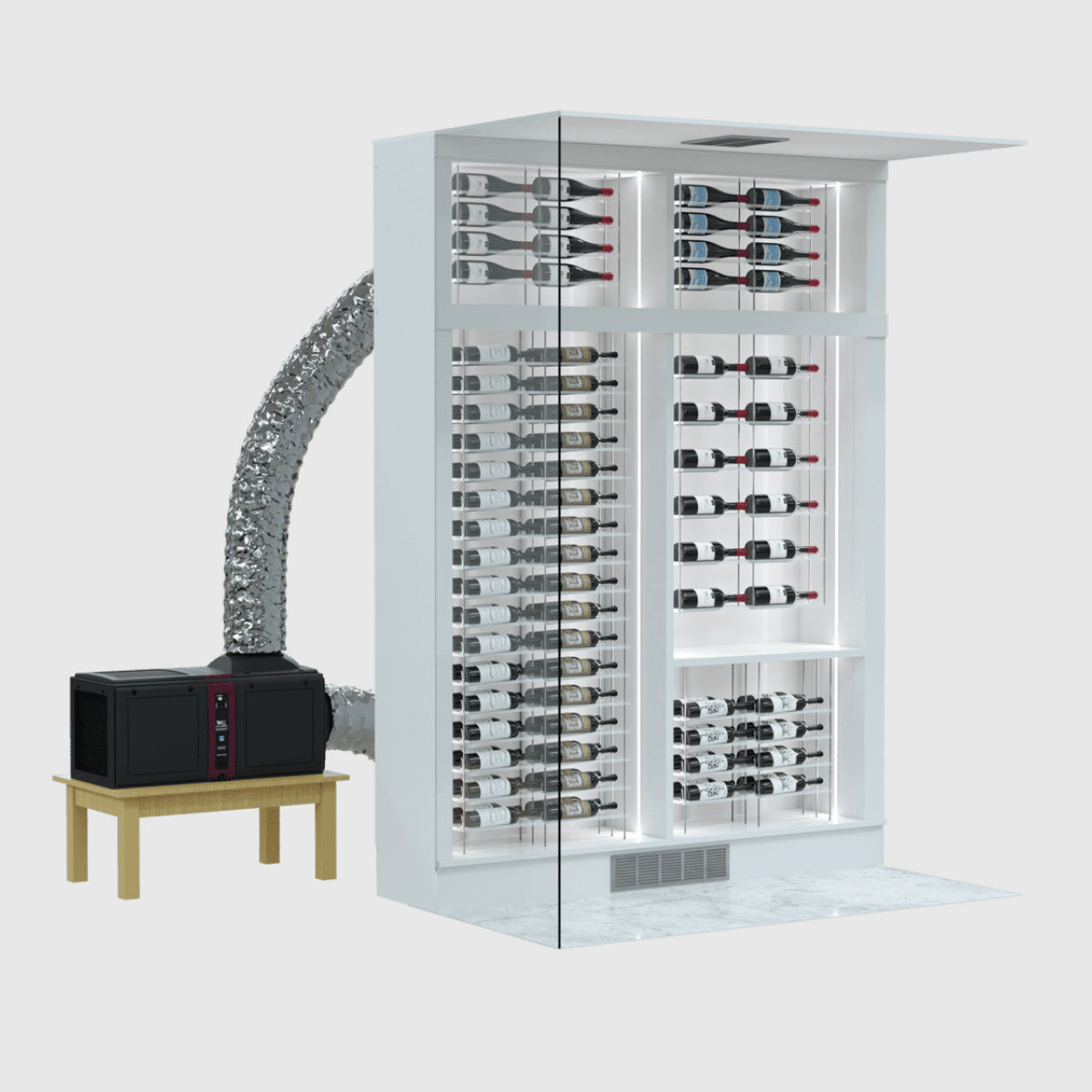
A freestanding wine fridge vents from the rear or sides. It is designed to stand independently, with open space around the unit to allow heat to escape. Enclose it on multiple sides and you restrict that airflow, force the compressor to work harder, and shorten the unit's life.
A built-in wine fridge vents from the front, typically through a grille at the base of the door. Because it exhausts heat forward rather than backward, it can be installed flush within cabinetry or under a counter without any rear clearance requirement.
That ventilation difference is the entire engineering distinction between the two categories. Everything else, where you can put the unit, what installation looks like, which models fit your space, follows directly from it.
Ventilation: Why It Drives Every Other Decision
Understanding how a wine fridge vents is not a technical footnote. It is the foundation for making a good purchase decision, and the source of most of the mistakes we see.
A freestanding unit installed inside a cabinet enclosure without adequate rear clearance will overheat. The compressor runs continuously, temperature fluctuates, and the unit fails years ahead of its intended service life. The wine may appear to be stored correctly in the meantime, while the environment is quietly working against both the collection and the equipment. Required clearance varies by model, but a minimum of five centimetres at the rear and sides is the baseline for most freestanding units. Some require more. Always check the installation specifications for your specific model before deciding on a location.
A built-in unit placed in a freestanding position will function correctly, because front ventilation is not blocked by open space behind the unit. The reverse is not true. A rear-venting freestanding unit cannot be converted to a built-in installation by simply sliding it into a cabinet opening, regardless of how precisely it fits.
Some units are marketed as convertible or dual-installation, meaning they can technically function in either configuration. Approach these claims with some care. A unit purpose-engineered for front ventilation will perform reliably in a freestanding position. A unit that simply tolerates front-venting as a secondary mode may not perform at the same standard over time. If flexibility is important to you, look for units where dual-installation is a deliberate design feature, not a marketing afterthought.
For a broader look at why temperature consistency matters so much for long-term storage, our article on wine storage temperature vs. serving temperature covers the underlying science in detail. The same principles that define good cellar conditions apply directly to how a wine fridge is sited.

When a Built-In Wine Fridge Is the Right Choice
Built-in fridges belong in spaces where the installation location is already defined and visual integration matters. Kitchen renovations and purpose-built home bars are the clearest applications: the cabinetry is specified, flush installation is part of the design intent, and the fridge needs to read as part of the room rather than an addition to it.
Aesthetics are a legitimate factor here, and worth taking seriously. A built-in unit installed at counter height, with a panel-ready or stainless door that matches surrounding appliances, reads as an intentional design choice. For collectors who have invested in a serious kitchen renovation, that visual continuity matters as much as the cooling performance.
From a spatial standpoint, built-in units earn their place by occupying zones that would otherwise go unused: the toe-kick area beneath a run of cabinets, the gap beside a refrigerator column, the alcove between a range and a wall. If bottle count is the priority and the space dictates a maximum height of 34 inches, a well-specified under-counter built-in is often the only viable option.
Under-counter wine fridges from brands like Perlick, Marvel, and Liebherr are engineered precisely for this context, with front-venting compressor systems and trim-kit options that integrate cleanly into virtually any cabinetry profile.

When a Freestanding Wine Fridge Is the Better Choice
Freestanding fridges offer a degree of flexibility that built-in units cannot match. If you're renting, if your kitchen layout isn't fixed, or if you want the option to relocate the unit as your collection or living situation evolves, freestanding is the practical answer. Installation is straightforward: plug in, allow adequate rear clearance, and you're done. No cabinetry professional required.
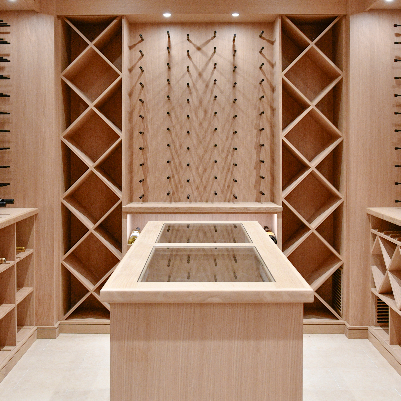
For collectors building a dedicated wine room or cellar-adjacent storage area, freestanding is also frequently the stronger choice. In a space designed specifically for wine, the argument for flush cabinet integration carries less weight. What matters there is capacity, cooling consistency, and the freedom to configure the room around the collection. Full-height freestanding units can hold two to three times the bottle count of a typical under-counter built-in, without the associated cabinetry cost.
Freestanding units are equally well suited to garages, basements, and utility-oriented storage zones, where reliable performance at a reasonable cost takes priority over seamless visual integration.
The Vantaggio line, Rosehill's house brand, is available in freestanding configurations built for serious collectors: consistent temperature control, meaningful bottle counts, and build quality that makes the purchase a long-term investment rather than a rotating appliance.
Other Variables Worth Settling Before You Buy
Once you've confirmed the right configuration for your space, a few additional factors deserve attention before committing to a specific unit:
Bottle capacity
Built-in under-counter units typically top out at 50 to 100 bottles, depending on unit height and internal configuration. For collections requiring 150 or more bottles of dedicated fridge storage, a full-height freestanding unit is generally the better path.
Dual-zone capability
Available in both configurations, dual-zone wine fridges allow two different temperature ranges simultaneously: long-term aging at 12 to 14 degrees Celsius in one zone, near-term drinking bottles at 15 to 17 degrees in the other. This is the most practical setup for collectors managing both a cellar stock and a ready-to-serve supply in the same unit. If that describes your collection, prioritize dual-zone from the start rather than treating it as an upgrade.
Noise
Built-in units installed in kitchens or living areas operate where noise is a genuine consideration. Compressor cycles, fan noise, and vibration levels vary meaningfully by brand and model. If quiet operation matters, ask about decibel ratings before committing rather than discovering the issue after installation.
Budget for installation
A freestanding unit is plug-and-play. A built-in unit installed within existing or new cabinetry typically requires a cabinetry professional, and that cost belongs in the budget conversation from the beginning. The unit price and the total installation cost are two different numbers.
Quick Reference: Built-In vs. Freestanding at a Glance
Built-in:
- Vents from the front: no rear clearance required
- Designed for flush installation within cabinetry or under a counter
- Best for kitchen renovations, home bars, and defined installation spaces
- Typical capacity: 15 to 100 bottles in under-counter format
- Professional installation recommended
Freestanding:
- Vents from the rear or sides: clearance required around the unit
- Designed for open placement, cabinet inclosure with appropriate rear clearance, or dedicated wine storage rooms
- Best for flexibility, larger collections, and utility wine storage
- Available from small countertop formats to full-height column units
- Standard plug-in installation
Ready to Find the Right Wine Fridge for Your Space?
Choosing between built-in and freestanding is the foundation of getting the rest of the wine fridge decision right. Whether you're fitting a unit into a kitchen renovation, setting up a dedicated wine room, or simply trying to protect a growing collection properly, the right configuration matters as much as the right brand.
Browse our full range of wine fridges online, or contact the Rosehill team for a personalized recommendation backed by over thirty years of wine storage expertise.