
















Somewhere between the first case of serious wine and the third time you’ve rearranged the garage, the question becomes unavoidable: is it time to build a proper cellar? And close behind it, almost always: will this actually be worth it when we sell?
The answer, for most well-built cellars in the right markets, is yes. A custom wine cellar can add meaningful value to a home: in appraisal terms, buyer appeal, and the daily experience of living with a collection that’s properly cared for. But the return is not automatic, and there are scenarios where a cellar investment underperforms. What follows is a clear look at both sides, so you can make the decision with full information.
How Does a Wine Cellar Affect Home Appraisal?
Wine cellars fall into the “special features” category in residential appraisals, alongside home theatres and professional kitchens. Unlike square footage or bedroom count, special features are assessed on market demand and execution quality. In practical terms, appraisers are looking at:
- Quality of construction: A cellar with proper insulation, a dedicated cooling unit, and professional racking carries more weight than a converted closet with a plug-in fridge.
- Functionality: Is the cooling system appropriately sized? Does the cellar actually work as a cellar, or does it just look like one?
- Integration: A cellar that feels purpose-built and architecturally considered reads as a feature. One that feels improvised reads as a liability.
-
Market alignment: In markets where buyers at that price point expect wine-adjacent amenities, a quality cellar adds more. In thinner markets, the return is more modest.
Most experts are candid about this: a wine cellar is ultimately an investment in how you live, not a guaranteed financial return. Real estate professionals do report meaningful upside for well-executed builds, with estimates of 6 to 15 percent in added property value cited for custom cellars in the right markets. But the figure varies considerably by location, price point, and execution, and is difficult to pin down with precision. What is more consistent is the daily return: a collection that is properly stored, easy to manage, and genuinely enjoyable to spend time with. For most collectors, that is the stronger case for building.

What Do Luxury Home Buyers Expect From a Wine Cellar?
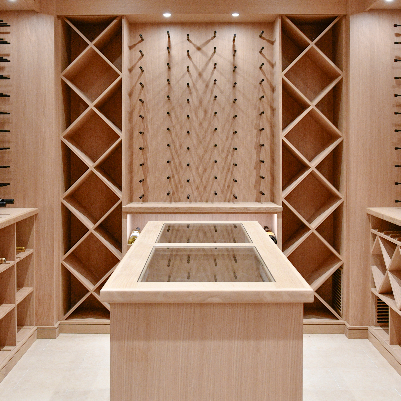
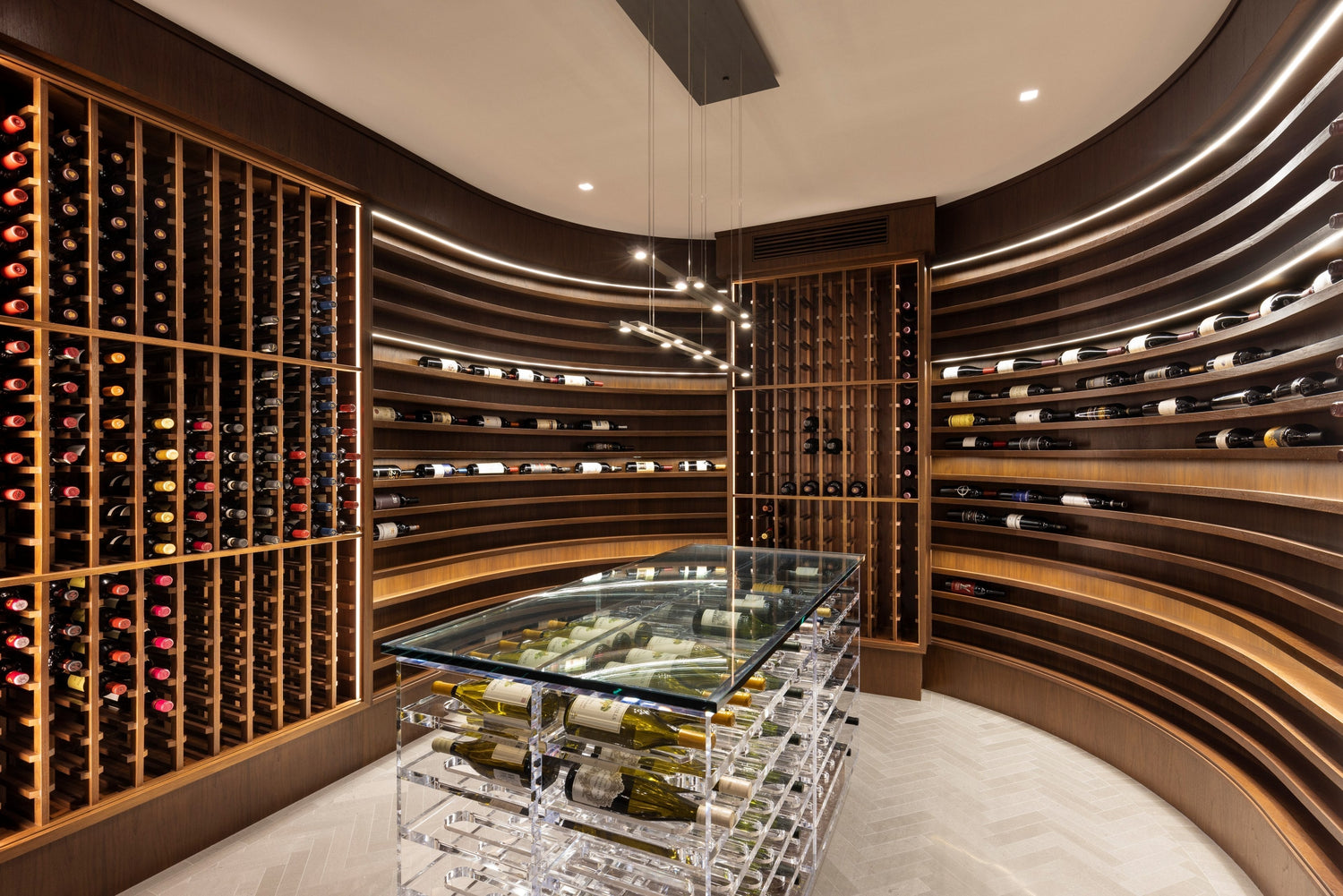
What moves buyers, specifically: climate control that actually works, meaningful bottle capacity (200 or more registers as serious storage), visual impact through glass walls or feature racking, and the overall sense that the cellar was designed by someone who understands wine. A cellar that checks those boxes photographs well and sells well.
Climate Is Where the Cellar Earns Its Keep
Market demand matters, but the strongest case for a wine cellar’s resale value is practical: in regions where heat and humidity put wine at genuine risk year-round, a properly built cellar is not a luxury add-on. It solves a real problem. That shifts how buyers perceive it, and how appraisers weigh it.
This is especially true in Southwest Florida, where collectors in markets like Naples face a climate that offers no off-season reprieve. Without active climate control, wine deteriorates quickly. A home that already has a professionally built, properly cooled cellar removes a calculation that every wine-collecting buyer is quietly running in their head. As more collectors relocate to the region, the expectation for thoughtfully designed storage is only growing. But the same logic applies anywhere humidity swings are wide or summer heat is sustained: the cellar that protects the collection is the one that holds its value.
When Does a Wine Cellar Not Add Value?
It’s worth being direct about the scenarios where a wine cellar investment underperforms:
- Overbuilding for the market: A $200,000 custom cellar in a $600,000 home is an outlier. Buyers at that price point may not value the feature, and the appraisal will reflect that.
- Poor execution: A DIY cellar with inadequate insulation or a failing cooling unit can reduce buyer confidence in the home’s overall quality.
- Sacrificing usable space: Converting a bedroom or laundry room may net you beautiful storage at the cost of something buyers value more.
- Wrong market: In markets primarily driven by schools and square footage, a wine cellar is unlikely to register as a meaningful feature.
The common thread is fit. A cellar adds value when it is proportional to the home, built to a standard buyers can trust, and positioned in a market where the feature resonates.

What Makes a Wine Cellar Worth the Investment?
For homeowners moving from the concept to a real investment, it helps to understand what’s involved. The gap between a cellar that adds to a home’s value and one that detracts from it almost always comes down to a few fundamentals:
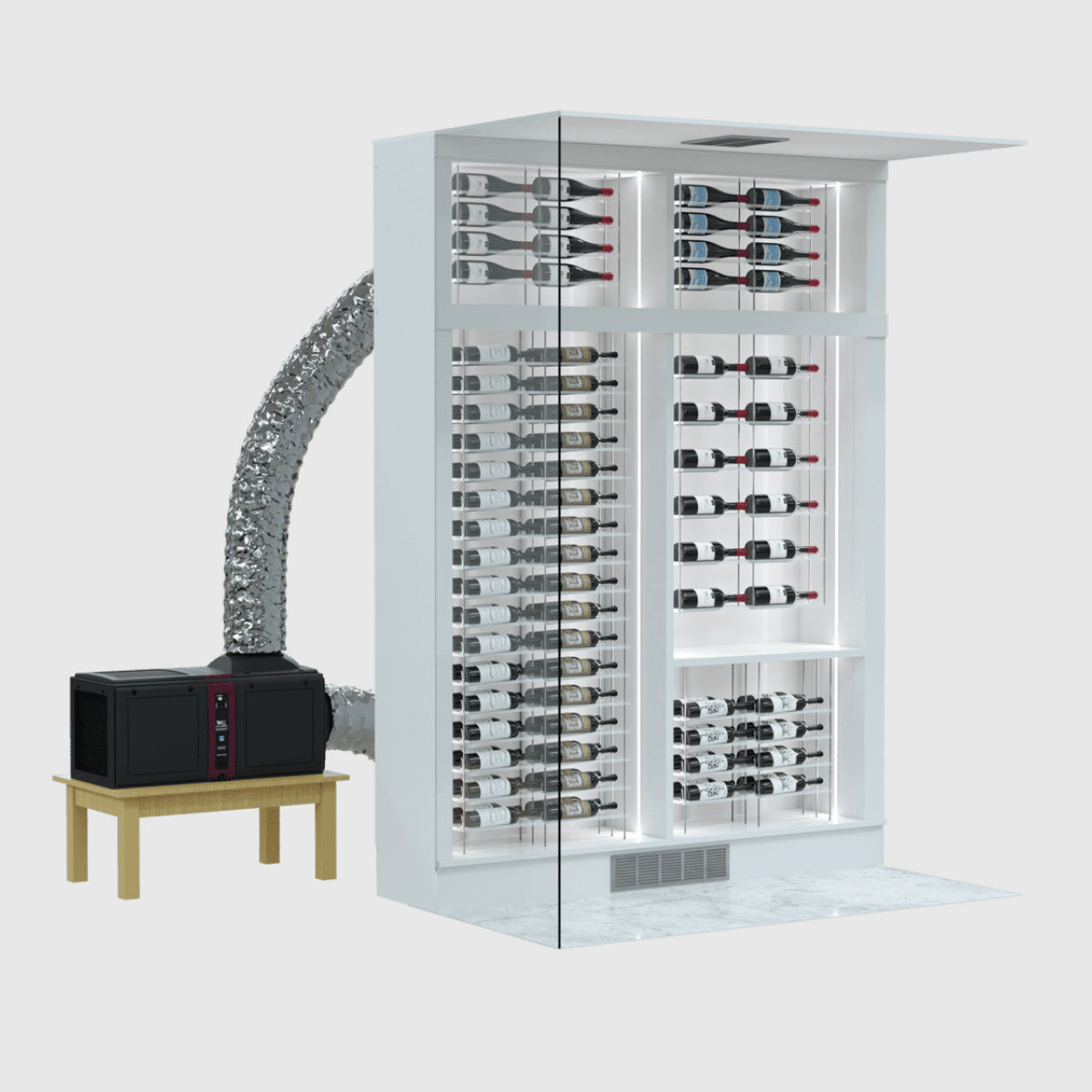
- Thermal envelope: Proper insulation on all six sides, with a vapour barrier on the warm side. This is the most commonly mishandled aspect of budget and DIY builds. A cellar with an inadequate thermal envelope cannot hold temperature, regardless of the cooling unit.
- Cooling system: Sized for the room, not chosen for price. Purpose-built wine cellar cooling units from brands like CellarCool maintain consistent temperature and run efficiently for years. An undersized unit runs constantly and fails early.
- Door and seal: A solid-core, well-insulated door with a tight perimeter seal. Glass doors are popular for their visual impact but require thermopane glass and a proper frame. Single-pane is an engineering problem, not a design choice.
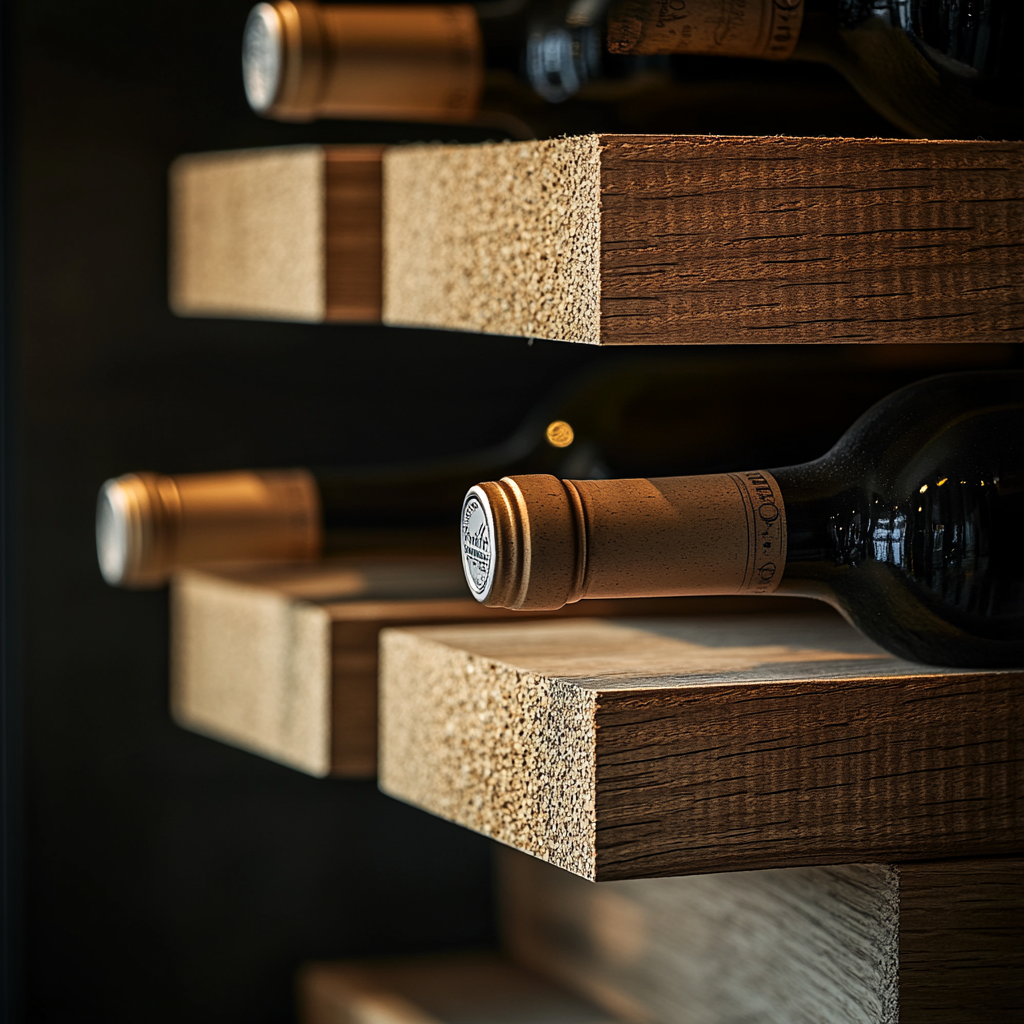
- Racking: Where design and function converge. The racking should be considered from the beginning of the build, not added as an afterthought. Traditional wood, contemporary metal, custom feature walls: the configuration should reflect the collection and the room.
A cellar at roughly 5 to 10 percent of your home’s overall value is typically proportional. Build for the collection you’re growing toward, not just the one you have today.
So, Is A Wine Cellar Worth It?
A wine cellar, built well and proportional to your home, adds real value across the board: financial, functional, and experiential. It is one of the few home improvements that also improves your daily life every time you reach for a bottle.
If you’re considering a build and want a clear picture of what it involves, what it costs, and what it adds to your home, our design and custom cellar team is ready to walk you through it. We’ve been doing this for over thirty years, in Toronto, across Ontario, and now in Naples, Florida.