

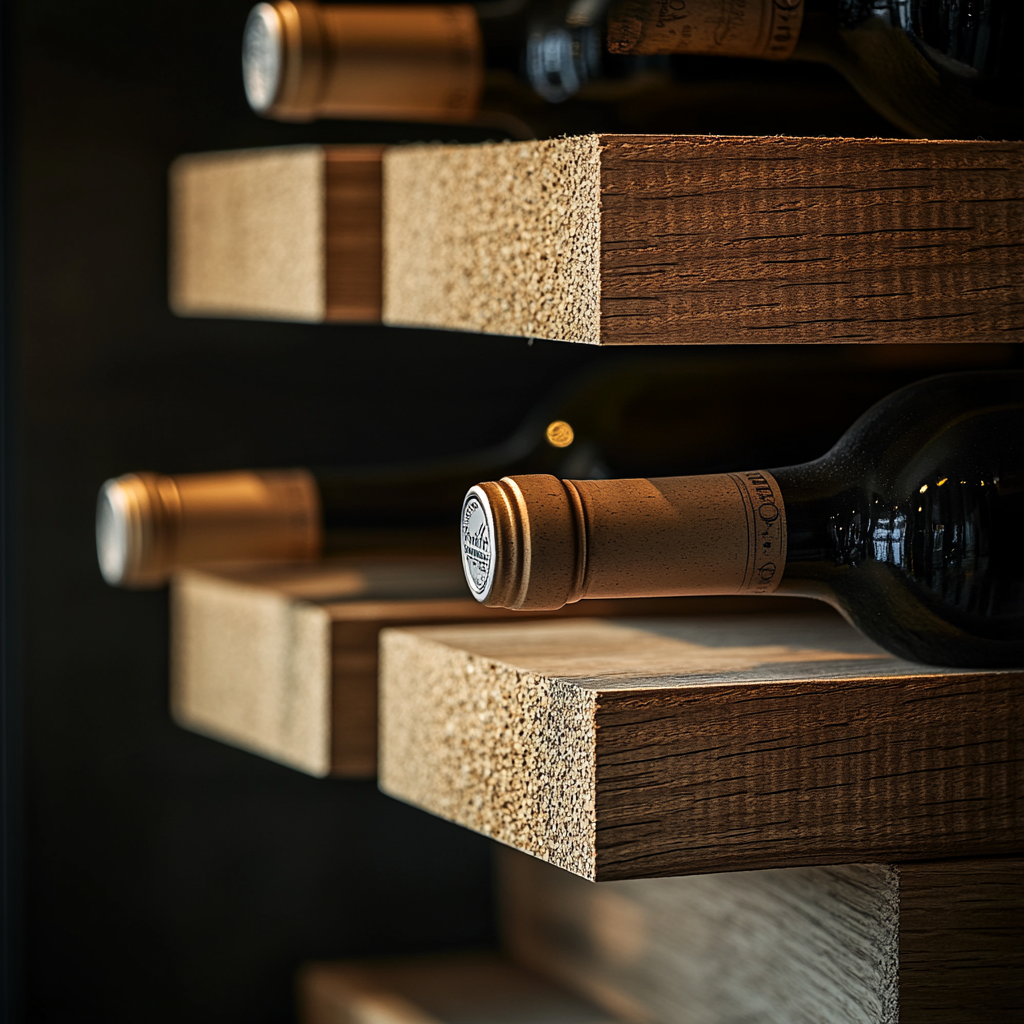





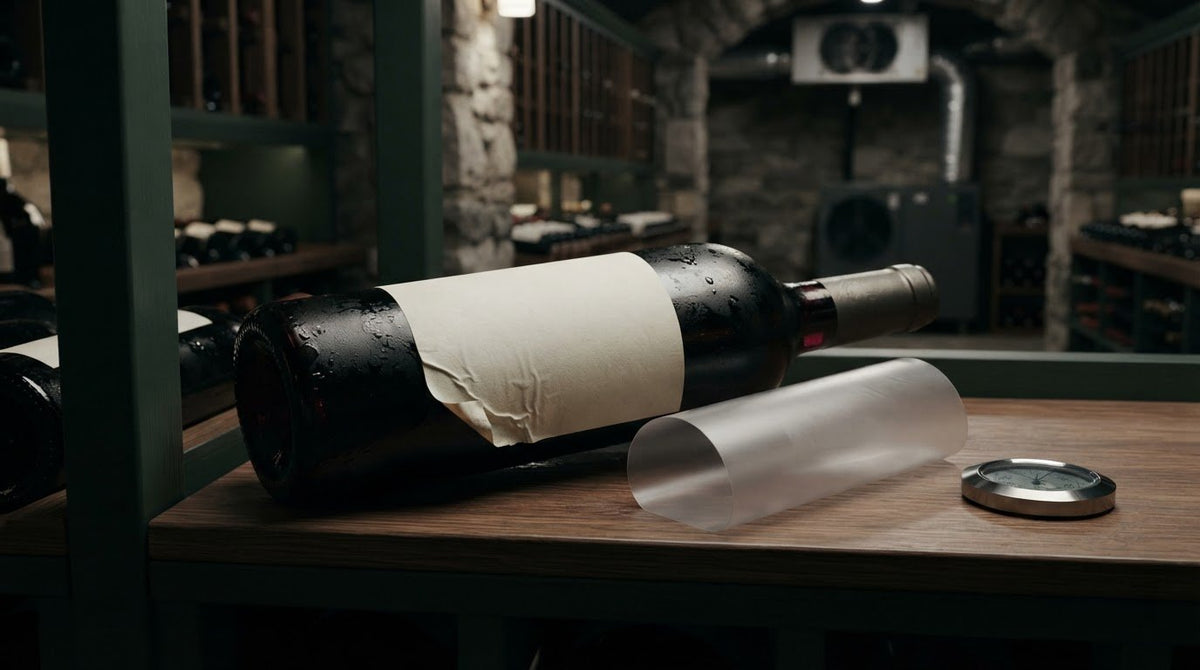
What if the safest way to stop a wine label peeling is to leave it alone until you know what’s causing the damage? High humidity wine label peeling solutions depend on whether moisture is lingering in the cellar, forming through condensation, or reaching a bottle during handling. Treating the label first can risk further damage, especially on a bottle with collector value.
It’s frustrating to see labels wrinkle, lift at the edges, or lose their appearance in storage. But changing cellar conditions isn’t always the right first step. Wine needs a stable environment, while a single damp bottle may call for a more targeted response.
This guide explains how to distinguish persistent humidity from condensation and handling issues, then choose a proportionate, low-risk response. You’ll learn when reusable label covers may help, when to leave a label untouched, and how stable storage and suitable cooling equipment fit into a long-term moisture plan.
Key Takeaways
- Track which bottles are affected and note handling or moisture patterns before choosing a solution.
- Use a suitable hygrometer to record cellar readings over time and help distinguish persistent humidity from isolated condensation.
- Compare high humidity wine label peeling solutions by risk and reversibility, from careful handling to protective sleeves.
- For a peeling label, document its condition and minimize handling. A valuable or visibly damp bottle needs a cautious approach.
- Prevent repeat damage by keeping bottle surfaces dry and storage conditions stable. If moisture persists, look at the wider cellar environment.
Why High Humidity Can Make Wine Labels Peel, Wrinkle, or Lift
A wine label peels when its paper or adhesive begins to lose its bond with the bottle. Moisture exposure can weaken that bond, causing the paper to wrinkle or the edges to lift, but no single humidity threshold explains every case. A visible change is a clue, not a diagnosis. One damaged label doesn’t prove that the entire cellar is unsuitable for wine storage.
Prolonged dampness may affect a label gradually, while condensation can leave a bottle wet after a sudden temperature change. The distinction matters. Before choosing among high humidity wine label peeling solutions, look for a pattern and consider what each bottle has experienced. General guidance on Wine Cellar Humidity also emphasizes steady cellar conditions, but a damaged label alone can’t identify the source of moisture.
How moisture affects paper labels and adhesive
Paper can absorb moisture and swell, then look rippled or puckered as it changes. If the adhesive bond softens, a corner or seam may lift from the glass. The response varies with the paper, finish, adhesive, bottle surface, and storage history. Older water-based adhesive could be a factor on some bottles, but it shouldn’t be assumed to explain every peeling label.
Clues that point to humidity, condensation, or another cause
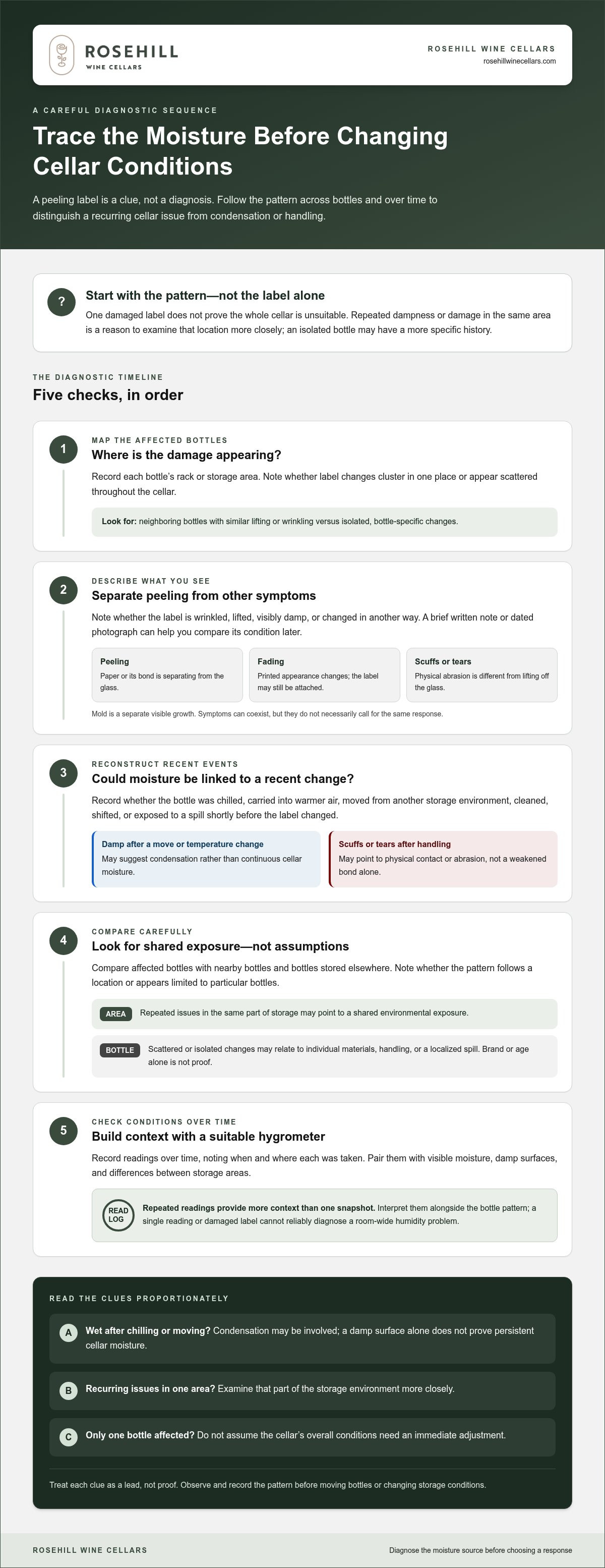
Repeated damage across bottles in the same area may point to a shared environmental exposure. An isolated mark, or peeling limited to a few bottles in different positions, may instead reflect individual materials, handling, or a localized spill. Treat the pattern as a lead, not proof. Record what you observe before moving bottles or changing storage conditions.
- Map the affected bottles. Note their positions and whether neighboring bottles show similar lifting or wrinkling. Damage concentrated in one area differs from scattered, bottle-specific changes.
- Consider recent temperature changes. Ask whether the bottle was recently chilled, brought into warmer air, or moved from another storage environment. A damp surface appearing after a move may suggest condensation rather than continuous cellar moisture.
- Review handling and contact. Check whether bottles were recently carried, wiped, shifted against one another, or exposed to a spill. Scuffs and tears usually show physical abrasion. They aren’t the same as paper lifting from the glass.
- Identify the symptom precisely. Fading changes the printed appearance but doesn’t necessarily loosen the label. Mold is a separate visible growth, while peeling means the paper or its bond is separating. These symptoms can coexist, but they don’t call for the same response.
If several bottles repeatedly show dampness, examine the wider storage environment rather than treating each label as an isolated problem. If only one bottle is affected, don’t assume the cellar’s overall conditions need an immediate adjustment. Distinguishing between these situations is the starting point for a proportionate response.
How to Diagnose the Source of Wine Label Moisture Damage
Before changing cellar settings or adding protection to every bottle, establish whether the moisture is persistent, localized, or linked to a recent change. A single reading or damaged label can’t reliably diagnose a room-wide humidity problem. Look for patterns over time and compare affected bottles with those that remain dry and intact.
A wet bottle surface points to a different immediate issue than repeated label damage across a storage area. Surface moisture after chilling or moving a bottle may suggest condensation. Recurring damage in the same part of a cellar calls for closer attention to that area and its conditions. Neither clue, on its own, proves the cause.
Map where and when the labels are affected
Make a simple record before moving bottles. Note each affected bottle’s location, the kind of label change, and whether nearby bottles show similar signs. Add the timing of recent chilling, cleaning, handling, or movement from another environment. Comparing bottles from the same rack with unaffected bottles elsewhere can reveal useful patterns without treating a wine’s brand or age as proof.
- Record the location. Mark the rack or area where each affected bottle was stored. Note whether damage appears concentrated in one place or scattered throughout the cellar.
- Describe the condition. Record whether the label is wrinkled, lifted, visibly damp, or marked in another way. A brief written note or dated photograph can help you compare changes later.
- Reconstruct recent handling. Note whether bottles were chilled, carried into a warmer space, cleaned, or shifted shortly before moisture or damage appeared.
- Compare carefully. Check nearby bottles and bottles of different ages or brands. If only particular bottles are affected, their handling or materials may matter. If a location shows repeated issues, examine that area more closely.
Check the storage environment without overreacting
Use a suitable hygrometer to record readings over time, and note when and where each reading was taken. Pair those observations with visible moisture, damp surfaces, and differences between parts of the storage space. Repeated readings offer more context than a single snapshot, but interpret them alongside the bottle pattern.
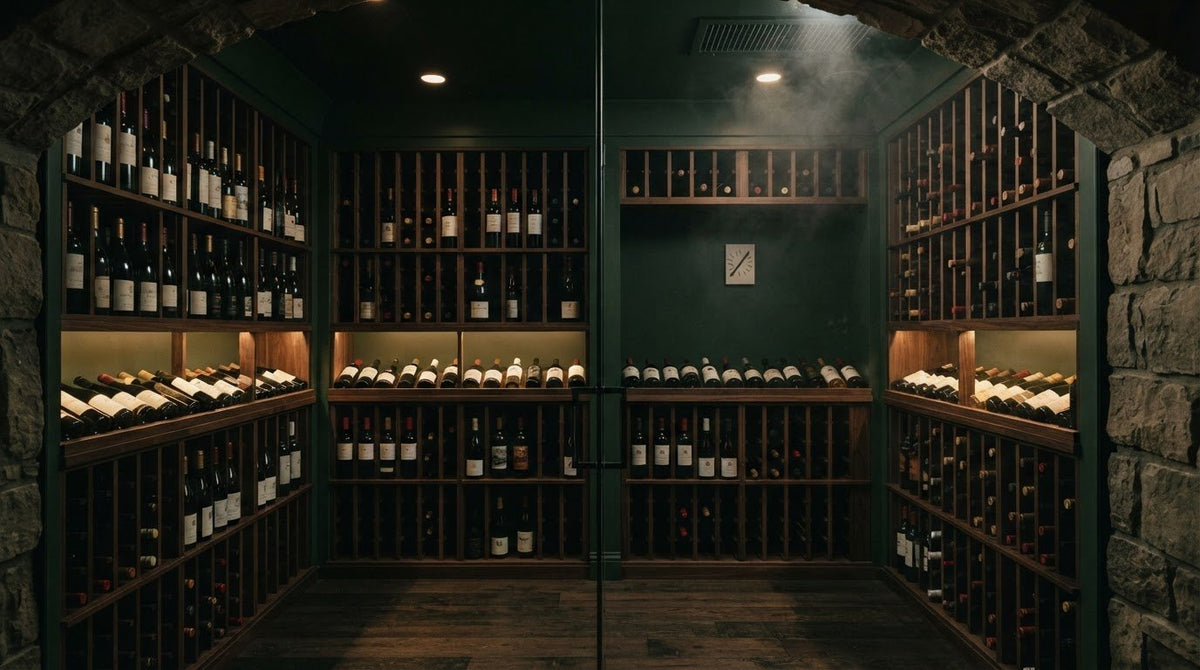
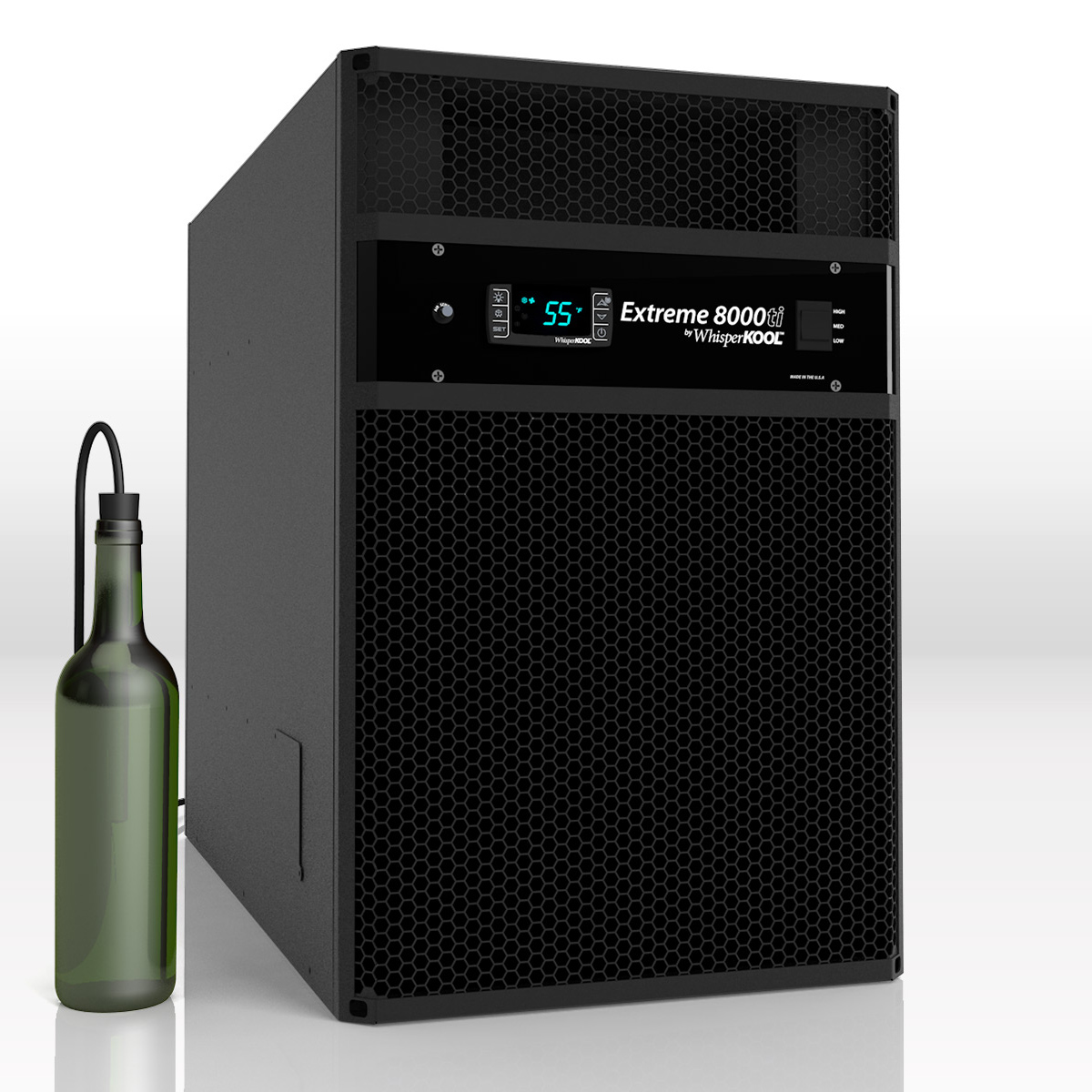
Resist abrupt adjustments based only on a label’s appearance. First, check whether the bottle was wet after a move or whether moisture appears repeatedly in the same storage area. If readings and visible conditions point to an ongoing cellar issue, environmental control may warrant a closer look. Wine cellar cooling systems are one part of planning a stable storage environment. Use the evidence to choose a proportionate response instead of treating every lifted edge as proof of excessive room-wide humidity.
Comparing Wine Label Peeling Solutions for Different Situations
The right response depends on what the evidence points to and whether the bottle is being stored long term, handled often, or showing signs of recurring dampness. A sleeve can guard against contact, but it won’t correct a moisture source. Changing the storage environment won’t necessarily restore a label that has already wrinkled or separated. Match the intervention to the problem, and start with the least disruptive suitable option.
Prevention
Best fit: Bottles with intact labels and a storage area without a verified moisture problem. Keep bottle surfaces dry and avoid unnecessary label contact.
Tradeoff: Prevention reduces avoidable exposure but can’t reverse existing damage.
Reversible: Yes. Handling practices can be adjusted at any time.
Protective sleeves
Best fit: Bottles likely to be moved, browsed, or handled, where incidental contact is a concern.
Tradeoff: A sleeve is a barrier, not a cure for high humidity or condensation. Fit and access matter, and a covering shouldn’t go over a damp label.
Reversible: Generally, a sleeve can be removed without altering the label, provided it’s fitted and taken off carefully.
Careful handling
Best fit: Bottles that are regularly retrieved or rearranged.
Tradeoff: It limits avoidable rubbing and pressure but won’t address persistent moisture in the storage area.
Reversible: Yes. Handle bottles by the neck or base where practical, rather than pressing on the label.
Correcting a verified moisture source
Best fit: Repeated condensation or persistent dampness affecting a storage area.
Tradeoff: The cause may involve the wider storage setup, so changing one setting without understanding the conditions can miss the issue.
Reversible: Adjustments may be changed, but make them deliberately and monitor the result rather than reacting to one damaged bottle.
Keep damp labels uncovered. Sealing a wet label in plastic may trap moisture. Wine Spectator has raised mold as a possible concern with wrapping damp labels. Treat that as a caution, not a guaranteed outcome. Let the source of wetness guide your next step, and don’t press or cover a label just to make it appear flat. A sleeve is most appropriate once the bottle surface and label are dry.
Choose protection only after checking the moisture source
If a sleeve suits the bottle’s handling needs, make sure it can be put on and removed without scraping the label or making the bottle awkward to access. For recurring dampness, address the storage conditions first. A broader assessment may include the cooling setup. Wine cellar cooling systems form part of long-term environmental planning, not a quick repair for an already damaged label.
These high humidity wine label peeling solutions are preventive or protective measures, not restoration promises. Choose based on the bottle’s condition and the moisture pattern. Don’t assume a wrinkled or detached label can be returned to its original appearance.
What to Do When a Wine Label Is Already Peeling
Resist the urge to press a lifting label back into place. First establish whether it’s dry and lifting at an edge, visibly damp, or showing possible mold. Those conditions call for different levels of caution, and a quick cosmetic fix may compromise the label or obscure evidence of what happened.
Reattaching or tightly sealing a damp label may worsen damage by trapping moisture. Photograph the bottle and label before moving it, then minimize handling. If the bottle is collectible, has important provenance, or may be valued partly for its original condition, preserving the evidence can matter more than making the label look neat. A qualified conservator can assess valuable bottles before any restoration is attempted.
A low-intervention response for a lifting label
For a dry edge that has begun to lift, document the condition and avoid adding glue or other treatments. Household adhesives may change the label or make later conservation more difficult. Without knowing the paper and adhesive, a do-it-yourself repair carries risk. Don’t rub, iron, or apply pressure to paper that’s damp or fragile. For a bottle with significant collectible value, seek a qualified conservation opinion rather than attempting to flatten, remove, or reattach the label yourself.
Visible dampness changes the priority. Don’t cover the label or try to smooth it while wet. If you see possible mold, avoid rubbing or wiping the affected area, which could disturb the surface. If fungal growth appears to be spreading across the storage space or surrounding structures, inspection specialists like My Pure Environment SF can help address environmental contamination. Photograph what you can without prolonged handling, and keep the bottle away from unnecessary contact while you determine whether moisture is recurring. The aim is to preserve the current condition, not to promise a return to its original appearance.
Protect the bottle while preventing repeat exposure
Move the bottle only if needed to address an immediate source of moisture or contact. Hold it by the neck or base where practical, keeping fingers and supporting surfaces away from the label. Don’t wrap a wet label tightly in plastic. Trapped moisture can prolong dampness and may create conditions in which mold becomes a concern. A cover is not a substitute for understanding why the bottle got wet.
- Document first. Take clear photographs of the label, bottle, and any visible moisture before changing its position.
- Limit contact. Handle only as much as necessary, and don’t rub, press, heat, or apply household glue to a fragile label.
- Respond to the condition. Keep a dry, lifted edge undisturbed. Treat a damp or mold-affected label with greater caution and avoid sealing it.
- Recheck the surroundings. Once the immediate issue is addressed, inspect the bottle surface and storage area for recurring dampness rather than assuming the label itself was the sole problem.
If moisture continues across the storage area, the broader cellar environment may need attention. For long-term planning, explore wine cellar cooling systems as one part of a considered storage setup, not a quick repair for a damaged label. This measured approach to high humidity wine label peeling solutions helps protect both the bottle and the information its original label carries.
Prevent Future Wine Label Peeling With Stable Storage
Protecting labels over time is less about applying a cover to every bottle and more about keeping storage practices consistent. Keep bottle surfaces dry before returning them to a rack, limit contact with paper labels, and watch for recurring signs of moisture. These habits can reduce avoidable exposure, though they can’t guarantee that a label will remain unchanged.
Build a repeatable bottle and cellar check
Make a brief inspection part of your regular cellar routine. Look for damp bottle surfaces, newly lifting edges, or changes in where affected bottles are stored. A simple dated record of observations and hygrometer readings can help distinguish an isolated incident from a pattern. If you use a humidity range to guide storage, verify it against current, authoritative wine-storage guidance rather than applying a universal target to every cellar.
- After chilling: Check the bottle surface before putting it back into long-term storage. Let any moisture dry rather than returning a wet bottle directly to a rack.
- During handling: Hold bottles by the neck or base where practical, and avoid pressing, rubbing, or wiping across the label.
- When arranging bottles: Reduce unnecessary rubbing or pressure between bottles and nearby surfaces, particularly where paper labels are exposed.
- During routine checks: Note whether dampness or label changes recur in the same location. A persistent pattern deserves more attention than a single isolated mark.
Connect recurring symptoms to the wider storage system
If moisture keeps returning, consider the storage environment as a whole rather than relying only on bottle sleeves or individual label care. Recurring condensation, damp surfaces, or repeated issues in one part of a cellar may warrant reviewing the setup and the condition of its equipment. A wine cooler or cellar cooling system is relevant to storage planning, but any change in equipment or settings should respond to observed conditions, not label appearance alone.
For collectors considering dedicated storage, wine coolers are one option to explore. In a cellar, the broader design and cooling arrangement also matter. Rosehill Wine Cellars designs custom wine cellars and offers maintenance plans for wine cooling systems. Ongoing equipment care belongs in a long-term storage plan, rather than being treated as a quick fix for a label that has already lifted.
The most useful prevention plan is steady and observant: keep bottles dry, handle them gently, monitor for changes, and respond to recurring moisture with a review of the wider environment. These high humidity wine label peeling solutions support thoughtful collection care without promising that any single measure will prevent all label damage.
Make Label Care Part of Your Storage Plan
Let recurring label damage prompt a closer look at how your collection is stored, rather than an automatic change to the cellar. A measured approach helps protect the bottle’s condition while keeping the broader storage environment in view. The most useful high humidity wine label peeling solutions respond to an identified cause and fit the needs of your collection.
For collectors planning a dedicated storage environment, Rosehill Wine Cellars designs and builds custom wine cellars and offers wine cooling units with maintenance plans. That expertise supports thoughtful long-term storage planning, though no system can promise to prevent every label issue. Consider how the space, cooling equipment, and ongoing care work together as your collection evolves.
Explore wine cooling systems for a considered storage environment and take the next step toward storage designed around your collection. With careful observation and a well-planned environment, you can give both your wine and its presentation more considered care.
Frequently Asked Questions
Can high humidity make wine labels peel?
Yes, prolonged moisture exposure can contribute to peeling, although the effect varies with a label’s paper, finish, and adhesive. A label may wrinkle or lift after repeated dampness, while a bottle exposed to a brief moisture event may show no change. Compare several bottles and note where they were stored. That pattern offers more useful clues than assuming every affected label has the same cause.
What humidity level prevents wine labels from peeling?
No humidity level can guarantee that labels won’t peel, since materials and exposure differ. General wine-storage guidance commonly places relative humidity between 50% and 70%, with around 60% often cited as a target. Treat that as guidance for wine storage, not a label-protection guarantee. Use a hygrometer to follow trends, and consult current authoritative guidance when setting conditions for a particular cellar.
Should I wrap a peeling wine label in plastic?
No, don’t tightly wrap a damp or peeling label in plastic. A close covering may trap moisture against the paper, creating conditions in which mold could become a concern. This isn’t an inevitable result, but it’s a reason to avoid sealing a wet label. Photograph the condition, leave the label undisturbed, and address the moisture source before considering removable protection for a dry bottle.
Are wine bottle sleeves effective for protecting labels?
They can help shield a dry label from incidental rubbing or contact during storage and handling. Their usefulness depends on the sleeve fitting the bottle without scraping or pressing on the label, and they can make the bottle less convenient to view or access. Sleeves don’t resolve persistent dampness or condensation. Check that the bottle and label are dry before using one, and remove it gently if it catches.
Can I reattach a wine label that has started peeling?
It may be possible, but applying household glue or pressing the paper back down yourself risks changing or further damaging the label. The right approach depends on its condition and materials, which can be difficult to judge by appearance alone. For a bottle with collectible value or important provenance, preserve its current state and seek a qualified conservation opinion before attempting cosmetic repair.
What happens if only some bottles in my cellar have peeling labels?
Selective damage doesn’t automatically mean the room has a uniform humidity problem. Bottles may differ in label construction, storage position, or exposure to handling and condensation. Compare affected bottles with nearby ones, then check whether the damage follows a particular rack, bottle history, or recent move. Brand or age can suggest a pattern to investigate, but neither proves the cause by itself.
Can condensation after chilling damage a wine label?
Yes, condensation can wet a label when a chilled bottle meets warmer, more humid air. For example, a bottle taken from a cold refrigerator into a warmer room may develop moisture on its surface. This brief event differs from repeated dampness in a storage area. Before returning a chilled bottle to its rack, allow its surface to dry and avoid rubbing directly across the paper.
Does a peeling label mean my wine cellar humidity is too high?
No, one peeling label isn’t enough to establish that cellar humidity is excessive. The bottle may have been chilled, moved, handled, or exposed to moisture in one location, and labels can respond differently. Look for repeated damage across an area and compare it with humidity readings taken over time. If dampness keeps returning, review the broader storage environment rather than reacting to one bottle alone.