


















For microfiber polishing cloth lint removal, crystal decanters call for less buffing, not more. A stray fiber stands out against clear crystal, and repeated rubbing can leave fresh lint or smudges. Narrow necks and curved shapes can make it tempting to keep polishing, even when a lighter touch is the better approach.
The goal is a clear, luminous finish without unnecessary handling. Start with a clean, well-prepared cloth, use controlled contact, and let the drying sequence do its part instead of rubbing harder.
This guide explains how to prepare a microfiber cloth, lift visible lint gently, and polish the outside of a crystal decanter with minimal pressure. You’ll also learn how to approach a narrow opening and when to stop, so you can avoid creating more fibers or smears while removing the ones you see.
Key Takeaways
- Tiny fibers and streaks show clearly on crystal, and repeated rubbing can make the finish worse.
- Prepare a clean cloth before polishing. Visible debris or residue can transfer onto the decanter.
- Choose an approach based on the decanter’s shape, access, and the type of residue. One cloth or method may not suit every situation.
- For microfiber polishing cloth lint removal on crystal decanters, follow a careful sequence: inspect, stabilize, lift visible lint gently, then check the result.
- Know when to stop. If fibers or streaks remain, don’t increase pressure or repeat passes unnecessarily.
Why Microfiber Lint Clings to Crystal & How to Fix It
Microfiber lint is a visible fiber or faint residue left behind after wiping. It may come from a cloth that sheds fibers, has picked up debris, or transfers residue during polishing. A fine strand that would go unnoticed on a matte surface can catch the eye on clear crystal, where light passes through and reflects from the glass. That contrast can make a small mark seem more prominent than it is.
Before polishing again, pause to identify what you’re seeing. A loose fiber, dried water mark, dust particle, and polishing streak can look similar at first, but they call for different responses. A careful approach to microfiber polishing cloth lint removal on crystal decanters begins with assessing the mark: inspect the surface, change the viewing angle, and avoid vigorous rubbing that could spread residue or leave fresh marks.
How to tell lint from streaks or mineral marks
Look at the spot under steady light, then turn the decanter slightly instead of wiping it right away. A fiber may appear as a fine strand, particularly when viewed against the light. A streak is usually a broader, hazy smear, while a dried water spot or mineral mark tends to look like a defined ring, patch, or pale deposit. Dust may shift or lift with minimal contact. For background on the material used in many polishing cloths, see this overview of microfiber.
Why a decanter needs a careful approach
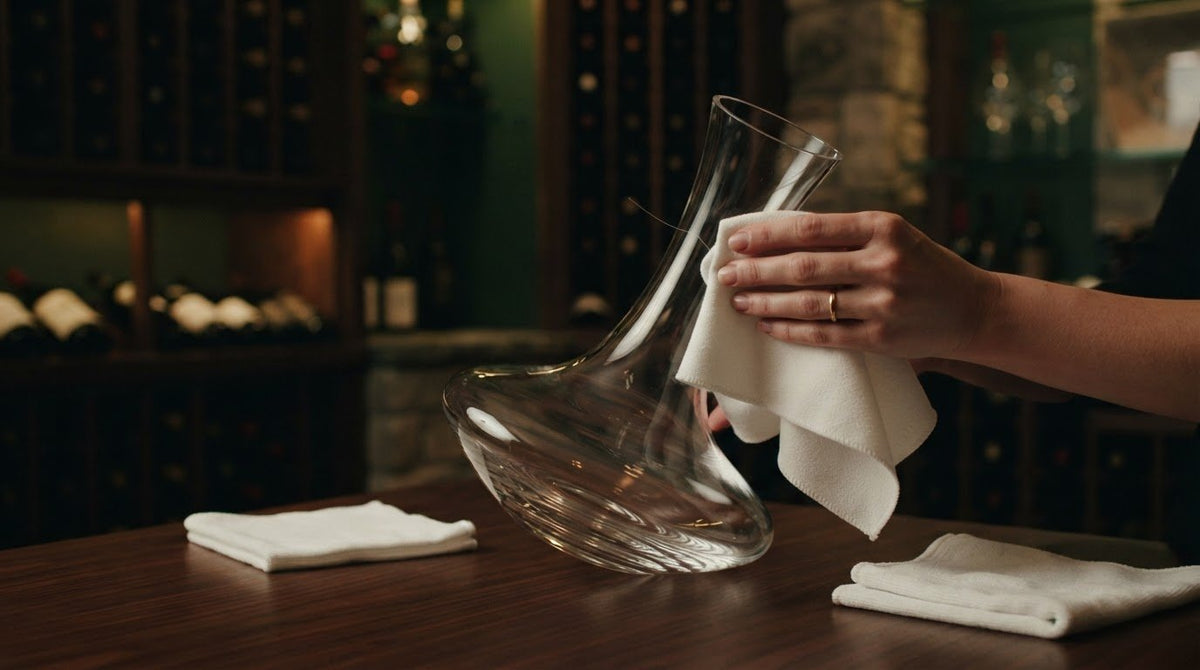
A decanter’s narrow neck and curved interior can limit hand access, making it difficult to see or reach every area comfortably. Don’t force a hand through the opening or insert fingers or tools where they could become trapped. Instead, place the vessel on a stable, padded surface and support it securely before inspecting or polishing. A steady decanter is easier to handle with light, controlled contact.
Once you’ve identified the mark, choose the next step accordingly. A visible loose fiber may need only a gentle lift. A broad smear or water mark may require a different cleaning step, not more dry buffing. Avoid twisting or gripping the vessel awkwardly, especially around the neck and shoulder. Keep the decanter well supported and your movements measured.
Start with a simple check: Is the mark a strand, a smear, or a spot? Does it change as you alter the angle? If the answer isn’t clear, stop and inspect it under different light rather than increasing pressure. This pause helps prevent unnecessary handling and points you toward a more suitable cleaning approach.
Prepare a Microfiber Polishing Cloth Before Cleaning Crystal
A careful polish begins before the cloth touches the decanter. Choose a clean microfiber cloth reserved for delicate glassware, then inspect it in good light. A cloth may look clean at a glance but still hold dust, residue, or a small piece of debris that transfers to crystal on the first pass. If it feels gritty or looks visibly soiled, set it aside and choose another cloth.
Preparing the cloth makes microfiber polishing cloth lint removal on crystal decanters more controlled: it reduces the chance of introducing new fibers or smears while addressing the ones already present. Keep the goal simple. The cloth should be clean and suitable for polishing, without products or care methods that go beyond its maker’s instructions.
Check and wash the cloth with care
Hold the cloth under bright light and examine both sides for loose fibers, lint, dust, stains, or embedded particles. If it needs washing, follow the care label or the cloth maker’s instructions rather than assuming a particular temperature, detergent, or drying method is appropriate. Where practical, wash polishing cloths separately from laundry that sheds lint, such as fluffy towels. Inspect the cloth again before use.
A tactile check matters, too. Lightly run your fingers over the fabric. If it catches on grit or feels as though something is lodged in its surface, choose another clean cloth. Don’t shake a dusty cloth near the decanter, since loose particles can settle on the glass or work area. Fold the cloth so you can use a fresh, clean section as you polish.
Set up a clean, controlled polishing area
Choose a dry, uncluttered surface with enough room to support the decanter securely. Keep the polishing cloth away from dusty counters, used towels, and other items that could transfer lint. Good lighting makes it easier to spot debris on the fabric and check the crystal between passes. A clear workspace also reduces the chance of knocking the vessel while reaching for supplies.
Before beginning, make a quick setup check:
- Surface: It’s clean, dry, and large enough to support the decanter.
- Cloth: It feels smooth and shows no visible dirt, lint, or residue.
- Light: You can see the cloth and crystal clearly from more than one angle.
- Nearby items: Dusty materials and used towels are kept away from the work area.
This preparation doesn’t require special equipment. It limits avoidable sources of lint and gives you a clear view of the result. If you’re also considering glassware for serving, Rosehill’s glassware collection includes options such as the Orrefors Glassware Collection. For polishing, use the clean cloth and controlled setup you’ve prepared.
Microfiber Cloth or Another Method? Choose a Gentle Lint-Removal Approach
No single cloth or technique suits every decanter. A clean microfiber cloth can lift loose fibers from an accessible exterior. Another clean, lint-free cloth may be a better fit if it feels smoother or is recommended for the glassware. Shape matters, too: a broad body is easier to polish than a narrow neck or curved interior, where reaching farther can make the cloth harder to control.
First identify the residue. Loose surface lint may lift with a dry cloth; a smear or dried mark may call for a different cleaning step. Follow the decanter’s care instructions before introducing moisture. For microfiber polishing cloth lint removal on crystal decanters, clean materials and light contact matter more than force.
| Method | Suitable situation | Handling caution |
|---|---|---|
| Clean, dry microfiber cloth | Loose fibers on an accessible surface | Use short, light strokes; stop if new fibers appear. |
| Another clean, lint-free cloth | A preferred alternative for an exterior you can reach easily | Check that it’s clean and smooth before contact. |
| Lightly dampened cloth | A residue that doesn’t lift with a dry cloth, when care instructions allow water | Don’t soak the cloth or fill the decanter; dry the exterior promptly. |
When a dry cloth is enough
For a loose fiber on the exterior, begin with a clean, dry cloth and a short, gentle stroke. Use a fresh section of fabric if needed instead of repeatedly working the same spot. Inspect the glass after each pass. If fibers keep appearing, stop and reassess the cloth and surface rather than buffing harder. Repeated friction can spread lint or create smears.
When a dampened cloth may help
If a mark remains and the decanter’s care instructions permit water, lightly dampen a clean cloth rather than soaking it. The fabric shouldn’t drip, and there’s no need to fill the vessel for exterior lint removal. Work gently over the affected area, then dry the exterior promptly with a separate clean cloth. If the instructions don’t support using water, don’t improvise.
Let access guide your decision as much as the type of residue. A cloth that works well across the decanter’s body may be awkward to maneuver near its neck. Don’t push fabric or fingers into a space you can’t reach comfortably. Choose the least involved method that suits the area, and keep the vessel securely supported as you work.
After a pass, change the viewing angle and inspect the result. If the mark has lifted, stop. If it hasn’t, reconsider whether you’re seeing lint, a streak, or another kind of residue before choosing the next step. A measured approach avoids extra handling that doesn’t improve clarity.
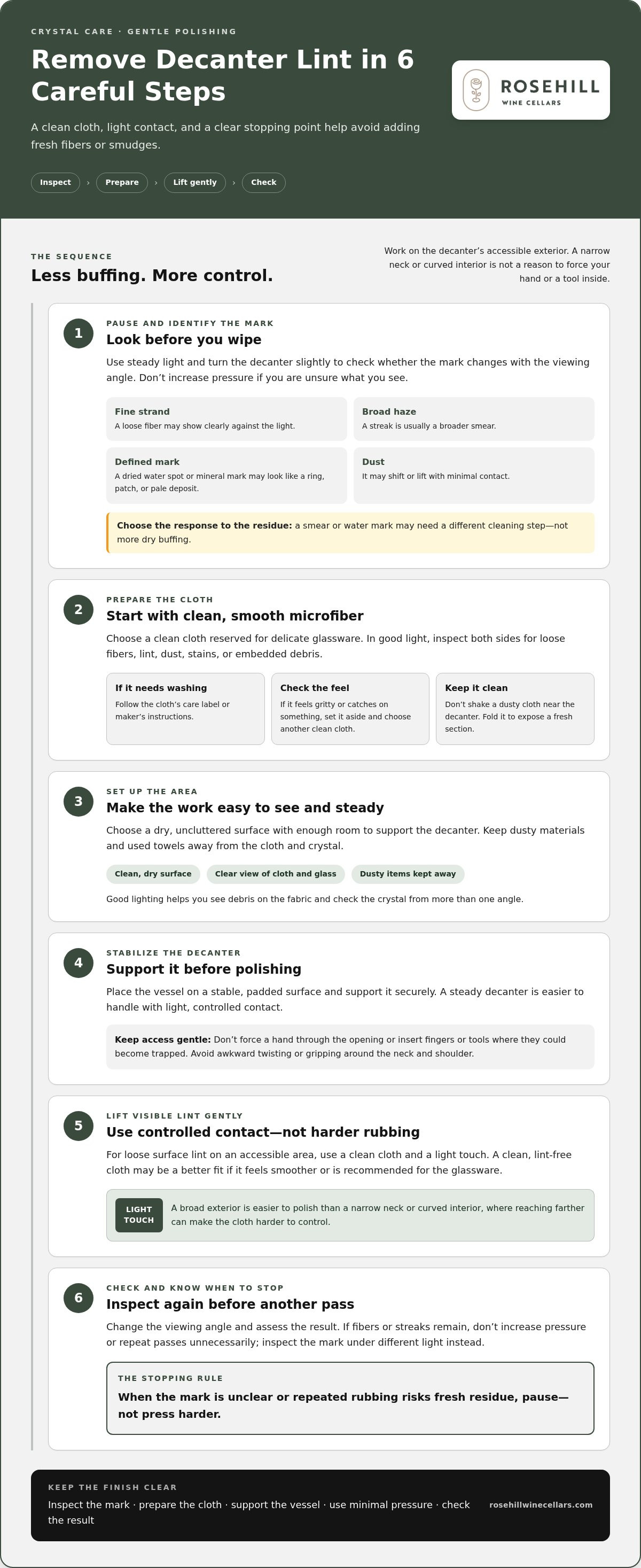
How to Remove Microfiber Lint from a Crystal Decanter Step by Step
Use a deliberate sequence rather than polishing the entire decanter at once. Treat the reachable exterior separately from the interior, where a narrow neck can make contact difficult to control. For microfiber polishing cloth lint removal on crystal decanters, the aim is to lift visible fibers gently, then reassess, not to keep rubbing until every mark disappears.
- Inspect the decanter. Under good light, locate the fibers and note whether they’re on the outside or inside. Check that the crystal is dry and identify the affected area before choosing a cleaning method. If the mark looks like a smear or water spot rather than a loose strand, pause instead of treating it as lint.
- Stabilize the vessel. Set the decanter on a stable, padded surface. Support its body securely, not its rim, and arrange it so the area you’re working on is easy to reach. Don’t hold it in an awkward position or grip it tightly while polishing.
- Lift visible exterior lint. Use a clean section of cloth and light, controlled contact. Make one short pass over the fiber, then lift the cloth away. Avoid scrubbing back and forth. If the fiber remains, inspect the cloth and crystal before deciding whether another gentle pass is appropriate.
- Check before continuing. View the area under angled light and turn the decanter carefully to see whether the fiber has moved or the mark has changed. Stop if the surface looks clear, or if additional rubbing starts to create smears or more visible fibers.
Polish the exterior without adding more fibers
Keep the decanter supported by its body and work only on an area you can reach comfortably. Fold the cloth so a clean section meets the crystal for each pass. After brief contact, inspect under angled light before repeating the movement. If lint transfers from the cloth, stop and switch to a clean section or reassess the cloth rather than pressing harder.
The sequence is simple: inspect the mark, steady the vessel, make one gentle pass, and check before deciding what to do next. It’s a careful process, not a promise that polishing will remove every mark.
Address lint inside a narrow-necked decanter
Interior fibers call for extra restraint. Don’t force your hand, a cloth, or an improvised object through a narrow opening. Difficulty reaching the spot is a reason to stop, not to push farther. If you use a cleaning tool intended for delicate glassware, follow its instructions and proceed only if you can use it without straining or risking contact that could damage the vessel.
Exterior polishing and interior cleaning aren’t interchangeable. If lint is inside and safe access is difficult, leave it rather than risking breakage or injury. For readers considering glassware alongside careful decanter care, explore the glassware collection.
Keep Crystal Decanters Clear: Final Checks and Better Polishing Habits
Finish with an inspection, not another round of polishing by default. Clear crystal can reflect a light source in ways that resemble a streak or fiber, so confirm that a mark is actually residue before touching the surface again. A pause helps you notice when the decanter is already clear and prevents extra handling that may introduce new smudges.
Check the decanter in clear, angled light
Rotate the decanter carefully to view the exterior from different angles, then look through the opening at any interior area visible without reaching inside. A strand may look different as the angle changes; a reflection may disappear entirely. If you can’t distinguish a mark from glare, adjust the light and look again rather than wiping immediately. Set the decanter down securely when you’re done inspecting.
Use this final checklist before deciding whether another pass is necessary:
- Fibers: Look for fine strands on the exterior and in any clearly visible interior area.
- Streaks: Check whether a broad haze remains or whether the mark changes with the viewing angle.
- Cloth: Make sure the section you used hasn’t collected visible lint or debris.
- Handling: Confirm the decanter is supported securely, with no need to grip or twist it awkwardly.
Stop polishing if the surface appears clear, if the mark proves to be a reflection, or if another pass would require extra pressure. If fibers keep appearing, put the cloth aside and reassess it. The aim is a careful, controlled finish, not repeated contact for its own sake.
Build a cleaner routine for future polishing
Store the polishing cloth clean and separate from everyday towels, which may leave lint or transfer debris. Before polishing again, inspect the fabric and fold it so a fresh section meets the glass. After each controlled pass, check the result before using another section. This routine makes it easier to tell when the cloth, rather than the decanter, is causing fibers to reappear.
For broader context on choosing glassware and caring for a considered collection, explore Rosehill’s glassware selection, including the Orrefors Glassware Collection. Follow the care guidance for each piece, and keep polishing gentle rather than relying on extra pressure.
Make Crystal Care Part of the Occasion
A well-kept decanter is more than a serving piece. Its clarity brings polish to the table, whether you’re setting out glassware for a quiet evening or welcoming guests. Treating microfiber polishing cloth lint removal on crystal decanters as a measured finishing touch, rather than a task that calls for endless buffing, keeps care practical and leaves more time to enjoy the occasion.
As you build a glassware collection, consider how each piece suits the way you serve and entertain. Rosehill Wine Cellars offers premium glassware, including the Orrefors Glassware Collection, for those looking to explore options for the table.
Explore Rosehill Wine Cellars’ glassware collection for ideas for your next gathering. With thoughtful care and glassware chosen to complement your table, every pour can feel a little more special.
Frequently Asked Questions
Can microfiber leave lint on a crystal decanter?
Yes, fibers can remain visible after wiping, though what looks like lint may also be residue or a streak. Before making another pass, change the angle of the light and inspect both the glass and cloth. A strand may look like a thin line, while residue may appear hazier. If you identify a loose fiber, use a clean cloth section for one gentle pass, then reassess instead of buffing repeatedly.
Is microfiber safe to use on crystal glass?
A microfiber cloth may be suitable for polishing crystal, but its condition and your handling matter. Use fabric that’s clean and free of grit, then apply light contact without pressing or twisting the vessel. A particle caught in a cloth can be dragged across the surface, so inspect the fabric first. Crystal types and care guidance can differ; follow the instructions for your decanter rather than assuming one method suits every piece.
How do you remove lint from inside a narrow-necked decanter?
Stabilize the decanter first, then use only a cleaning tool intended for delicate glassware and follow its instructions. Don’t push fingers, rolled cloth, or improvised objects through a narrow neck; they may become stuck or put uneven pressure on the vessel. If you can’t reach the fiber with a suitable tool and controlled movement, stop. Leaving a small strand is preferable to risking breakage or injury while trying to retrieve it.
Should I wet a microfiber cloth to remove lint from a decanter?
Not necessarily. A loose fiber may lift with a clean, dry cloth, while dried residue may need a different approach. If the decanter’s care instructions allow water, you can consider a lightly dampened cloth, not a soaking wet one. Work only on the area you can reach safely, then dry the exterior carefully with a separate clean cloth. If the care guidance is unclear, don’t assume moisture is appropriate for that piece.
Can I put a microfiber polishing cloth in the washing machine?
Check the cloth’s care label before machine washing. Laundering requirements vary, so don’t assume a temperature, detergent, or drying method. Where practical, keep the cloth separate from lint-producing laundry, such as fluffy towels. After washing and drying according to its instructions, inspect it under good light and feel for embedded debris. Set it aside if it still looks dusty or feels gritty rather than using it on crystal.
Why does my decanter still look streaky after polishing?
A streaky appearance may come from a smear, dried water mark, reflection, or fine fiber, and clear glass can make these difficult to distinguish. Shift the decanter or light source to see whether the mark changes before wiping again. If the cause remains uncertain, avoid repeated dry buffing, which may add more visible marks. Choose the next cleaning step according to the type of residue and the decanter’s care instructions.