
















What if a cooling unit that runs constantly isn’t low on refrigerant at all? Wine cooling system low refrigerant symptoms can raise a reasonable concern when cellar temperatures begin to drift, but they don’t confirm the cause. Blocked airflow, a dirty condenser, sensor problems, or an overheated exhaust space can create similar signs.
It’s understandable to worry about how changing cellar conditions may affect your wine and to want to avoid paying for the wrong repair. This guide explains which symptoms may point to low refrigerant, what other problems can look similar, and how to monitor the cellar while deciding what to do next. You’ll also learn why refrigerant work isn’t a DIY task and how an assessment can help you weigh repair against replacement. A measured first check can help you respond with greater confidence.
Key Takeaways
- Reduced cooling, longer run cycles, and shifting cellar conditions may be among wine cooling system low refrigerant symptoms, but they aren’t proof of a refrigerant problem.
- Airflow obstructions, dirty components, sensor issues, and electrical faults can create similar clues. Compare possibilities without treating them as a diagnosis.
- Record temperature readings and changes in operation, and check visible airflow paths without opening the unit.
- Monitor cellar conditions and follow the cooling-system manufacturer’s instructions while considering the next step.
- A service assessment can help determine whether repair or replacement better suits the system’s condition and your cellar’s requirements.
Wine Cooling System Low Refrigerant Symptoms: What Owners May Notice
Low refrigerant is one possible reason a wine cellar cooling system may lose performance, but symptoms can’t establish that refrigerant is low. Reduced cooling, extended run cycles, and difficulty maintaining the cellar’s configured conditions can all prompt a closer look. The same changes may also stem from restricted airflow, a dirty component, a sensor issue, or another equipment fault.
What you notice depends on the system’s design, its operating environment, and the fault involved. Compare current behavior with the unit’s usual pattern rather than relying on one observation. The principles of refrigeration explain how a cooling system transfers heat, but symptoms alone can’t show whether refrigerant loss is disrupting that process. No symptom by itself confirms low refrigerant.
How reduced cooling can show up in a wine cellar
A cellar may take longer than usual to return to its configured temperature after the door has been opened, or the cooling unit may run more often than you’re accustomed to. If that pattern persists, the room may have increasing difficulty holding its intended conditions. Track the trend rather than treating a brief fluctuation as evidence of a fault.
Changes in room conditions, door use, or airflow around the unit can also affect its workload. Note when longer cycles occur and whether they coincide with an obvious change in the surroundings. A persistent pattern is useful information to share during an assessment, but it doesn’t identify the cause on its own.
What unusual system behavior may prompt a closer look
Weak cooling output, visible icing, or a change in the unit’s usual operating pattern may warrant further assessment. These clues can accompany a refrigerant concern, but they can also arise from other operating or equipment problems. No single sound, patch of ice, or other visible sign proves refrigerant has been lost.
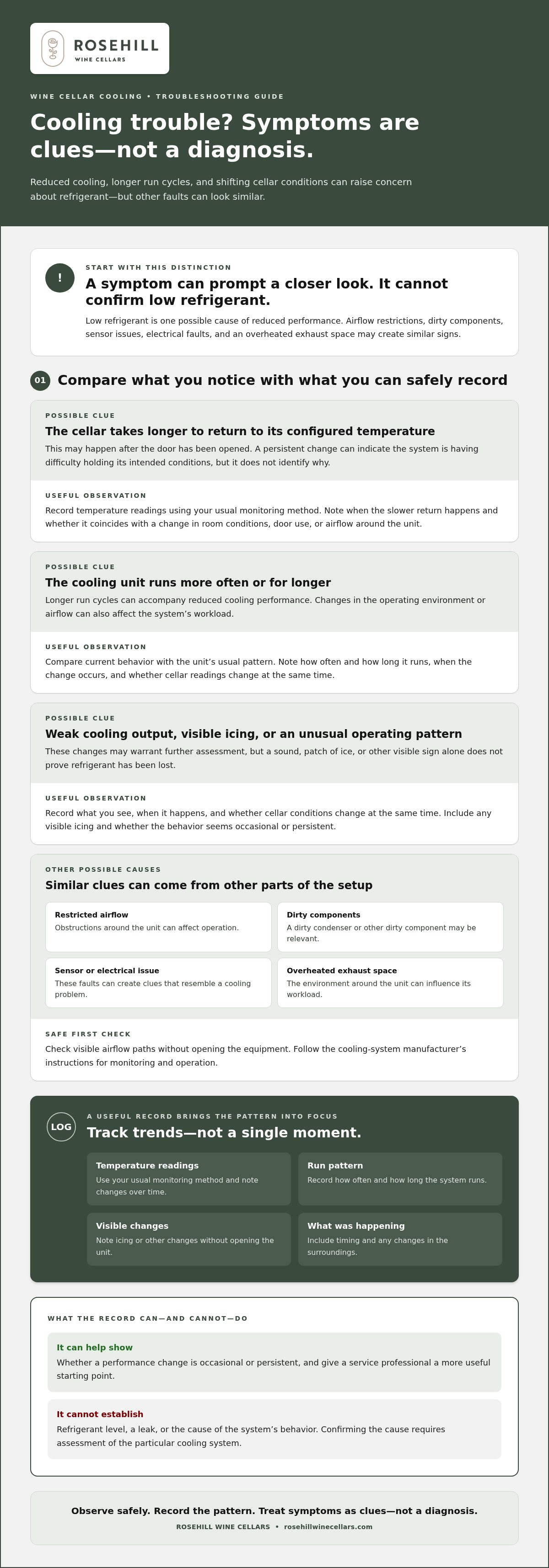
Observe the system without opening the equipment. Record what you notice, when it happens, and whether cellar conditions change at the same time. Include temperature readings from your usual monitoring method, changes in how often or how long the system runs, and any visible icing. This log can show whether the behavior is occasional or persistent and give a service professional a more useful starting point.
If you’re considering a new or replacement unit, specialist wine cellar cooling systems are designed for the demands of wine storage, rather than simply cooling an ordinary room. Treat wine cooling system low refrigerant symptoms as observations, not a diagnosis. A careful record helps distinguish a lasting performance change from a short-lived fluctuation and supports a more informed next step.
How Low Refrigerant Can Affect a Wine Cellar Cooling System
A wine cellar cooling system moves heat out of the cellar so the space can remain near its configured storage conditions. Refrigerant circulates through the system and changes pressure and state as part of that heat-transfer process. If the amount circulating is insufficient, cooling performance may decline. That is one possible explanation for the wine cooling system low refrigerant symptoms owners may observe, not a diagnosis based on appearance or behavior alone.
Refrigerant loss means there is less refrigerant in the system’s circuit than its design calls for. In a system designed as a sealed refrigeration circuit, a low charge generally points to refrigerant escaping rather than being routinely consumed. Designs vary, however, and the cause and condition need to be assessed by someone familiar with the specific equipment. A symptom or simplified explanation of the cooling cycle can’t establish refrigerant level or identify a leak.
Why refrigerant level and cooling performance are connected
As refrigerant circulates, it absorbs heat from the cellar at one part of the system and releases that heat elsewhere. If the system can’t transfer heat as intended, the cellar may take longer to cool or struggle to hold its configured conditions. Reduced refrigerant can contribute to that problem, but restricted airflow, component faults, and other issues can produce similar results.
How a fault presents depends on the unit’s type, design, and operating conditions. Different system layouts move air and reject heat in different ways, so a clue seen on one unit may not appear on another. A basic understanding of heat transfer is useful context, but it isn’t a diagnostic procedure. Confirming the cause requires assessment of the particular cooling system.
Why cellar conditions deserve careful attention
A wine cellar cooling system is selected to support wine-storage conditions, not simply to make a room feel comfortable. If performance changes persist, the cellar environment may also shift over time. Pay attention to the displayed reading and note changes in cooling behavior, such as altered run patterns or a slower return to the configured setting. Readings are most useful for tracking trends, not proving refrigerant loss.
Keep the equipment’s design in mind as you interpret what you observe. Room temperature, airflow around the unit, and the cellar’s construction can all influence its workload. The same displayed reading may therefore have different context depending on how and where the system is installed. Follow the manufacturer’s instructions for monitoring and operation, and don’t open the unit to investigate refrigerant components.
Purpose-built wine cellar cooling systems are intended for the particular demands of wine storage. If your existing equipment’s performance has changed, review the system’s design and condition before assuming a refrigerant problem or selecting replacement equipment.
Low Refrigerant or Another Fault? Compare the Clues Carefully
Weak cooling or longer operating cycles can have more than one explanation. A refrigerant concern is only one possibility. Airflow restrictions, a dirty filter where the system uses one, a sensor or control issue, and an electrical or mechanical fault can produce overlapping behavior. Treat the pattern as a clue to investigate, not a DIY diagnostic key.
Use the comparison below to organize observations, not to identify a failed part. What a symptom means can vary with equipment type, installation, and operating environment. You can note what the unit does and what the display shows; conclusions about refrigerant charge or internal components require an assessment specific to the equipment.
Airflow, filter, and heat-rejection problems that can look similar
Restricted airflow can interfere with a unit’s ability to move or release heat, so note whether visible openings are blocked. Some designs use a filter that may need attention according to the manufacturer’s instructions; others differ. Record what you can see without removing panels or taking equipment apart. A technician can assess the relevant airflow paths and components for that specific unit.
Sensor, control, and equipment faults to keep in view
A sensor or control problem may affect the displayed reading or the system’s response to cellar conditions. Compressor and other component faults can also impair cooling, but their signs depend on the equipment. Note displayed readings, unusual cycling, and when changes occur. Leave electrical checks and internal testing to a qualified service assessment.
As you track wine cooling system low refrigerant symptoms, keep observations separate from conclusions: describe what changed rather than naming a suspected failure. A clear account helps a specialist assess refrigerant concerns alongside airflow, controls, and equipment condition, reducing the risk of treating one plausible explanation as the answer.
What to Do When You Suspect Low Refrigerant
A measured response can help you monitor cellar conditions and make a service assessment more useful. Treat possible wine cooling system low refrigerant symptoms as a reason to observe and document, not to open the equipment or attempt a repair. Follow the manufacturer’s operating and maintenance instructions throughout.
What information to record before arranging service
Keep a concise log of what the system and cellar are doing. Record displayed readings, when the change began, and whether it persists or comes and goes. Note unusual run patterns, visible icing, or changes in airflow from accessible openings, without touching internal components. If available, write down the unit’s model and maintenance history. This context gives a service professional a more useful starting point for assessing the equipment.
Use this sequence to make your observations safely:
- Document readings. Note the displayed cellar temperature and the time of each observation, using the same monitoring method where possible.
- Describe operating changes. Record when cooling behavior changed, whether the pattern continues, and any visible signs such as icing.
- Check visible airflow paths. Look for an obstruction at accessible intake or exhaust openings if your unit has them. Don’t remove panels or reach inside.
- Continue monitoring. Track cellar conditions and follow the manufacturer’s guidance for operating the system while you arrange an assessment.
What not to do when refrigerant loss is suspected
Don’t add refrigerant, use a DIY recharge product, open sealed components, or bypass a safety control. These actions can create safety risks, damage equipment, or obscure the original fault. In the United States, refrigerant handling work, including leak repair and recharging, must be performed by an EPA Section 608 certified technician. An assessment can determine whether refrigerant is involved or another system concern needs attention.
Focus on what you can safely observe. A change in the display, visible ice, or an unusual cycle is useful information, but it can’t confirm a refrigerant problem. Leave testing and work on refrigerant-containing components to qualified hands, and share your notes, the unit model, and maintenance records when arranging service.
Preventative care can also help you stay familiar with your system’s normal operation and manufacturer-recommended upkeep. For wine cellar-specific guidance, consult this annual wine cooling maintenance plan guide. If the cooling concern persists, request wine cooling system service support to arrange a focused assessment.
Repair or Replace? Choosing the Right Wine Cooling System Next Step
A change in cooling performance doesn’t automatically mean a system needs replacement. Low refrigerant is one possible explanation, but an assessment is needed to identify the underlying fault and determine whether it is repairable or tied to a broader equipment or installation concern. That distinction matters: choosing a next step based only on symptoms can lead to a repair that doesn’t address the cause, or replacement before the system’s condition is understood.
Consider the unit as part of the cellar’s overall design. Its history, current performance, and compatibility with the space all matter. The wine cooling system low refrigerant symptoms you’ve recorded can help describe the change, while a service assessment can evaluate the equipment and inform what makes sense next.
When a repair assessment may be the sensible next step
Start by identifying the cause, not presuming a solution. Similar cooling problems can stem from different faults, and a specialist assessment can help distinguish a repairable equipment issue from concerns involving the installation or the system’s suitability for the cellar. Share the unit’s model, maintenance history, and notes on recurring performance changes. This context helps frame an informed assessment without presuming what the repair will involve.
A repair may be worth considering when the unit otherwise meets the cellar’s needs and the fault can be addressed without leaving an unresolved performance concern. Recurring symptoms deserve particular attention: they may indicate that an earlier issue persists or that another factor is affecting operation. Let the system’s condition and assessment findings guide the decision. Avoid relying on a generic rule or assuming suspected refrigerant loss always means a leak, a particular repair, or immediate replacement.
When to compare replacement cooling options
Compare replacement options if performance concerns keep returning, the cellar’s requirements have changed, or the existing equipment may no longer suit the space. Consider the cellar’s design and operating needs alongside the unit’s condition. Compatibility matters: a different system must suit the space and its cooling requirements, rather than simply being selected because it is readily available.
Also distinguish whole-cellar cooling from a wine cabinet or cooler designed to store bottles as an appliance. They serve different purposes, so a cabinet isn’t automatically a substitute for equipment intended to condition a cellar. If you’re comparing bottle-storage options rather than a cellar system, explore Rosehill Wine Cellars’ wine coolers. For a cellar, compare wine cellar cooling systems in light of the existing space and equipment.
There isn’t one answer for every cellar. Use an assessment to understand the unit’s condition, then weigh repair and replacement against recurring issues and your storage needs. Request wine cooling service support or explore cooling solutions as you consider the right next step.
Protect Your Cellar’s Conditions With a Thoughtful Next Step
Uncertainty about wine cooling system low refrigerant symptoms can make it tempting to settle on the first explanation. Instead, use what you’ve observed to guide a careful decision about the equipment and the cellar it serves. A well-matched cooling system supports more than comfort: it helps create a considered environment for your collection.
If your system’s performance has changed, a focused assessment can help clarify whether repair or a different cooling approach deserves consideration. Rosehill Wine Cellars offers wine cellar cooling systems, service appointments, and maintenance plans to support ongoing care of your cellar environment.
Explore wine cellar cooling solutions and take the next step toward a cellar that supports your collection with confidence.
Frequently Asked Questions
Can low refrigerant make a wine cellar cooling system run constantly?
Yes, low refrigerant can contribute to extended or near-continuous operation, but that pattern doesn’t identify the cause. Restricted heat release, unusually warm surrounding conditions, or another equipment problem may also keep a system running. If wine cooling system low refrigerant symptoms include prolonged operation, note whether the unit eventually reaches its setting and whether the pattern is new. That context helps distinguish a change from the system’s usual behavior.
Can I recharge a wine cellar cooling system myself?
No. Don’t use a DIY recharge kit or open the system to add refrigerant. In the United States, work involving refrigerants, including recharging and leak repair, must be performed by an EPA Section 608 certified technician. Adding refrigerant without addressing the underlying problem may not restore reliable operation and can create safety or equipment risks. Arrange an assessment by a qualified technician familiar with wine cellar cooling equipment.
What happens to wine if the cellar cooling system stops maintaining conditions?
Wine exposed to unsuitable or fluctuating storage conditions for an extended period may age differently and lose quality; the effect depends on the wine and the conditions it experiences. If the cooling system stops maintaining the cellar’s intended environment, monitor the readings and don’t assume the display will recover on its own. For especially valuable bottles, consider temporary storage in a stable wine-storage environment while the cooling issue is assessed.
How can I tell whether poor cooling is caused by low refrigerant or restricted airflow?
You can’t reliably distinguish the two by temperature behavior alone. Without opening the unit, look for an obvious blockage at accessible air openings and check any owner-serviceable filter only as directed by the manufacturer. A clear path doesn’t prove low refrigerant, just as an obstruction doesn’t rule out another fault. A technician can assess airflow and test the system to identify the cause rather than relying on visual clues.
Does ice on a wine cooling unit mean it is low on refrigerant?
No. Ice can appear for more than one reason, including airflow or operating problems, so it doesn’t confirm refrigerant loss. Note where the ice appears and whether it returns, but don’t scrape it off or remove panels to investigate. Follow the unit manufacturer’s instructions and arrange an assessment if icing persists or cooling performance changes. The unit’s design and operating conditions affect how this clue should be interpreted.
How quickly should I respond if I suspect a refrigerant problem?
Start monitoring and documenting as soon as you notice a persistent change. If the system can no longer maintain the cellar’s intended conditions, or its performance continues to worsen, arrange a service assessment rather than waiting for the problem to resolve on its own. Keep readings and observations together, and follow the manufacturer’s operating guidance while you wait. This helps you make a timely decision without attempting an unsafe repair.