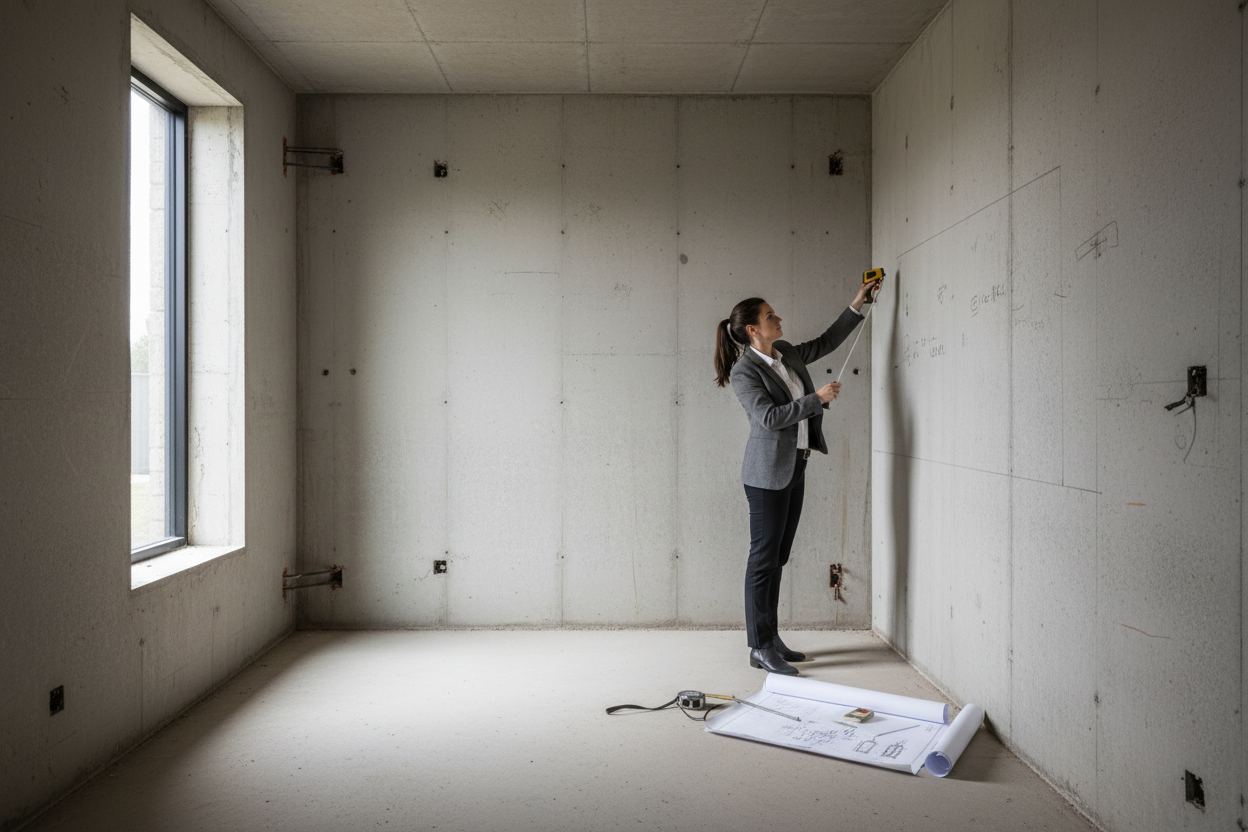
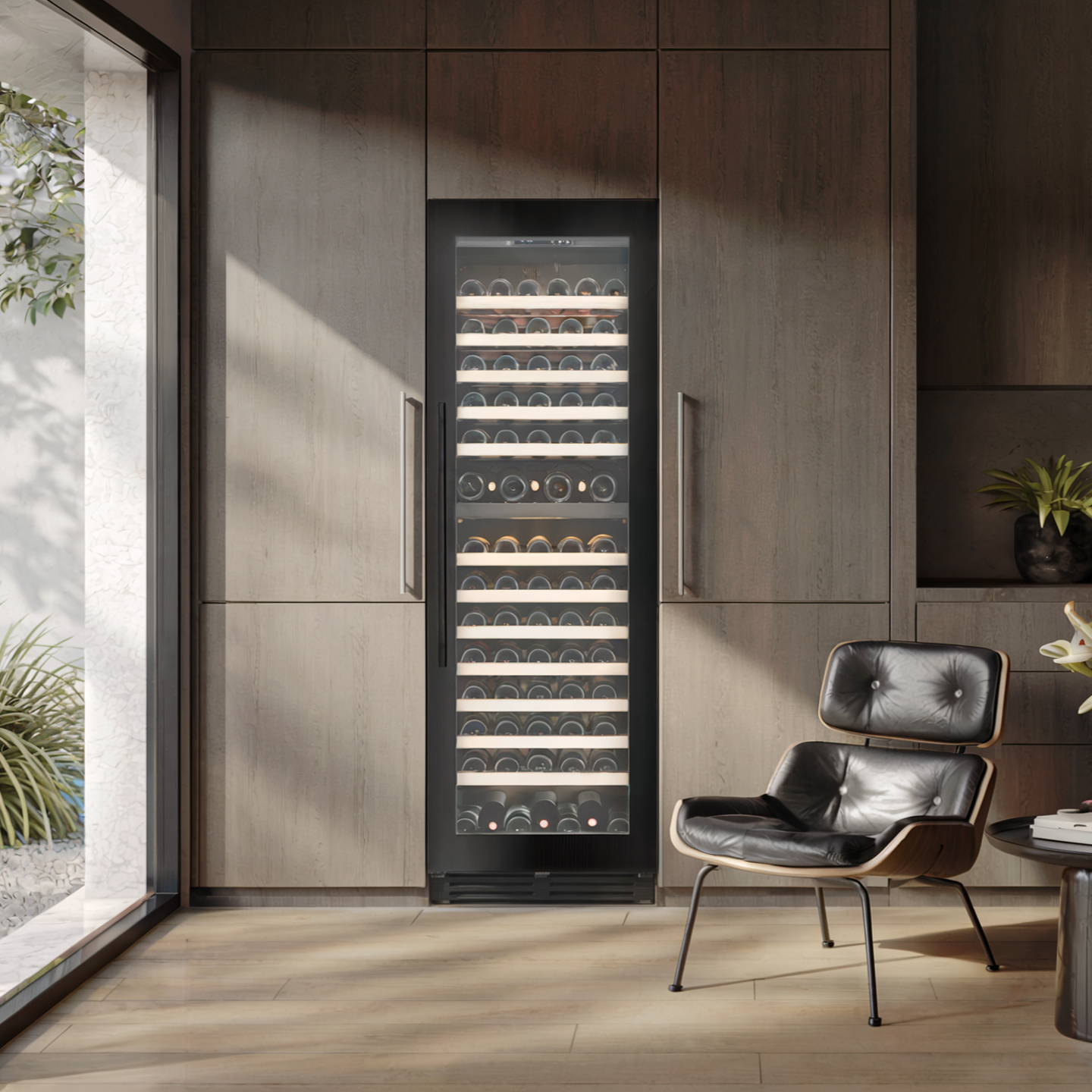
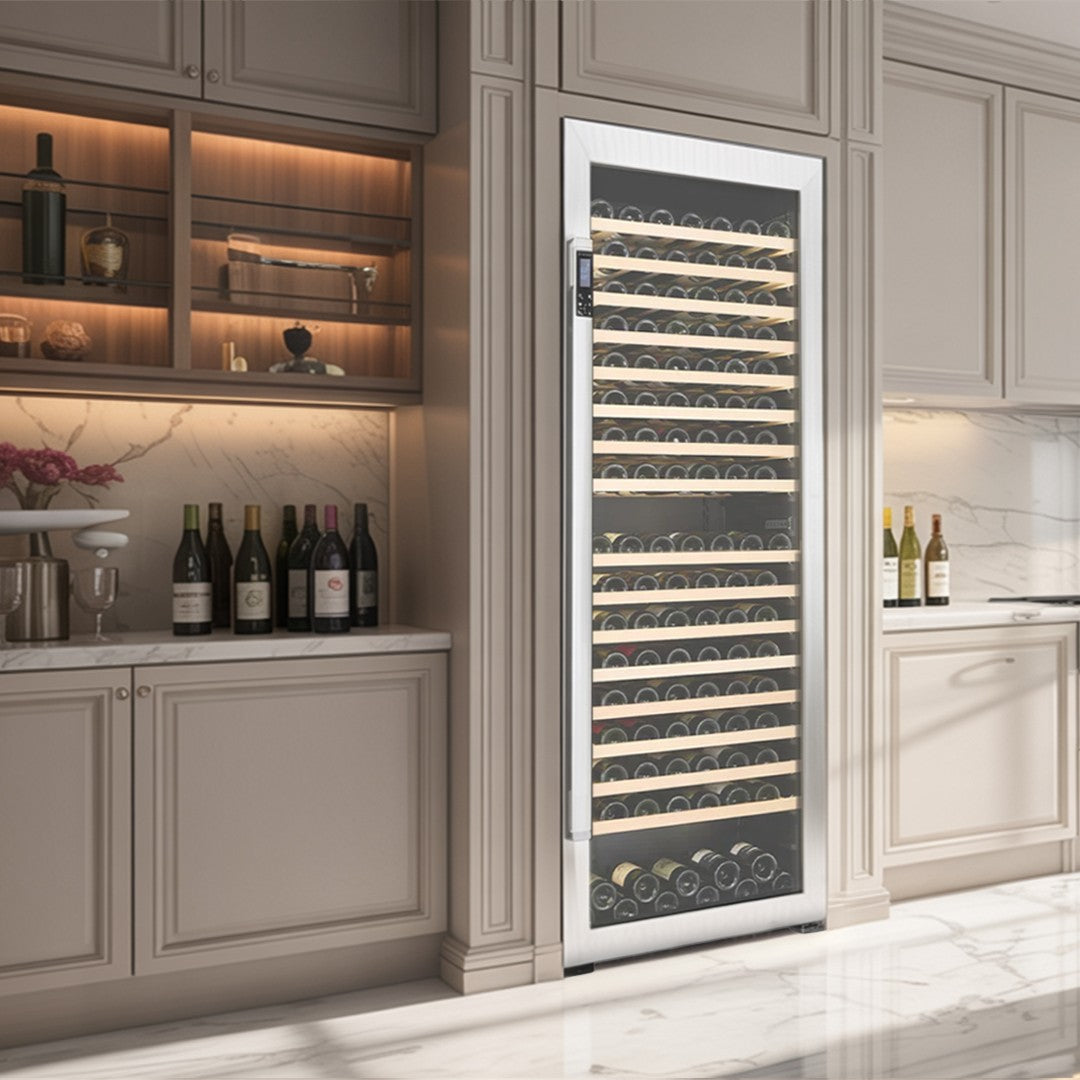
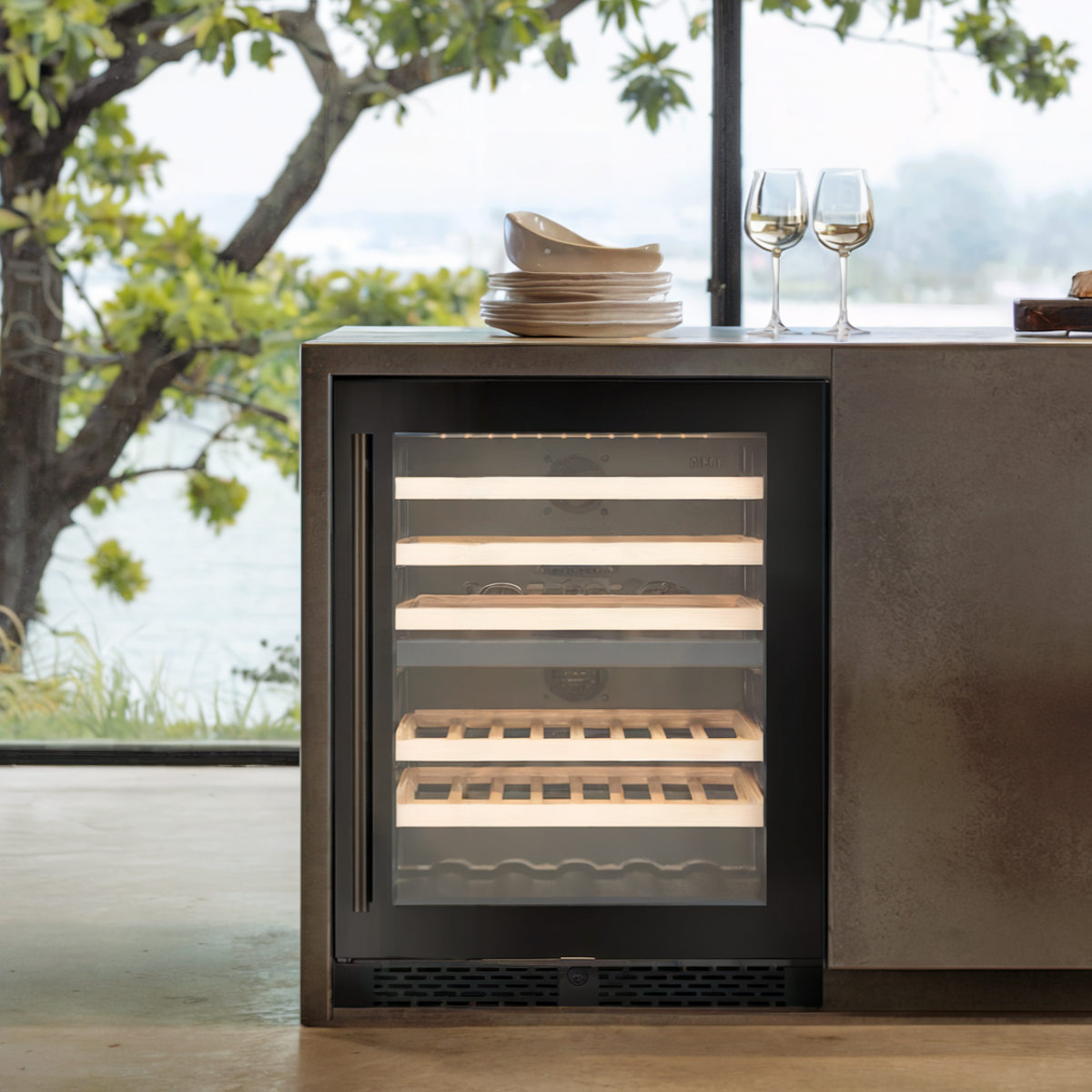







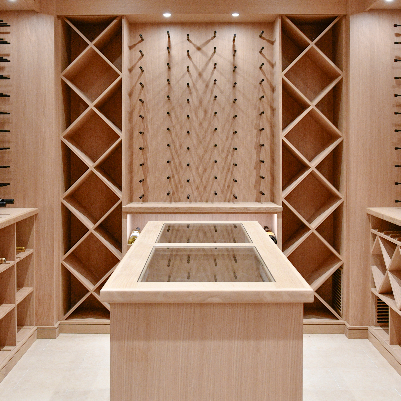
















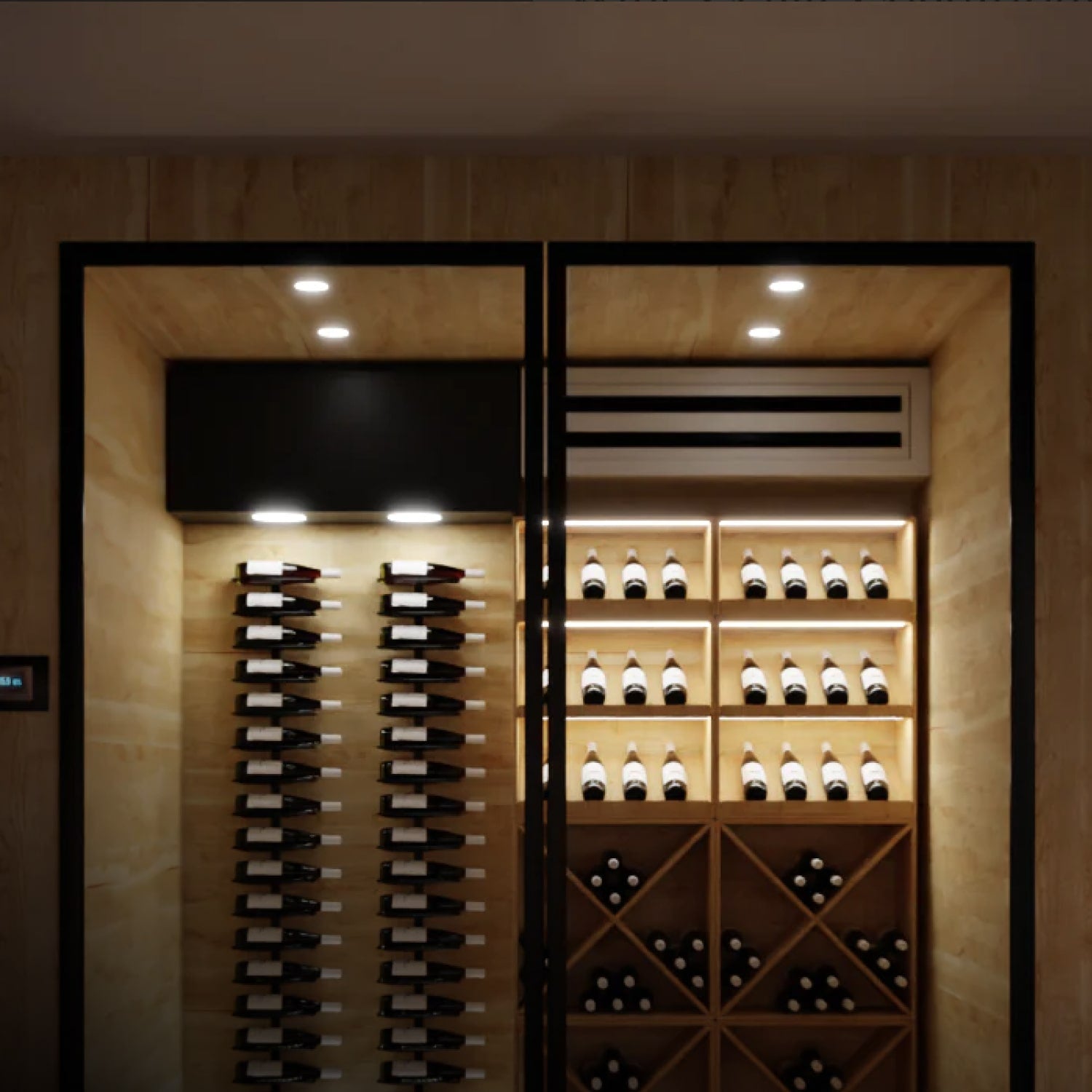
Building a wine cellar in a condo comes with a different set of challenges than building one in a detached home. In addition to temperature and humidity control, noise becomes a major factor. Shared walls, limited mechanical space, and nearby bedrooms or living areas can make even a well performing cooling system feel intrusive if it is not planned properly.
The good news is that a quiet condo wine cellar is absolutely achievable. The key is to think about sound control from the start, not after the system is already installed.
Why cooling noise is more noticeable in condos
In a condo, sound travels more easily through walls, ceilings, floors, and service penetrations. That means the issue is not only the sound you hear directly from the unit. Vibration can also move through framing, drywall, and ductwork, making the system seem louder than its rated output would suggest. The source article highlights this as one of the main reasons acoustic isolation matters more in condos than in basements or detached homes.
Start with the right type of cooling system
Not all wine cellar cooling systems perform the same way acoustically. If noise reduction is a top priority, system selection matters as much as installation quality.
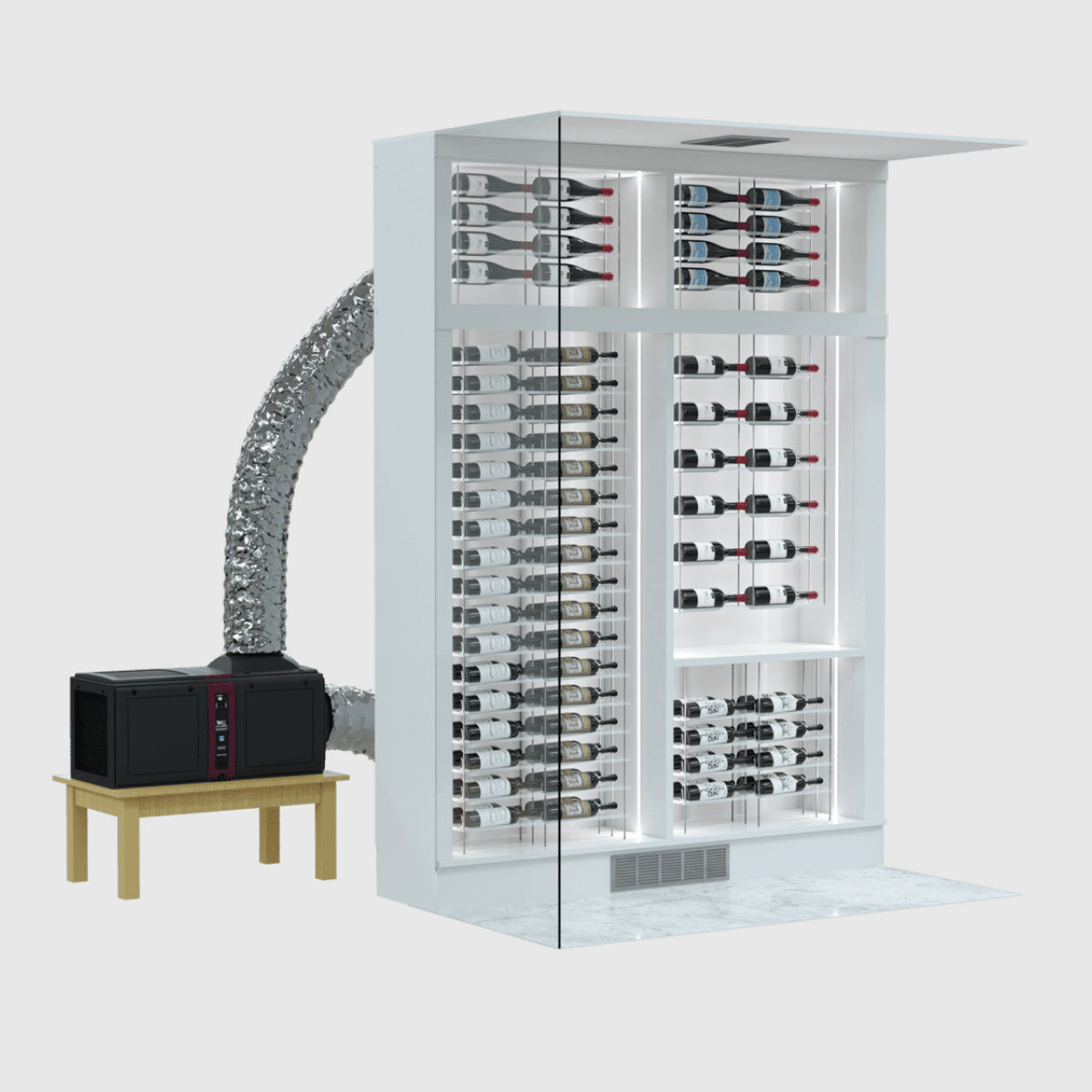
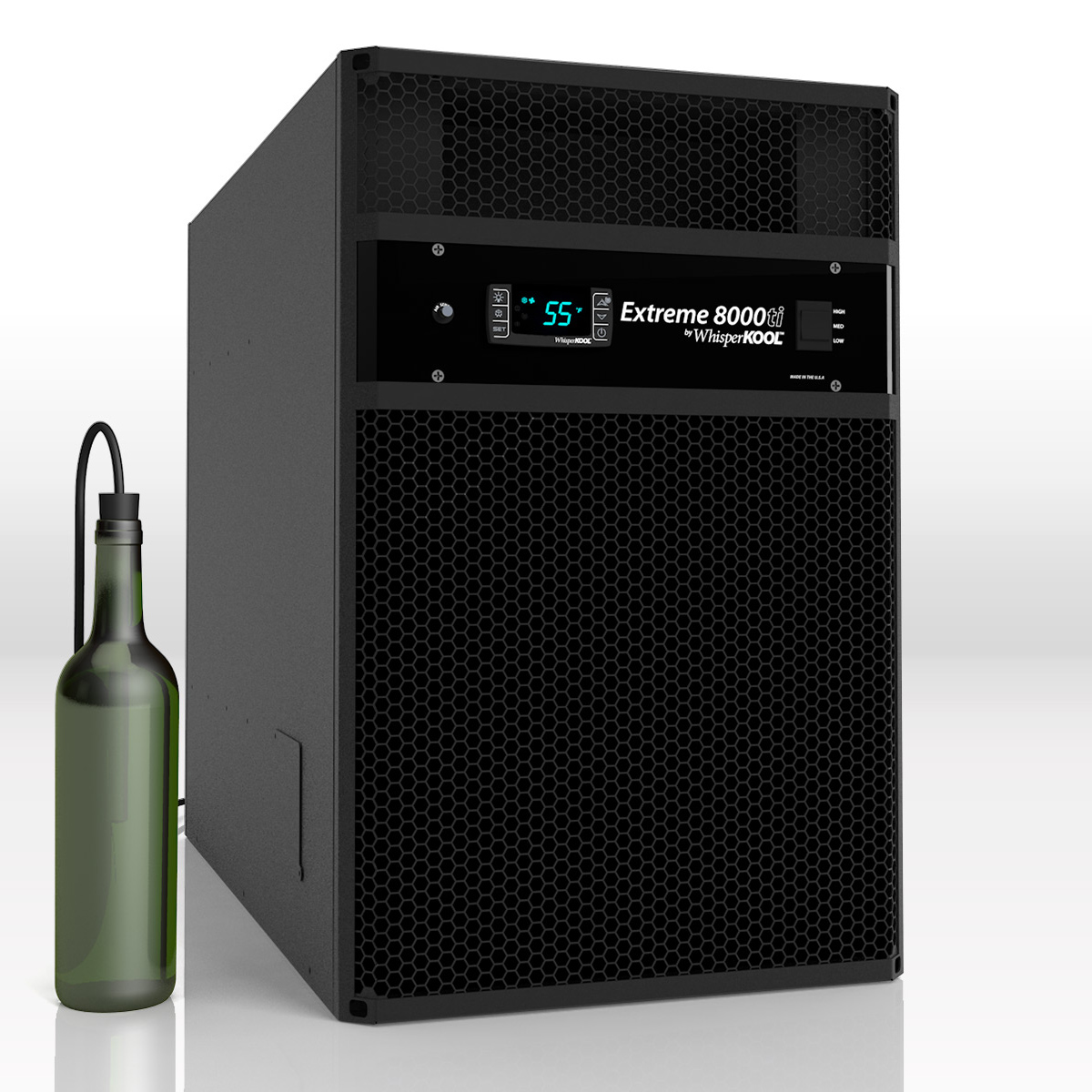
In general, quieter systems place the noisiest components away from the wine room and away from the main living area. Ducted split systems are often preferred in condo applications because the louder equipment can be located remotely, while the cellar itself benefits from quieter air delivery. By contrast, through the wall and many standard self contained systems are usually more noticeable because the mechanical activity is closer to the occupied space. The source article specifically positions ducted split systems among the quietest options and notes that through the wall or self contained units are typically less ideal when low noise is the goal.
For condo projects, that often means evaluating:
Ducted split systems
A strong choice when there is access to an approved remote mechanical area and a workable path for line sets or ducts.
Ducted self contained systems
Often quieter than simple through the wall units, especially when paired with insulated duct runs and thoughtful placement.
Through the wall systems
Sometimes suitable where space is very limited, but usually not the first recommendation when acoustic performance is critical.
Isolate vibration before it spreads
A surprising amount of noise is actually structure borne vibration. If a cooling unit or condenser is mounted directly to framing or sits hard against a floor or shelf, vibration can transfer into the building and create rattles or low frequency hum.
A better approach is to break that path with vibration control components such as:
- rubber isolation pads under the equipment
- anti vibration mounts or brackets
- resilient separation materials between the unit and hard surfaces
The source article recommends these exact types of measures to reduce low frequency transmission through walls and floors.
Use insulation for more than temperature control
In a wine cellar, insulation is already essential for thermal performance. In a condo, it can also contribute to sound control.
Dense insulation in surrounding walls can help reduce airborne noise transfer. In some designs, an enclosure or mechanical cavity around the cooling equipment can also help contain sound, provided airflow and service access are maintained. The source article points to dense insulation, sound damping enclosures, and acoustic treatment on walls facing shared spaces as useful strategies.
This is where integrated design matters. The cooling system, room envelope, and finish details should all work together rather than being treated as separate decisions.
Ducting can either help or hurt
Ductwork is one of the most overlooked sound paths in a condo wine cellar. Rigid ducting can carry noise efficiently, especially if the run is short and direct. Flexible insulated ducting is often better for acoustic control because it helps absorb some of the sound energy rather than carrying it straight into the room.
The source article also notes that gentle bends in the duct run can reduce perceived noise, and that additional acoustic wrapping can further improve results.
That does not mean every project should maximize bends or length without regard for performance. It means the duct layout should be designed for both airflow and acoustic comfort.
Keep the loudest components away from living areas
Where building rules and layout allow, remote placement can make a major difference. The condenser or other noisier components should be kept as far as practical from bedrooms, living rooms, and shared walls. The source article suggests remote placement in approved mechanical rooms or other suitable locations when permitted.
In condo projects, this step always needs to be balanced with:
- building bylaws and approvals
- service access
- ventilation requirements
- manufacturer installation standards
Seal every penetration
Even a well selected cooling system can sound much louder if there are gaps around ducts, piping, wiring, or access panels. Small openings often become sound leaks.
Acoustic sealant, proper grommets, and tightly finished penetrations help preserve the effectiveness of the rest of the design. The source article specifically calls out acoustic caulk, draft seals, and sound isolating details around openings as part of a complete noise reduction strategy.
Fine tune after installation
Even the best design sometimes needs adjustment once the system is running. A minor rattle, a resonance in one wall section, or an uninsulated section of duct can be the difference between acceptable and excellent.
The source article recommends checking for resonance and vibration after startup, tightening fittings, and adding damping or acoustic treatment where needed.
That final tuning step is especially important in condos, where the goal is not only protecting the wine but also preserving everyday comfort.
The Rosehill approach
At Rosehill Wine Cellars, we look at wine cellar cooling as part of the whole room, not as a standalone piece of equipment. In condo projects, that means considering system type, room construction, duct routing, equipment placement, and acoustic detailing together from the beginning.
A quieter cellar usually starts with better planning. When the system is selected and installed with condo acoustics in mind, you can enjoy stable storage conditions without turning your wine room into a source of background noise.