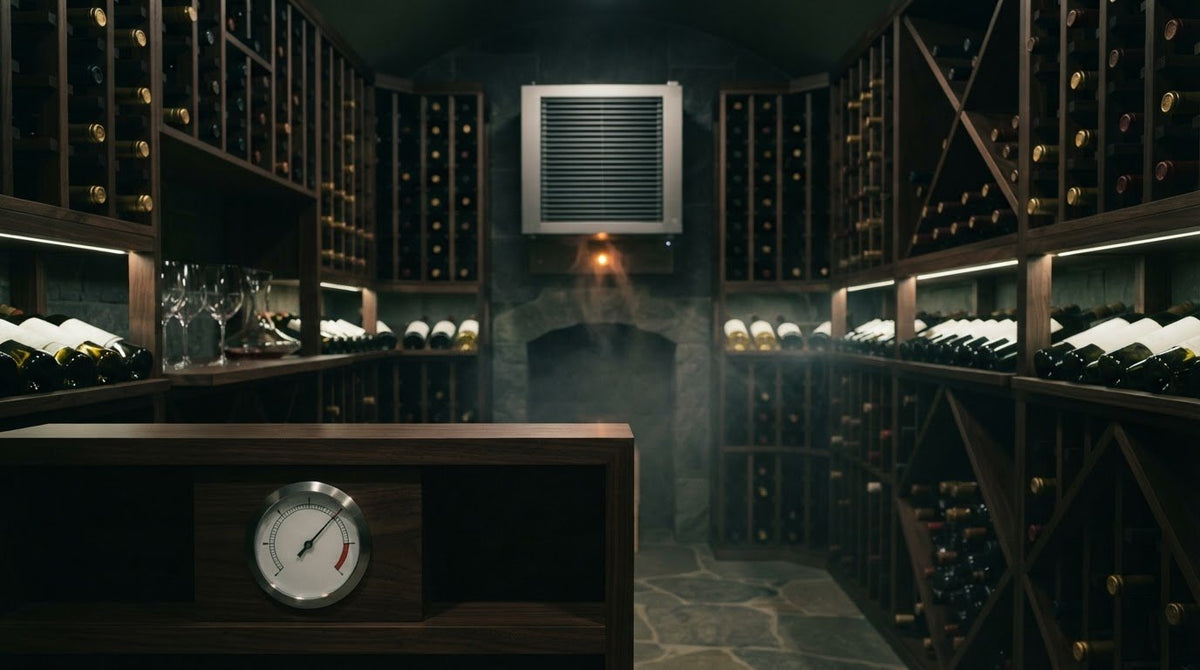
















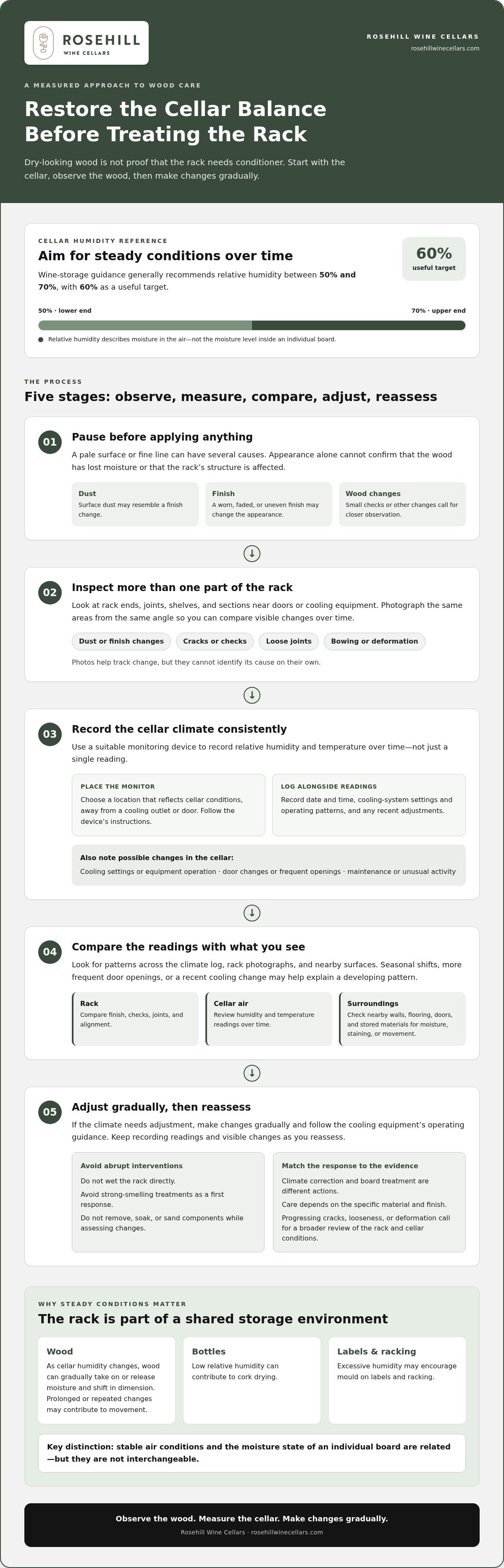
What if the safest way to restore dry-looking wine racking is to leave the wood alone, at least at first? Fading or a changed finish can look alarming, but appearance alone doesn’t confirm that the wood is too dry. A careful approach to restoring dry wooden wine racking humidity balance starts with the cellar environment, not a quick coat of conditioner. For wine storage, relative humidity is generally recommended between 50% and 70%, with 60% as a useful target.
It’s understandable to worry that a repair could affect both the racking and the bottles it holds. First compare the cellar’s humidity and temperature readings over time with visible changes to the rack. Then make any appropriate climate adjustments gradually, rather than applying strong-smelling treatments or changing settings abruptly. This guide explains how to distinguish surface changes from signs of genuine dryness, monitor humidity, and decide when wood care may be appropriate. It also covers when persistent cracking or climate instability calls for a broader look at how the racking and cellar environment work together.
Key Takeaways
- Learn to distinguish a dry-looking finish, surface dust, checking, and changes that may call for closer assessment.
- Understand why cellar air conditions and the moisture state of an individual board are related but not interchangeable.
- Compare climate correction, gentle cleaning, material-specific care, and professional assessment before choosing a response.
- Use a measured process for restoring dry wooden wine racking humidity balance, recording readings, settings, and visible changes as you reassess.
- Recognize when routine monitoring may be enough and when the racking, layout, and cellar climate merit a broader review.
Why Wooden Wine Racking Looks Dry: Start with the Cellar Conditions
A pale surface or fine line in a wooden wine rack can be concerning, but appearance alone can’t tell you whether the wood has lost moisture or whether the rack’s structure is affected. Dust, a worn or changed finish, and small checks in the wood can look similar at a glance. Before applying a treatment, inspect several parts of the rack and consider whether cellar conditions have changed recently.
Humidity balance means keeping cellar relative humidity reasonably stable over time, rather than dampening the wood itself. Wine-storage guidance commonly recommends 50% to 70% relative humidity, with 60% as a practical target. Relative humidity describes moisture in the air compared with the amount it can hold at a given temperature; Understanding Humidity and its Impact on Wood explains why changes in ambient moisture can affect materials such as wood. Wood may respond gradually to its surroundings, while an individual board’s condition also depends on its finish and history.
How to assess dry-looking wine racking
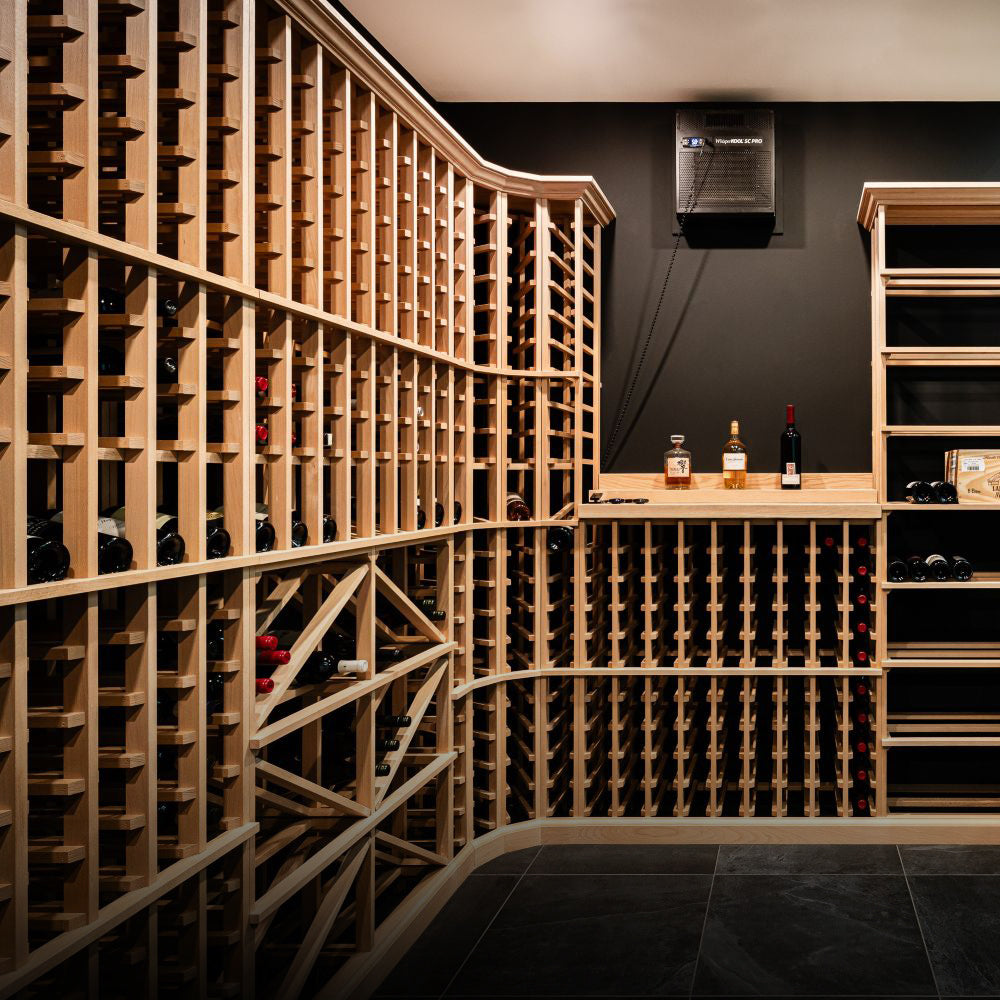
Inspect more than one area, including rack ends, joints, shelves, and sections near doors or cooling equipment. Note whether the surface looks dusty, whether the finish appears faded or uneven, and whether you can see cracks, loose joints, bowing, or other deformation. Photograph the same areas from the same angle over time. Comparing images can help you tell a persistent change from a temporary impression, though photographs alone cannot identify the cause.
Look beyond the rack, too. Check nearby walls, flooring, doors, and stored materials for related changes such as visible moisture, staining, or movement. If several materials show changes in the same area, the cellar environment may deserve closer attention. Consider the wine racking as part of the complete storage setting, not in isolation.
Which cellar conditions to record before making changes
Use a suitable monitoring device to record relative humidity and temperature over time instead of relying on one reading. Place it where it can reflect cellar conditions, away from a cooling outlet or door, and follow the device’s instructions. Log each reading with its date and time, along with cooling-system settings, operating patterns, and any recent adjustments.
- Note changes to cooling settings, equipment operation, or cellar doors.
- Record periods of frequent door opening, maintenance, or unusual cellar activity.
- Compare readings with visible changes in the rack and surrounding surfaces.
Seasonal shifts, more frequent door openings, or a recent change to cellar cooling can help explain a developing pattern. Avoid abrupt humidity adjustments, and don’t wet the rack directly to make it feel less dry. Uneven moisture can affect wood and finishes, while sudden environmental changes make it harder to identify what is driving the problem. Start by collecting consistent readings. If cracks, looseness, or deformation are progressing, review both the racking and cellar conditions. Rosehill’s wine racking options are part of a storage environment where rack design and climate need to work together.
How Humidity Affects Wooden Wine Racking and Stored Bottles
Wood responds to its surroundings. Over time, it can take on or release moisture as the cellar’s relative humidity changes, causing small shifts in its dimensions. Repeated or prolonged changes may contribute to movement at joints, hairline checks, or altered contact between components. The pace and visible effects depend on the wood, construction, finish, and duration of exposure, so no single surface symptom confirms a particular cause.
Prolonged swings in cellar conditions can encourage wood to expand and contract, while steady conditions help limit repeated movement.
The cellar’s relative humidity describes moisture in the air; it isn’t a direct reading of the moisture inside a rack board. A monitor may show stable air conditions even while an individual component retains signs of earlier exposure. Likewise, a sealed or finished surface may look unchanged while the surrounding air varies. For restoring dry wooden wine racking humidity balance, this distinction matters: improving the cellar climate and treating a board are different actions, and one doesn’t automatically resolve the other.
Humidity, wood movement, and surface finishes
Wood and its finish may respond at different rates. A coating can slow moisture exchange, but it doesn’t make every rack impervious to its environment. Document surface changes, fine cracks, joint gaps, or changes in alignment without removing, soaking, or sanding components. Treatment depends on the specific material and finish; don’t assume a product suitable for one rack is appropriate for another.
Wood movement is only part of the picture. Wine storage also depends on a stable cellar environment. Low relative humidity can contribute to cork drying, while excessive humidity may encourage mould on labels and racking. Temperature matters, too, because cellar cooling influences the conditions experienced by bottles, racks, and surrounding surfaces together. These are reasons to monitor the whole space, not a promise that one humidity adjustment will prevent every storage concern.
Why wine-cellar stability matters beyond the rack
Changing the cellar’s climate affects more than the wood. It can alter conditions around bottles, labels, walls, and other stored materials. Follow the operating guidance for your cooling equipment when reviewing settings, and observe how readings change instead of making repeated, unmeasured adjustments. A reading taken near a supply outlet or doorway may not represent conditions throughout the room.
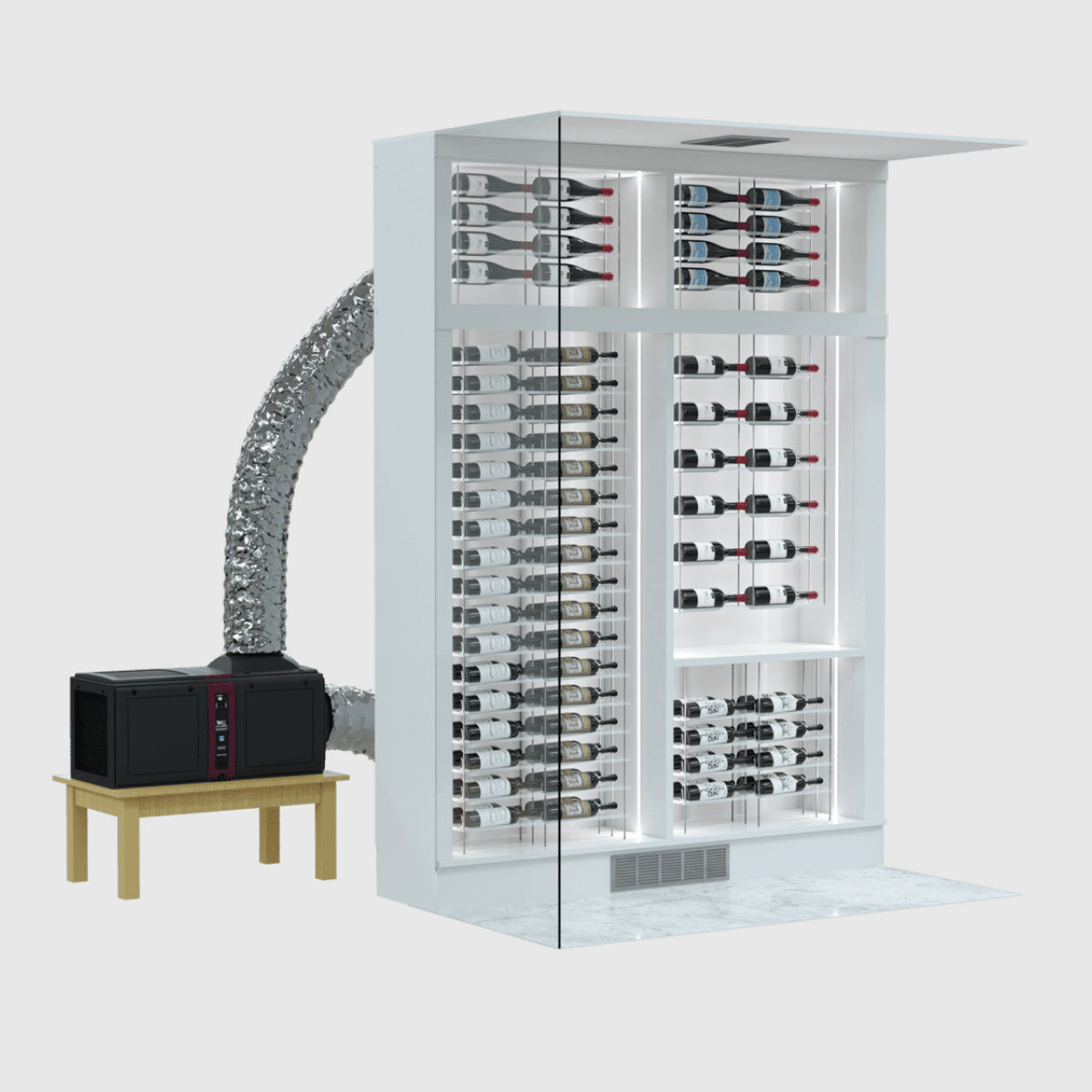
Cooling equipment, racking layout, and the cellar enclosure work together as one storage environment. If monitoring shows persistent swings, or visible changes extend beyond the rack, consider whether the wider setup needs review rather than treating the wood alone. Rosehill’s wine cellar cooling systems are one element to consider when planning climate control alongside the racking. Keeping a record of readings and visible changes can help clarify whether the issue is local to a component or part of a broader pattern.
Restoring Dry Wooden Wine Racking: Compare Low-Intervention Options
Choose a response based on the evidence, not on the desire to make a rack look refreshed quickly. A darker finish after polishing may improve appearance without correcting a cellar climate issue. Stable readings, in turn, won’t repair a loose joint. Start with the least invasive option that addresses the likely cause. Avoid soaking wood, applying unverified oils or coatings, or making abrupt humidity changes.
When environmental correction may be the first step
Review readings over time and compare them with the cooling equipment’s operating guidance before changing settings. A single measurement or dry-looking board isn’t enough to establish a pattern. If readings suggest persistent fluctuations, make gradual adjustments in line with the equipment guidance, then monitor the results rather than chasing a universal target. Cellar cooling equipment serves the wider storage environment, so changes can affect bottles and surrounding materials as well as the racking.
| Option | Purpose and limits | Use caution when |
|---|---|---|
| Monitor and correct climate | Addresses ongoing environmental variation; won’t restore a damaged finish or repair a joint. | Readings are inconsistent or equipment guidance is unclear. Avoid sudden setting changes. |
| Gentle surface cleaning | Removes loose dust and helps reveal the underlying surface; doesn’t rehydrate wood or correct climate. | The finish or material is unknown. Don’t saturate the rack or use an abrasive cleaner. |
| Material-specific treatment | May address a finish or surface-care need when the product is suitable for the rack. | You can’t verify compatibility or lingering odour risk. Don’t apply an untested oil, polish, stain, or coating. |
| Professional assessment | Helps evaluate persistent cracking, loose joints, instability, or deformation that surface care can’t resolve. | Changes are progressing or the rack’s condition could affect secure bottle storage. |
When cleaning, treatment, or specialist assessment may be appropriate
Before cleaning or treating, identify the rack material and finish as far as possible, then follow care guidance specific to them. A soft, dry cloth may be a cautious first step for loose dust, but even a damp cloth can be unsuitable for some finishes. Don’t apply a product simply because it is described as a wood conditioner: compatibility and odour matter in a cellar storing wine.
Cosmetic improvement isn’t proof that the underlying cause has been resolved. If cracks deepen, joints loosen, shelves deform, or the rack feels unstable, pause surface treatment and have the structure and cellar conditions assessed. If maintenance alone isn’t enough, Rosehill’s wine racking options can inform a broader look at suitable racking choices. For a considered review of how racking and climate work together, explore custom cellar design.
A Careful Step-by-Step Plan to Rebalance and Monitor the Cellar
Follow a consistent sequence: document visible changes, measure cellar conditions, review equipment guidance, make appropriate adjustments gradually, then reassess readings and rack condition. This helps distinguish a persistent environmental pattern from a surface change and reduces the temptation to react to one surprising reading. Keep measurements, settings, dates, and observations together in a log.
The first checks before changing humidity
Before adjusting anything, make sure the monitoring device is positioned and used according to its instructions. Record the rack’s location, the affected areas, and any recent changes in cellar use, such as more frequent door openings or a change in cooling operation. This context makes later readings easier to interpret.
- Document symptoms. Note the location and appearance of faded areas, cracks, loose joints, or deformation. Take dated photographs from consistent angles, and avoid moving loaded components just to inspect them.
- Measure conditions. Record relative humidity and temperature over time, including the date and time of each reading. Follow the monitor’s placement guidance so the readings are meaningful, and note unusual activity around the cellar.
- Review the cooling system. Check its operating instructions and record current settings and operating patterns before making changes. Don’t alter settings based solely on a single reading or a rack’s appearance.
- Adjust gradually, if appropriate. If a sustained pattern suggests conditions need correction, follow the equipment guidance and make measured changes rather than abrupt shifts. Avoid direct water application to the rack and don’t introduce unverified oils, cleaners, or coatings.
- Reassess and record. Continue tracking readings and compare new observations with your dated photographs. Look for patterns in both the cellar conditions and the rack, rather than expecting a particular recovery timeline.
How to monitor progress without overcorrecting
Consistency matters more than frequent intervention. Take readings in a repeatable way, use the same monitoring locations, and log any setting changes so you can connect cause and effect. If a reading appears unusual, verify it according to the device instructions and compare it with subsequent measurements before responding. The aim is to understand the trend, not chase every fluctuation.
Routine observation can help track dust, finish changes, or stable hairline marks. Repairs are different. Persistent or worsening cracks, loose connections, instability, or deformation may require expertise specific to the rack’s material and construction. Pause DIY treatment if structural symptoms progress or if cellar readings remain unstable despite following the cooling system’s guidance.
For restoring dry wooden wine racking humidity balance, patience and records are more useful than an improvised fix. When the log points to a wider issue involving cellar layout, racking, and climate, a considered design review can bring those elements together. Explore custom wine cellar design options as you plan the next step.
Protect the Cellar Long Term with Suitable Racking and Climate Planning
Once you’re tracking readings and visible changes, use those observations to decide whether routine monitoring is enough. A rack with stable joints, no progressing deformation, and a finish that remains consistent may simply need continued observation. Recurring changes, persistent climate instability, or a layout that makes access and airflow difficult suggest a broader review. The aim isn’t to replace sound racking unnecessarily, but to understand whether the environment and storage design are working together.
When the issue points to a wider cellar-design review
Consider a wider review if humidity readings repeatedly fluctuate, similar wood changes return after care, or conditions differ noticeably across the cellar. Cooling equipment, the enclosure, and racking choices interact: the room’s construction and layout influence the climate the system must maintain, while rack placement affects how the space is used. Rosehill’s custom wine cellar design brings these elements into an integrated planning discussion instead of treating the rack as an isolated component.
Keep your monitoring log available for the review. Readings over time, photographs, notes about equipment settings, and a sketch of the rack layout can help show whether the issue is local or part of a recurring pattern. Routine observation is generally more appropriate when changes remain stable and the rack continues to hold bottles securely. Persistent instability or structural movement deserves closer attention.
Planning racking that suits the cellar environment
Repair, reconfiguration, and replacement are distinct choices. Repair addresses a specific defect, but won’t resolve an unstable cellar climate. Reconfiguration may improve how storage fits the room, though it should be considered alongside circulation and equipment placement. Replacement can be appropriate when the existing arrangement no longer suits the cellar or when persistent structural concerns can’t be addressed through routine maintenance. None of these decisions should be based on faded appearance alone.
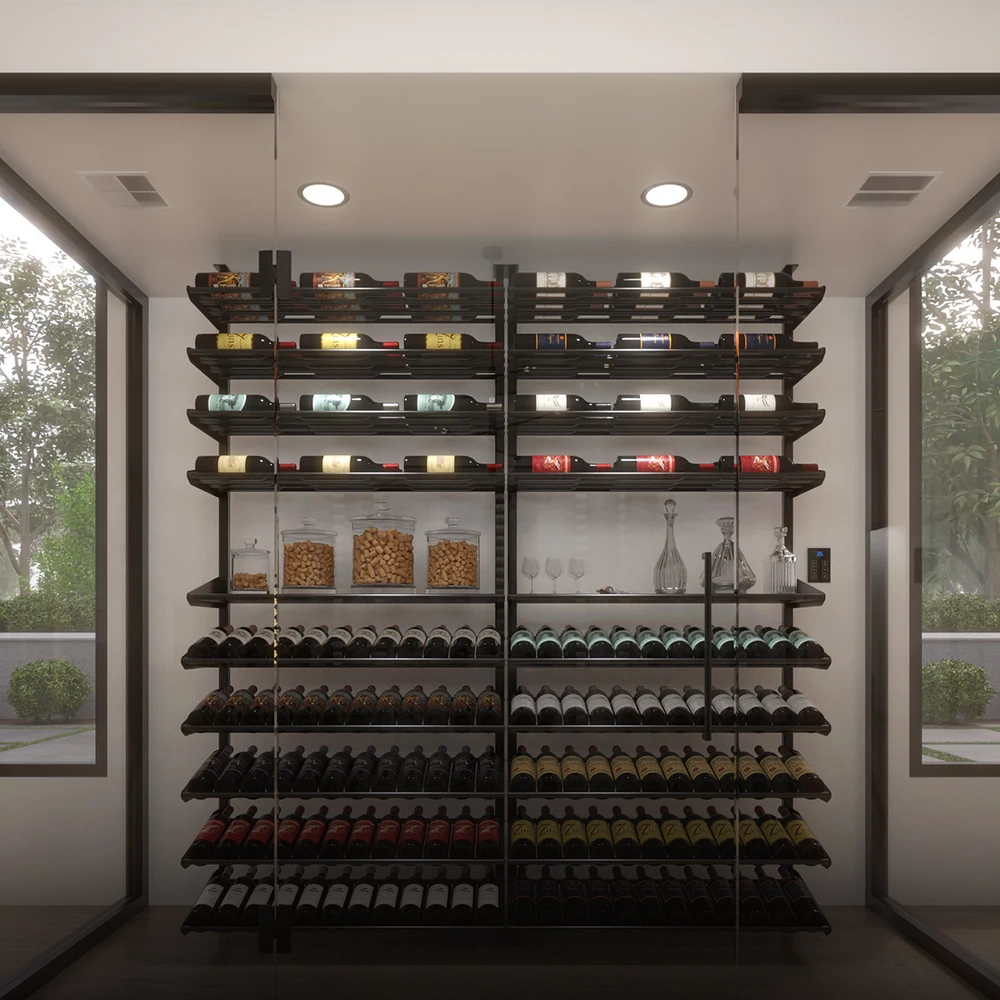
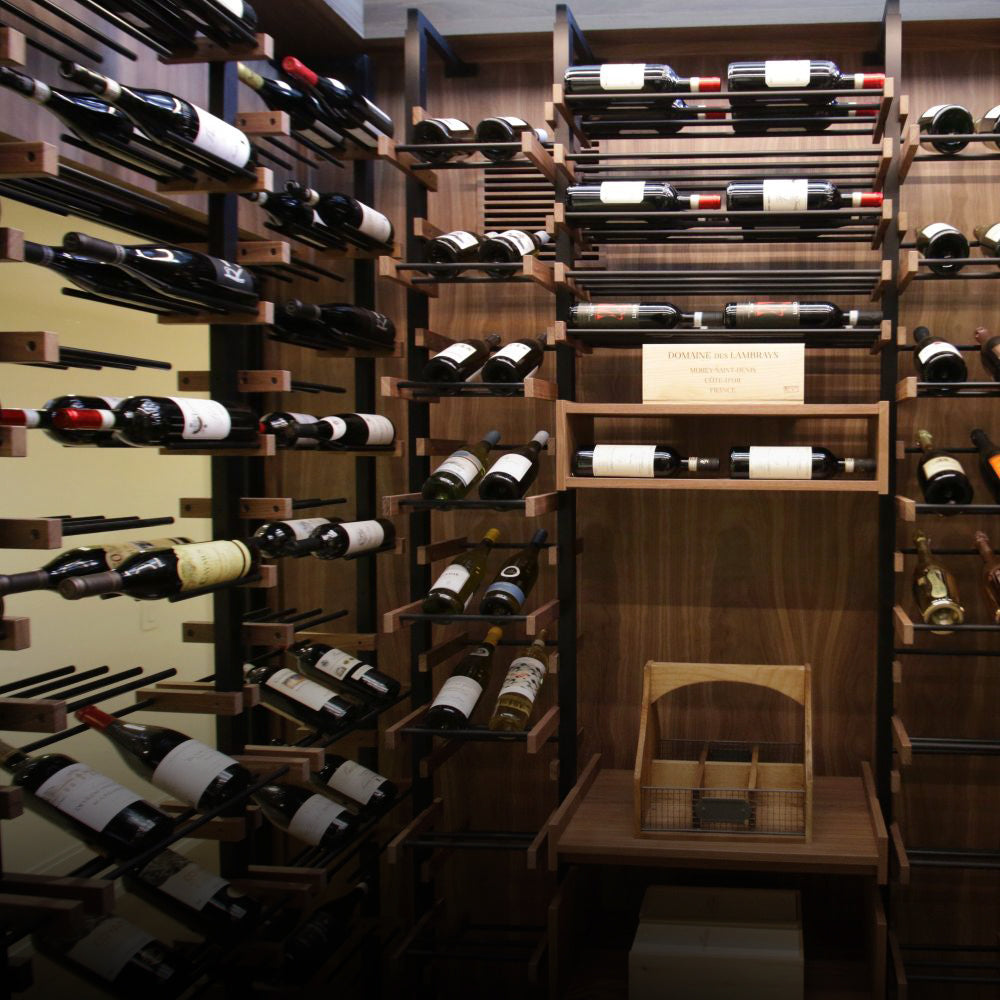
As you compare options, consider the rack’s construction and finish, the cellar’s conditions, how bottles are accessed, and whether the layout can adapt to future needs. Premier Cru Classic Racking is one option to consider as part of that broader evaluation; its suitability depends on the project and cellar plan. Modular configurations can also be useful to explore when storage needs may change, but the arrangement should still work with the room’s climate strategy.
A lasting plan pairs consistent monitoring with racking and cellar conditions suited to the space. If readings remain steady and visible changes aren’t progressing, continue documenting rather than applying unnecessary treatments. If the pattern points to a wider design concern, explore racking and cellar-planning options with the full storage environment in view.
Turn Your Cellar Observations into a Lasting Plan
Use your monitoring notes as a planning tool. Patterns in readings, rack condition, and day-to-day use can help clarify whether ongoing care is enough or whether the storage layout deserves a fresh look. That perspective keeps restoring dry wooden wine racking humidity balance focused on the whole cellar, rather than a quick cosmetic fix.
Rosehill Wine Cellars designs and builds custom wine cellars, and offers wine racking and wine cellar cooling systems. When maintenance alone doesn’t address the underlying concern, consider how the racking and climate plan can work together for your space.
Explore wine racking and cellar solutions, and take the next step toward a cellar designed for confident, considered storage.
Frequently Asked Questions
Can I use water to restore dry wooden wine racking?
Don’t apply water directly to rack components as a way to restore them. Different parts of the wood may absorb moisture unevenly, and water can mark or affect some finishes. First record cellar conditions and identify the rack material and finish. Then follow care instructions from the rack’s manufacturer. Don’t assume water, oil, polish, or another treatment is suitable without checking its compatibility with the specific surface.
What humidity level is right for a wine cellar with wooden racks?
A commonly cited wine-storage guideline is 50% to 70% relative humidity, with about 60% as a reference target. Treat it as a guide for cellar air, not a measure of moisture inside a particular rack board, and follow your cooling system’s specifications. Track readings consistently over time, since a single measurement can’t show whether the cellar is stable.
How can I tell whether wooden wine racking is too dry or simply worn?
You can’t determine that from fading or dust alone. Those signs may reflect surface wear rather than a change in the wood’s moisture condition. Photograph the same areas over time, note cracks or loose joints, and compare those observations with cellar readings. If a shelf begins to bow or a joint becomes less secure, don’t rely on photographs to diagnose it. A material-specific assessment can help evaluate structural concerns.
Can a wine cellar cooling system cause wooden racks to dry out?
A cooling system can influence cellar conditions, but appearance alone can’t establish that it caused a rack to dry. Review its operating instructions, current settings, and recent changes, then compare temperature and humidity readings from suitable locations in the room. For example, readings near a supply outlet may differ from those elsewhere. If measurements remain unstable, review the cooling system and cellar conditions rather than assuming the rack identifies a fault. Rosehill offers wine cooling units and maintenance plans for wine cooling systems.
Should I sand or refinish dry wooden wine racking?
Sanding or refinishing isn’t a default solution for a rack that looks dry. Surface work can change colour or texture without addressing the cellar conditions that may be contributing to the concern. Before intervening, identify the rack material and existing finish, then follow care guidance suited to them. If cracks are widening or joints appear compromised, pause cosmetic work and seek a material-specific assessment before disturbing the structure.
How long does it take for wooden wine racking to recover after cellar humidity changes?
There’s no dependable universal recovery timeline. The response can vary with the rack’s material, finish, previous exposure, and how consistently the cellar conditions are maintained. Keep tracking readings and visible changes in a consistent way, and avoid repeated abrupt adjustments in search of a quick result. If movement, cracking, or instability persists or worsens, have the rack assessed rather than assuming it will resolve with time.