





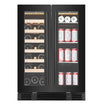

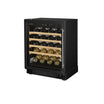
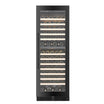
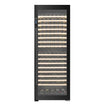








The rack with the highest bottle count may be the wrong fit for your room. Choosing vintageview wine racks means weighing more than capacity: bottle display, mounting style, and room to expand all matter. It can be difficult to choose between sleek wall-mounted racks, individual pegs, and freestanding or floor-to-ceiling options when each creates a different look.
Start with the space you have and the display you want. A label-forward W Series arrangement makes bottle labels part of the design, while Vino Pins and Vino Rails offer different peg and rail approaches. Your choice also depends on the installation surface and whether a wall-mounted, floating, or freestanding configuration suits the room.
This guide compares recognizable VintageView formats, layouts, stated capacities, and installation considerations. You’ll learn how to weigh bottle count against available wall or floor area, plan a cohesive display, and leave room for your collection to change over time.
Key Takeaways
- Choose between label-forward and cork-forward presentation based on the look you want for your room.
- Compare vintageview wine racks by format and configuration, since stated bottle capacity varies with rack size and depth.
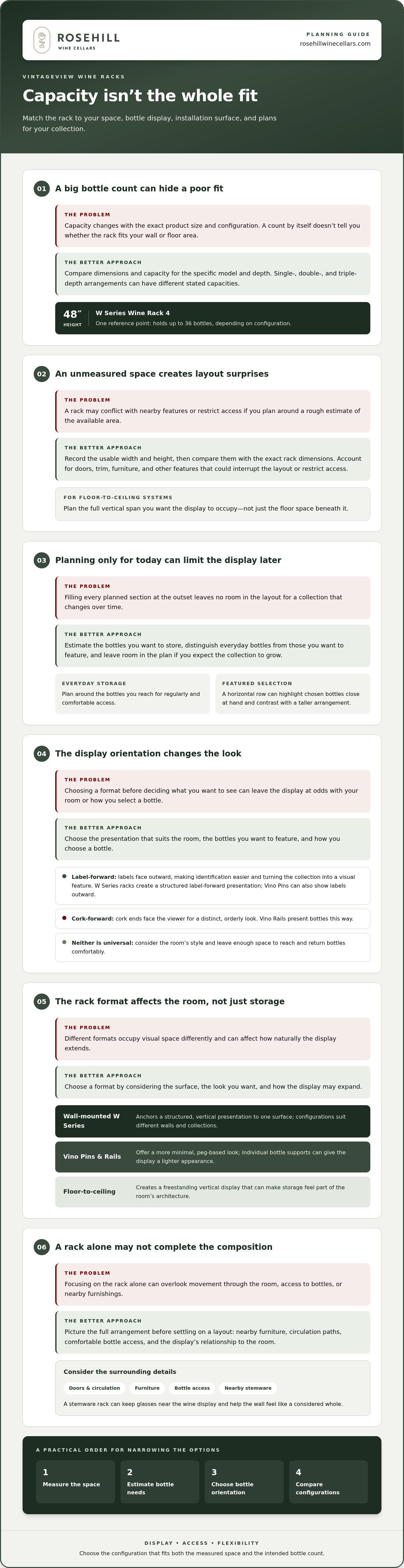
- Use the W Series Wine Rack 4’s 48-inch height and capacity of up to 36 bottles as one reference point when planning a display.
- Measure the space and account for doors, circulation paths, lighting, and furniture before settling on a layout.
- Consider which format may suit a compact wall, a growing collection, a statement display, or a selection of chosen bottles.
VintageView Wine Racks: Match the Display Style to Your Space
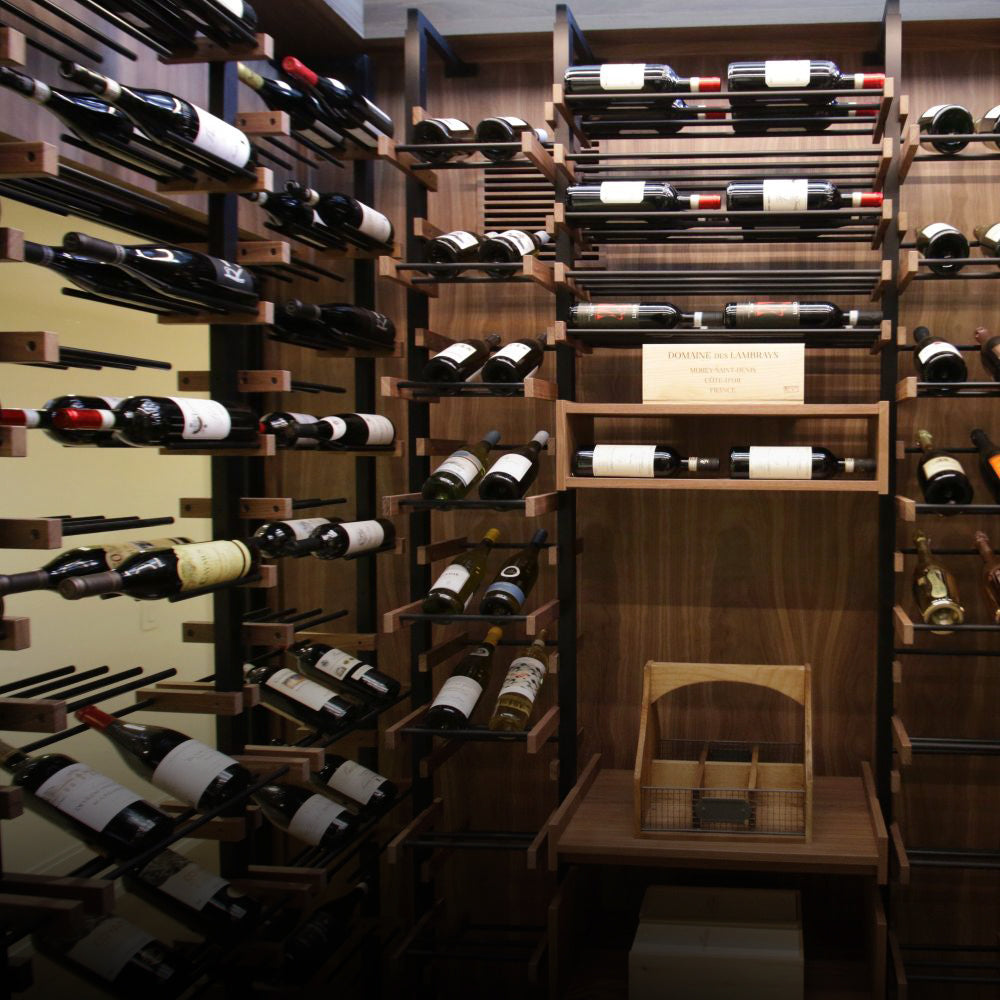
A wine display should suit the room and the collection it holds. Before comparing capacity, decide what you want to see: labels facing outward, corks facing forward, or a vertical display that gives bottles an architectural presence. The format also affects the rack’s footprint, how easily you can reach each bottle, and how naturally the display can expand.
A wine rack might be a discreet wall-mounted arrangement or a prominent feature that helps define a room. VintageView formats offer several ways to shape a display. If you’re comparing materials and broader rack formats too, browse the Wine Racks collection.
Wall-mounted racks, pegs, and floor-to-ceiling displays
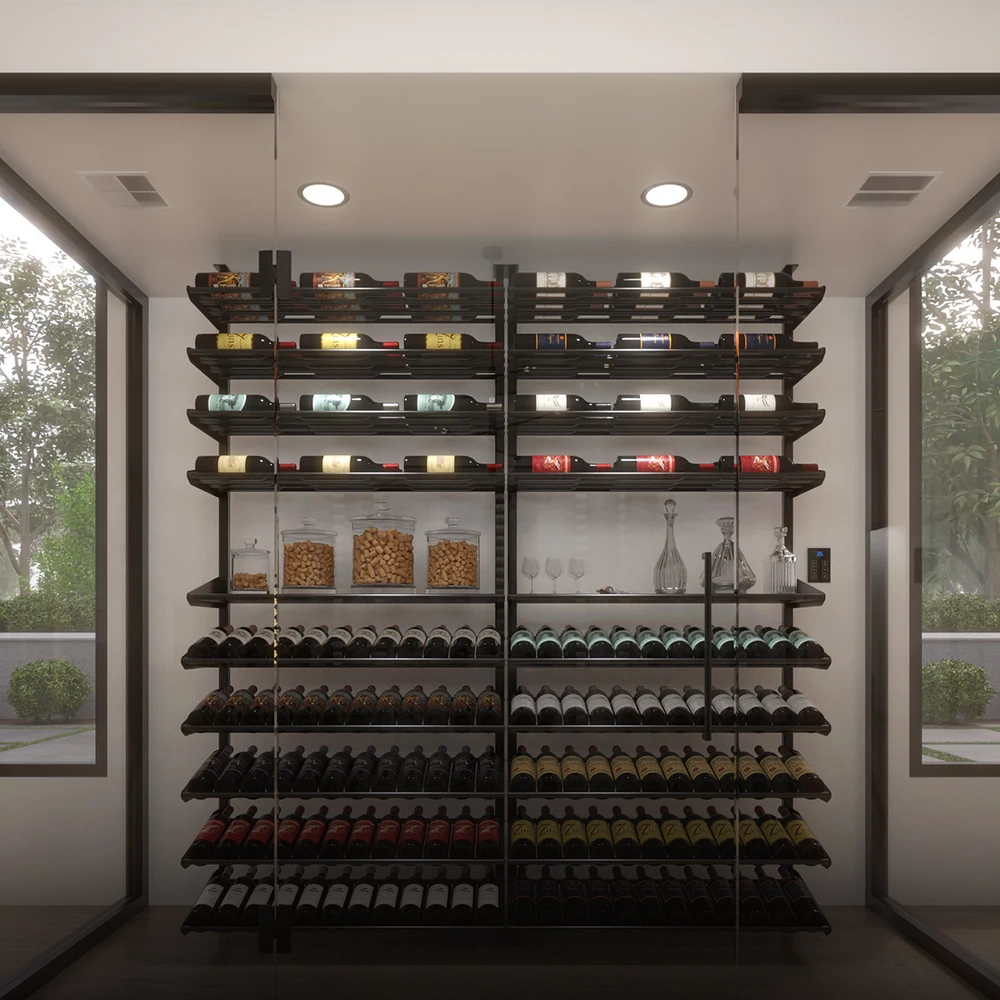
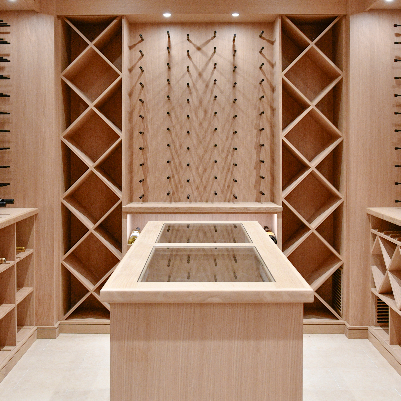
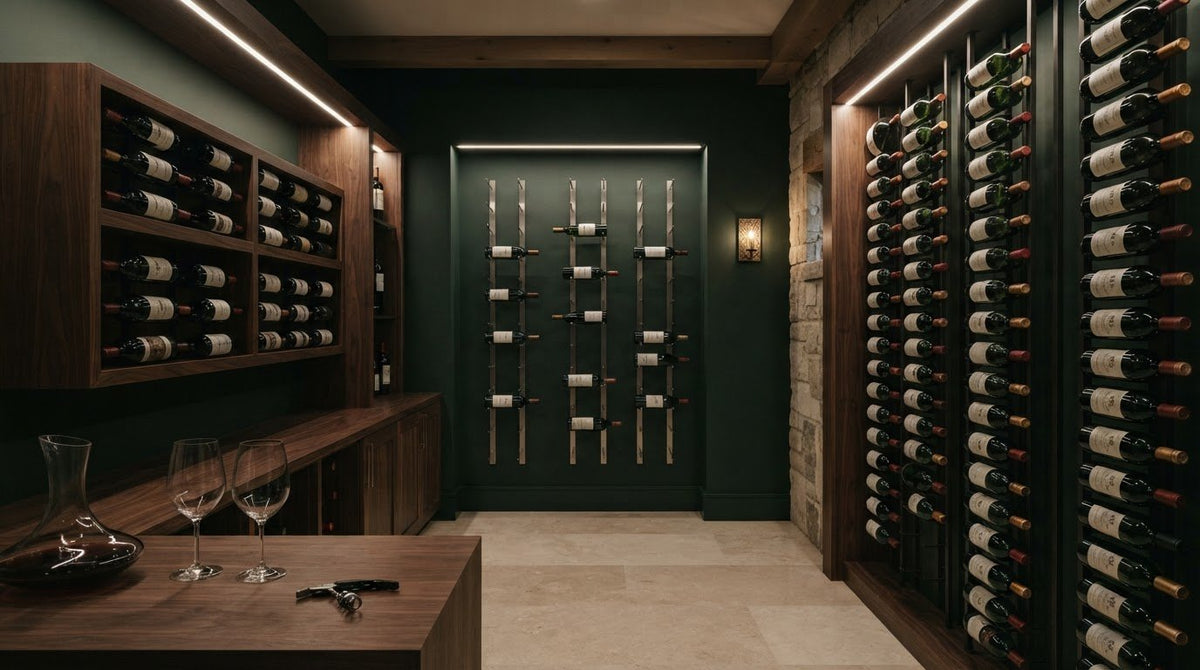
Wall-mounted W Series racks create a structured, vertical presentation, with configurations to suit different walls and collections. Vino Pins and Vino Rails offer a more minimal, peg-based look. Vino Pins can show labels outward, while Vino Rails present bottles cork-forward. Floor-to-ceiling systems create a freestanding vertical display, a different visual effect from a conventional wall-mounted layout.
Look beyond bottle count. A wall-mounted rack anchors the display to one surface, while pegs can give each bottle a lighter, more individual appearance. A floor-to-ceiling system can make storage feel like part of the room’s architecture. Each format occupies visual space differently and affects how easily you can extend the display.
Choose the display orientation that suits your collection
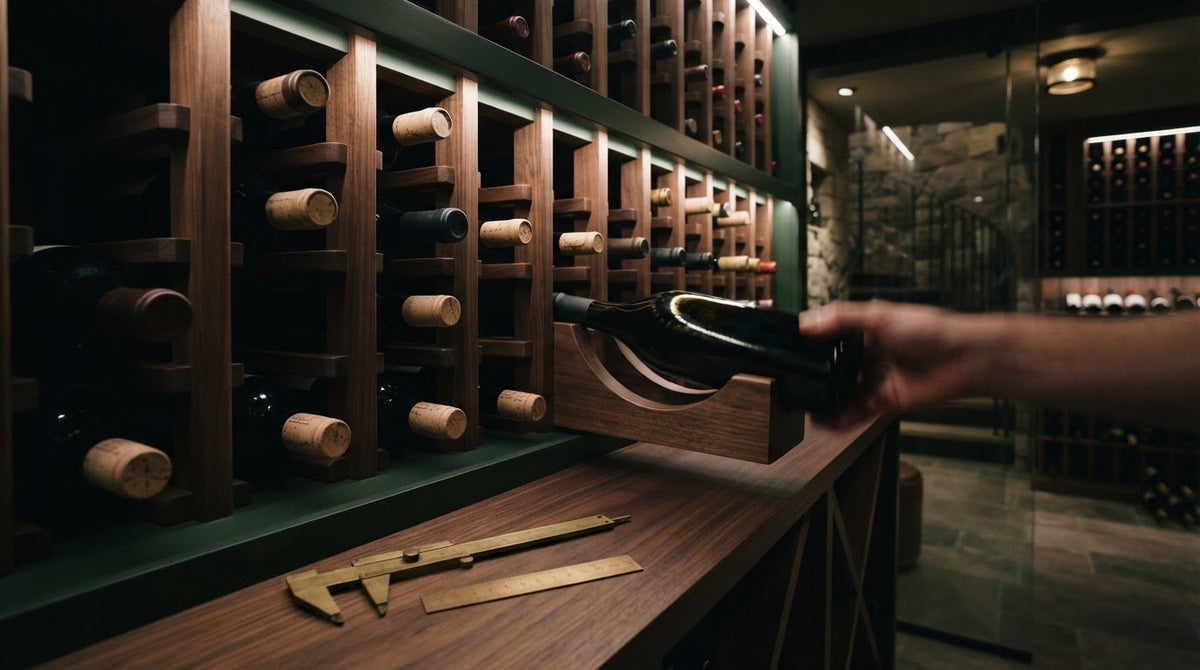
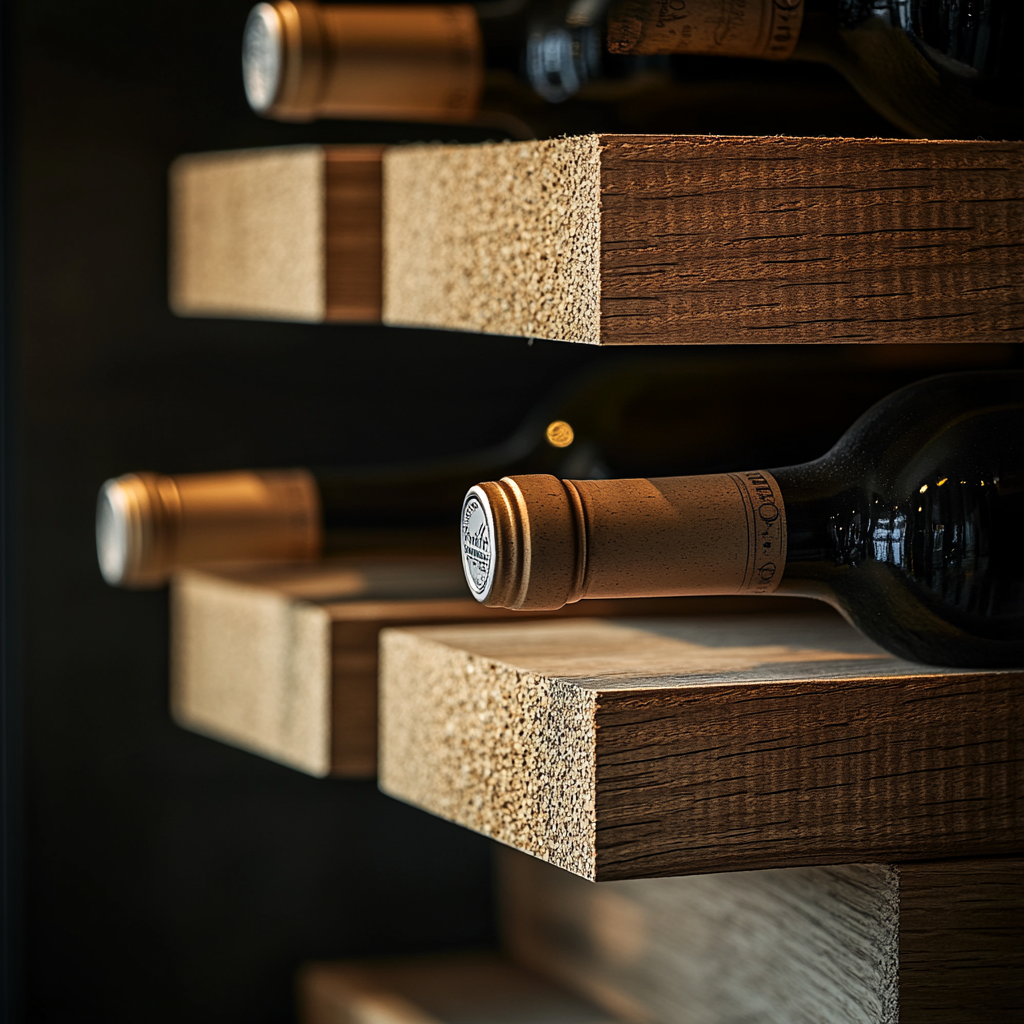
In a label-forward arrangement, bottle labels face outward, making identification easier and turning the collection into a visual feature. Cork-forward displays face the cork ends toward the viewer, creating a distinct, orderly look that may suit a restrained interior. Neither orientation is right for every room. Let the room’s style, the bottles you want to feature, and how you choose a bottle guide your decision.
A horizontal presentation row can highlight a curated selection, such as bottles you want close at hand, without giving the entire display equal prominence. It can also add contrast beside a taller arrangement. Consider access as well as appearance: leave enough space to reach and return bottles comfortably.
A stemware rack can keep glasses near the wine display and help the wall feel like a considered whole. When comparing vintageview wine racks, picture the full composition, including nearby furniture and the space needed to move through the room. The right format balances display, access, and flexibility.
How to Choose VintageView Wine Racks by Capacity and Configuration
Use a simple sequence to narrow your options: measure the space, estimate the number of bottles you want to store, choose the bottle orientation, then compare rack configurations. This keeps a large capacity figure from overshadowing practical details such as wall width, display depth, and the amount of space the arrangement occupies.
Capacity alone cannot determine rack fit: the rack’s dimensions, configuration, and available space all matter. Stated capacities can change with product size and whether a rack is single, double, or triple depth. Treat each bottle count as specific to its product and configuration, not as a general measure of how well it will fit your room.
Measure the wall or floor area before comparing models
Record the usable width and height of the intended area. Account for nearby doors, trim, furniture, and other features that could interrupt the layout or restrict access. For a floor-to-ceiling system, plan the full vertical span you want the display to occupy, rather than choosing a height based only on the available floor space.
Compare your measurements with the dimensions for the exact product and configuration you’re considering. This is especially useful when reviewing vintageview wine racks, since similar-looking options can occupy different amounts of space depending on their depth and arrangement.
Balance current bottle count with collection growth
Separate the bottles you reach for regularly from those you want to feature in the display. This gives you a more realistic capacity estimate and helps you decide whether the rack should serve as everyday storage, a feature for selected bottles, or both. If you expect your collection to grow, leave room in the plan rather than filling every available section at the outset.
The W Series Wine Rack 2, 3, and 4 provide different sizes to compare. One supplied example, the W Series Wine Rack 4, measures 48 inches tall and holds up to 36 bottles, depending on configuration. For Wine Rack 2 and Wine Rack 3, compare the listed height and capacity for the specific depth you’re considering. Don’t infer a bottle count from another model or configuration.
As you narrow the options, check that the layout suits both your measured space and intended bottle count. You can compare VintageView metal wine-racking options by format and configuration before settling on a plan.
VintageView Wine Rack Styles Compared: W Series, Vino Pins, and Vino Rails
The clearest difference between these styles is how they present bottles. W Series racks arrange bottles label-forward in a structured wall display. Vino Pins and Vino Rails create a more minimalist, cork-forward look. The table compares their formats and the supplied dimensions and capacities, helping you shortlist options by visual effect and available space.
| Style | Format | Display orientation | Supplied dimensions or capacity | Suitable use |
|---|---|---|---|---|
| W Series Wine Rack 1 | Wall-mounted rack | Label-forward | 12-inch profile | A compact vertical display |
| W Series Wine Rack 3 | Wall-mounted rack | Label-forward | 36 inches tall; up to 27 bottles, depending on configuration | A structured display with a moderate vertical profile |
| W Series Wine Rack 4 | Wall-mounted rack | Label-forward | 48 inches tall; up to 36 bottles, depending on configuration | A taller feature display |
| W Series Wine Rack 5 | Wall-mounted rack | Label-forward | Five feet tall; up to 45 bottles, depending on depth | A higher-capacity vertical arrangement |
| W Series Wine Rack 6 | Wall-mounted rack | Label-forward | Six feet tall | A display that uses more vertical wall space |
| Vino Pins 1 and 2 | Wall-mounted pegs | Cork-forward | Vino Pins 2 is described for double-depth bottle display; no capacity is stated here | A minimalist peg display, with a deeper presentation option |
| Vino Rails 1 | Wall-mounted rails | Cork-forward | No dimensions or capacity are stated here | A streamlined rail-style display |
W Series racks for structured, label-forward storage
W Series Wine Rack 1 has a 12-inch profile, while Wine Rack 6 stands six feet tall. Between them, Wine Rack 3 measures 36 inches and holds up to 27 bottles, and Wine Rack 5 stands five feet tall and holds up to 45 bottles, depending on depth. Single, double, and triple variants affect capacity, so compare the exact configuration rather than assuming a model’s listed count applies to every version.
Vino Pins and Vino Rails for minimalist, cork-forward displays
Vino Pins 1 uses a wall-mounted peg format for cork-forward presentation. Vino Pins 2 is described for double-depth bottle display, while Vino Rails 1 presents bottles cork-forward on rails. This contrasts with the W Series, where labels face outward. Choose by the display effect and how you want bottles arranged, then compare the specific product details with your intended layout.
For a closer look at vintageview wine racks, browse the VintageView metal wine rack collection.
Plan a VintageView Wine Rack Installation and Avoid Common Mistakes
A successful installation plan starts with the room, not the product page. Choose the display wall or floor area, map the arrangement, select a system that fits, then follow the product-specific installation instructions. This sequence helps prevent a rack that looks appealing on screen from blocking movement or feeling out of scale in the room.
Before settling on the layout, account for door swings, circulation paths, lighting, and nearby furniture. Sketch the display in relation to these features. The finished arrangement should leave comfortable access to bottles without crowding the room. For ideas on planning a display that can evolve, explore this modular wine rack guide.
Check the installation surface and intended location
The mounting surface and selected product variant affect installation planning. For example, Vino Pins listings distinguish drywall and wood or stud variants. Use that distinction as a reason to review the exact option, rather than assuming every version suits every surface.
Read the instructions for the specific product and variant to understand compatible hardware and installation requirements. Follow the manufacturer’s directions instead of making assumptions about fasteners or wall capacity. Preparation matters for all vintageview wine racks, particularly when the display spans a large area or uses a tall configuration.
Avoid capacity, scale, and layout mismatches
A rack’s maximum bottle capacity doesn’t show whether its dimensions suit the room. Compare the selected model’s measurements with the wall or floor area you mapped, and consider how its height will affect the room’s visual balance. A tall display can create a strong vertical feature, but it also changes what’s visible and how you reach bottles.
If you plan to combine racks, decide how the arrangement could expand before positioning the first unit. Leave a coherent path for additional sections, and consider how their spacing and orientation will look as one display. Planning ahead can prevent a growing collection from turning into a crowded or uneven wall.
After measuring the space and considering the surface, review the product instructions before installation. Then explore VintageView metal wine racks and compare formats for your planned layout.
Find the Right VintageView Wine Rack for Your Collection
Use your space and display priorities to narrow the options instead of looking for one universal “best” rack. A compact wall, a collection expected to grow, and a feature display call for different proportions and layouts. These starting points can help you shortlist vintageview wine racks for your plans.
Shortlist products by space and display goal
- For a compact display: W Series Wine Rack 1 has a supplied 12-inch height, making it worth considering when vertical space is limited. Compare its full dimensions with your available wall space before choosing a configuration.
- For a growing collection: W Series Wine Rack 7 is a seven-foot vertical display. Its capacity depends on configuration, so review the details for the exact version rather than estimating from height alone.
- For a statement display: A taller W Series arrangement can give a wall a strong vertical presence. Consider how its scale relates to nearby furniture and how you’ll access the bottles.
- For selected bottles: W Series Presentation Row creates a horizontal label display that can highlight a chosen group. Vino Pins offer a minimalist peg format for arranging bottles individually. Compare the specific product details for orientation and configuration.
If you’re weighing a contemporary look against other design approaches, compare these options with modern wine racking options. Focus on an appearance and layout that suit your room, not simply the tallest rack or the largest stated capacity.
Make the final selection with a simple checklist
Before deciding, confirm three essentials: the available space, your preferred bottle orientation, and the capacity your collection needs now. Then compare the product’s configuration, finish, dimensions, and installation information. These details help you judge whether a rack fits the display and installation plan.
Allow for your collection to change. If you expect to add bottles or extend the display, consider how a future arrangement could sit alongside the first rack. A considered layout can stay cohesive as it grows, rather than looking assembled one section at a time.
With those factors in mind, compare the VintageView metal wine rack collection against your space and collection.
Choose a Display That Grows with Your Collection
The right system brings together three decisions: how you want bottles displayed, how much space you can dedicate, and how your collection may change. Compare dimensions and configuration-specific capacity instead of relying on bottle count alone, and review product instructions with your installation surface in mind.
VintageView options include compact and taller W Series wall-mounted formats, as well as label-forward racks and cork-forward peg styles. This range lets you plan vintageview wine racks around both the room and the character of your collection, whether you want a discreet arrangement or a more prominent display.
Take your measurements and preferred orientation with you as you compare configurations. A considered choice can create a cohesive display now while leaving room for what comes next. Browse VintageView metal wine racks and choose a format for your space.
Frequently Asked Questions
Are VintageView wine racks suitable for a small space?
Yes, some VintageView wine racks suit compact displays. For example, the W Series Wine Rack 1 has a supplied 12-inch height, while peg styles can create an individual arrangement on a wall. Compare the full dimensions of the specific configuration with your usable space, including nearby trim and furniture. A shorter profile doesn’t necessarily mean a smaller footprint, so check width and depth too.
Can VintageView wine racks be mounted on different wall types?
Some product listings distinguish mounting variants by surface. Vino Pins, for example, have listings that distinguish drywall and wood or stud variants. That doesn’t mean every rack or variant suits every wall. Identify the surface and read the instructions for the exact product and configuration before installation. Use those directions to determine compatible hardware and preparation, rather than assuming requirements based on another rack in the range.
How many bottles do VintageView W Series racks hold?
Capacity varies by W Series model and configuration. For example, the Wine Rack 3 is 36 inches tall and holds up to 27 bottles, depending on configuration; the Wine Rack 4 is 48 inches tall and holds up to 36. The five-foot Wine Rack 5 holds up to 45 bottles, depending on depth. Compare the listed capacity for the precise variant you’re considering.
What is the difference between Vino Pins and Vino Rails?
Vino Pins use individual wall-mounted pegs, while Vino Rails use a rail format. Both offer a minimalist display, but their layouts differ: Pins arrange bottles individually, while Rails create a rail-based line. Vino Pins 2 is described for double-depth bottle display. Compare the product details and instructions for the specific option, including its display orientation and configuration, before planning the wall arrangement.
Can I combine different VintageView wine rack styles?
You can plan a display that brings different formats together visually, such as a structured W Series arrangement alongside a peg-style section. Don’t assume separate products connect directly or share installation requirements. Compare their dimensions, spacing, orientation, and product-specific instructions before fixing the layout. A measured plan helps the combined display feel intentional and keeps access clear as your collection or display changes.
How do I choose between a wall-mounted rack and a floor-to-ceiling system?
Choose a wall-mounted rack if you want the display on a particular wall and its dimensions suit the available area. A floor-to-ceiling system creates a vertical display across the intended floor-to-ceiling span. Compare the product’s dimensions and installation information with the room’s layout, circulation paths, and mounting conditions. The right format depends on the space and display you’re planning, not capacity alone.
Do VintageView wine racks display labels or corks?
Both orientations are available. W Series racks present bottles label-forward, making labels visible from the front. Vino Pins also support label-forward presentation, while Vino Rails offer a cork-forward display. Choose based on the look you prefer and how you want to identify or feature bottles. Check the details for the exact style and configuration so the finished arrangement matches your intended presentation.