






A wine decanter isn’t a finishing touch every bottle needs. For some wines, careful decanting can help aromas emerge; for others, the priority is leaving sediment behind without giving the wine too much air.
If you’re unsure which bottles may benefit, or whether a broad base or narrower shape suits you, start with the reason for decanting. Older, delicate bottles call for a lighter touch than young, structured reds. The right decanter should also suit how much you serve, where you store it, and how easily you can clean it.
This guide explains what decanting does and when it may help, then walks you through choosing a practical size and shape. You’ll also learn how to pour gently to separate sediment, judge whether a wine needs more air, and clean your decanter. The aim is thoughtful service, not following a ritual for its own sake.
Key Takeaways
- Understand the two distinct reasons to decant: letting certain wines meet air and separating wine from sediment.
- Choose a wine decanter for its shape, capacity, handling, and ease of cleaning. Shape alone can’t predict how a wine will evolve.
- Use a slow, controlled pour when a bottle may contain sediment, and stop before the deposits reach the decanter.
- Serve from a stable surface, then clean and dry the decanter according to its care instructions.
- Consider how glassware complements the serving experience and lets you enjoy a wine’s aromas and character.
What Does a Wine Decanter Do, and When Is It Useful?
A wine decanter is a vessel for transferring and serving wine. Decanting means moving wine from its bottle into a separate vessel; pouring straight from the bottle into a glass isn’t decanting. As a decanter is a vessel used to hold and serve liquid, its practical purpose with wine is to separate sediment, expose some wines to air, or both.
Neither purpose makes decanting essential for every bottle. A wine decanter is a serving choice, not a guarantee of better wine. The wine’s condition, the reason you’re decanting, and how long it stays in the vessel all affect what you notice.
How does decanting affect wine?
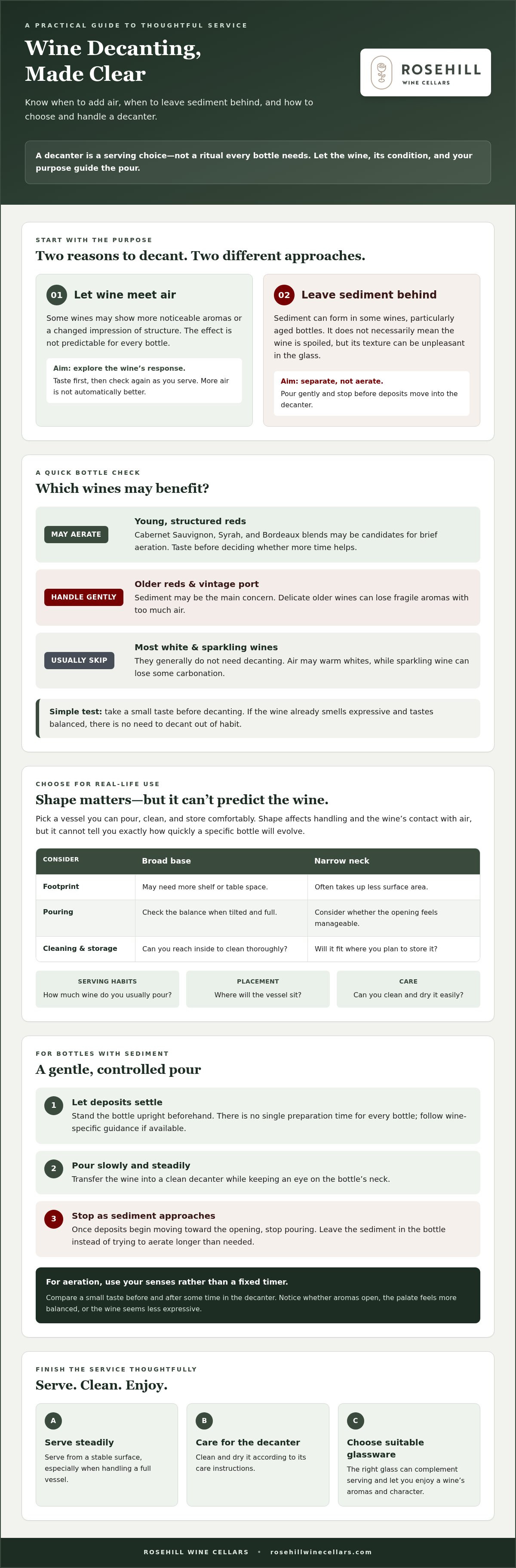
When wine meets air, its aromas and taste may change. Some scents can become easier to notice, but the result isn’t predictable for every bottle. Decanting can also help keep visible sediment out of the glass. In that case, the goal is separation, not aeration, so a gentle transfer is more useful than leaving the wine exposed for longer than necessary.
Which wines may benefit from decanting?
Young, structured reds, including Cabernet Sauvignon, Syrah, and Bordeaux blends, may be candidates for brief aeration. Air can affect their aromas and the impression of tannins, but taste before deciding whether more time helps. Older reds and vintage port may develop sediment, so careful separation can matter more than prolonged exposure. Delicate older wines can lose their fragile aromas with too much air. Most white and sparkling wines generally don’t need decanting. Air may warm whites, while sparkling wine can lose some of its carbonation.
Start with a small taste before decanting, then check the wine again as you serve it. If its aromas seem reserved or its structure feels firm, a little air may be worthwhile. If it already smells expressive and tastes balanced, there’s no need to decant out of habit. For an older bottle, look for sediment and handle it gently. The next sections explain how to choose a vessel and pour with care.
Aeration and Sediment: The Two Reasons to Decant Wine
Decanting has two distinct purposes: letting wine meet air, or leaving sediment behind as you pour. These goals call for different handling. Aeration involves exposing wine to oxygen; sediment removal means transferring the clear wine while keeping deposits in the bottle. A wine decanter can serve either purpose, but one doesn’t automatically achieve the other.
What does aeration do to wine?
As wine comes into contact with air, its aromas and taste may shift. Some aromas may become more noticeable, and the wine’s structure may seem different on the palate. The change depends on the wine and how it responds. Aeration isn’t a guaranteed improvement, and extended exposure may not suit a delicate bottle.
Use your senses rather than a fixed timer. Pour a small taste before decanting, then compare it with another taste after the wine has spent some time in the decanter. Notice whether the aromas open, the palate feels more balanced, or the wine seems less expressive. If the first taste is already inviting, further aeration may not be necessary. For a particular vintage or style, consult reliable wine-specific guidance when available.
How does a decanter separate sediment?
Sediment is a natural deposit that can form in wine, particularly as some bottles age. It may include crystals or particles from the wine itself. Its presence doesn’t necessarily mean the wine is spoiled, though the texture can be unpleasant if deposits reach the glass.
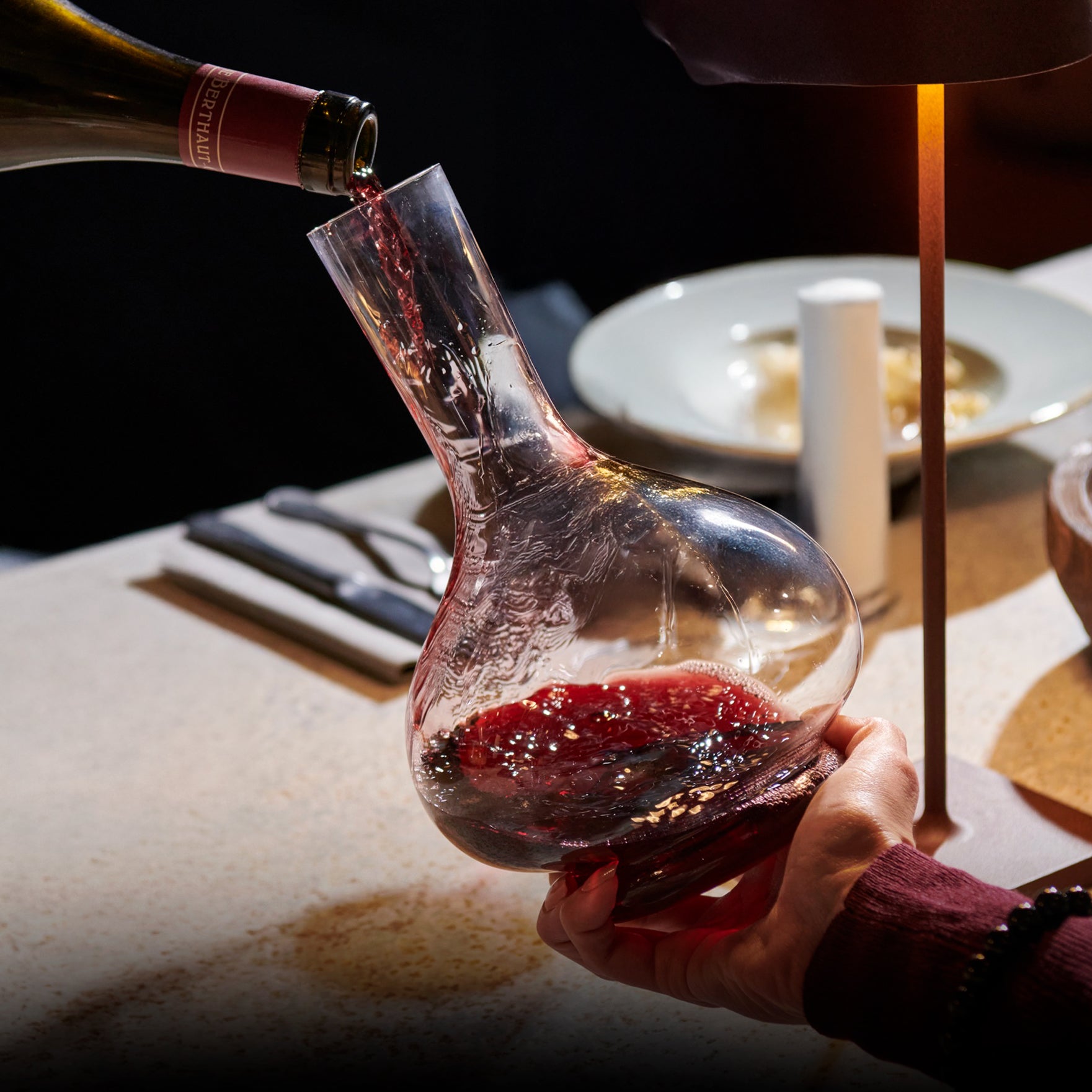
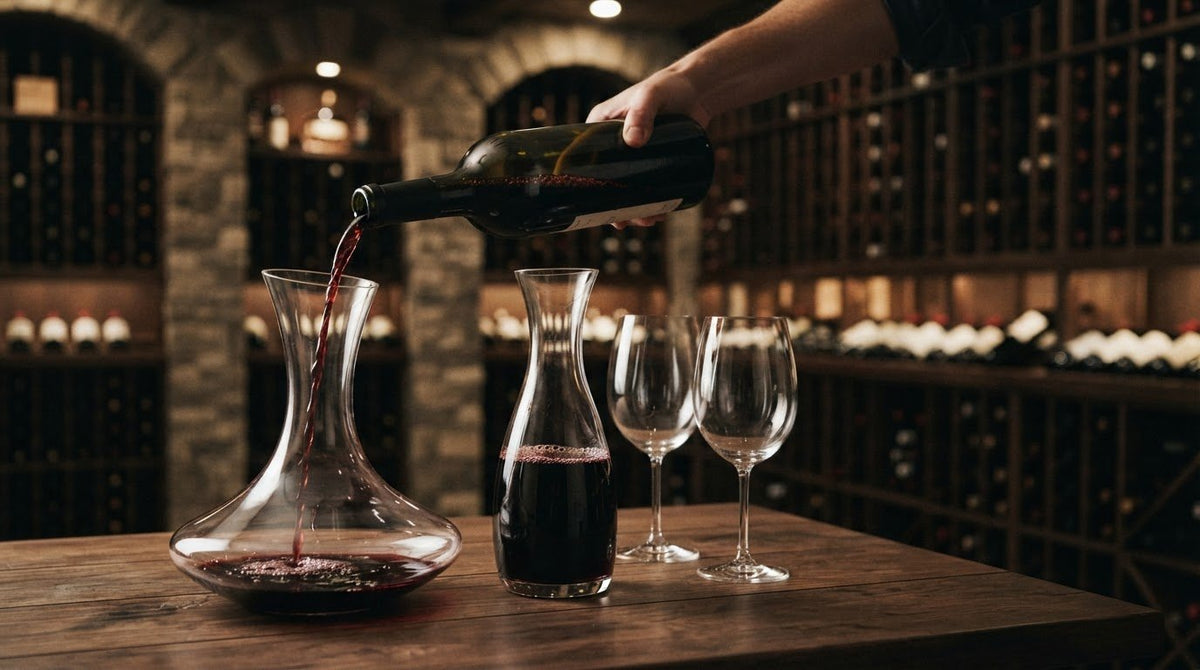
When sediment is visible or expected, stand the bottle upright beforehand so deposits can settle at the bottom. There’s no single preparation time that suits every bottle; follow guidance specific to the wine if you have it. Then pour slowly and steadily into a clean decanter, keeping an eye on the bottle’s neck. Stop once sediment begins to move toward the opening. The aim is to leave the deposit behind, not to aerate the wine longer than needed.
Keep the intention clear: choose aeration to explore how air changes the wine, or pour carefully to separate it from sediment. For the serving experience, Rosehill’s premium wine glassware offers options to consider for serving wine after decanting.
How to Choose a Wine Decanter: Shape, Size, and Ease of Use
The right wine decanter is one you can pour, clean, and store comfortably. Shape affects handling and the wine’s contact with air, but it can’t tell you exactly how quickly a specific bottle will evolve. Start with your serving habits: how much wine you usually pour, where the vessel will sit, and whether you can reach inside to clean it thoroughly.
| Feature | Broad-base shape | Narrow-neck shape |
|---|---|---|
| Footprint | May need more shelf or table space | Often takes up less surface area |
| Pouring | Check the balance when tilted and full | A narrower opening may help contain the pour |
| Cleaning | Assess whether your hand or cleaning tool can reach inside | A tight neck may make access more difficult |
| Air contact | Wine may spread across a larger surface, depending on fill level | Less exposed surface may be available, depending on design and fill level |
Is a wide-base or narrow-neck decanter better?
Neither shape is universally better. A broad base can occupy more room and may be harder to grip if the vessel is large; a narrow-neck design may be easier to store but less convenient to clean. Check how the decanter feels when empty, then consider how it will feel when full. Choose a shape that fits your storage space and feels controlled in your hands.
What makes a decanter easy to live with?
Look beyond appearance. Check the capacity against the amount you typically serve, and make sure the base sits securely on your table. A comfortable neck or grip, steady balance, and rim that pours cleanly can help reduce drips. The opening should also allow thorough cleaning and drying. If it’s too narrow for your hand or cleaning tool, residue may be difficult to remove.
Before choosing, consider these practical checks:
- Will it fit on your shelf and serving table?
- Can you hold and pour it steadily when full?
- Can you reach the interior to clean and dry it?
When weighing up the serving setup, consider the glass as well as the decanter. Explore Rosehill’s wine glassware selection to browse options for your table and serving style.
How to Decant Wine Carefully: A Simple Step-by-Step Method
A calm, controlled pour matters more than specialist equipment. Use a clean decanter and a steady hand, then tailor the method to your purpose: leaving sediment behind or giving the wine some contact with air.
How should you decant wine with sediment?
- 1. Let deposits settle. If you know the bottle contains sediment, stand it upright beforehand where practical. This allows deposits to collect at the bottom rather than remain suspended as you pour.
- 2. Prepare your setup. Set the clean decanter on a stable surface. Arrange good lighting so you can see the wine moving through the bottle’s neck. A bright lamp or a well-lit room is enough; no special tool is essential.
- 3. Pour slowly. Hold the bottle steadily and transfer the wine in a smooth, unhurried stream. Watch the neck and stop as soon as you see sediment approaching it. Leave the final cloudy portion in the bottle rather than trying to save every drop.
A candle or another light source is sometimes used to help see sediment, but clear visibility is what matters, not a particular piece of equipment.
How should you aerate wine for serving?
- 1. Pour into a clean vessel. For aeration, transfer the wine carefully into the decanter. There’s no need to rush or splash it deliberately.
- 2. Taste before waiting. Pour a small glass and notice the aroma and taste. This gives you a point of comparison.
- 3. Check again as you serve. Return to the wine periodically. If its aromas and taste are enjoyable, serve it. If you want to observe how it changes, give it more time and taste again rather than following a fixed duration.
Older, delicate wines deserve a particularly light touch. If you’re unsure how one will respond, taste early and continue only if it benefits in your glass. Sediment removal and aeration are separate aims, so don’t leave a bottle exposed longer than needed simply because you’re decanting it.
Decant gently and let the wine guide the timing. When you’re ready to serve, complement the careful pour with wine glasses suited to your table.
After Decanting: Serving, Cleaning, and Finding the Right Glassware
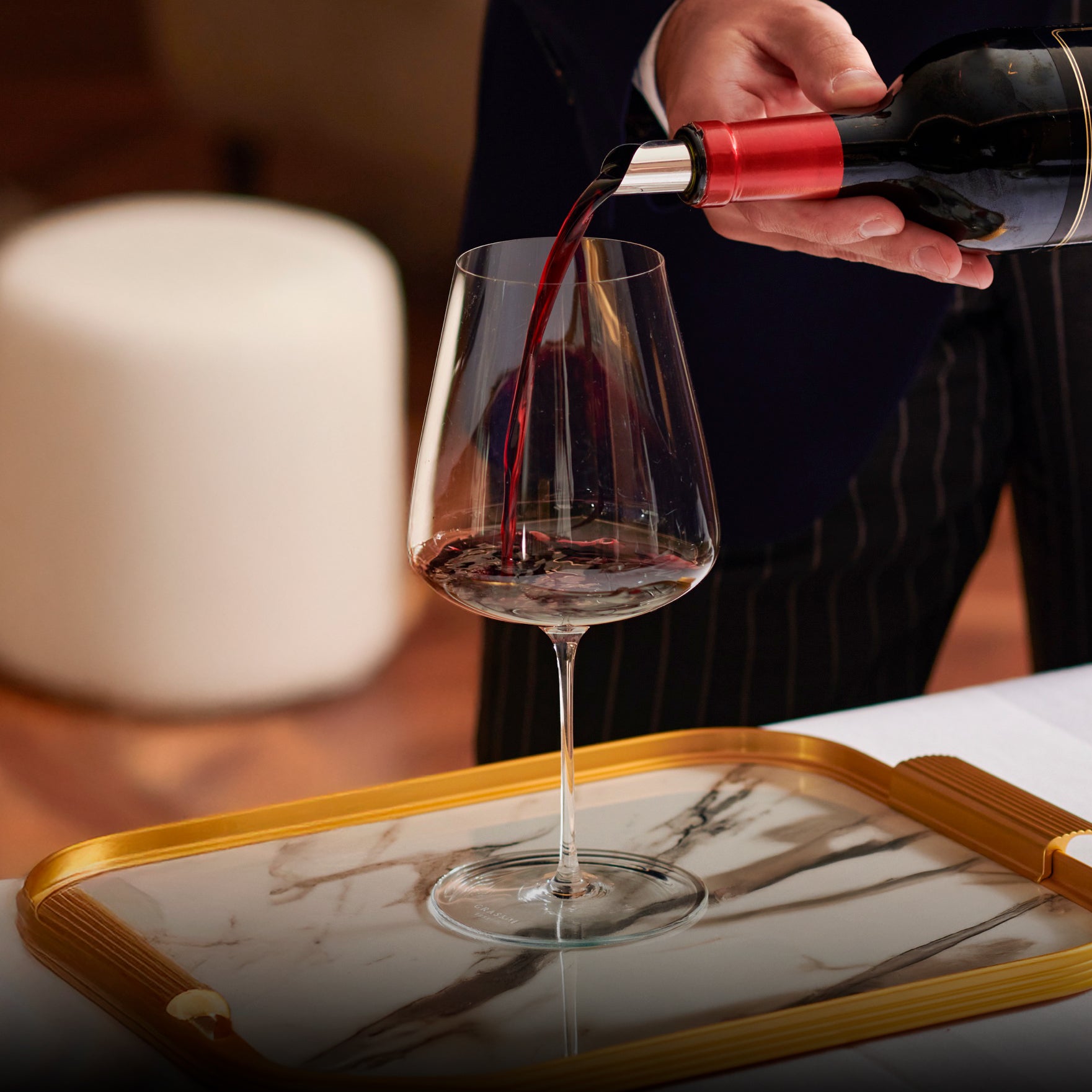
Once the wine is in the decanter, place it on a stable surface and use both hands if the vessel feels heavy or awkward. Keep the neck close to the glass and pour slowly, leaving room in each glass. If you decanted to separate sediment, avoid swirling or disturbing the remaining wine in the bottle.
How do you clean and store a wine decanter?
Rinse the wine decanter promptly after serving, before wine residue has time to dry. Follow the manufacturer’s care instructions for its material and design. Not every vessel can be cleaned the same way, so don’t assume a particular detergent, brush, or abrasive tool is suitable.
After washing, rinse thoroughly and let the decanter dry completely. Lingering moisture can leave water marks or stale odors, especially if the vessel is put away while damp. Position it securely so air can circulate through the opening, and store it where its shape won’t make it easy to knock over. If the opening is narrow or the base is unusually shaped, check the care guidance before choosing a drying method.
Does decanting change which wine glass to use?
Decanting doesn’t remove the value of choosing a suitable glass. The glass still affects how comfortably you serve the wine and experience its aromas. Choose a stable glass that feels comfortable to hold and leaves enough room to swirl without spilling. There’s no need to match the decanter and glass as a set; practicality and the occasion matter more than a coordinated appearance.
Rosehill’s wine glassware selection offers a starting point for considering glassware as part of the serving experience.
A decanter can contribute to presentation and give selected wines measured contact with air, but it also needs careful handling, cleaning, drying, and storage. Choose one you’ll be comfortable using and maintaining. If that care feels like more effort than the bottle calls for, serving directly from the bottle may be the more thoughtful choice.
Serve Each Bottle with Confidence
Decanting is a choice, not a rule. A wine decanter can help separate sediment or give a wine measured contact with air, but the best approach depends on the bottle. Choose a shape that’s comfortable to pour, clean, and store, then taste as you go instead of relying on a fixed schedule.
Keep the serving experience simple and considered: pour carefully, use glassware that feels right for the wine and occasion, and clean your decanter promptly according to its care instructions. These small choices let the wine remain the focus.
Explore Rosehill Wine Cellars’ premium glassware and wine accessories to find options for serving wine. If you have questions, contact the team by toll-free phone or live chat.
Frequently Asked Questions
Is a wine decanter necessary?
A wine decanter is optional; it isn’t necessary for every bottle. Decanting can expose some wines to air, which may alter their aromas and taste, or help separate wine from natural sediment. These are different aims, so choose a method that suits the bottle rather than treating decanting as a ritual. Many wines can be served directly from the bottle without losing the pleasure of the occasion.
Can you decant white wine?
Yes, you can decant some white wines, but it isn’t a standard requirement. Air may make certain whites’ aromas more noticeable, while other bottles may show little benefit or lose freshness with unnecessary exposure. The response varies by wine, so taste a small pour first. If the aroma and flavor are already appealing, serve it as it is; decant only if you have a reason to try it.
How long should wine sit in a decanter?
There is no universal duration for wine in a decanter. The right timing depends on the wine, its condition, and whether your aim is to observe aeration or separate sediment. Start by tasting a small pour, then check the wine periodically as it rests. Serve it once its aromas and taste are enjoyable. For guidance on a particular bottle, consult a reliable source familiar with its style or vintage.
What happens if you decant wine for too long?
Prolonged air exposure may change a wine’s aroma and taste, and in some cases its character can become less expressive. How quickly that happens varies with the wine, its age, and condition, so there’s no reliable universal cutoff. Rather than setting a timer and leaving it unattended, taste periodically and serve once it’s showing well. Delicate or older wines call for particular attention.
Should you decant old wine?
You can decant an old wine, but handle it gently and distinguish sediment removal from aeration. If deposits are present, pour slowly into a clean vessel and stop before they reach the neck; the goal is to leave them behind. Avoid extended exposure unless the wine benefits from it. Taste soon after pouring, then keep checking its aroma and flavor, since older bottles can be delicate.
How do you clean a wine decanter?
Rinse the decanter promptly after serving so wine residue doesn’t dry inside. Follow the manufacturer’s care instructions, since safe methods can vary with the material and shape. Avoid abrasive cleaners or tools unless the maker specifically approves them. Rinse thoroughly, then allow the vessel to dry completely before storing it. Good airflow helps limit lingering moisture and odors; make sure it rests securely while drying.
What is the difference between a wine decanter and a carafe?
The terms can overlap in everyday use, and there isn’t one universal distinction. Both vessels may be used to hold and serve wine. A decanter is often associated with transferring wine for presentation, aeration, or sediment separation, while carafe can refer more broadly to a serving vessel. Naming conventions vary by maker, so check the vessel’s shape, capacity, and care instructions rather than relying on its label alone.