
















A wine cooling unit can still struggle if the cellar around it is poorly sealed. It’s tempting to assume any air conditioner can keep bottles cool, but wine storage calls for more than lower air temperature: it requires steady conditions and appropriate humidity.
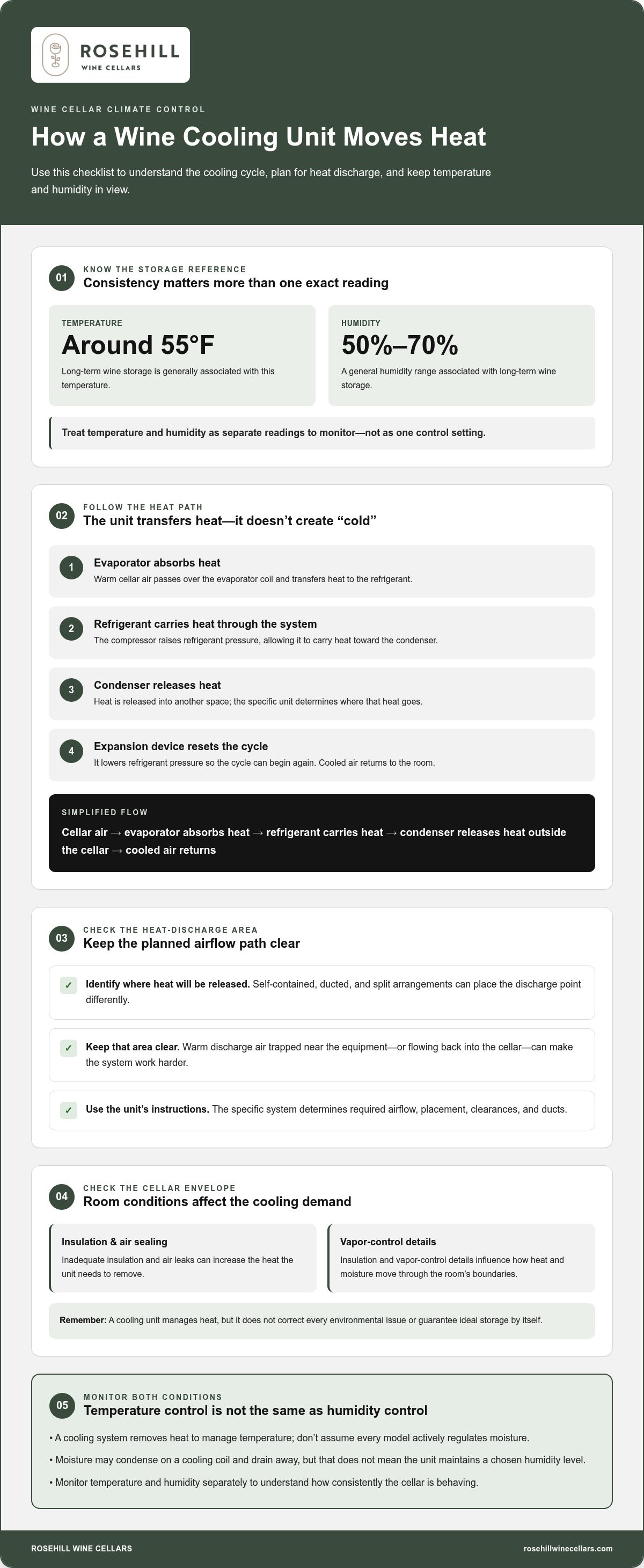
If you’re unsure what the equipment does or whether your room is ready for it, start by looking at both. Long-term wine storage is generally associated with temperatures around 55°F and humidity between 50% and 70%, with consistency more important than hitting one exact reading. This guide explains how a wine cooling unit moves heat, why standard air conditioning may not be a suitable substitute, and how insulation, a vapor barrier, and a well-sealed door affect performance.
You’ll also learn what to assess before choosing a system for your cellar. When the room and equipment work together, climate control becomes part of a complete storage plan, not an appliance choice made in isolation.
Key Takeaways
- A wine cooling unit moves heat out of the cellar, but it doesn’t control every part of the storage environment on its own.
- Understanding the evaporator and condenser shows how a cooling system transfers heat and why placement matters.
- Standard air conditioning and cellar cooling serve different purposes, so don’t assume they’re interchangeable.
- Plan the room, assess its construction, and identify where the system will release heat before selecting equipment.
- Monitor cellar conditions and keep required airflow paths clear so you can spot changes and know when professional service is needed.
What Does a Wine Cooling Unit Do in a Cellar?
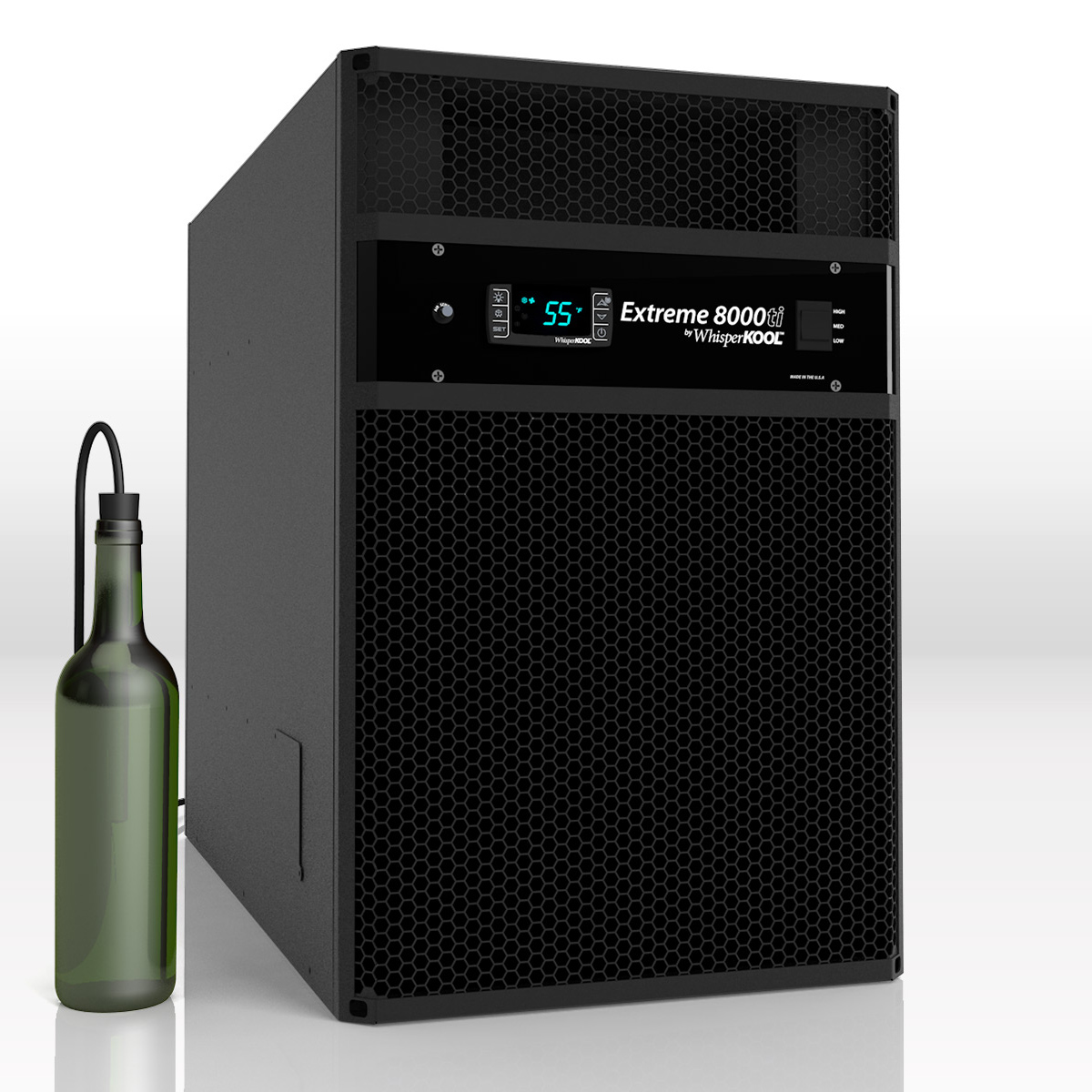
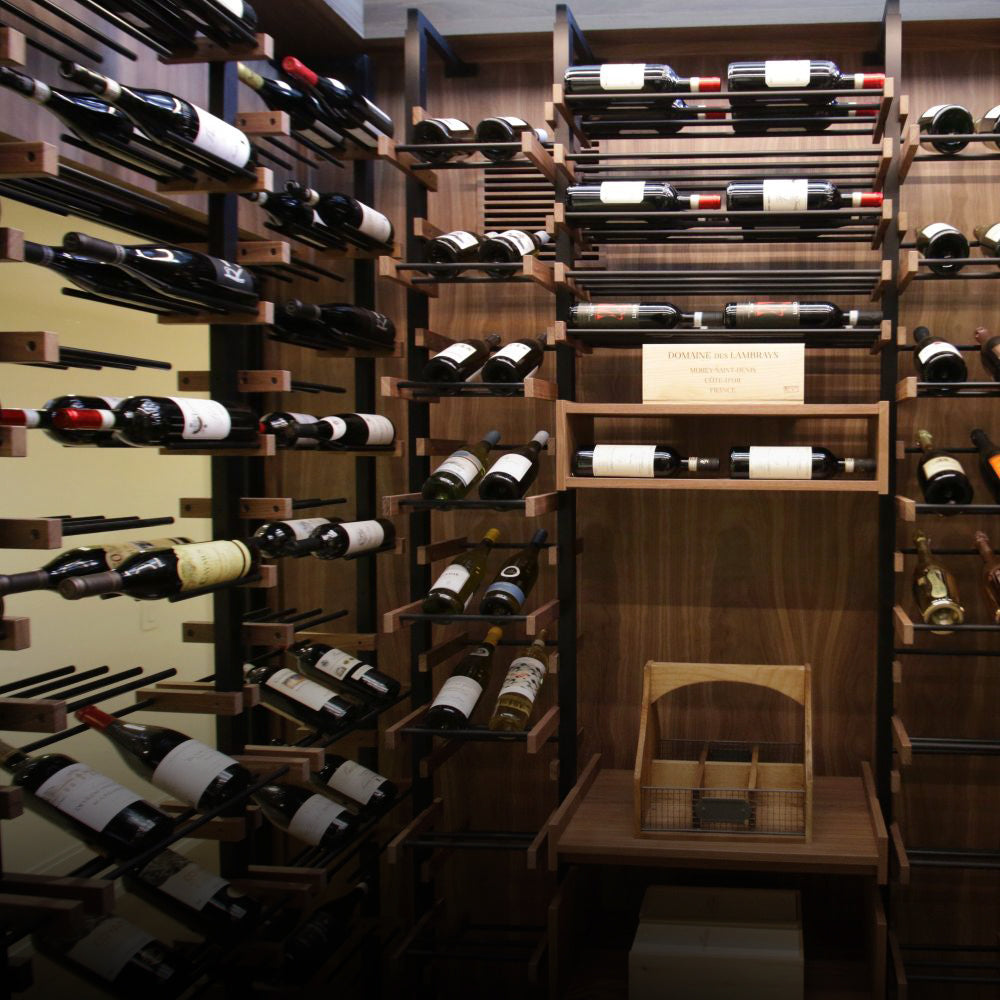
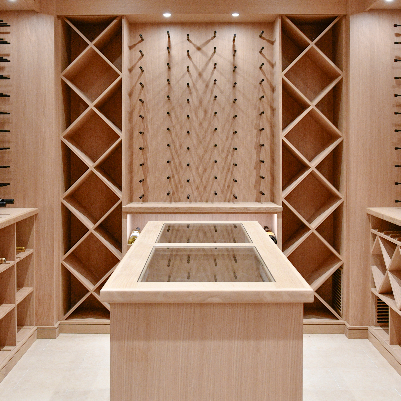
A wine cooling unit removes heat from a wine-storage room and helps maintain a stable cellar environment. It conditions the room as a whole, rather than cooling only the small space around a few bottles. The system manages heat; insulation, air sealing, humidity conditions, and other aspects of cellar design also shape the storage environment.
This matters when planning a cellar and caring for its equipment. A cooling unit operates within the conditions created by the room, so inadequate insulation or air leaks can increase the heat it needs to remove. Knowing the system’s role helps explain why reliable performance depends on more than the unit alone.
How Is a Cellar Cooling Unit Different from a Wine Refrigerator?
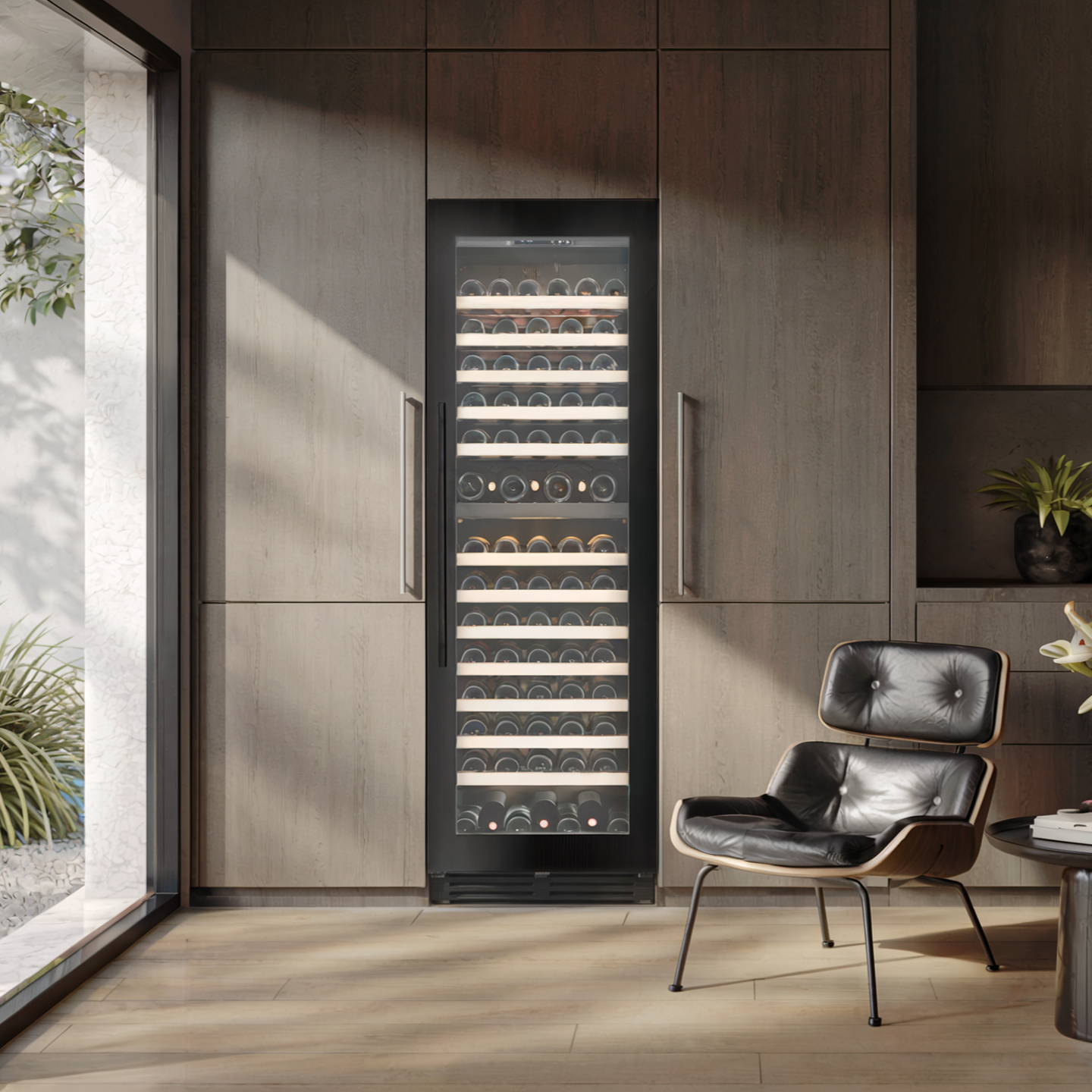
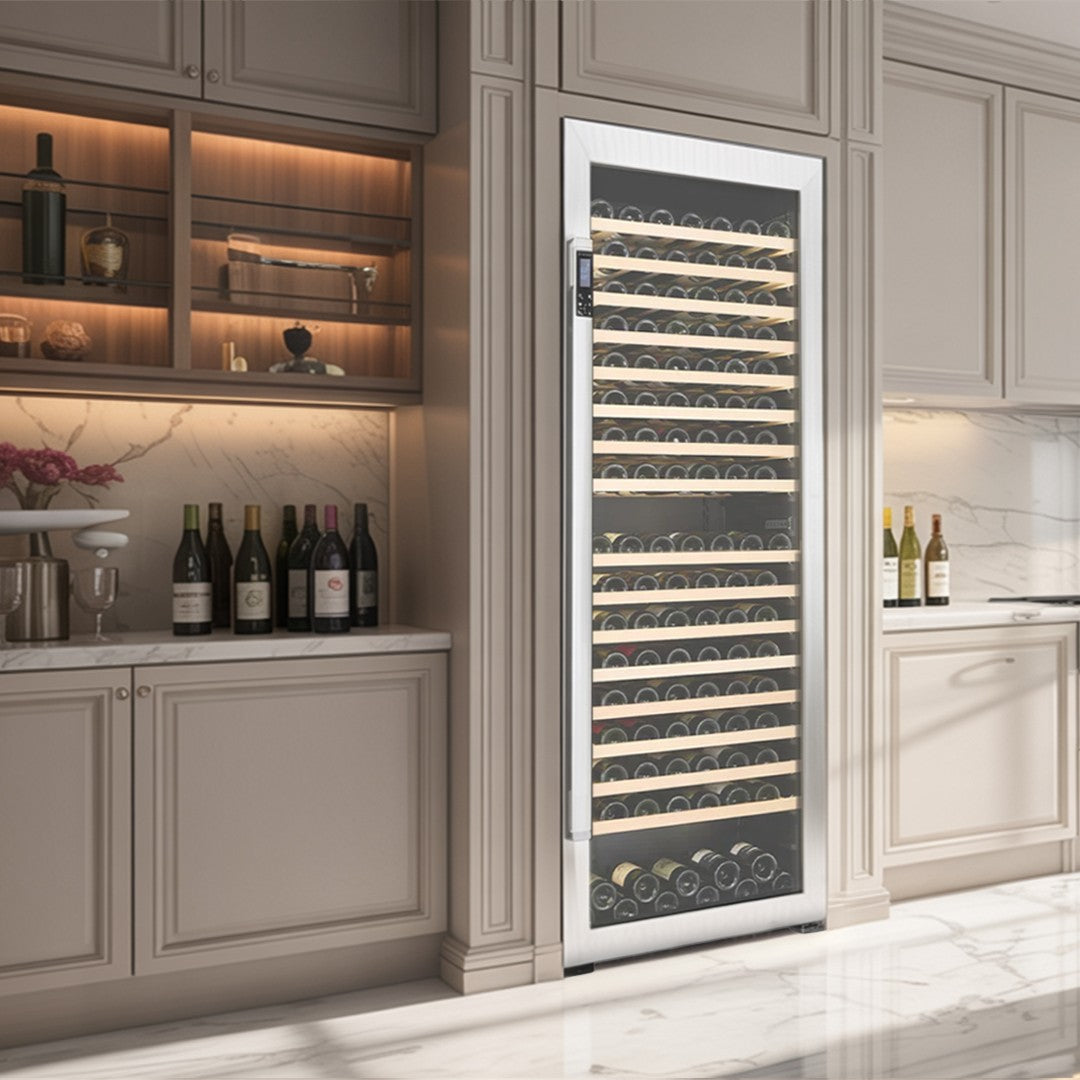
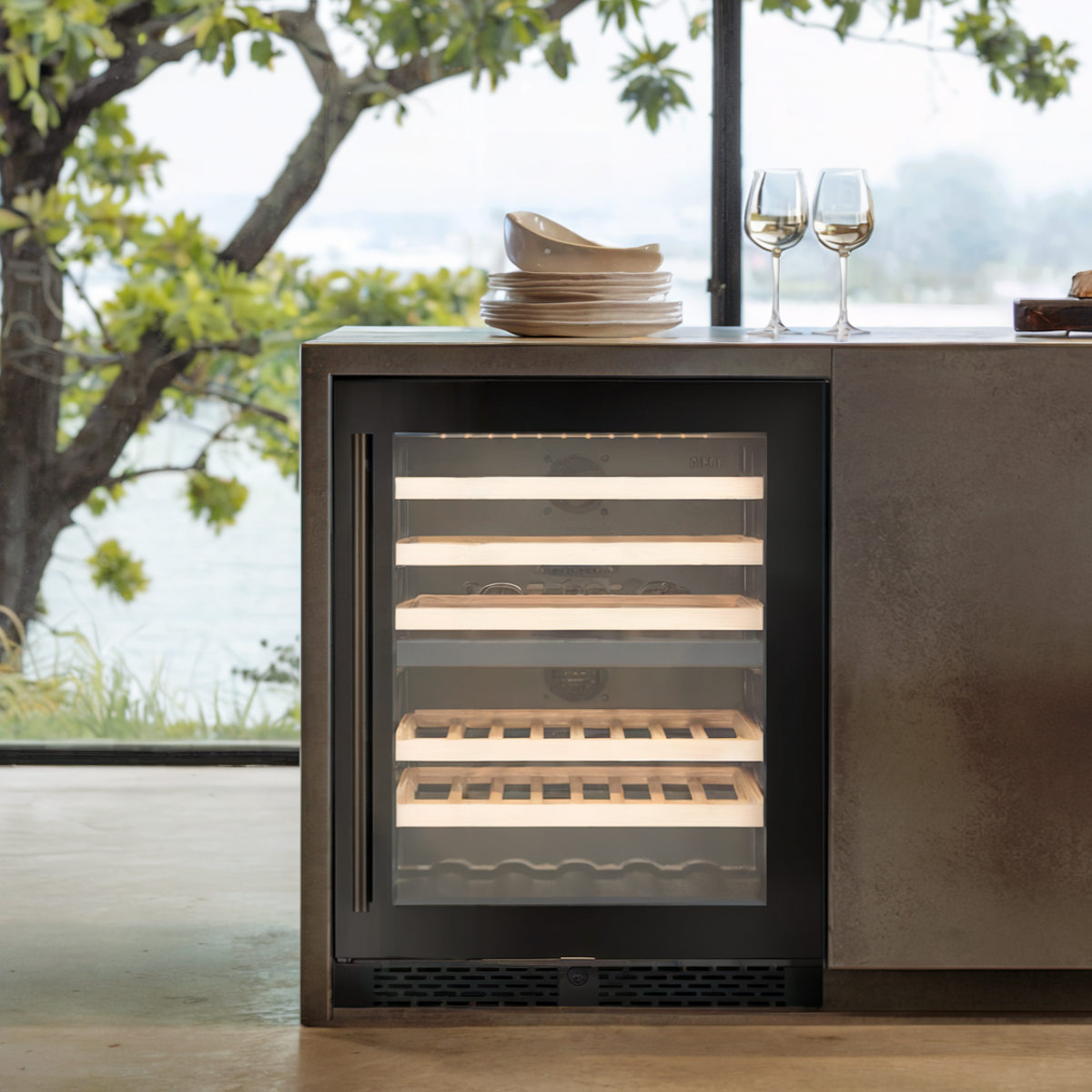
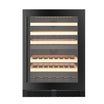
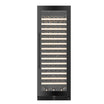
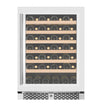
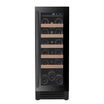
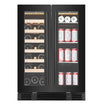
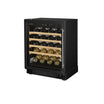
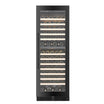
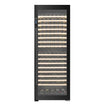
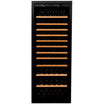
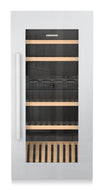
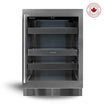
A cellar cooling system conditions a dedicated room, while a wine refrigerator or cabinet cools bottles inside its own enclosed space. A room-scale system is selected in relation to the cellar’s dimensions and construction. A cabinet provides a contained storage space without requiring you to climate-control an entire room.
Consider how much wine you want to store and whether you have a suitable room before choosing between the two. If enclosed storage better fits your plan, explore the wine cooler collection.
Why Does a Wine Cellar Need Dedicated Climate Equipment?
Wine collectors seek stable conditions because changing room conditions can make it harder to maintain a suitable storage environment over time. A passive cellar relies on naturally stable surroundings, while an active wine cellar uses climate-control equipment to help manage its environment. A dedicated cooling system is designed for this room-level role, rather than simply lowering the temperature of a general living space.
Cooling alone doesn’t preserve wine. Warm conditions, air leakage, and insufficient insulation can increase the heat the system must remove. A well-planned cellar envelope helps limit those demands. Monitoring temperature and humidity also gives you a clearer picture of how consistently the room performs. The cooling unit doesn’t correct every environmental issue or guarantee ideal storage on its own.
Think of the system as one part of a complete wine-storage environment. The room’s design, the unit’s operation, and regular attention to changing conditions all contribute to dependable performance.
How Does a Wine Cooling Unit Remove Heat?
A wine cooling unit doesn’t create “cold” so much as move heat from one place to another. In many cellar systems, a circulating fluid called refrigerant absorbs heat indoors, carries it through the equipment, and releases it elsewhere. The layout varies by system, so follow the manufacturer’s installation requirements for the specific unit.
What Do the Evaporator and Condenser Do?
The evaporator is the heat-absorbing coil. Warm cellar air passes over it, transferring heat to the refrigerant. A compressor raises the refrigerant’s pressure, allowing it to carry heat toward the condenser, which releases that heat into another space. An expansion device lowers the refrigerant’s pressure so the cycle can begin again.
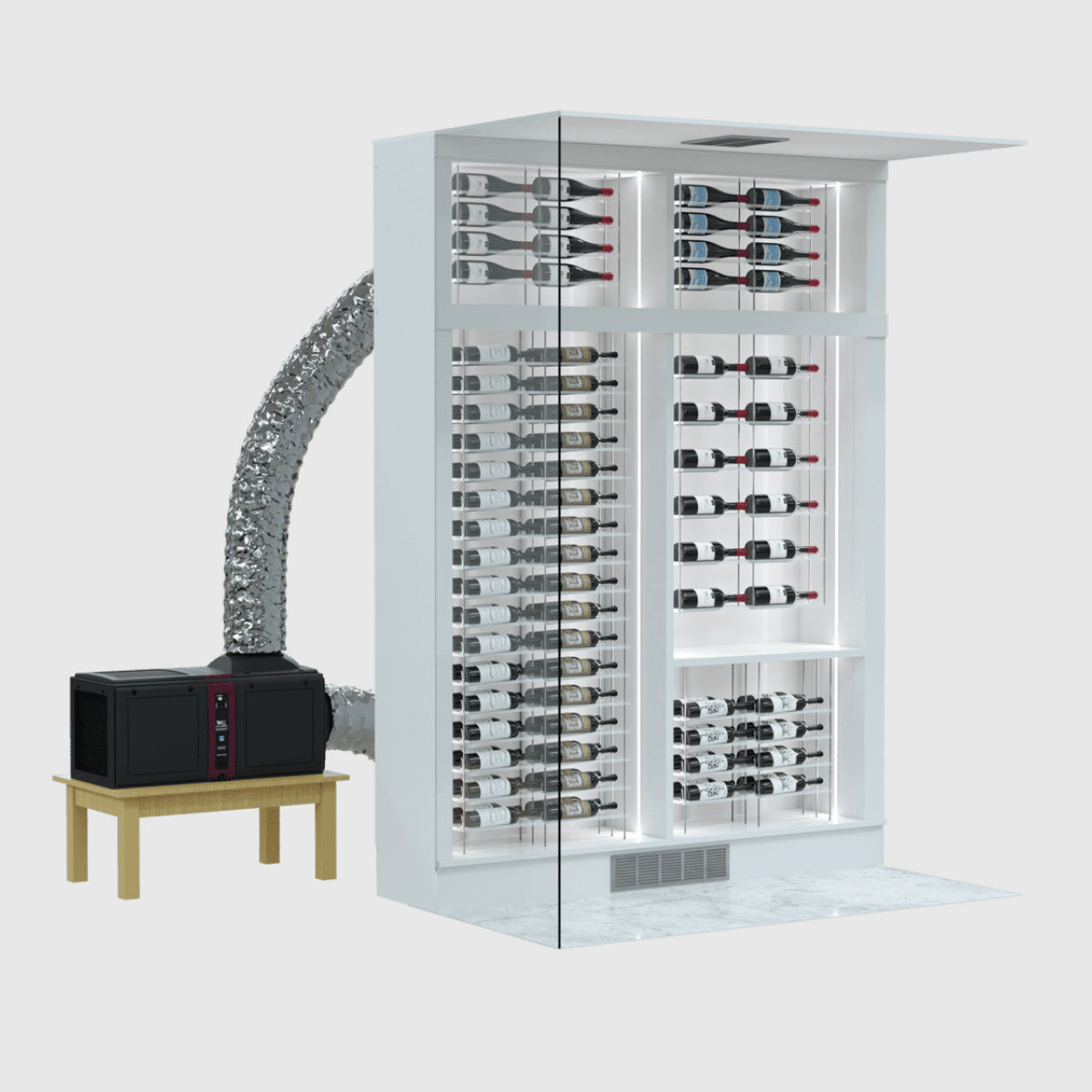
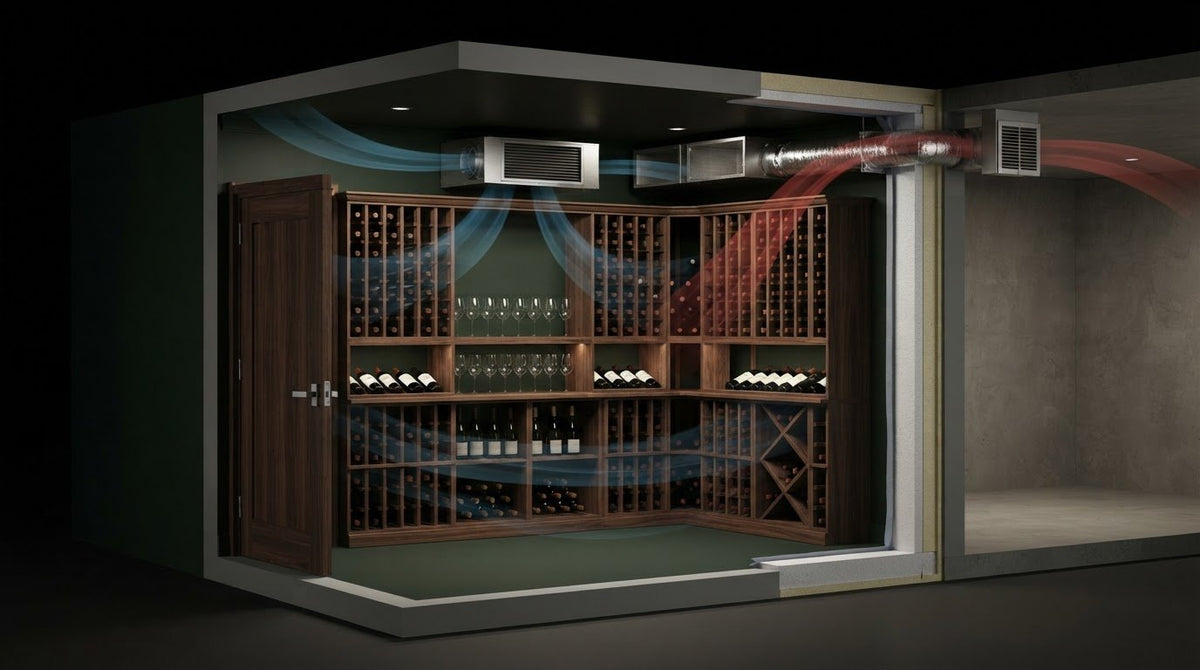
In practical terms, heat moves from cellar air to the evaporator, through the refrigeration circuit, and out through the condenser. A self-contained unit may reject heat on the other side of a wall, while ducted or split arrangements can place the heat-discharge point elsewhere. These are examples, not universal rules. The specific unit determines where heat goes and what clearances or ducts its installation requires.
Heat movement, simplified: Cellar air → evaporator absorbs heat → refrigerant carries heat → condenser releases heat outside the cellar → cooled air returns to the room.
The final step is essential. If warm discharge air is trapped near the equipment or flows back into the cellar, the system may have to work harder. Keep the planned heat-rejection area clear and follow the unit’s instructions for airflow and placement.
How Do Temperature and Humidity Relate?
Temperature and humidity are connected, but they aren’t the same control task. A cooling system removes heat to manage temperature. Don’t assume every model actively regulates moisture. Depending on the coil temperature and air conditions, moisture may condense on a cooling coil and drain away, but that doesn’t mean the unit maintains a chosen humidity level.
Cellar construction matters, too. Air leaks can bring in warmer, moisture-laden air, while insulation and vapor-control details influence how heat and moisture move through the room’s boundaries. Monitor temperature and humidity separately to understand how the cellar is behaving, rather than relying on the cooling setting alone.
To compare configurations designed for cellar use, explore the wine cellar cooling systems.
Wine Cooling Unit vs. Standard Air Conditioning: What Is the Difference?
A standard air conditioner and a cellar cooling system both move heat, but they’re designed for different settings. Room air conditioning typically serves living comfort, while cellar equipment is selected for a wine-storage room and its construction. Standard air conditioning isn’t automatically unsuitable for every cellar, either. Suitability depends on the equipment, controls, installation, and room conditions.
| Consideration | Standard air conditioning | Cellar cooling system |
|---|---|---|
| Intended application | Usually conditions an occupied room for comfort. | Designed to manage temperature in a dedicated wine-storage space. |
| Installation context | Selected and placed for the home’s comfort-cooling layout. | Must suit the cellar’s size, construction, and heat-discharge arrangement. |
| Room requirements | Works within the conditions of the room it serves. | Performance is affected by insulation, air sealing, glazing, and surrounding spaces. |
Can Standard Air Conditioning Cool a Wine Cellar?
Possibly, depending on the design. The important question is whether the specific equipment and controls can maintain the intended cellar conditions given the room’s heat gain and installation constraints. Comfort systems may cycle in response to ordinary room use, while a cellar application has a different purpose and should be considered as a complete system. Neither category is automatically suitable or unsuitable in every situation.
Temperature and humidity are separate measurements, and air-conditioning behavior varies by system and operating conditions. For technical decisions, use the equipment manufacturer’s documentation and qualified HVAC guidance. Don’t assume a comfort unit will manage every aspect of cellar climate.
Which Room Conditions Affect Cooling Performance?
Heat entering the cellar increases the work the cooling equipment must do. Review the room as a whole: poorly insulated walls or ceilings, gaps around the door, sun-exposed glazing, and warm adjacent spaces can all add to the cooling load. Lights, appliances, and other heat-generating equipment inside the cellar contribute as well.
For example, a cellar beside a warm utility room or with a glass wall exposed to sunlight may face a different heat load from an enclosed, well-insulated space. These conditions affect equipment selection and placement, including where the system can release heat. Assess the room before choosing a unit, then explore wine cellar cooling systems designed for dedicated storage spaces.
What Should You Prepare Before Installing a Wine Cooling Unit?
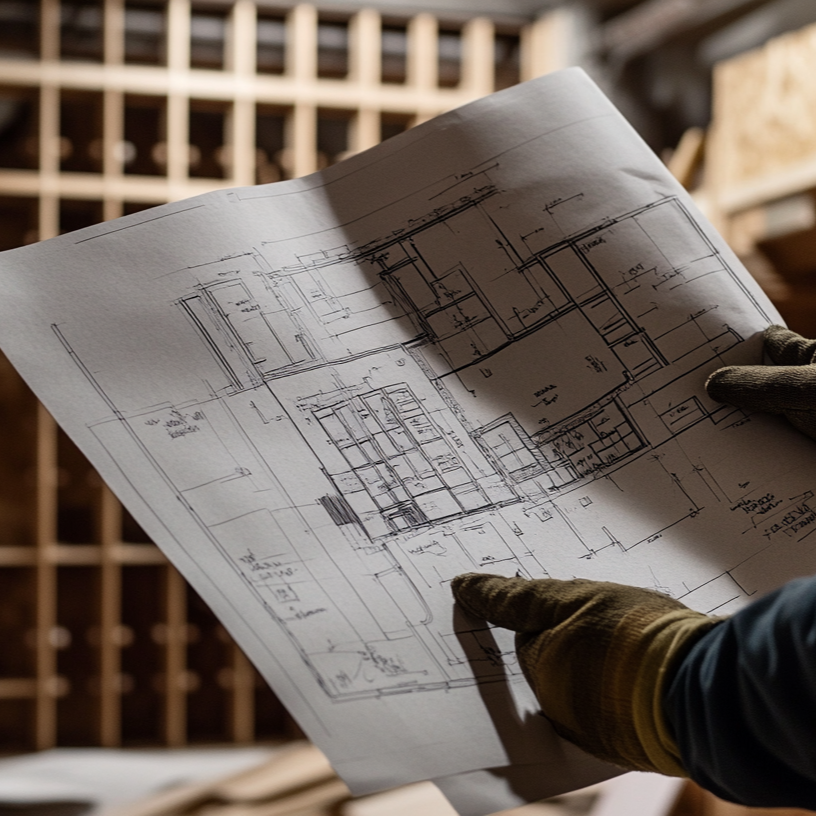
Plan the cellar and its cooling equipment as one system. Before selecting a wine cooling unit, define the space it will serve, assess how well the room holds its conditions, and decide where the equipment can release heat. These steps give equipment planning a clearer foundation and help you avoid treating installation as an appliance decision alone.
- Define the room. Record the cellar’s dimensions and intended layout, including storage, doors, windows, and equipment that will generate heat. The room’s size and use help frame the cooling requirements.
- Assess the envelope. Review the walls, ceiling, floor, door, glazing, and openings for insulation and air leakage. Weak points allow more heat exchange with adjacent areas or outdoors, affecting the conditions the system must maintain.
- Plan heat discharge. Identify where the system can release heat without allowing warm air to return to the cellar. The suitable location depends on the system configuration and building layout.
- Size the equipment. Use room dimensions and construction details as inputs to equipment planning. A room with significant heat gain presents a different demand from a compact, well-sealed cellar.
How Do Insulation and Air Sealing Affect a Cellar?
Insulation slows heat transfer through surfaces, while air sealing limits drafts through gaps and openings. Check door seals, windows, wall and ceiling transitions, and penetrations for wiring or other services. Even a correctly selected system may face greater demand if warm air enters freely or heat passes readily through the room boundaries. Address these details early in cellar planning.
Why Does Ventilation and Heat Discharge Matter?
A cooling system removes heat from the cellar, so that heat must be released outside the cooled space. Depending on the configuration, discharge may occur near the unit or be directed elsewhere through a designed arrangement. The location affects the room plan and should be considered alongside cellar dimensions, not as an afterthought. Follow the selected equipment’s documentation for its specific venting, airflow, and installation requirements.
Coordinating the room design with the cooling approach helps align construction details and equipment needs from the outset. Explore wine cellar cooling systems as you plan a purpose-built cellar environment.
How Can You Keep a Wine Cooling Unit Working Reliably?
Regular attention helps you notice changes in cellar conditions and understand whether they persist. Keep a simple record of temperature and humidity readings, note lasting shifts, and follow the maintenance instructions for your equipment. Routine observation is useful, but it isn’t a substitute for professional inspection or repair.
What Can Owners Check Between Service Visits?
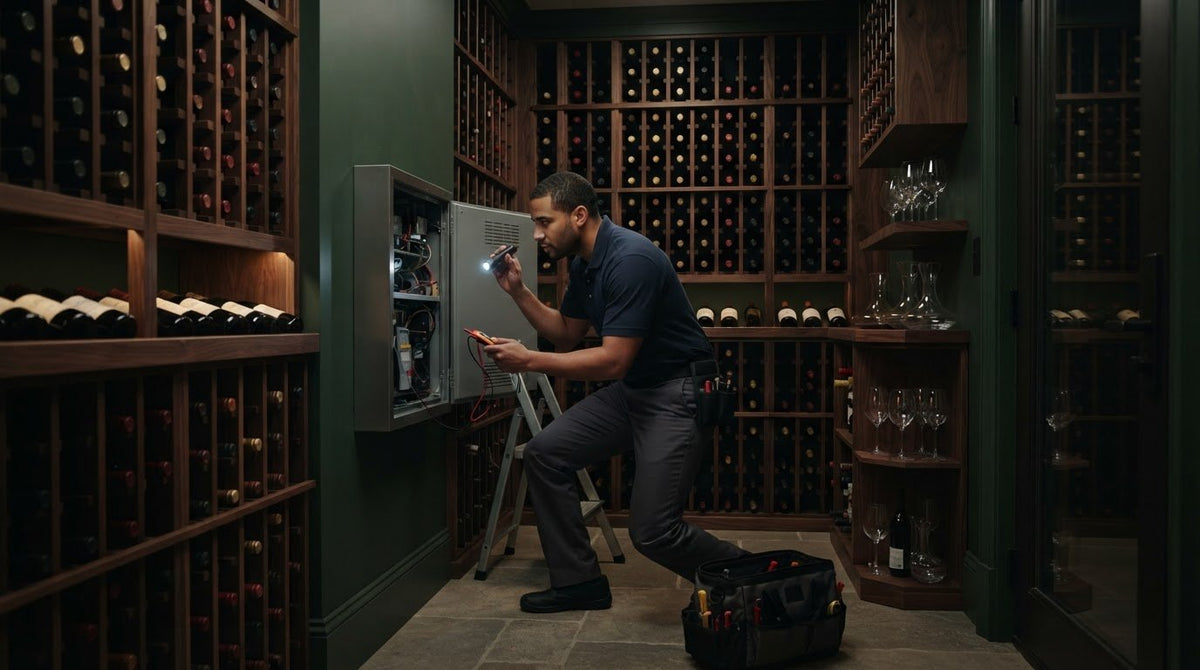
Start with safe visual checks. Review the system display and cellar monitor regularly, then record readings so you can distinguish a lasting pattern from a brief fluctuation. Look for visible changes around the equipment, such as blocked air pathways or objects placed close to vents. Keep required airflow areas clear according to the manufacturer’s documentation for your model.
Cleaning requirements vary by equipment. Follow only the care steps described by the manufacturer, and don’t open panels or attempt electrical or refrigerant work. If conditions remain outside the expected range or the system behaves differently than usual, note what changed and arrange qualified service rather than trying to diagnose the cause.
When Is Professional Maintenance Worth Considering?
Preventative maintenance gives a qualified professional an opportunity to review system condition and operation. It can be especially useful if you notice persistent changes in cellar readings, unusual operating behavior, or visible concerns that aren’t covered by owner-level instructions. Timely attention can help clarify whether the system needs service, without assuming a particular fault or promising a specific outcome.
Rosehill Wine Cellars offers annual maintenance plans for wine cooling systems. For more detail, consult the guide Annual Maintenance Plan for Wine Cellar Cooling, and explore wine cellar cooling systems as part of your cellar-care planning.
Build a Cellar That Supports Consistent Care
A wine cooling unit works best as part of a thoughtfully planned storage environment. Its job is to move heat, while the cellar’s insulation, air sealing, and layout help determine the demands placed on the system. Don’t assume standard air conditioning is interchangeable with dedicated cellar equipment. Regularly monitoring room conditions can also help you notice persistent changes early.
Keep the equipment’s airflow paths clear as directed by its manufacturer, monitor cellar readings over time, and leave technical inspection or repair to a qualified professional. Rosehill Wine Cellars offers cooling-system maintenance plans to support ongoing care.
Ready to explore options designed for cellar storage? Browse Rosehill Wine Cellars’ wine cellar cooling systems and take the next step toward a considered, well-maintained cellar.
Frequently Asked Questions
What is a wine cooling unit?
A wine cooling unit removes heat from a dedicated wine-storage room and helps maintain its temperature. Unlike a wine refrigerator, which cools bottles inside an enclosed cabinet, a cellar system serves a room. It doesn’t manage every storage condition by itself: the cellar’s insulation, air sealing, and design also influence how well the environment holds steady.
How does a wine cellar cooling unit work?
A wine cellar cooling unit transfers heat from the cellar to another area. In a typical refrigeration cycle, refrigerant absorbs heat as cellar air passes over the evaporator coil. The refrigerant carries that heat to the condenser, which releases it beyond the cooled space. The configuration determines where heat is discharged, so installation needs to match the specific system’s requirements.
Can I use a regular air conditioner in a wine cellar?
Possibly, but don’t assume a standard air conditioner suits every cellar. Its effectiveness depends on the room, the equipment’s controls and operating characteristics, and how the system is installed. A comfort-cooling unit may operate differently from equipment intended for a dedicated storage space. Consider whether the system can maintain the cellar’s desired conditions consistently, and review the manufacturer’s guidance before deciding.
Does a wine cooling unit control humidity?
Not necessarily. A cooling unit primarily removes heat, and its ability to manage humidity depends on the equipment’s design and controls. Cooling can affect moisture in the air, but that doesn’t mean every system maintains a selected humidity level. Cellar construction, air leakage, and air exchange also influence moisture conditions. Monitor humidity separately instead of assuming temperature control will take care of it.
Does a wine cellar cooling unit need to vent outside?
The system must release heat outside the cooled cellar, but that doesn’t always mean venting directly outdoors. The heat-discharge location depends on the unit’s configuration and installation plan. Some systems release heat near the unit, while others can direct it elsewhere. Follow the manufacturer’s instructions for venting, airflow, and placement, and avoid allowing discharged warm air to flow back into the cellar.
How do I know what size wine cooling unit I need?
Start with the cellar’s dimensions, then account for factors that affect heat gain, including insulation, air leakage, glazing, adjacent spaces, and heat-generating equipment. The required capacity also depends on the system’s intended operating conditions and installation configuration. Room size alone isn’t enough to select equipment. Use the manufacturer’s sizing guidance and include the cellar’s construction details in the planning process.
How often should a wine cooling unit be serviced?
Follow the maintenance schedule in the manufacturer’s documentation, since service needs vary by system and installation. Between visits, monitor cellar readings, note persistent changes, and keep required airflow paths clear. Leave internal inspection, repair, and technical work to a qualified professional. Rosehill Wine Cellars offers annual maintenance plans for wine cooling systems for owners planning regular preventative care.