




Bare drywall is a weak foundation for a heavily loaded wine rod: a screw installed in drywall alone may support only 10-20 pounds. Floor-to-ceiling wine rod drywall anchor weight limits vary with the anchor type, drywall condition, and how the load is distributed, so an anchor’s stated capacity shouldn’t be treated as a guaranteed working load.
It’s understandable to look for one reliable weight limit, but an anchor’s performance depends on whether the drywall is sound, damaged, or previously repaired. This guide explains how bare drywall compares with common anchor types, why wall condition matters, and why fastening into framing is generally more dependable for heavy items. It also covers what to assess before choosing support for a wine rod, where appearance and lasting stability both matter.
Key Takeaways
- Assess drywall thickness, condition, and previous repairs before choosing a mounting method; damage or moisture can weaken support.
- For heavy items, fastening into wall framing provides more dependable support than relying on drywall alone.
- Anchor capacities vary widely by type and installation, so compare the rating with the load and how it will pull on the wall.
- Distribute weight across suitable mounting points, and account for leverage when supporting shelves or other projecting items.
- Learn why a wine rod’s mounting design and the condition of the wall both matter for a stable installation.
Does Wall Condition Matter?
Yes. Sound, dry drywall holds anchors more reliably than cracked or moisture-damaged board. For a wine rod, consider the wall surface, framing, and how the load transfers through each mounting point.
Load Distribution Across Anchor Points
Load distribution describes how the rod’s weight and bottles are shared between its floor and ceiling supports. It matters because uneven pressure can strain one attachment more than the others.
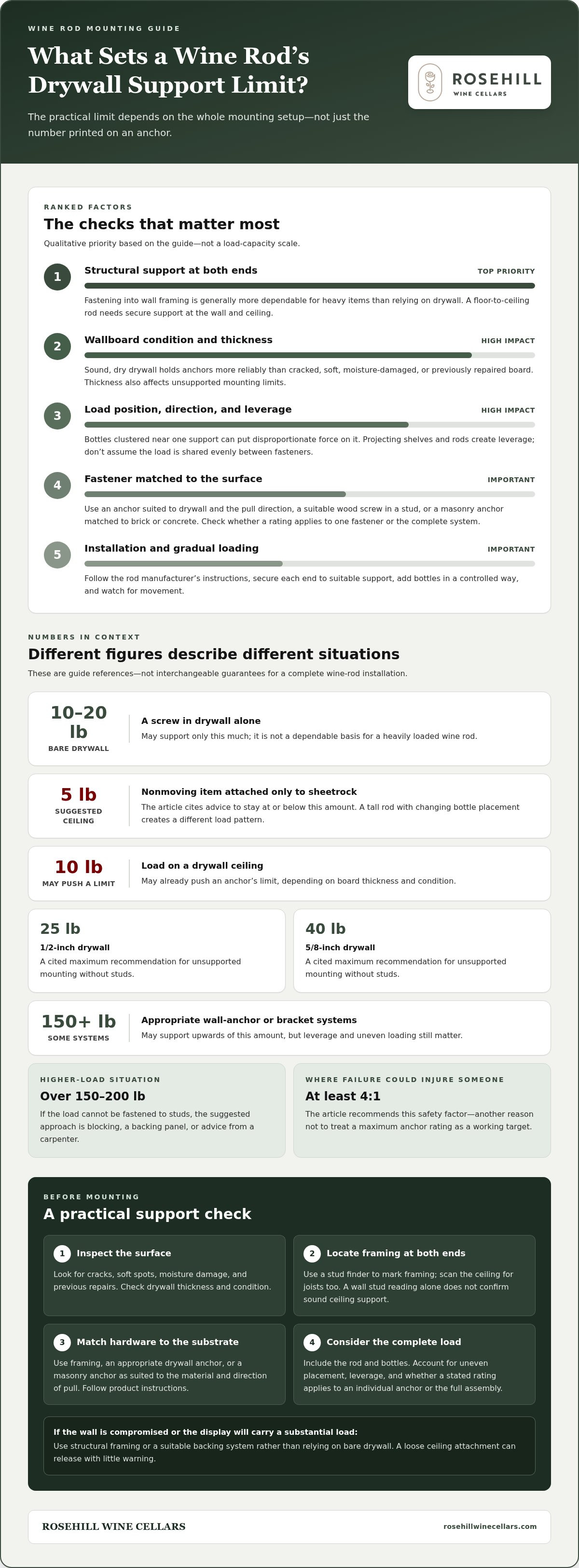
A centered load may transfer differently from bottles clustered near one side. If a rod relies on drywall at its ends, a weak or repaired patch can become the point that takes disproportionate force. A 10-pound load on a drywall ceiling may already push an anchor’s limit, depending on board thickness and condition.
Consider each mounting point and the direction of pull, rather than dividing total weight evenly by the number of fasteners. A nonmoving item attached only to sheetrock has been advised to stay at or below 5 pounds. A tall rod holding bottles creates a different load pattern, especially if bottles are removed or added unevenly.
Mounting Options for Different Surfaces
Mounting options are fasteners chosen to suit the material behind each rod support. Matching the fastener to the surface matters because drywall, wood studs, and masonry resist force differently.
For drywall, choose an anchor suited to the board’s thickness and the direction of the load. A hollow-wall toggle spreads pressure behind the panel. For wood studs, drive a suitable wood screw into the framing, not just the drywall. For brick or concrete, use a masonry anchor matched to the substrate and its condition.
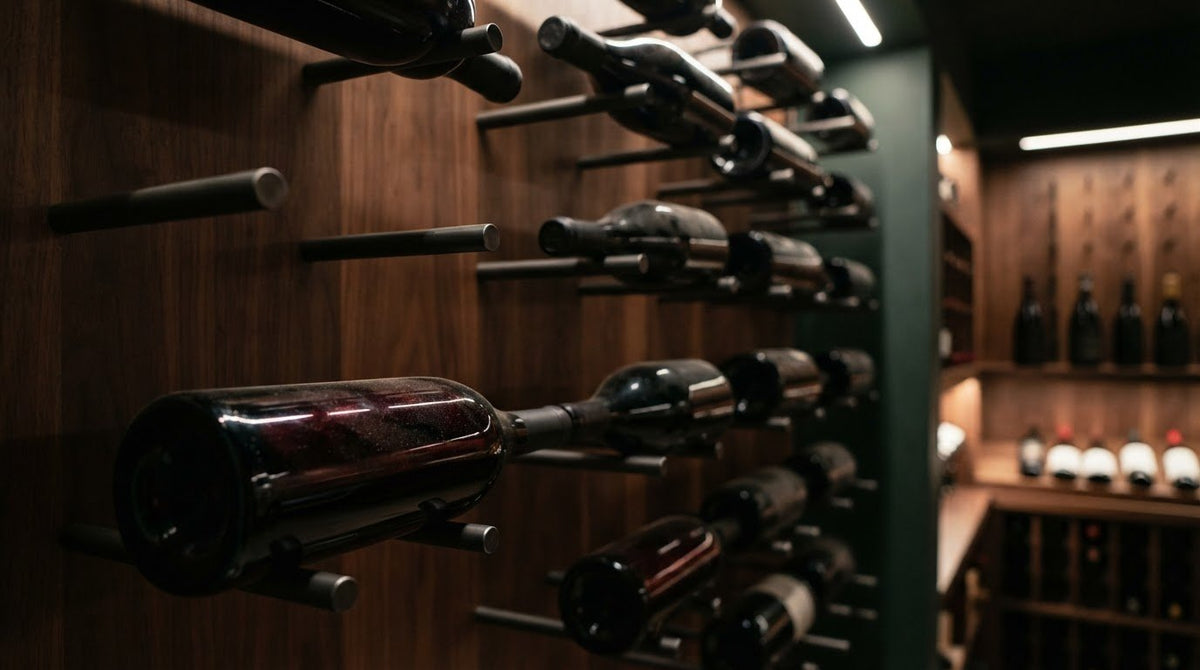
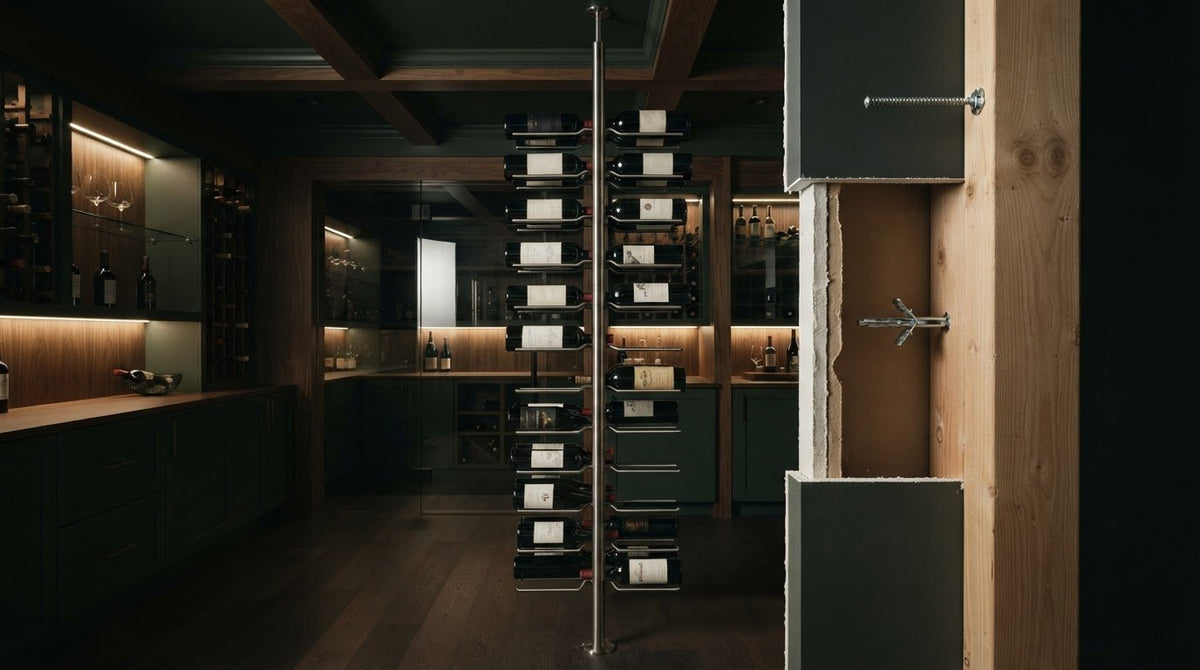
A floor-to-ceiling wine rod is a vertical support positioned between the floor and ceiling, with bottle supports attached along its length. Installation involves aligning the rod and securing or adjusting its end supports according to the manufacturer’s instructions and the surface at each end.
Manufacturers specify capacity and mounting requirements in product instructions or ratings for the rod, supports, and required fasteners. Check whether a rating applies to one anchor or the complete system, and confirm that it covers the substrate in your installation. A drywall rating does not establish capacity when mounting to a wood stud or masonry.
Wine Rod Weight and Pullout Risks
The total load includes the rod’s weight and the bottles it holds. The exact amount depends on the rod’s material and length, the number of bottles, and their contents.
For example, bottles concentrated near one support place more demand on it than an evenly arranged display. If an anchor pulls out, the rod could tilt or fall, damaging the wall and risking injury or broken bottles. A ceiling attachment can also release with little warning.
Before installation, check the mounting area for cracks, soft spots, moisture damage, or previous repairs. If the wall is compromised or the rod will carry a substantial load, use structural framing or a suitable backing system rather than relying on bare drywall. This distinction is central to understanding floor-to-ceiling wine rod support limits.
Tips for hanging heavy items without studs
Without framing, the anchor and wallboard must resist the full load. For a wine rod, first locate structural support. Use a properly selected wall-anchor system only when framing cannot serve as the attachment.
Locating Studs and Ceiling Joists
Locating studs and joists means identifying framing behind the wall and ceiling before choosing attachment points. This matters because a fastener secured into framing transfers force beyond the drywall panel.
Scan the wall with a stud finder, then mark the detected edges and center. A careful tap can help distinguish a hollow cavity from framing, but it should not replace checking the marked location. Residential framing commonly uses 16″ or 24″ on-center spacing, so nearby framing may help confirm a reading.
Scan across the ceiling to locate framing, identify the joist direction, and mark the center. A floor-to-ceiling rod needs secure support at both ends; locating a wall stud alone does not confirm that the ceiling attachment is sound.
Installing and Safely Loading a Wine Rod
To install and safely load a wine rod, secure each end to suitable support, then add bottles in a controlled way. This helps avoid sudden stress on a single attachment.
Follow the rod manufacturer’s mounting instructions and use fasteners suited to the actual surface. If you use a hollow-wall anchor, check its rating for the board and anchor type, then consider how the rod’s load pulls against the wall. Don’t treat the product’s maximum rating as a working target.
For shelves, use heavy-duty brackets because projecting loads create leverage and pull-out force. Add items gradually and watch for movement. A safety factor of at least 4:1 is recommended where failure could cause injury; that principle underscores why a heavy display shouldn’t depend on a marginal anchor.
Drywall thickness affects the limits of unsupported mounting. One recommendation places the maximum at 25 pounds for 1/2-inch drywall without studs, and 40 pounds for 5/8-inch drywall without studs. These figures aren’t interchangeable with an anchor’s own rating or a wine rod’s complete system capacity.
Appropriate wall-anchor or bracket systems can support upwards of 150 pounds, but shelves and rods still face leverage and uneven loading. If a load exceeds 150-200 pounds and can’t be fastened to studs, the suggested approach is retrofitting blocking, adding a backing panel, or consulting a carpenter. A rod carrying bottles demands particular care because a loose anchor could drop glass and injure someone.
Typical drywall anchor capacities
There is no universal floor-to-ceiling wine rod weight capacity based on drywall anchors alone. Support depends on the rod, fasteners, wallboard, installation, and load direction. The weakest part of the assembly sets its practical limit, so an anchor’s published rating cannot be treated as the rod’s capacity.
Typical anchor ratings vary by design and are usually stated per anchor. Use them to compare options, not as a promise that a complete installation will safely hold the same load.
- Plastic expansion anchors: typically 10-25 lbs. They expand inside the drilled hole and suit lighter loads.
- Threaded drywall anchors: typically 25-75 lbs. Their threads grip the board, but drywall condition and pull direction still matter.
- Molly bolts: typically 50-75 lbs. The sleeve expands behind the board when tightened.
- Toggle bolts: typically 100-200 lbs. Their wings open behind hollow wallboard and spread the load across a wider area.
- Spring-toggle anchors: commonly advertised at 250-500 lb per anchor through 1/2″ drywall. A practical safe design load is lower, with 100-300 lb suggested depending on load direction and installation quality.
Those ranges aren’t directly interchangeable. Hollow-wall anchors and molly bolts, for example, have typical working loads of 25-100 lb, depending on size and type. A rating may describe a test result or advertised maximum, while the rod experiences sustained weight, uneven bottle placement, and force at its attachment points.
One stated example rates a correctly installed 1/4-inch toggle bolt in 5/8-inch fiber-reinforced drywall for 380 pounds of shear load. That figure applies to the specified anchor, board, and shear direction. It doesn’t establish a safe limit for ordinary drywall or for force pulling outward from the wall.
For comparison, shelves with light items commonly use drywall anchors rated at 25-50 lb per anchor. A medium mirror or light-item shelf hung with two stud screws or two good toggle anchors is given as an example of up to about 100 lb total. These examples show why the number and placement of fasteners matter, but a wine rod’s complete capacity still depends on both end supports and the rod assembly.
To assess a proposed load, identify the anchor type, what its rating covers, the board material, and the load direction. Then account for the rod’s weight and its full bottle load together. Don’t simply add individual anchor ratings: uneven loading can put more force on one point and reduce what the whole installation can support.
A 55-85-inch flat-screen TV should be mounted to two studs with lag bolts; example capacity is 200-500+ lb, depending on the bolts and stud embedment.
Wall condition and drywall strength
Wall condition affects how well drywall and anchors resist a wine rod’s sustained load. Board thickness, damage, repairs, moisture, and framing all influence the support available.
Wall Condition
Wall condition refers to the drywall’s physical integrity and the state of the surrounding structure. It matters because an anchor transfers force into the material holding it, not into an abstract weight rating.
Inspect the mounting area for cracks, softened paper, bulges, moisture marks, and old repair patches. A fastener near a damaged seam may perform differently from one in intact board. Moisture can weaken the paper facing and gypsum core, reducing an anchor’s grip even when the drywall looks mostly flat.
Pay attention to previous repairs, too. A patched opening may contain joint compound rather than solid board where the anchor needs to grip. Temperature changes and wall movement can add stress over time. If the rod’s upper support is near a ceiling seam, inspect the seam and surrounding board before relying on it.
Choose the mounting position only after identifying sound material and framing. If wall condition varies across the intended area, don’t assume every attachment point has the same capacity. A solid stud at one end and deteriorated drywall at the other can leave the weaker point carrying a disproportionate share of the load.
Drywall Strength
Drywall strength is the board’s ability to resist cracking, tearing, or crushing around a fastener. It matters because even a strong anchor cannot compensate for board that fails around the contact point.
Standard 1/2-inch drywall by itself can usually hold more than 50 pounds before it begins to crack or tear when a screw is installed directly into it. That figure describes drywall’s resistance in a particular setup, not a recommended wine-rod load. A rod’s leverage and sustained weight create different demands.
Ceiling board deserves separate consideration. That example does not establish a safe attachment rating; it describes a specific board installation and loading scenario.
For a heavy rod, wall studs provide significantly more support than drywall alone. Whenever possible, fasten directly into a stud or other structural framing. If an attachment must rely on drywall, match the anchor to the board and inspect the hole and surrounding surface for damage after installation.
Treat the floor-to-ceiling span as a reason to assess both ends separately. A sound wall does not prove the ceiling drywall is equally strong, and a secure ceiling point does not reinforce a weak wall attachment. The condition of each surface and the rod’s load path determine how reliably the assembly can support bottles.
Weight limits of bare drywall
Bare drywall is the board itself, without a stud or a separate anchor supporting the fastener. A screw installed in drywall alone may support only 10-20 pounds. That modest figure is the clearest starting point for understanding what the wallboard itself can carry.
An anchor’s rating is not a dependable working limit for a wine rod. The rod’s weight, bottle load, mounting angle, and board condition all affect the force on each fastener. A centered, stationary object loads drywall differently from a tall rod with bottles sitting away from the wall. The rod also transfers force through its end supports, so a rating for one screw cannot establish the capacity of the complete installation.
There’s an important distinction between a load that drywall can briefly withstand and one suitable for long-term support. Standard 1/2-inch drywall by itself can usually hold more than 50 pounds before it begins to crack or tear when a screw is installed directly into it. That describes a cracking or tearing threshold, not a recommended load. The 10-20-pound estimate for a screw in drywall alone is a more conservative figure to consider for unsupported fastening.
For example, a fastener that stays in place during installation can still damage the board under sustained weight. The screw bears on a small area; as the load pulls downward or outward, the surrounding gypsum can compress, crack, or tear. A visible bulge, crushed paper, or hairline crack signals that the board is losing its grip.
Keep this practical distinction in mind when assessing floor-to-ceiling wine rod drywall anchor weight limits: bare board is not the same as framing or a rated anchor system. A screw driven directly into drywall lacks the support of a stud. Adding screws does not automatically multiply capacity, because their position, spacing, and the strength of the surrounding board affect how the force is shared.
Before choosing a mounting point, inspect the wall and ceiling for seams, repairs, cracks, and moisture marks. Then determine whether each fastener reaches framing or relies only on the board. If the rod’s loaded weight exceeds what the bare drywall can reliably support, don’t use drywall alone as the structural attachment. A sound connection into framing changes the load path and provides a more suitable foundation for a heavy display.
The takeaway is simple: use 10-20 pounds as a cautious reference for a screw in bare drywall, not as permission to hang a wine rod at that weight. A rod carrying bottles is a sustained, uneven load, and drywall’s cracking threshold is not a safe design rating. Its support should come from a suitable attachment system and sound structure.
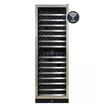
Rosehill Wine Cellars: Vantaggio V300 Wine Cabinet
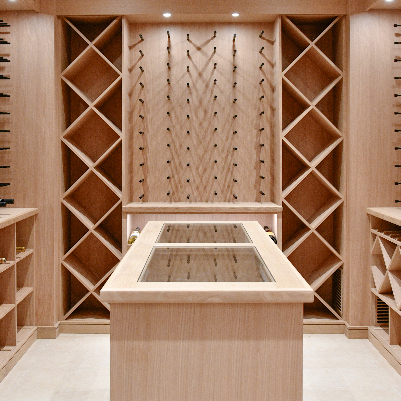
Rosehill Wine Cellars offers the Vantaggio V300 Wine Cabinet as an alternative to storing bottles on a wall-mounted rod. If your planned location has damaged drywall or lacks suitable framing, consider a wine cabinet instead of relying on anchors in the wall. For a built-in storage approach, Premier Cru Classic Racking and Premier Cru Modern Racking offer other wine-storage categories to explore. Wine Cooling Units are also available for projects that include cooling equipment.
The right choice depends on your space and how you want to store your collection. Explore these options when a rod installation doesn’t suit the wall conditions or your preferred design. Contact Rosehill Wine Cellars to discuss your wine-storage needs.
Plan a Wine Display That Fits Your Space
A wine display should feel considered in the room and secure at its mounting points. Before choosing a location, think about how you want to arrange bottles, which surfaces are available, and whether a wall-mounted rod suits the space. Understanding floor-to-ceiling wine rod drywall anchor weight limits can guide your decision, but the broader goal is a display that balances function, stability, and the character of your interior.
If the wall or ceiling doesn’t offer a suitable foundation, a different storage arrangement may be the better direction. Rosehill Wine Cellars offers the Vantaggio V300 Wine Cabinet, Premier Cru Classic Racking, and Premier Cru Modern Racking as other options for organizing a collection. The right format depends on your room and preferred design, so let the space shape the next step.
Contact Rosehill Wine Cellars to discuss wine storage for your home. With a considered plan, you can move toward a display that feels intentional and enduring.
Frequently Asked Questions
How Much Weight Can Drywall Hold Without a Stud?
A screw in bare drywall may support only 10-20 pounds, which isn’t a sound basis for a wine rod. Think of that figure as a small-load reference, not a target for a display that holds bottles over time. A useful assessment includes the rod’s own weight and its full contents, plus whether force pulls downward, outward, or unevenly at the attachment point.
What are the weight limits for drywall anchors by type and size?
Typical capacities range from 10-25 lbs for plastic expansion anchors to 100-200 lbs for toggle bolts. Threaded drywall anchors are typically rated at 25-75 lbs, while molly bolts are typically rated at 50-75 lbs. Ratings vary by anchor size, drywall, and loading direction. Compare the specific anchor’s stated rating with the complete load, and don’t add separate ratings as though every anchor shares weight equally.
Can drywall anchors safely support a wine rod, or must it be fastened to studs or ceiling joists?
For a heavy wine rod, fastening into structural framing is generally more dependable; drywall anchors alone are not a universal solution. When the installation allows, secure the upper and lower attachment points to suitable framing, such as a wall stud and ceiling joist. If the rod relies on hollow-wall anchors, choose support suited to the actual board and load. A generic anchor rating cannot establish the capacity of the complete rod installation.