


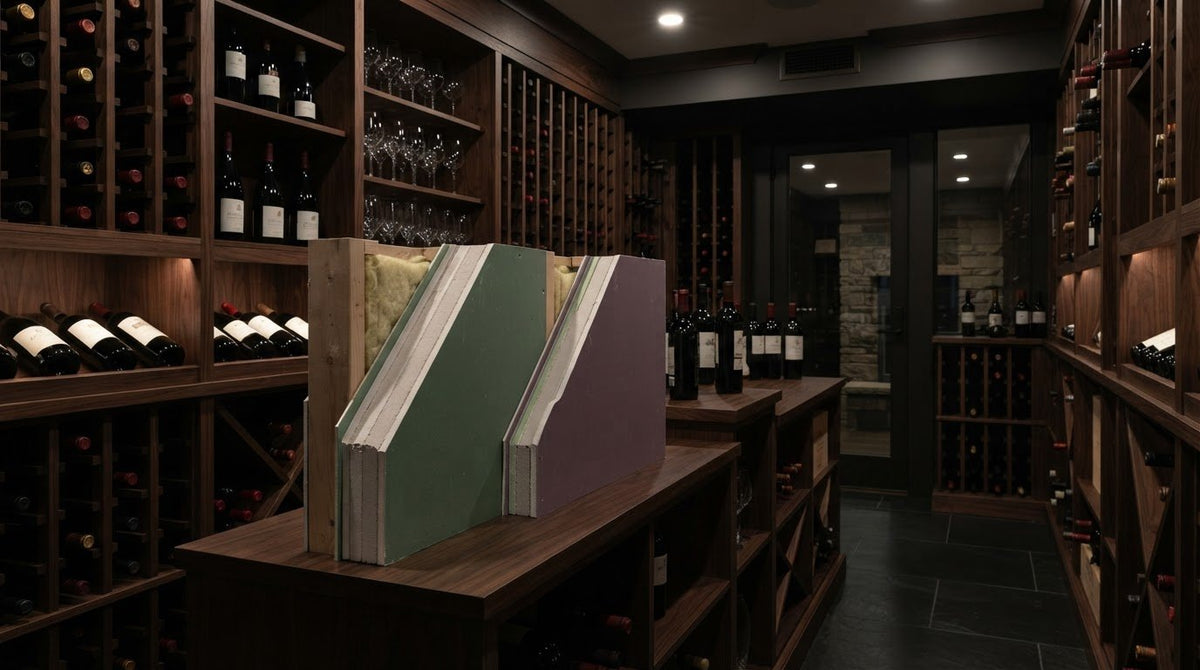
Purple drywall offers broader protection than green board in a wine room: it resists moisture, mold, and mildew, while green board is moisture-resistant. The wine room drywall comparison of mold-resistant green board vs. purple board comes down to more than color; the boards use different facings and offer different levels of resistance. Neither is waterproof or a substitute for controlling moisture and installing the wall correctly.
Green board may seem like the straightforward choice where humidity is a concern, but a wine room calls for a closer look at how the wall assembly will handle persistent moisture. The right material can help protect the room’s finish, but no drywall can make up for poor ventilation, leaks, or inadequate sealing.
This guide explains how the boards differ in construction, moisture and mold resistance, durability, and relative cost. It also offers practical guidance for choosing between them, including when neither is suitable for a wall exposed directly to water.
Key Takeaways
- Purple drywall resists moisture, mold, and mildew; green board is moisture-resistant but offers less protection against mold.
- Choose green board for areas with occasional moisture, and consider purple board where added resistance is useful.
- Compare sheet costs alongside the board’s construction and durability to weigh upfront expense against the protection you need.
- Neither board is waterproof or mold-proof. Pair the right material with sound installation, sealing, and ventilation.
- For water-exposed walls, use an appropriate waterproofing system rather than relying on either drywall type alone.
What makes PURPLE drywall resistant to moisture, mold and mildew?
PURPLE drywall combines a specially treated gypsum core with a moisture-, mold-, and mildew-resistant facing. The paper facing is made from 100 percent recycled material and treated to resist moisture. This layered construction offers broader protection than green board, but it doesn’t make the panel waterproof or mold-proof. If water gets behind the wall or condensation persists, the assembly can still be damaged.
Green board, also called moisture-resistant drywall, has a gypsum core and a green-colored paper facing. Its thicker facing is treated with wax and chemicals to repel moisture. It suits areas with occasional moisture, such as a half bath, laundry room, or properly ventilated basement. The paper still contains organic material, however, so mold can grow if water reaches it.
For wine room walls, consider the room’s moisture conditions rather than relying on board color alone. Purple board provides more resistance to mold and mildew, while green board can suit spaces with occasional moisture and good ventilation. Neither product replaces sound installation, sealing, and ventilation. Persistent dampness, leaks, or condensation can undermine either choice.
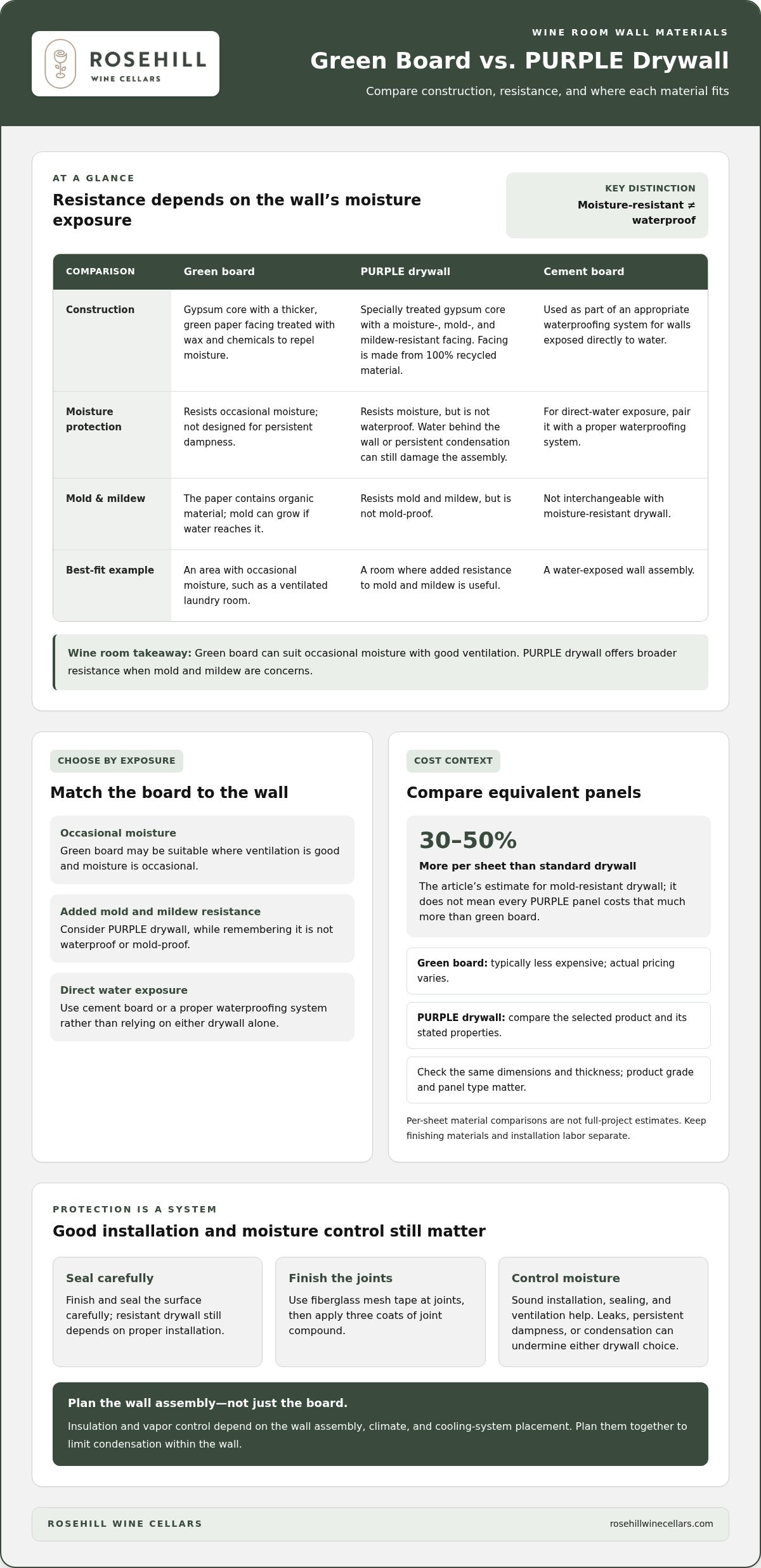
| Drywall option | Moisture protection | Mold and mildew resistance | Best-fit example |
|---|---|---|---|
| Green board | Resists occasional moisture | Paper facing can support mold growth if wet | Ventilated laundry room |
| PURPLE drywall | Resists moisture | Resists mold and mildew | Room where added resistance is useful |
| Cement board | Used with a proper waterproofing system where walls face direct water | Not interchangeable with moisture-resistant drywall | Water-exposed wall assembly |
Choose based on exposure: green board can work for occasional moisture, while PURPLE drywall offers broader resistance when mold and mildew are concerns.
Should wine room walls use cement board or another material instead of moisture-resistant drywall? On walls directly exposed to water, use cement board or a proper waterproofing system rather than relying on green or purple drywall alone. For other walls, select drywall according to moisture exposure and the planned wall assembly.
Are there building code requirements for drywall in wine cellars? Requirements depend on location and wall assembly; there isn’t one drywall rule that applies to every wine cellar. Choose materials to suit the construction conditions as well as the room’s moisture needs.
What drywall moisture resistance rating is recommended for wine cellar walls? Choose a product specifically labeled moisture- and mold-resistant; PURPLE drywall offers resistance to moisture, mold, and mildew. Green board is moisture-resistant, but its paper facing remains vulnerable if water reaches it.
Does wine room drywall need a vapor barrier or special insulation? That depends on the wall assembly, climate, and placement of the cooling system. Plan insulation and vapor control together to limit condensation within the wall.
How should drywall seams and surfaces be finished in a wine room? Use fiberglass mesh tape at joints, then apply three coats of joint compound. Finish and seal the surface carefully, since resistant drywall still depends on proper installation.
Green and purple drywall costs per sheet
Those ranges overlap, so purple board isn’t automatically more expensive for every purchase. Green board is typically less expensive, but the actual difference depends on the selected panel and local retail pricing. Treat the figures as a planning baseline, not a room-wide estimate.
Mold-resistant drywall costs roughly 30 to 50 percent more per sheet than standard drywall. That premium reflects a different product construction, including resistance-focused facing. It doesn’t mean every purple panel costs that much more than green board: product grade and panel type matter. Compare the same dimensions and thickness, then check whether the panel’s stated properties suit the wine room’s moisture conditions.
| Material or upgrade | Cost reference | How to use it |
|---|---|---|
| Green board | Baseline for moisture-resistant drywall | |
| Purple drywall | Compare against green board’s overlapping range | |
| Mold-resistant drywall | Roughly 30 to 50 percent more per sheet than standard drywall | Consider the product’s added resistance |
Room size changes the total more than a per-sheet comparison suggests. These are material upgrade examples, not labor or full-project estimates.
That figure applies to the stated whole-house scenario, not every wine room. A cellar’s total depends on wall and ceiling area, panel selection, layout, and how much drywall needs upgrading.
Before installing panels, estimate the coverage needed for each wall and the ceiling, then compare equivalent products. Include expected offcuts in the material plan, especially around doors, corners, and cooling-system openings. Board price alone won’t account for finishing materials or installation labor, so keep those costs separate. For a wine room, weigh any upfront difference against the moisture and mold resistance the space actually needs.
Green board limitations in humid or wet spaces
Green board is designed for occasional moisture, not persistent dampness. Its treated paper facing can repel moisture, but it remains organic material that mold can grow on. A ventilated laundry room may suit green board; a wine room wall exposed to repeated condensation presents a different challenge. Moisture that reaches the back of the panel can bypass the facing’s protection.
That distinction matters around cooling equipment, cold surfaces, and unsealed openings. If condensation repeatedly forms behind a green board panel, the gypsum core and wall cavity can stay damp. A small leak at a pipe or an improperly sealed opening can also send water behind the panel. Green board cannot prevent those sources from affecting the surrounding materials.
Green board is not recommended for shower stalls, tub surrounds, or spaces with consistent humidity. Those environments expose panels to more moisture than green board is designed to handle. A wine cellar may not have a shower, but persistent condensation or a recurring leak can create similarly unsuitable conditions. Select the board based on the wall’s exposure, not simply the room’s name.
What are the risks of mold behind drywall in a wine room? Water behind green board can reach its paper facing, where mold can grow, and concealed dampness can affect the wall assembly. Because growth may be hidden from view, address the moisture source and inspect affected materials rather than covering the stain.
Before choosing a material, check where water could enter or collect. Look around pipe openings, wall-floor junctions, and cooling-system penetrations. Consider whether ventilation can remove moisture and whether the wall assembly is sealed correctly. These details matter because mold-resistant drywall cannot compensate for a leak or persistent condensation.
- Occasional moisture: Green board can suit a ventilated laundry room or half bath.
- Repeated dampness: Consider a more mold-resistant panel, such as PURPLE drywall.
- Direct water exposure: Use cement board or a proper waterproofing system, not either drywall type alone.
These distinctions help separate moisture resistance from waterproofing. Green board offers some protection against moisture absorption, but it is not mold-proof if water gets behind the wall. Purple board is not waterproof or mold-proof either, so neither panel eliminates the need to control moisture and install the assembly properly.
In a wine room, trace recurring dampness to its source before closing the wall. Green board may suit a dry, ventilated area, but it is a poor choice for a section with ongoing condensation or water intrusion. Match the material to the conditions each wall actually faces.
PURPLE drywall core and paper construction
PURPLE drywall pairs a specially treated gypsum core with a moisture-, mold-, and mildew-resistant facing. The core is also described as fire-resistant, while the facing is made from 100 percent recycled material. These components work together: the treated core and resistant outer layer provide protection against moisture exposure. The panel still isn’t waterproof, so construction details and moisture control remain essential.
The facing matters because drywall’s exposed surface meets the room environment first. PURPLE drywall is designed to resist moisture, mold, and mildew. Standard drywall has a paper face, while mold-resistant drywall uses a gypsum core with a non-organic facing material. Construction can vary by product, so read the panel label for its stated features.
Green board uses a different approach. Its gypsum core is covered by thicker, moisture-repellent paper treated with wax and chemicals. That facing resists moisture absorption, but it still contains organic material. If water gets behind the wall, mold can grow on the paper. PURPLE drywall’s mold-resistant facing is intended to offer more protection against that risk.
For a wine room, consider where the panel will sit in relation to the cooling equipment and wall assembly. A properly selected panel can add resistance, but it cannot prevent condensation from reaching concealed materials. Sealed openings and careful installation matter alongside the board’s core and facing. For example, a gap around a pipe can expose the wall cavity to moisture.
Basements offer a useful comparison because their walls can face damp conditions. Mold-resistant drywall may be worth considering where mold is more likely, but it does not replace moisture management. The same principle applies in a wine room: assess the wall’s exposure, surrounding materials, and potential for moisture behind the panel before choosing a board.
- Core: PURPLE drywall uses specially treated gypsum with moisture- and fire-resistant properties.
- Facing: Its recycled facing resists moisture, mold, and mildew.
- Assembly: The panel’s resistance works alongside sound sealing and installation, not instead of them.
When selecting materials, compare the panel’s labeled construction rather than relying on color alone. Green board’s treated paper suits occasional moisture, while PURPLE drywall adds mold and mildew resistance. Neither is a waterproofing system. Where a wall faces direct water, use cement board or proper waterproofing instead of relying on drywall facing.
The distinction is practical: PURPLE drywall combines materials designed for resistance, while green board relies on treated paper. Choose according to the wall conditions and the protection the room needs.
Mold-resistant drywall versus green board
The key difference is the facing: green board uses treated paper, while mold-resistant drywall uses a non-organic facing. Both have gypsum cores, but PURPLE drywall is designed to resist moisture, mold, and mildew. Green board resists moisture, yet its paper can still support mold growth if water gets behind the panel. For a wine room, PURPLE is the stronger choice where mold resistance matters.
Green board still has useful applications. A ventilated half bath or laundry room may experience occasional moisture without constant dampness. In those settings, moisture-resistant paper can provide practical protection. A wine room with persistent condensation presents different conditions. Choose material based on the wall’s exposure, including nearby cooling equipment, rather than assuming every cellar has the same moisture profile.
| Option | Facing and resistance | Best-fit condition | Key limitation |
|---|---|---|---|
| Green board | Treated paper; moisture-resistant | Occasional moisture in ventilated spaces | Paper can support mold if water gets behind it |
| PURPLE drywall | Non-organic, mold-resistant facing | Areas where added mold and mildew resistance is useful | Not waterproof or mold-proof |
| Cement board or waterproofing system | For walls directly exposed to water | Direct water exposure | Neither drywall option replaces this protection |
Bathrooms illustrate the distinction: purple board can be used in bathrooms, including near showers or tubs when proper backer material is present. That does not make either drywall suitable as the waterproof layer. Walls directly exposed to water need cement board or a proper waterproofing system. A wine room wall with occasional humidity and one repeatedly wetted by a leak require different material decisions.
Installation details also affect performance. Use fiberglass mesh tape at mold-resistant drywall joints, because paper tape provides organic material mold can attach to. Finish drywall with three coats of joint compound. For ceilings, panels should be either 1/2 inch or 5/8 inch thick. These construction choices complement the board’s resistance; they don’t correct ongoing moisture or poor sealing.
- Choose green board for occasional moisture in a ventilated area.
- Choose mold-resistant drywall when added resistance to mold and mildew is a priority.
- Choose a waterproof assembly where the wall faces direct water.
Both boards can serve a purpose, but neither is waterproof or mold-proof. For wine rooms with persistent dampness, address the moisture source and choose the wall assembly accordingly. To plan room layout alongside material decisions, explore custom wine cellar design.
Rosehill Wine Cellars: Vantaggio V300 Wine Cabinet
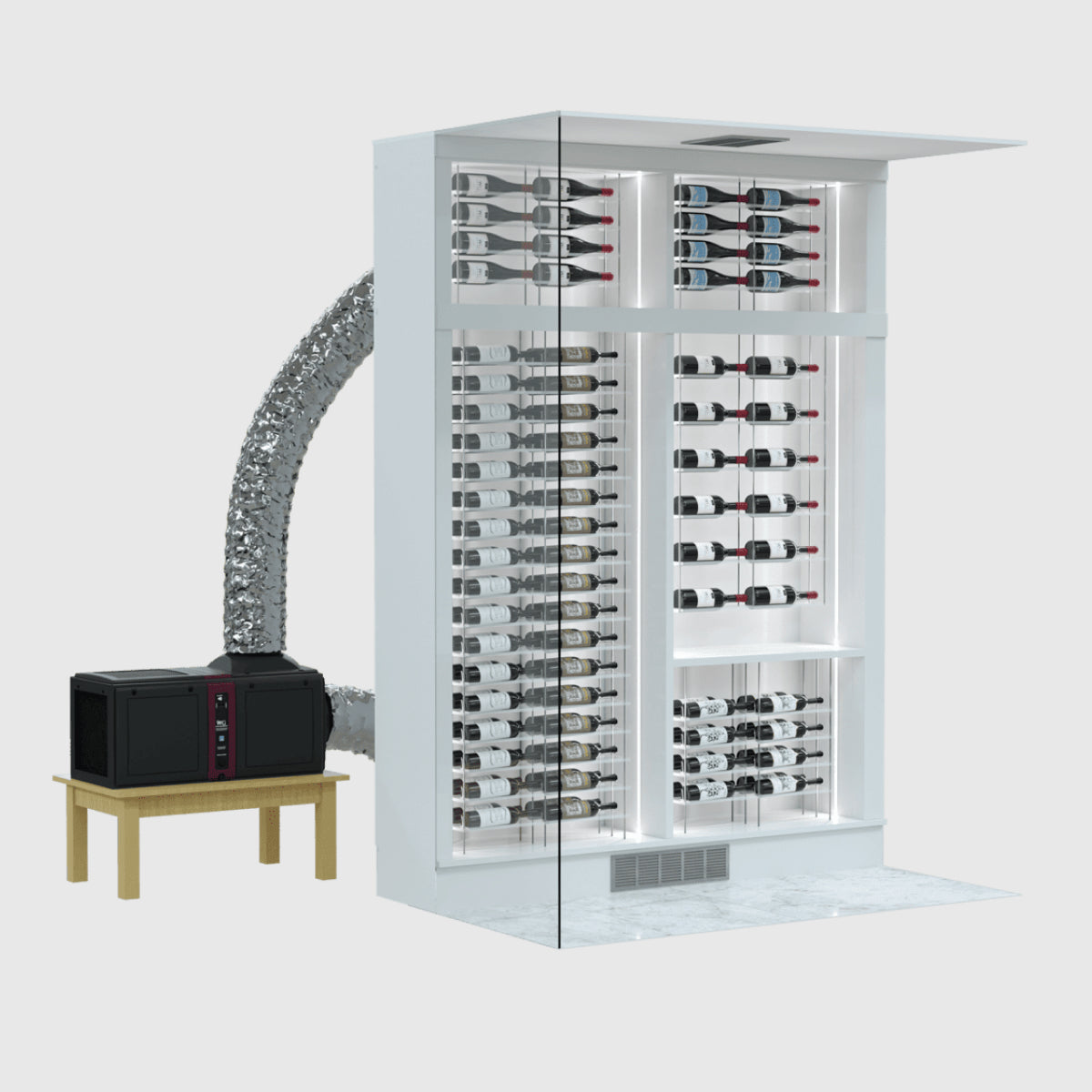
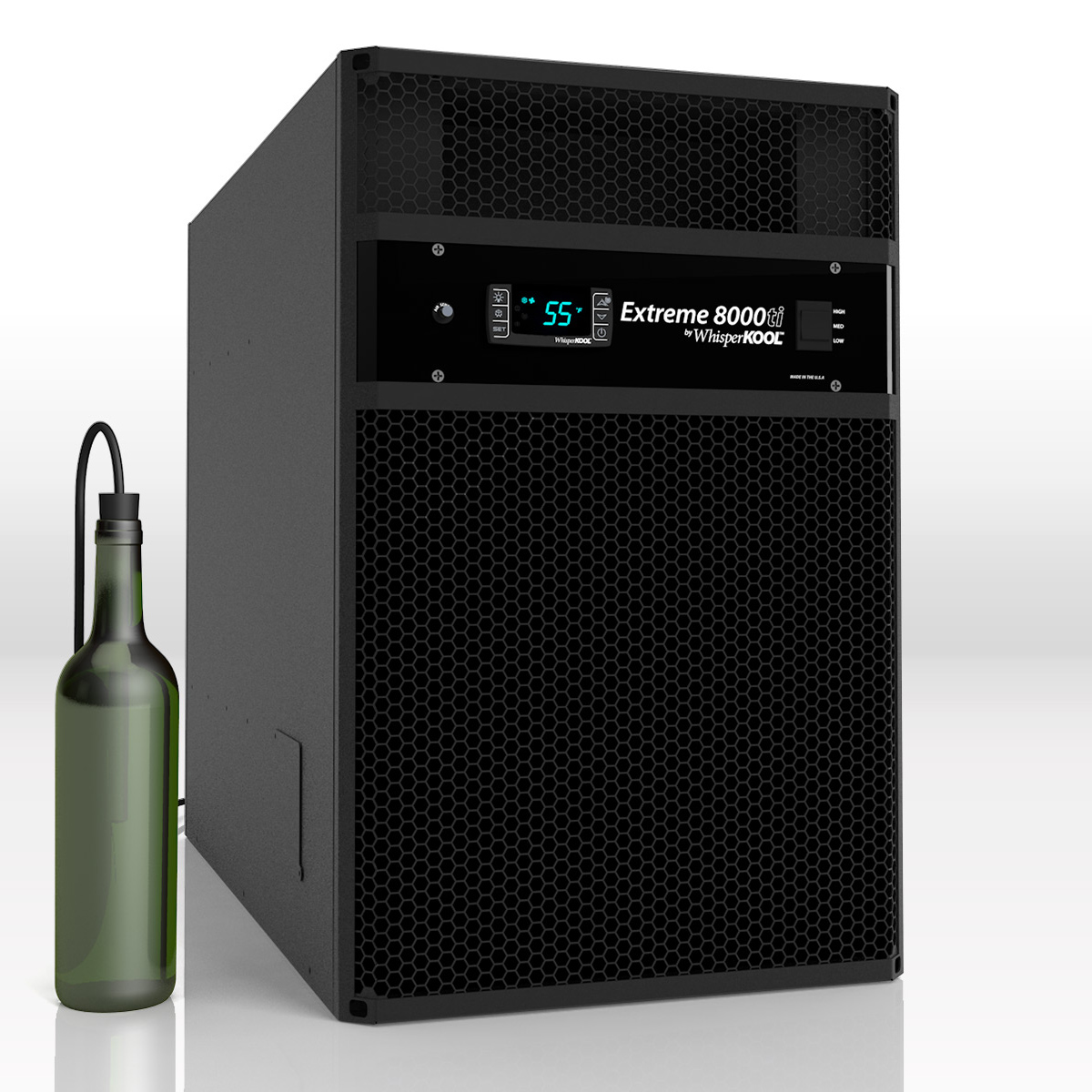
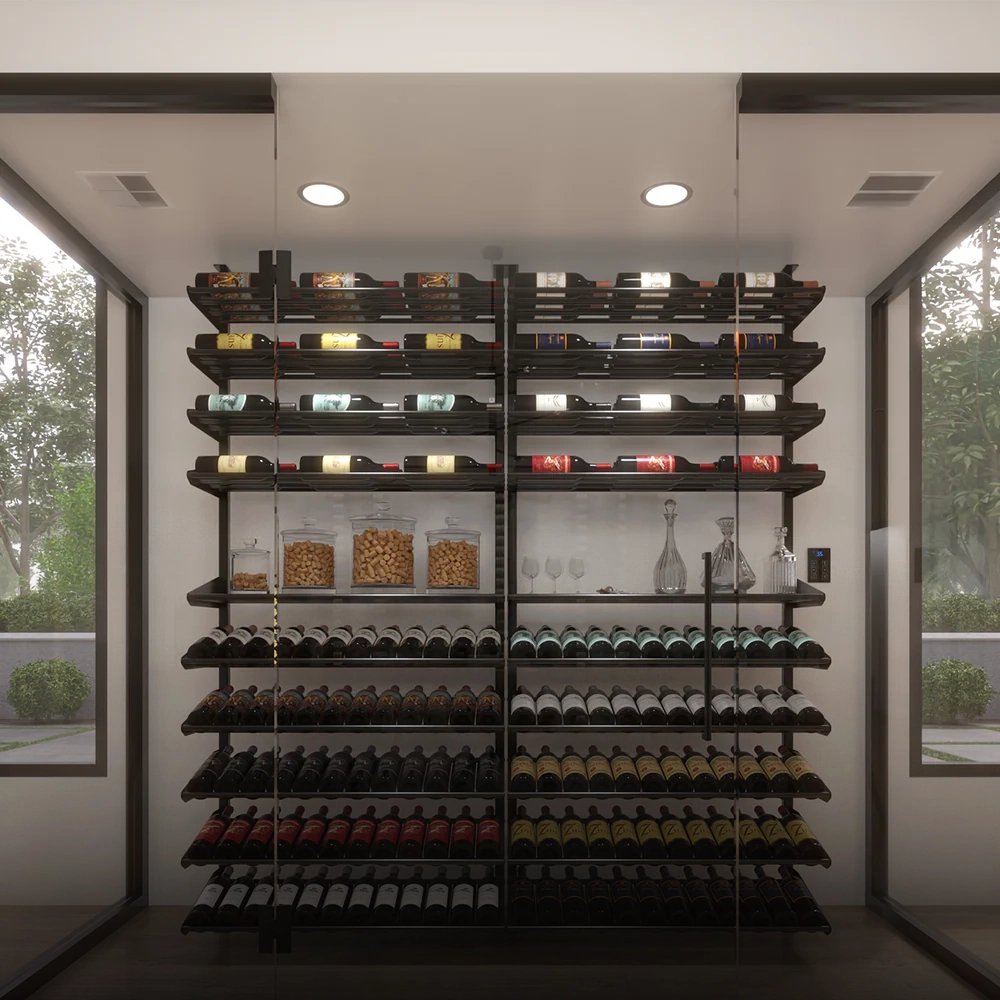
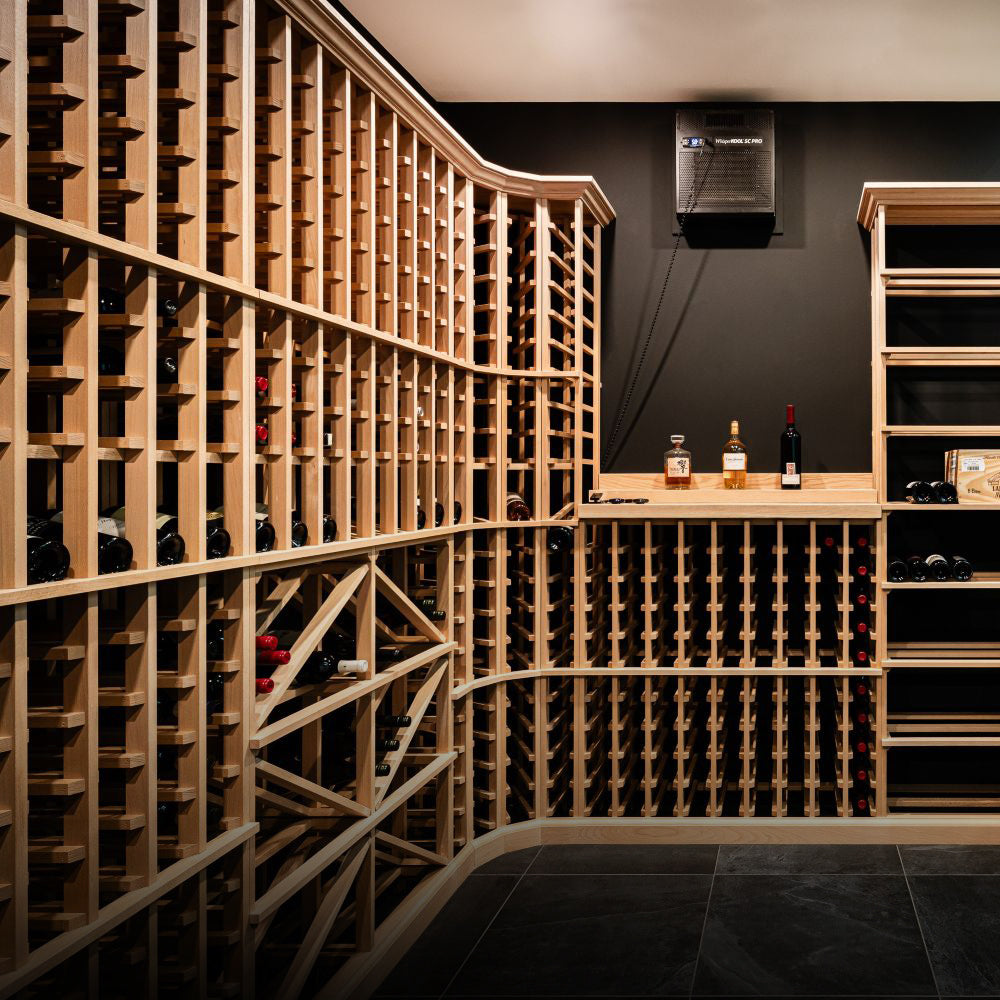
Rosehill Wine Cellars offers the Vantaggio V300 Wine Cabinet as a storage option when a dedicated wine room isn’t the right fit. For a larger cellar, Premier Cru Classic Racking and Premier Cru Modern Racking provide distinct approaches to organizing a collection, while Wine Cooling Units support the room’s temperature-control plan. These choices complement, rather than replace, sound decisions about wall materials, moisture management, and installation.
If you’re planning a cellar, Rosehill Wine Cellars’ Custom Wine Cellar Design can bring storage, cooling, and the room’s overall layout into one considered plan. Share your project goals and discuss a design that suits your space. Contact Rosehill Wine Cellars to plan your wine storage.
Shape the Wine Room Around Your Collection
As you choose between mold-resistant green board and purple board for your wine room, consider how the finished space will serve your collection over time. Wall materials are one part of the plan; storage and room layout should also work together, from the first bottle you place to future additions.
Rosehill Wine Cellars offers the Vantaggio V300 Wine Cabinet for a dedicated storage option, along with Premier Cru Classic Racking and Premier Cru Modern Racking for cellar layouts. These offerings can help you think through how your storage approach fits the space you’re creating, without treating drywall as a substitute for a well-planned room.
Bring your ideas and storage goals together as you plan the next stage. Contact Rosehill Wine Cellars to discuss your wine storage plans, and move forward with a room designed around your collection.
Frequently Asked Questions
What’s the difference between PURPLE drywall and traditional green drywall?
PURPLE drywall is designed to resist moisture, mold, and mildew, while green drywall is moisture-resistant. Green board has a gypsum core and treated paper facing; PURPLE drywall combines a treated gypsum core with a resistant facing made from 100 percent recycled material. For example, a laundry room with occasional dampness may suit green board, while PURPLE offers broader resistance where mold is a concern. Neither option is waterproof.
So, Which Should You Choose?
Choose based on the wall’s likely moisture exposure and the protection your room needs. A wine room drywall mold resistant green board vs purple board comparison starts with whether the space faces occasional dampness or persistent condensation. Green board can suit a ventilated half bath, while PURPLE drywall offers added resistance where mold is a concern. If a wall faces direct water, neither drywall type replaces a suitable waterproofing system.
What is green board?
Green board is gypsum drywall with a green-colored, moisture-repellent paper facing, and its official description is moisture-resistant drywall. The facing is treated with wax and chemicals to resist moisture absorption. Green board is commonly used in spaces such as laundry rooms, half baths, and properly ventilated basements. In practice, it can resist moisture on its facing, but water behind the panel can still expose its paper to mold growth.
Is green board or purple board better for a wine room?
PURPLE drywall is often the more suitable choice when added resistance to mold and mildew matters in a wine room. For the wine room drywall mold resistant green board vs purple board decision, consider the wall’s actual exposure, not just the room’s label. A wall near cooling equipment may need closer attention to condensation. Green board can suit a well-ventilated area with occasional moisture, while neither material replaces sound sealing and ventilation.
Are green board and purple board mold resistant or mold proof?
Both can resist moisture to some degree, but neither is mold-proof. PURPLE drywall is designed to resist mold and mildew; green board’s treated paper resists moisture but still contains organic material. If a leak wets the wall cavity, either assembly can be affected. For instance, a damp patch near a pipe should prompt attention to the water source, not simply a surface repair or different paint finish.
Can moisture-resistant drywall be used in a wine room with high humidity?
Moisture-resistant drywall can be part of a wine room wall assembly, but persistent humidity or condensation calls for more than a board choice. Address conditions that keep the wall damp, including poor ventilation, unsealed openings, or water intrusion. PURPLE drywall offers additional resistance compared with green board, yet it cannot waterproof the assembly. Avoid using either type as the sole protection on a wall directly exposed to water.
What are the costs of green board versus purple board drywall?
Green board typically costs between $12 and $16 per standard sheet, while purple drywall generally ranges from $16 to $22 per sheet. The ranges overlap, although green board is typically less expensive. Mold-resistant drywall costs roughly 30 to 50 percent more per sheet than standard drywall. To compare a project fairly, consider the same panel size and thickness, then calculate the wall and ceiling coverage rather than judging by one sheet’s price alone.