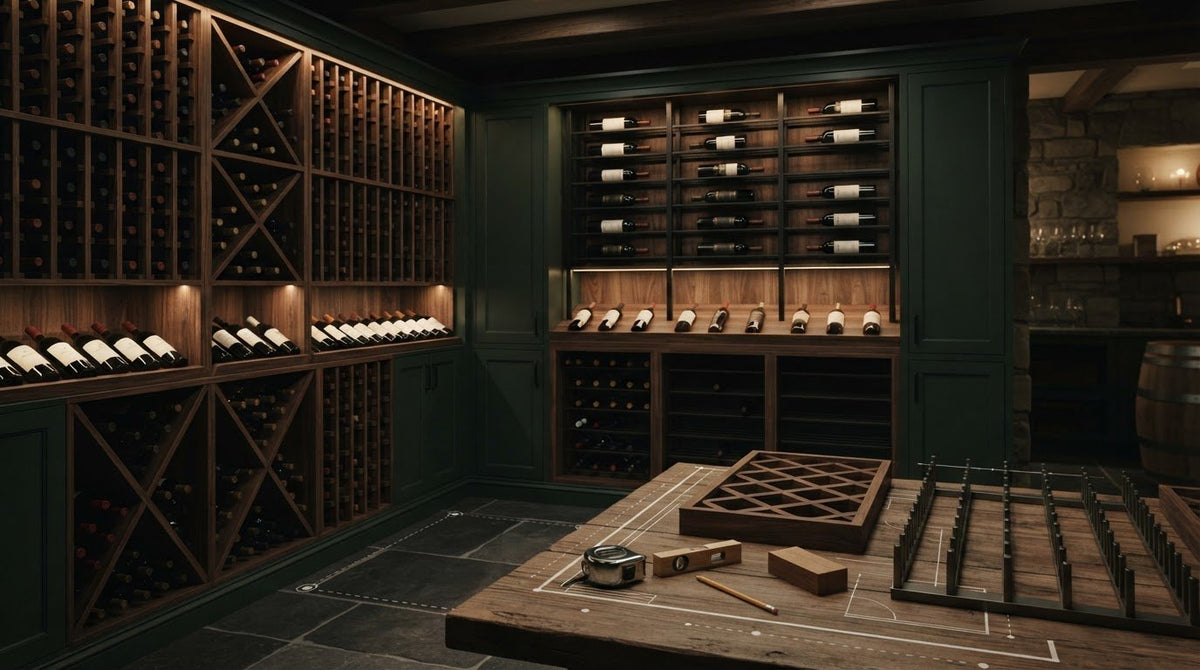















What if a brief temperature spike during service points to the room, not just the cooling unit? Restaurant wine room temperature recovery opening doors can vary because each cellar responds to a different combination of door traffic, room design, insulation, and equipment. So how quickly should your wine room return to its usual conditions? There’s no single recovery time that fits every restaurant.
It’s understandable to focus on the temperature reading when it rises as staff move in and out. Recovery describes how the room’s conditions settle back after warm air enters, but a sensor reading can fluctuate without telling the whole story. The pattern over time, the frequency and duration of openings, and the sensor’s location all matter.
This article explains what recovery means, why some wine rooms stabilize faster than others, and how to assess practical cooling options. You’ll also learn which operational or room-system changes may help before you consider new equipment. By looking at door use, room performance, and cooling-system suitability together, you can take informed steps to protect wine while keeping service running smoothly.
Key Takeaways
- Temperature recovery is shaped by the room and the rhythm of service, not cooling capacity alone.
- Track door access alongside temperature readings to help distinguish traffic-related changes from room or equipment concerns.
- Use consistent sensor placement and service-period records to make patterns easier to interpret.
- For restaurant wine room temperature recovery opening doors, start with practical operational adjustments before deciding whether a system review is needed.
- Persistent fluctuations may call for a closer assessment of the wine room’s construction and cooling equipment.
Restaurant Wine Room Temperature Recovery Opening Doors: What Happens?
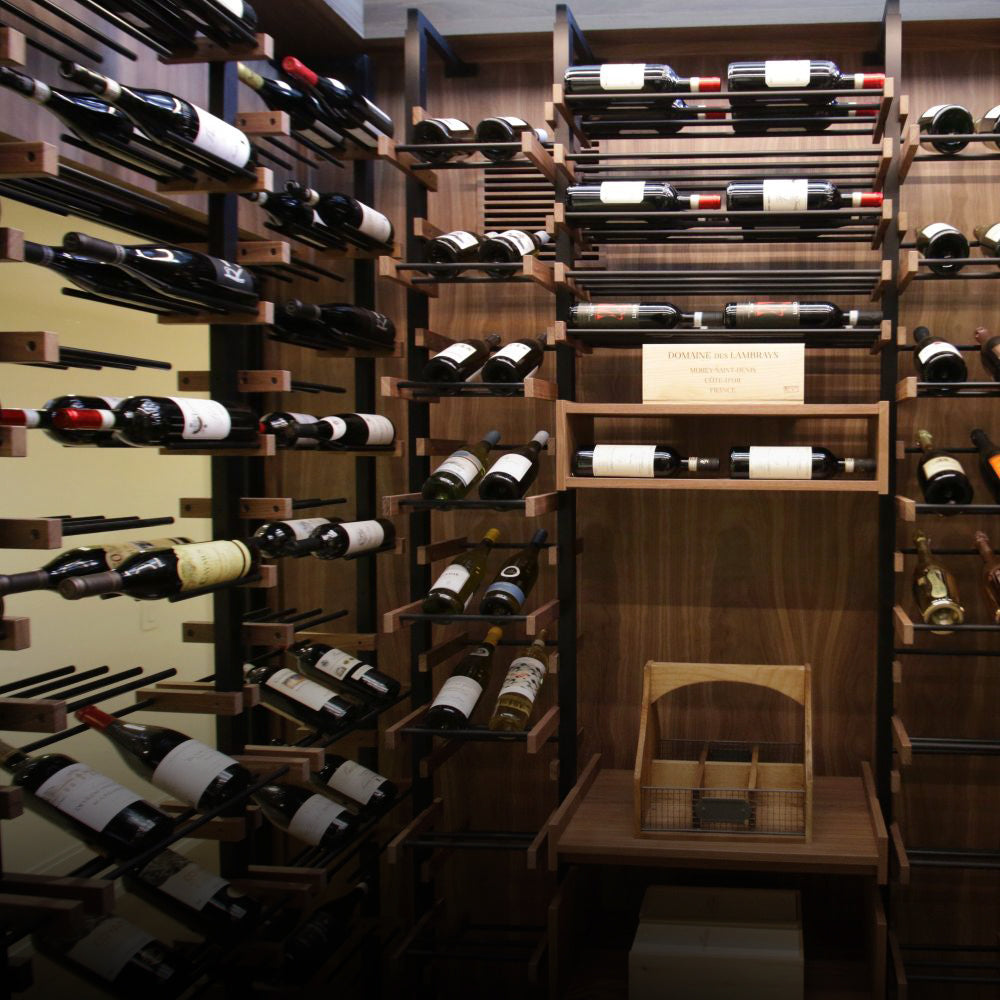
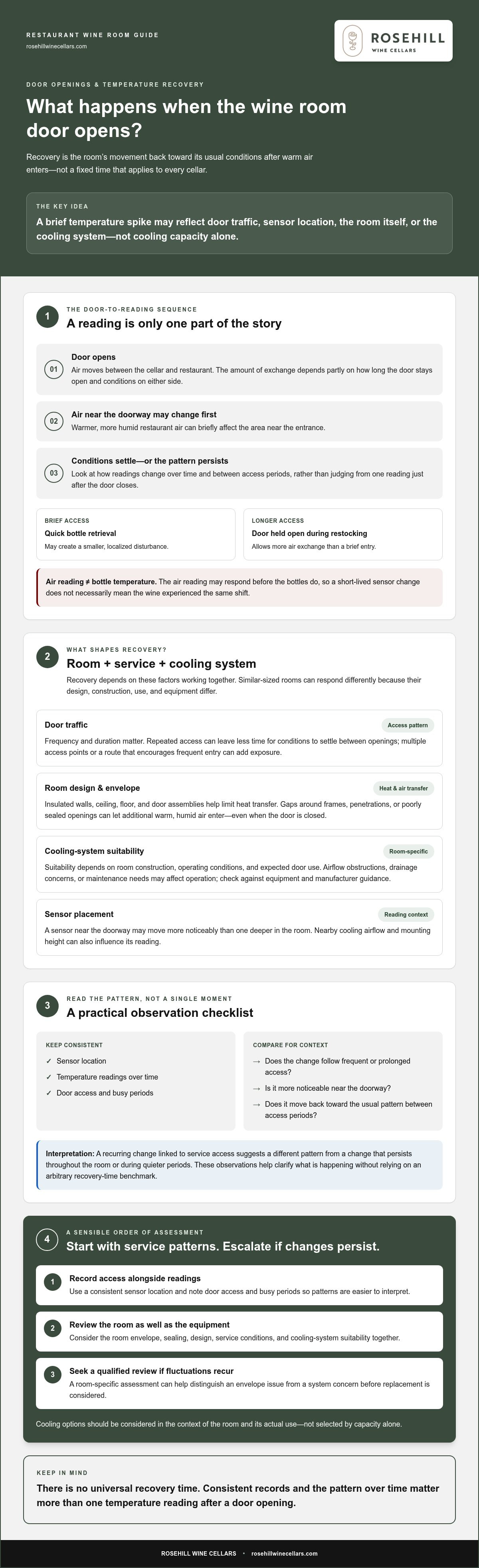
Each time a wine room door opens, air moves between the cellar and the restaurant. The amount of exchange depends on how long the door stays open and the conditions on either side. Warmer, more humid restaurant air can enter, briefly affecting the air near the doorway before the room settles. A quick bottle retrieval and a door held open during repeated stocking create different disturbances.
Temperature recovery is the room’s movement back toward its usual operating conditions after a disturbance, not a fixed time or temperature that applies to every cellar. The air reading may respond before the bottles do, so a short-lived sensor change doesn’t necessarily mean the wine itself has experienced the same shift. For context on ideal wine storage conditions, temperature and humidity are both part of the storage environment to consider.
Why do restaurant wine room temperatures fluctuate during service?
Frequent staff access can repeatedly exchange room air, leaving less time for conditions to settle between openings. A reading near the doorway may move more noticeably than one taken deeper in the room. Sensor position, nearby cooling airflow, and mounting height can all influence what it records. Compare readings from a consistent location over time before treating a brief fluctuation as a room-wide problem.
What does normal recovery look like?
There’s no universal recovery time. Room design, construction, service patterns, and cooling-system configuration all affect how conditions respond. Start by recording temperature consistently and noting the sensor location, door access, and busy periods. Look for recurring patterns rather than judging performance from one reading immediately after the door closes.
For example, a brief entry to retrieve a bottle may produce a small, localized change, while a door left open during restocking allows more air exchange. If the reading moves back toward its usual pattern between access periods, that tells a different story from a change that persists throughout the room or during quieter periods. These observations help clarify what restaurant wine room temperature recovery opening doors looks like in your operation, without relying on an arbitrary benchmark.
What Determines Wine Room Temperature Recovery After Door Openings?
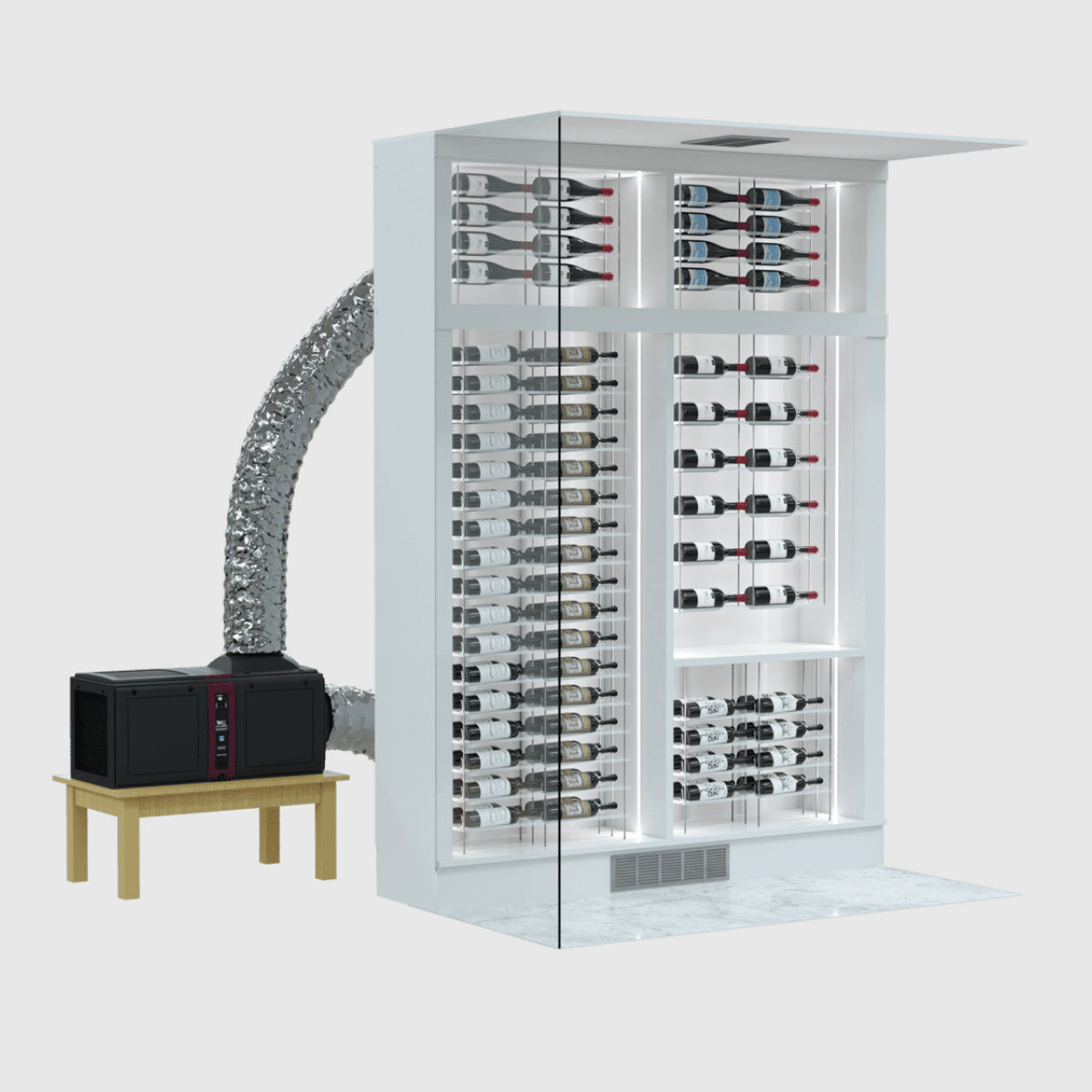
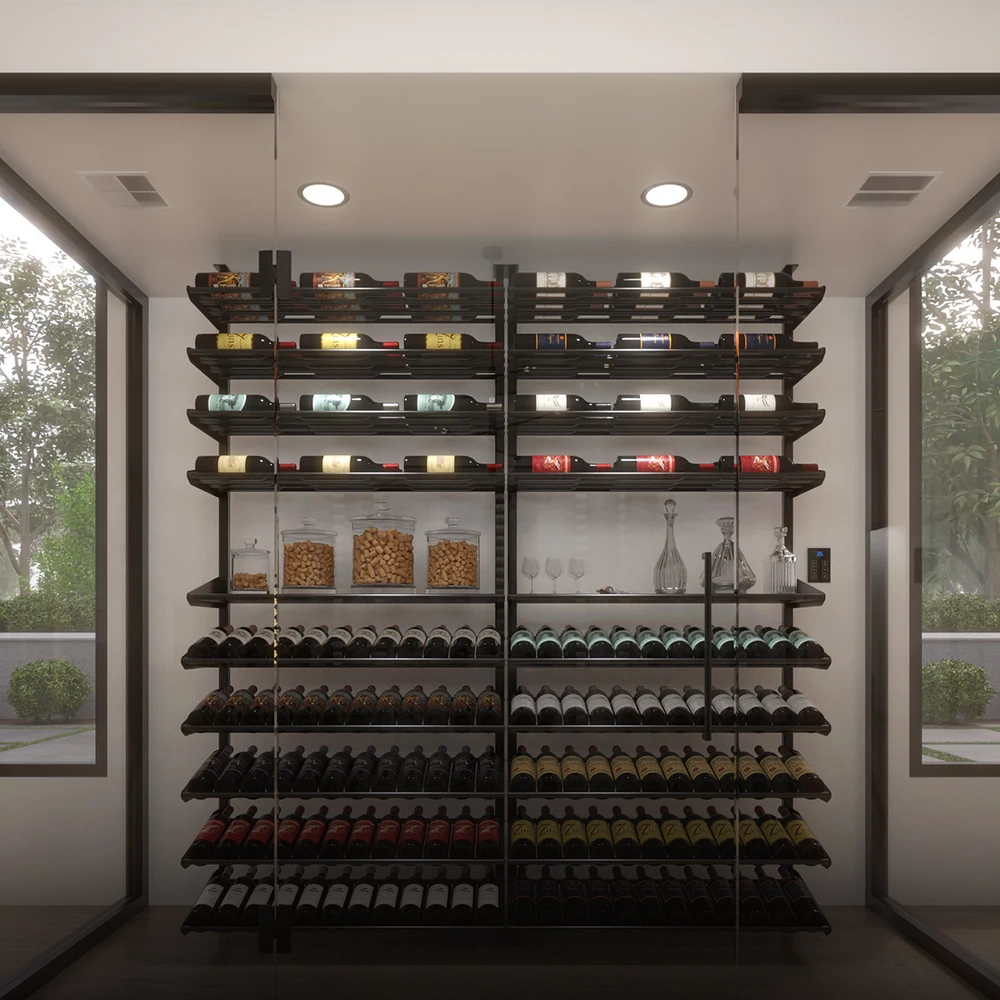
Recovery depends on room design, access patterns, and cooling-system performance working together. A cellar with a well-sealed envelope may face a different challenge from a glass-fronted room beside a busy dining area, even if both have similar dimensions. The building science of wine cellars helps explain why construction details and climate control need to be considered as one system.
Door traffic sets the pace of air exchange. A door opened briefly for a bottle creates a different load from one held open during restocking or repeatedly used by staff during a rush. Several access points, or a route that encourages frequent entry, can also make exposure harder to manage. These patterns matter because the cooling system must respond to the conditions the room actually experiences, not simply its intended use.
How do insulation and air leakage affect recovery?
Insulated walls, ceiling, floor, and door assemblies help limit heat transfer through the room’s boundary. Gaps around frames, penetrations, or poorly sealed openings can allow additional warm, humid air to enter, adding a load even when the door is closed. If fluctuations persist, have the room envelope assessed before attempting modifications. The appropriate response depends on the room’s construction and cooling system.
How do cooling-system design and maintenance matter?
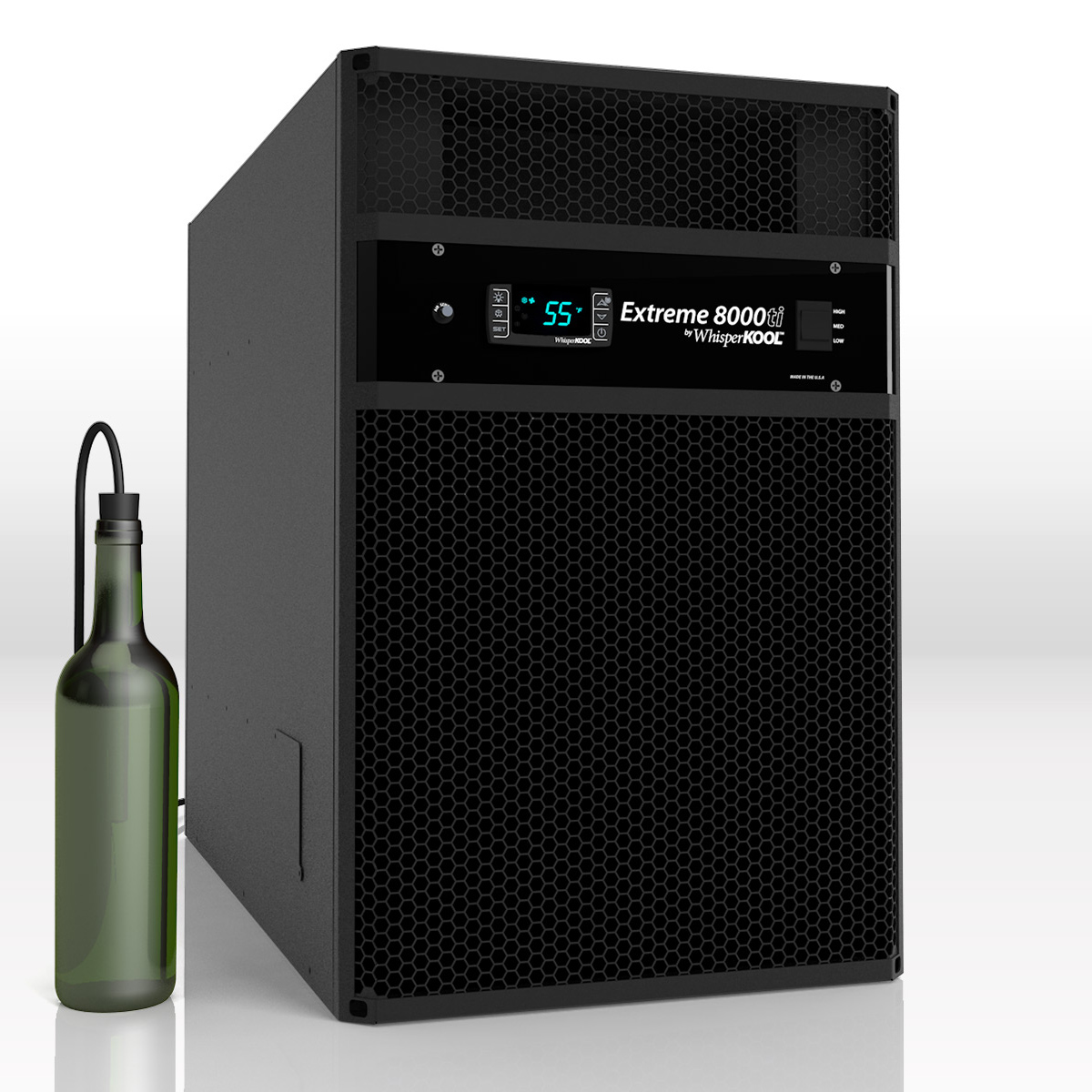
System suitability depends on the room’s construction, operating conditions, and expected door use. Obstructed airflow, drainage concerns, or maintenance needs may affect operation, but these should be checked against the equipment and manufacturer guidance. A qualified review can help distinguish a room-envelope issue from a system concern before replacement is considered.
Keep a record of access patterns and temperature changes, then compare it with the room’s design and equipment history. If recurring fluctuations remain, explore wine cellar cooling systems as part of a room-specific assessment, rather than choosing equipment by capacity alone. For restaurant wine room temperature recovery opening doors, the most useful next step is to identify which part of the room and system is contributing to the pattern.
Door Traffic, Cooling Capacity, or Room Design: How to Find the Likely Cause
A fluctuating reading is a clue, not a diagnosis. Note when it occurs, where it appears, and whether it coincides with service traffic. A Purdue University study of temperature changes examines heat and moisture transfer during refrigerator door openings, helping explain why repeated access can add to a refrigerated space’s load. A restaurant wine room has its own design and operating conditions, so use observed patterns to guide the next check rather than assuming a single cause.
What patterns point to door traffic or room-design issues?
If readings rise during a busy service and settle during quieter periods, repeated door access may be contributing. Compare readings taken consistently near the entrance with those from farther inside. A difference may indicate a localized effect, while similar changes across locations suggest a broader pattern to investigate. Record door use alongside readings before changing equipment.
| Observable pattern | Possible contributor | Suitable next check |
|---|---|---|
| Changes coincide with frequent access or long openings | Repeated exchange with warmer restaurant air | Log access frequency and duration alongside readings |
| Readings vary by location or remain unsettled when access is limited | Room envelope, air leakage, or sensor placement | Compare consistent sensor locations and have the room construction reviewed |
| Instability continues during quiet periods or appears alongside operating concerns | Cooling-system operation, airflow, installation, or maintenance | Arrange a professional review of system operation and service history |
These symptoms suggest investigation paths, not a definitive remote diagnosis. A larger cooling unit isn’t an automatic remedy. If frequent access, air leakage, or room construction is driving the load, added capacity may not address the underlying condition. Equipment selection should follow an assessment of the room and how it’s used.
When might the cooling system need professional assessment?
Consider a professional assessment if instability persists despite more controlled door use, or if readings remain inconsistent during quieter periods. Share your temperature and access records, then ask for a review of system operation, airflow, installation, and maintenance history. These checks can help distinguish a system concern from a room-design issue without presuming equipment failure. For restaurant wine room temperature recovery opening doors, a measured diagnosis is more useful than replacing equipment based on one fluctuating reading.
How Restaurants Can Improve Wine Room Recovery During Service
Start with observation, not equipment changes. A simple record can show whether temperature patterns follow busy service, repeated access, or a system alert. For restaurant wine room temperature recovery opening doors, consistent readings paired with practical adjustments give teams a clearer basis for deciding what to investigate next.
What should restaurant teams track first?
Choose a sensor location and keep it consistent. Record readings at consistent intervals, along with door openings and their approximate duration. Note unusually busy service periods, system alerts, maintenance visits, and operational changes that could affect access or airflow. A brief log is more useful than isolated readings because it lets you compare similar operating periods.
Keep the record straightforward. A shared log might include the time, temperature reading, access activity, and any relevant observations. If more than one sensor is already in use, identify each location so readings aren’t mistakenly compared as though they came from the same part of the room.
Which operational changes are worth testing?
Once you have a baseline, review small changes that can reduce unnecessary exposure without slowing service. Consider whether staff can organize bottle retrieval or restocking to avoid repeated trips. Make sure the door closes fully after each entry, and keep stored items or equipment from obstructing the cooling system’s airflow. Don’t change established equipment settings unless the manufacturer’s guidance supports doing so.
Observe the pattern, log access and readings, reduce avoidable exposure, then reassess before making larger changes. Test one practical adjustment at a time, keeping the sensor position and logging routine consistent. That makes it easier to see whether the pattern changes and avoids assumptions based on a single busy shift. If fluctuations persist, share the record with a qualified wine-cooling professional for a room and system review.
Keep adjustments compatible with the restaurant’s workflow. The aim isn’t to restrict necessary access, but to make door use deliberate and ensure the room can close and operate as intended between visits. Consistent records can also provide useful context for cooling-system service appointments or maintenance planning.
Explore wine cooling system support from Rosehill Wine Cellars if operational adjustments haven’t resolved recurring fluctuations.
When to Review Wine Cooling Options for a Restaurant Wine Room
Once you’ve tracked readings and tested practical changes, look at the pattern as a whole. If fluctuations continue during quieter periods or remain after you reduce avoidable door exposure, it may be time to review both the room and its cooling equipment. A consistent log, maintenance history, and details about how the room is used can make that review more focused. Persistent changes don’t automatically mean equipment failure, and there’s no universal reading or time threshold that determines when a system should be replaced.
Should a restaurant change operations, maintain equipment, or reassess the system?
Match the next step to what the records show. If changes align with service traffic, refine access practices and observe the pattern again. If maintenance is overdue or system alerts have appeared, review equipment operation and service history with a qualified professional. If instability persists despite controlled access and appropriate maintenance, room construction or system suitability may deserve closer assessment. Operational adjustments can reduce avoidable exposure, but they can’t correct every design or equipment limitation.
What should a wine cooling consultation evaluate?
Bring practical details: room dimensions, construction information, door and service patterns, temperature logs, and available maintenance records. Ask how any proposed cooling equipment suits the room’s construction and expected operation, and what further assessment is needed before selecting a solution. The goal is to understand the cause and fit, not to assume that a larger unit is the answer.
For a room-specific review, Rosehill Wine Cellars’ work with cooling systems and custom wine cellar design may help inform the options under consideration. Explore wine cellar cooling systems alongside custom wine cellar design to see the relevant categories. These are starting points for evaluating possibilities, not a promise that any one change will resolve a particular fluctuation.
Addressing restaurant wine room temperature recovery opening doors begins with evidence: identify the pattern, consider operational and maintenance factors, then determine whether the room design or cooling system needs further review. If your records point to a recurring issue, use them to guide a measured conversation about the room and its cooling options.
Make Your Next Wine Room Decision With Confidence
Temperature changes during service aren’t automatically a sign that a wine room needs a larger cooling unit. Recovery depends on the room, door use, and system working together. Track readings and access patterns consistently, then consider whether operational adjustments, a maintenance review, or a closer look at room design and cooling equipment is the sensible next step.
A measured approach to restaurant wine room temperature recovery opening doors can help protect wine without disrupting service. If fluctuations persist, bring your records and room details to a professional review. Rosehill Wine Cellars designs and builds custom wine cellars, offers wine cooling units and service appointments, and provides maintenance plans for ongoing cooling-system care.
Explore wine cellar cooling systems and request informed guidance. With clear observations and the right expertise, you can move toward a solution suited to your room and restaurant.
Frequently Asked Questions
How quickly should a restaurant wine room recover after the door opens?
There’s no universal recovery time for a restaurant wine room. The room’s construction, cooling system, sensor location, and door use all influence how quickly readings move back toward their usual pattern. For restaurant wine room temperature recovery opening doors, compare consistent readings over time and note the duration and frequency of access. Check the equipment manufacturer’s guidance before judging performance against a specific recovery target.
Is it normal for a wine room temperature to rise when the door opens?
Yes, a temporary rise in an air reading can occur when warmer, more humid restaurant air enters through an open door. The change may be most noticeable near the entrance, depending on sensor placement and airflow. A brief fluctuation doesn’t necessarily indicate a room-wide problem. Record readings from a consistent location and note door use so you can distinguish a short-lived change from a recurring pattern.
Can opening a restaurant wine room door damage the wine?
A brief opening doesn’t automatically mean the wine has been harmed. A sensor measures air conditions, which can change more quickly than the temperature of the bottles themselves. Repeated or prolonged exposure, combined with broader temperature instability, deserves attention because consistent storage conditions matter. Track patterns rather than reacting to a single reading, and seek a room-specific assessment if conditions remain unsettled.
What happens if a wine room temperature does not recover?
Persistent instability may indicate that door traffic, room construction, air leakage, sensor placement, or cooling-system operation needs closer review. First, check that readings are taken consistently and record access, service periods, system alerts, and maintenance history. If the pattern continues during quieter periods or despite more controlled access, arrange a qualified assessment of the room and equipment rather than assuming a specific component has failed.
Can a larger wine cooling unit solve temperature swings caused by opening doors?
Not necessarily. A larger unit may not address swings driven by frequent access, a poorly sealed room, or other design conditions. Choosing equipment without understanding the room’s construction and actual use can miss the underlying contributor. Review access patterns, temperature records, and maintenance history first. A professional assessment can help determine whether operational changes, maintenance, room improvements, or different cooling equipment should be considered.
How can restaurant staff reduce temperature fluctuations in a wine room?
Staff can help by closing the door promptly, organizing retrieval or restocking to limit unnecessary repeat trips, and keeping cooling-system airflow unobstructed. Record readings at consistent intervals and locations, noting approximate door use and busy service periods. Test one practical change at a time, then compare the pattern. These steps can clarify whether access is a contributor, but they can’t resolve every room-design or equipment limitation.